What you need to know about 100 series aftermarket wheel options

This site may earn a commission from merchant affiliate
links, including eBay, Amazon, Skimlinks, and others.

Joined
Sep 19, 2010
Threads
3
Messages
317
Location
Seattle
Hey Hundyheads! I've been getting a good amount of questions about aftermarket wheel fitment, stance, and tire size options. This thread will share all of the information I have through my research and first hand experience. I will address in a general way wheel sizes, offsets, and tire options that worked for me. This should give you enough information to make an informed decision when it comes to what you are considering. Use my example as base line numbers and do the math for sizes you are considering. It should give you a good idea if you are going to have fitment issues.

Before we get started you should have a very good idea on how you plan on using your hundy. Heavy off road? Pavement princess? Do you have a certain tire size that you want to run? Research your tires first for your application. Bigger tires do not work well with most aftermarket wheels and a fully compressed suspension. Even if your hundy will be a pavement princess you can run into situations that will bottom out your suspension and cause damage by bending fender lips and tearing out wheel well liners. You may find aftermarket is not an option for the tire application you need.

Some may say...I'm going to run a lift that will prevent issues with bigger tires. Unfortunately, a lift will not keep your hundy from bending up that pretty sheet metal with a poor wheel and tire choice. If it will rub at stock height it will rub lifted. The only thing a lift does is start your suspension travel in a higher location and it still bottoms out in the same position as stock. Even with the added stiffer torsion bars and springs you will bottom out in the same stock location. It is much harder to bottom out with the lift and stiff components but you can still do damage when you do bottom out. A body lift will help to gain the extra clearance you need for large size applications.

Whats the wheel problem?

The 100 series Land Cruiser and LX470 have a very narrow window for wheel offsets and tire sizes. Throw in our protruding front hub and there are very few aftermarket wheels that will work with our vehicles. Most every aftermarket wheel that will fit is mainly produced to fit the Toyota Tundra. Luckily we share the same bolt pattern of 5x150 and from the factory use similar offsets ranging from +40mm to +55mm. The bad news is most aftermarket Tundra wheels have an offset around +25mm to +0mm. The Tundra is far more forgiving of lower offset than the 100 and this is the rub. Lower number + offset means that the wheel sticks out towards the fender. This can cause rubbing and clearance issues. To add to the problem finding an aftermarket wheel that is the stock 8 inches wide is nearly impossible. Most options will be at least 9 inches wide. This adds to the offset dilemma and decreases the already low offset wheel choices by 12.7mm. This puts things even closer to rubbing with your front fenders.

The conservative solution:

Whether you are choosing 16,17 or 18 inch wheels keep the offset +20mm or higher if running a 9 inch wide wheel. If you find a 8 inch wide wheel you can decrease your offset accordingly or increase tire width. I call this a conservative solution because running a wheel in this offset range limits you to a conservative tire size. I run a 275/70/18 on a 18x9 fuel wheel with a +20mm offset on my LX. It is on the edge of just fitting and required some minor modifications to avoid rubbing. This is what I consider to be safe. People will say you can go wider tires or lower offset but my experience with the fitment on my LX says different. I would not go lower offset or wider tire. This is conservative fitment of an aftermarket wheel that will work on a 100 series. If you want a wider tire you need either a 8 inch wheel, a shorter tire or a higher offset. Stock wheels are well suited for big tire options.

Modifications needed:

Any wheel you choose will likely need front center cap modification. The fuel wheels have a high cap and still required half inch poly washers to space the caps to fit. Keep it in mind when looking at wheels if you want to run caps.

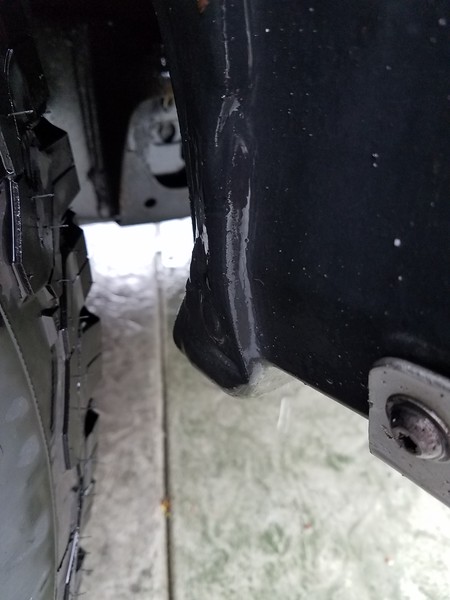
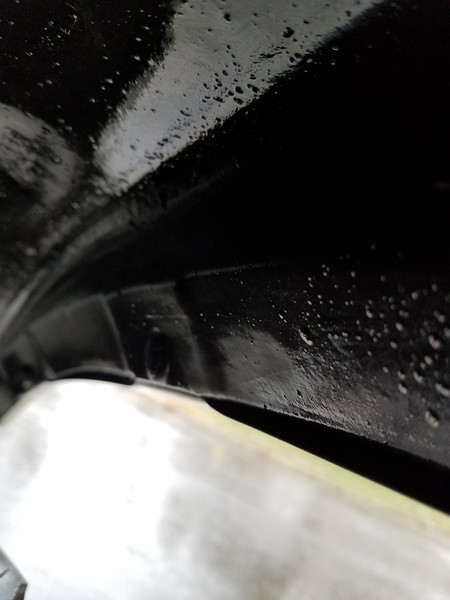
The front fender liner will need to be remolded and flattened with a heat gun against the lower pinch weld. Easy fix.

The front fender liner where it attaches in the 12 o'clock position just inside the fender by a retainer clip needs to be pushed up flat against the inside fender. The retainer holds the liner and attaches it to a metal tab that will rub under full compression unless you push up and flat against the inner fender. Leave the liner attached when pushing up. You can do it with your fingers or block of wood.

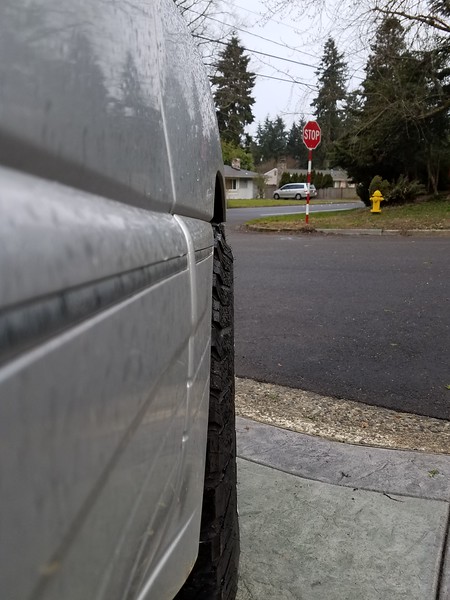
This is how they fit.
Front
20170305_165205-L.jpg


Rear
20170305_165412-L.jpg


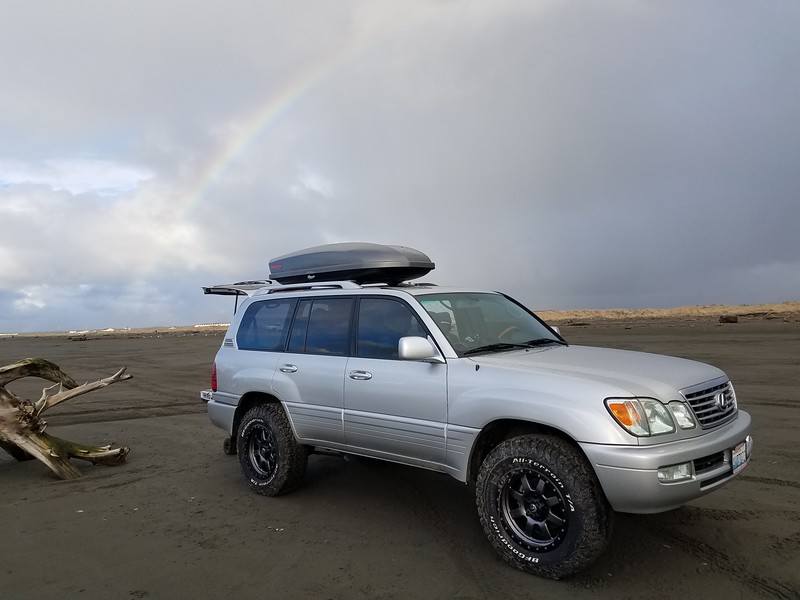
Fuel Trophy 18x9 +20 BFG AT 275/70/18
AHC on H
20170219_162312-L.jpg


Happy Trails!
 
The combination of 1.25" spacers and 275/70 r18 K02s have taught me the practical "poke" limits of the platform.

There's no way a 9" wheel (with the stock 60mm offset) would work with the 1.25" spacer (subtracting 32mm from the offset = 28mm)

The good news is that there are sh*t-loads of stock 8" wide tundra wheels on Craigslist in all sorts of looks and sizes.

My next trial may be an aftermarket wheel in the 18x9 size with a 40-ish mm offset. I think this would allow the 305/65r19 K02 to possibly fit on the truck (might need an AHC lift and some bump stops... we'll see).
 
Question: With a 275/70- R18 Going from an 8" wheel to a 9" wheel wouldn't that flatten out the tire a bit, and reduce some height? It would square it up ever so slightly right?
 
Question: With a 275/70- R18 Going from an 8" wheel to a 9" wheel wouldn't that flatten out the tire a bit, and reduce some height? It would square it up ever so slightly right?

It does square it up. No loss in height. Also not a great combo for wheel protection crawling through rocks. This is a jack of all trades master of none setup. For someone that is really focused on off road I recommend sticking with a stock wheel that affords you plenty of leeway in tire sizes. This setup affords a different look with decent off road capabilities, reasonable unsprung weight, fair mpg, and decent price point for tires. As with all options there is compromise.

It does give you an idea of where you need to be when exploring other offsets and tire sizes.
 
You could try 285 65 18 if you don't like the 275 70. Shorter and wider . It would be very close with a 18x9 +20 I have not had a chance to test fit.
 
Great and informative writeup. Based on my research and experience, I'll add some clarification. I think the various specs come into play more when running oversized tires. Not just one size up from stock (Some Toyotas sold in other markets come with these from the factory) but oversized as in 33"+ for instance. One of the better/safer and common aftermarket wheel offsets seems to be +25 and this is true for the 200 series as well. It seems to center the wheel in the wheel well optimally so larger tire/wheel combos don't bump stuff. Speaking of which, its important to specify what you're rubbing if it does occur. Ultimately wheel width has very little to do with rubbing the fenders. Wheel width with come into play more for rubbing suspension parts like control arms, etc. on the interior side of the wheel. Wheel offset and tire size are the predominant factors in whether you'll end up rubbing your fenders since wheel width does change the tread width at the outer edge of the tires (at least not much) where the tire is most likely to contact the truck. So depending what is getting rubbed should guide you toward what wheel spec is the issue. Tires typically rub fenders if the offset number is low, e.g., +0 or +10, or suspension parts if the offset number and tire size are high, e.g., +60 or 325/70/18. Wheel metal will rub (usually suspension parts) if the offset number is high (+50-60) or wheel width is high, e.g., over 8.5-" wide. some examples are a 285/75/16 is a safe beefy setup as long as the wheel offset is +25-10 or so on stock height suspension. Similarly, many people run 275/70/18 on stock wheels and suspension with no issue. My 2 cents.
 
Great and informative writeup. Based on my research and experience, I'll add some clarification. I think the various specs come into play more when running oversized tires. Not just one size up from stock (Some Toyotas sold in other markets come with these from the factory) but oversized as in 33"+ for instance. One of the better/safer and common aftermarket wheel offsets seems to be +25 and this is true for the 200 series as well. It seems to center the wheel in the wheel well optimally so larger tire/wheel combos don't bump stuff. Speaking of which, its important to specify what you're rubbing if it does occur. Ultimately wheel width has very little to do with rubbing the fenders. Wheel width with come into play more for rubbing suspension parts like control arms, etc. on the interior side of the wheel. Wheel offset and tire size are the predominant factors in whether you'll end up rubbing your fenders since wheel width does change the tread width at the outer edge of the tires (at least not much) where the tire is most likely to contact the truck. So depending what is getting rubbed should guide you toward what wheel spec is the issue. Tires typically rub fenders if the offset number is low, e.g., +0 or +10, or suspension parts if the offset number and tire size are high, e.g., +60 or 325/70/18. Wheel metal will rub (usually suspension parts) if the offset number is high (+50-60) or wheel width is high, e.g., over 8.5-" wide. some examples are a 285/75/16 is a safe beefy setup as long as the wheel offset is +25-10 or so on stock height suspension. Similarly, many people run 275/70/18 on stock wheels and suspension with no issue. My 2 cents.


I don't want to confuse people so I want to clarify some of your post.

1. Wheel size does effect rubbing the fender. Yes, it can cause contact on both inside on suspension parts but it equally effects the outside. Example: if you have a 8 inch wheel at +25 offset and a 9 inch wheel at +25 offset you will be a half inch closer to the control arm and a half inch closer to the fender.

2. +25 as a safe size and centering the tire in the wheel well is not quite accurate. Where I sit at a +20 is only .196 inches closer to the fender. Less than a quarter of an inch is negligible in my opinion.

3. As stated above in my other post you can run a shorter wider set up as you suggest. Your 285 size is about an inch shorter and a +25 wheel moves you in less than a quarter inch and the tire is wider by a little over a quarter inch. This should work and be close.

4. A +10 or +0 will guarantee fender contact with a 33 inch option.

5. Running a 275/70/18 has never been an issue on stock wheels. The offset of the wheel is optimal and is the only offset that centers the wheel in the wheel well. It can run a much wider size and still have no issue as well. This is why aftermarket is not optimal and stock is.

6. A 325/70/18 is a totally different animal. It is tall enough under full compression with the front wheels turned to contact the front fender and bend it. The only way to avoid it is a body lift. That would go for any 35 inch plus option not to mention rubbing inside and outside without offset mods.

7. The 200 series suffers similar issues at +20 with the 9 inch wheel and a 285. It will rub.
 
Jay I'm running stock 18" rims - with 30mm spacers, and 275/70-R18, guessing should be pretty close to your set up Fuel +20 18 x 9.
 
Here a question I've had for years. What effect does offset and or spacers have on alignment, tire and wheel bearings wear?

I ask this because years ago I bought my son a second set of tires & wheel (aftermarket) for his Lexus IS300. The offset was just slightly different than stock wheels. This offset caused the IS300 to eat tires in 2K miles, wearing on inside to the metal. It took sometime before we narrowed this down to offset. Basically swapping aftermarket setup with stock setup a few times, with the help of a very good mechanic using a brand new Hunter alignment machine.

The principle is same as you move offset out or in on any vehicle, but how much or if any effect to the 100 series have I have no idea. Do you?
 
Here are some pictures of the areas that need some simple mods.

The lower pinch weld area on the fender liner will need to be heated and flattened to prevent rubbing. Some may get away with not doing it but I had to.

20170307_131152-L.jpg


This is already flattened.

You will need to also flatten the steel tab under the fender liner. Push it up and towards the inner fender. Leave the liner connected and push on the retainer.

20170307_131252-L.jpg


If you look at your front tire this is located in the 12 o'clock position.
 
Jay I'm running stock 18" rims - with 30mm spacers, and 275/70-R18, guessing should be pretty close to your set up Fuel +20 18 x 9.

Your offset on the 18's are 60mm so you would be around +30 add in rim size and the fuel setup will sit out further by about a half inch.
 
Here a question I've had for years. What effect does offset and or spacers have on alignment, tire and wheel bearings wear?

I ask this because years ago I bought my son a second set of tires & wheel (aftermarket) for his Lexus IS300. The offset was just slightly different than stock wheels. This offset caused the IS300 to eat tires in 2K miles, wearing on inside to the metal. It took sometime before we narrowed this down to offset. Basically swapping aftermarket setup with stock setup a few times, with the help of a very good mechanic using a brand new Hunter alignment machine.

The principle is same as you move offset out or in on any vehicle, but how much or if any effect to the 100 series have I have no idea. Do you?

Pushing things out from the center does have an effect.

Positive: the handling was improved with the wider stance. My turning radius was not affected that I could tell.

As for bearing wear I could not comment that it has no effect. There are others on the board that have logged many more miles than me without issue. I have also seen no visible signs of increased wear on the tires. The fact that the hundy barely has any negative camber and very little toe may be why there is little effect on the tires.

On your sons IS I would imagine it runs more negative camber and a higher offset coupled with softer lower profile tire could all be factors for increased tire wear. You obviously had a pretty extreme issue to rip through a set of tires in 2k miles.
 
Paul,

As for the IFS front end, I am confident that pushing the wheels further out( adding spacers or increased offset) increases lateral forces on the spindles & bearings and decreases service life- by how much is the big unanswered question. Probably depends on several conditions like suspension, tires, vehicle weight, driving behavior, highway driving vs twisty mountain roads etc.

Not sure if spacers and +offset impacts rear axle wheel bearings in the same way as the front.

Honestly I like the way my truck handles and tracks with an extra 30mm of spacing on each wheel. If that impacts bearing life significantly I will reassess.

I replaced front bearings and added spacers at 170,000 miles. The original front bearings were a little loose, but in pretty good shape no signs of major wear and probably would have gone thousands more miles with normal use.

If by using spacers cuts the bearing service life by half, and my front replacement bearings last 90-100k- I will be satisfied.
 
I don't want to confuse people so I want to clarify some of your post.

1. Wheel size does effect rubbing the fender. Yes, it can cause contact on both inside on suspension parts but it equally effects the outside. Example: if you have a 8 inch wheel at +25 offset and a 9 inch wheel at +25 offset you will be a half inch closer to the control arm and a half inch closer to the fender.

2. +25 as a safe size and centering the tire in the wheel well is not quite accurate. Where I sit at a +20 is only .196 inches closer to the fender. Less than a quarter of an inch is negligible in my opinion.

3. As stated above in my other post you can run a shorter wider set up as you suggest. Your 285 size is about an inch shorter and a +25 wheel moves you in less than a quarter inch and the tire is wider by a little over a quarter inch. This should work and be close.

4. A +10 or +0 will guarantee fender contact with a 33 inch option.

5. Running a 275/70/18 has never been an issue on stock wheels. The offset of the wheel is optimal and is the only offset that centers the wheel in the wheel well. It can run a much wider size and still have no issue as well. This is why aftermarket is not optimal and stock is.

6. A 325/70/18 is a totally different animal. It is tall enough under full compression with the front wheels turned to contact the front fender and bend it. The only way to avoid it is a body lift. That would go for any 35 inch plus option not to mention rubbing inside and outside without offset mods.

7. The 200 series suffers similar issues at +20 with the 9 inch wheel and a 285. It will rub.

well, i'll have to disagree on #1 above but i think its because you're not reading what i wrote precisely. if you change the width of the wheel (not the tire) the only thing that changes is the location of where the tire contacts the wheel but the location of the outer diameter of the tire doesn't change at all. Since it is the outer diameter of the tire that will contact the fender first, wheel width doesn't effect fender rubbing. Wheel width can effect rubbing the suspension behind the wheel since it brings the location of the outer diameter of the wheel (not necessarily the tire) closer to contacting suspension parts. This of course assumes that the offset is the same between the two different width wheels. My main point here is that changing the width of the wheel doesn't change whether the outer diameter of the tire contacts the fender or not. Offset and tire size dictate this.

This same concept comes into play for #2. When i said et25 seems to be a safe spec, its because that extra 5mm seems to make a difference when it comes to rubbing fenders and near the pinch welds, often when turning. That 5mm difference seems to be just enough to gain a little extra clearance around the corners of the tires when turned.

For #3, its important to remember that the 285, for instance, doesn't tell the story because the 70, for instance, is a ratio so my example of 285 was on a 75/16 setup, whereas your setup 275-70/18 is different, as you know, i.e., shorter wider vs taller skinnier. Similarly, my 0 offset example was for the 16" setup and SCS F5 wheels as an example. There are several people running 0 offset SCS wheels with 265 or 285-75-16s on 100s with minimal or no rubbing, often depending on whether they've cranked the tbars a bit.

I think your setup works because it all fits, i.e., a 275-70-18 fits fine with a 18" wheel with an offset of 20mm. But that's because there's some more room in the wheel well to where if you ran a slightly higher offset, e.g., 35-25, you could fit a wider tire/wheel setup like a 285-70-18 MT. To run a taller setup, you're probably talking about lifting the truck then.
 
Good info guy's, thanks.

Years ago when I first asked the question on wheel bearing torque. It was those running spacers, oversized tires and or increased offset that found running higher preload (torque) on wheel bearings beneficial. The implication was; added pressure on wheel bearings was overcome by using higher torque on adjusting nut of wheel bearings, without doing so they'd burn up bearings. This gave me a degree of comfort with using higher preloads on wheel bearings, that I've experimented with over the years. I suppose with stock tire & wheel setup being closer to 9.5LB+ on Breakaway Preload is fine. Whereas with oversized or change in offset it would be beneficial to push up to 15lb BP limit.

I've never heard much about tire wear when using various combination of wheel and tires. So lack of complaints speaks for itself I suppose.

The IS300 rear wheel drive with typical IFS, was and extreme case and known for being difficult to align. This case made us aware of the issue some vehicle have when offset is changed.
 
well, i'll have to disagree on #1 above but i think its because you're not reading what i wrote precisely. if you change the width of the wheel (not the tire) the only thing that changes is the location of where the tire contacts the wheel but the location of the outer diameter of the tire doesn't change at all. Since it is the outer diameter of the tire that will contact the fender first, wheel width doesn't effect fender rubbing. Wheel width can effect rubbing the suspension behind the wheel since it brings the location of the outer diameter of the wheel (not necessarily the tire) closer to contacting suspension parts. This of course assumes that the offset is the same between the two different width wheels. My main point here is that changing the width of the wheel doesn't change whether the outer diameter of the tire contacts the fender or not. Offset and tire size dictate this.

This same concept comes into play for #2. When i said et25 seems to be a safe spec, its because that extra 5mm seems to make a difference when it comes to rubbing fenders and near the pinch welds, often when turning. That 5mm difference seems to be just enough to gain a little extra clearance around the corners of the tires when turned.

For #3, its important to remember that the 285, for instance, doesn't tell the story because the 70, for instance, is a ratio so my example of 285 was on a 75/16 setup, whereas your setup 275-70/18 is different, as you know, i.e., shorter wider vs taller skinnier. Similarly, my 0 offset example was for the 16" setup and SCS F5 wheels as an example. There are several people running 0 offset SCS wheels with 265 or 285-75-16s on 100s with minimal or no rubbing, often depending on whether they've cranked the tbars a bit.

I think your setup works because it all fits, i.e., a 275-70-18 fits fine with a 18" wheel with an offset of 20mm. But that's because there's some more room in the wheel well to where if you ran a slightly higher offset, e.g., 35-25, you could fit a wider tire/wheel setup like a 285-70-18 MT. To run a taller setup, you're probably talking about lifting the truck then.

Apparently you did not understand the intention of this thread . It is not intended for hashing out what other people run and what aftermarket combos fit. Quite honestly it sounds like most all of the combos you quote are regurgitated info you have read about here on the forms. If you have run those options or seen them in action in person then fine start a thread .

The combo I run now was utilized in this thread to give a good example of issues that arize with aftermarket wheels with a 33 inch tire. Guys can now begin to figure from a base set of numbers what will and won't work. I have no interest in what you or others think works. My example is plug and play deviate from it as you will. Every tire is different, every aftermarket wheel is different, and just because the specs quote a number does not guarantee that is what it is.

Another reason I wrote this up the way I did is because there are plenty of guys that claim no rubbing and fight it to the grave that it does not rub when others clearly rub. Anything I say will rub or not I have seen first hand. Thank you for your input.
 
Apparently you did not understand the intention of this thread . It is not intended for hashing out what other people run and what aftermarket combos fit. Quite honestly it sounds like most all of the combos you quote are regurgitated info you have read about here on the forms. If you have run those options or seen them in action in person then fine start a thread .

The combo I run now was utilized in this thread to give a good example of issues that arize with aftermarket wheels with a 33 inch tire. Guys can now begin to figure from a base set of numbers what will and won't work. I have no interest in what you or others think works. My example is plug and play deviate from it as you will. Every tire is different, every aftermarket wheel is different, and just because the specs quote a number does not guarantee that is what it is.

Another reason I wrote this up the way I did is because there are plenty of guys that claim no rubbing and fight it to the grave that it does not rub when others clearly rub. Anything I say will rub or not I have seen first hand. Thank you for your input.

There's no need to get defensive and my comments are intended to be constructive. They are also based on my actual experience, as I stated. I also gave examples of other setups that people are running on their 100s so people can have some confidence about what fits well; yours is one of the more common setups, i.e., 275-70-18 is the go to tire for those looking to go taller. The combos I cite don't rub but my point is that 1)rubbing isn't as simple as does the tire bump the fender and 2)wheel offset is a very important spec to keep in mind when selecting wheels and tires. The safe wheel offset range for tires ~33" and under is roughly 55-20mm but if youre at the far end of that on either side and try to run a wider setup, rubbing can become an issue. This is why a lot of folks running wider or larger tires run method wheels since they are available with an offset of 25, which like i said, seems to provide that little extra bit of clearance over a et20 wheel. But you don't seem too interested in continuing this dialogue so I'll leave it at that. Your truck still looks sharp.
 
There's no need to get defensive and my comments are intended to be constructive. They are also based on my actual experience, as I stated. I also gave examples of other setups that people are running on their 100s so people can have some confidence about what fits well; yours is one of the more common setups, i.e., 275-70-18 is the go to tire for those looking to go taller. The combos I cite don't rub but my point is that 1)rubbing isn't as simple as does the tire bump the fender and 2)wheel offset is a very important spec to keep in mind when selecting wheels and tires. The safe wheel offset range for tires ~33" and under is roughly 55-20mm but if youre at the far end of that on either side and try to run a wider setup, rubbing can become an issue. This is why a lot of folks running wider or larger tires run method wheels since they are available with an offset of 25, which like i said, seems to provide that little extra bit of clearance over a et20 wheel. But you don't seem too interested in continuing this dialogue so I'll leave it at that. Your truck still looks sharp.

Not defensive. Everyone has an opinion. My information is a guide. Now we are cluttering it with second hand account. The conclusions you have come to are your own through your experience. I appreciate you want to be helpful.

I think this is a case of me not being clear on the type of information that would be helpful in this thread. I should have asked for first hand accounts. I welcome all to share fitment info on aftermarket setups. Please keep it specifically to what you have / had on your 100 along with some pictures and specs . There is plenty of misinformation out there and it would be nice to build a thread with all we need to point someone in the right direction who has questions.

Sorry for the confusion sickspeed hope this clears it up. I just don't want to vouch for anything I have not personally had on my 100s at full suspension articulation. Last thing I want is someone saying " it rubs" when I said it's safe.
 
Back
Top Bottom