Gas tank building excessive pressure & fuel smell. Dangerous for sure! Why does this happen?

This site may earn a commission from merchant affiliate
links, including eBay, Amazon, Skimlinks, and others.

Here's some non-scientific personal experience information that might be helpful to others experiencing this problem. 2 weeks ago, my LC had this issue and I think I have since solved it.

1999 LC with about 255k miles, brand new OEM radiator, hoses, topped up with OEM coolant, new heater tees, and brand new OEM gas cap; factory original carbon canister in the engine compartment; generally running 185-195 F coolant temps

When I first had this issue, I was driving up to about 10k elevation in the Eastern Sierras from Owens Valley starting with a full tank of 91 octane gas which was 10% ethanol. The OAT in Owens Valley was 100F. By the time I got up to 10k elevation, I had some fuel odor in the passenger compartment, some dirt staining around the gas cap, and fuel odor coming from the EVAP canister in the engine bay. I loosened the gas cap and it immediately began venting lots of pressure and fuel vapors. I closed the gas cap. I did not have any issues starting the truck and no engine shutdown.

After that trip, I made the following changes to the truck. I replaced all the EVAP hoses in the engine compartment and the PCV valve. The rubber was old and cracking. The plastic grommet for the PCV practically fell apart on removal as well. I also used 36" long x 3" wide velcro heat wrap from Amazon and wrapped the hard fuel lines as they passed the catalytic converter on the driver's side.

This past weekend, I drove back up to 10k elevation with OAT in the valley of 100 F again. Same fuel and full tank. This time, no fuel smell inside or outside the truck and no dirt/fuel residue around the gas cap. I did not burp the gas cap to check, but I'm guessing fuel pressure was just fine since there was no venting from the EVAP or gas cap.

List of EVAP related hoses/parts replaced:
Everything in the Wit's End PCV Kit 100 Series 2UZ PCV Kit- 1/1998-4/2005
12204-50020 - Valve, ventilation
90480-18001 - PCV grommet
12235-50010 - Vent Cap
12236-50010 - Vent valve cover
12261-50050 - Vent hose
12262-50080 - Vent hose

Plus the following
17341-50110 - Hose, Air
17030-50070 - Hose, No 1 (Idle-up)
23829-50070 - Hose, Fuel Vapor

Photos of my poorly executed fuel line wrap:

View attachment 2414576View attachment 2414577
Very good info and posting! Nice job!

It would be great data point/experiment, if you remove the heat wrap from fuel lines. Then do another run in same conditions. Also I see OME medium duty. Can you give more detail on or if bumper, frig, skids, etc...

Getting pre & post ECT, IAT, fuel trims, RPM logs would be icing on the cake..
 
Very good info and posting! Nice job!

It would be great data point/experiment, if you remove the heat wrap from fuel lines. Then do another run in same conditions. Also I see OME medium duty. Can you give more detail on or if bumper, frig, skids, etc...

Getting pre & post ECT, IAT, fuel trims, RPM logs would be icing on the cake..

I'll try to do logs next time I'm out there.

As for equipment, it's 99 LC with stock bumpers, stock skid/cover plates, MetalTech sliders, OME medium duty rear springs, OME torsion bars, OME shocks, snorkel, 285/65/r18 Toyo Open Country R/T.
 
I'll try to do logs next time I'm out there.

As for equipment, it's 99 LC with stock bumpers, stock skid/cover plates, MetalTech sliders, OME medium duty rear springs, OME torsion bars, OME shocks, snorkel, 285/65/r18 Toyo Open Country R/T.
Thank you!
 
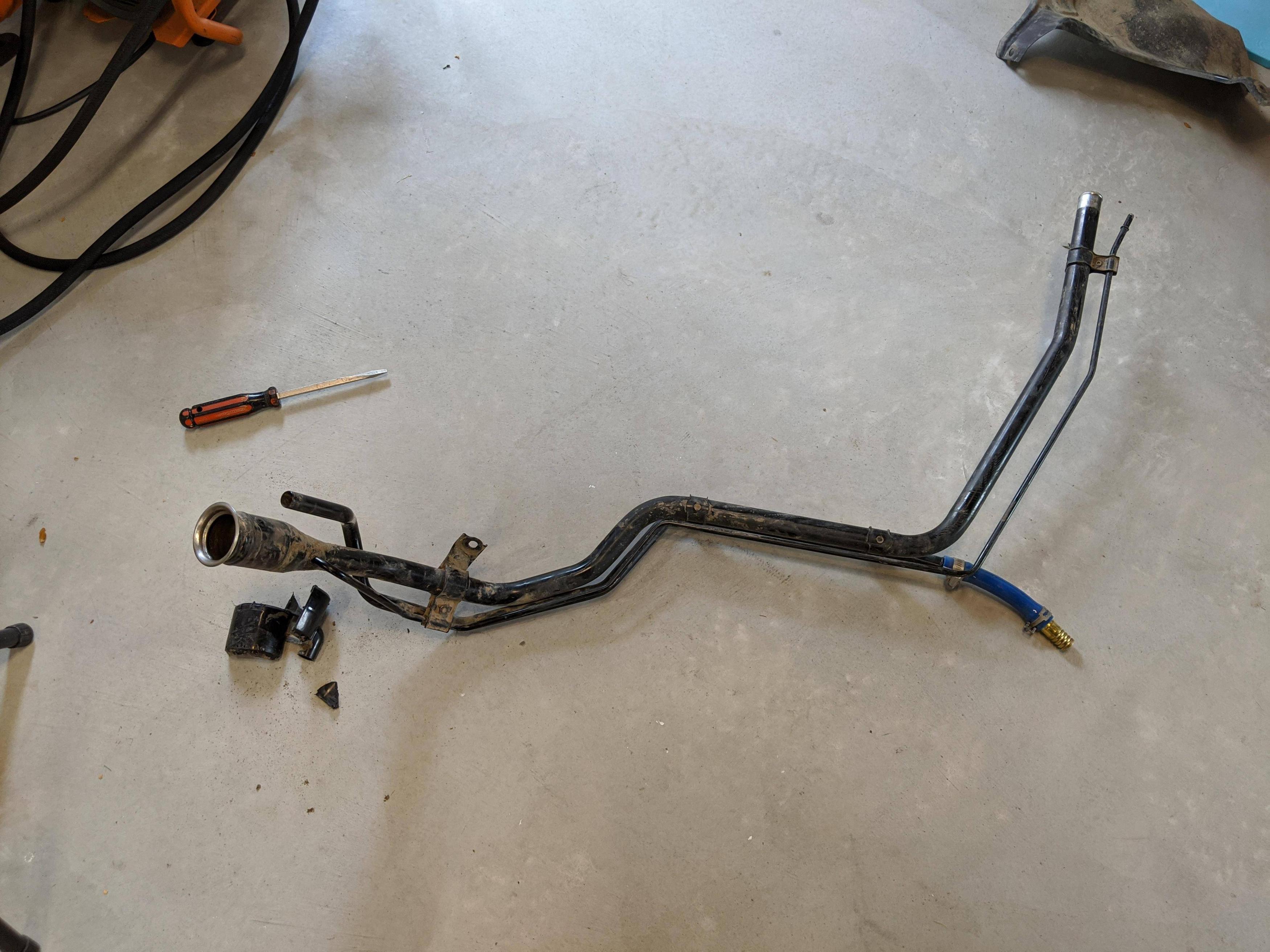
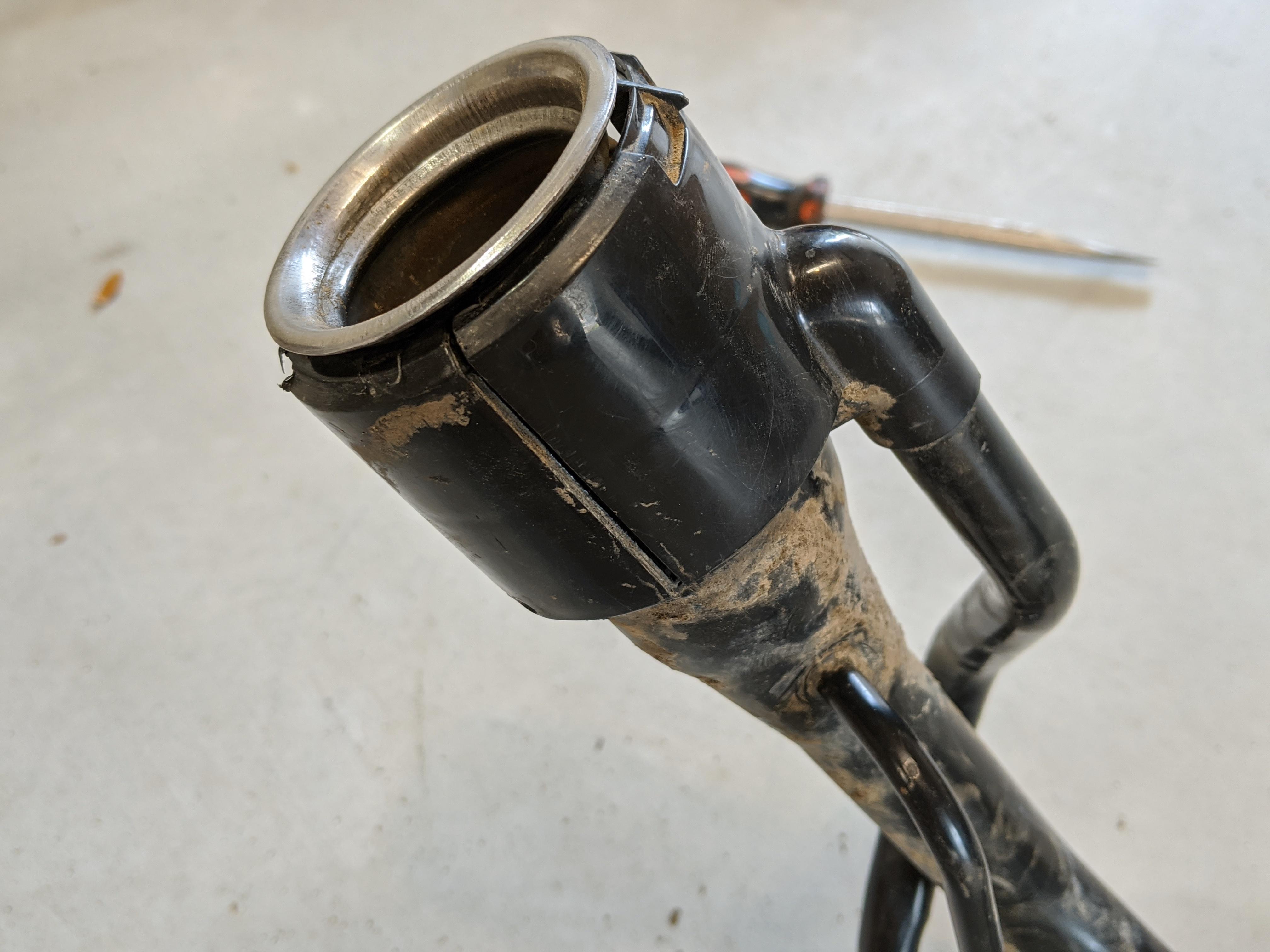
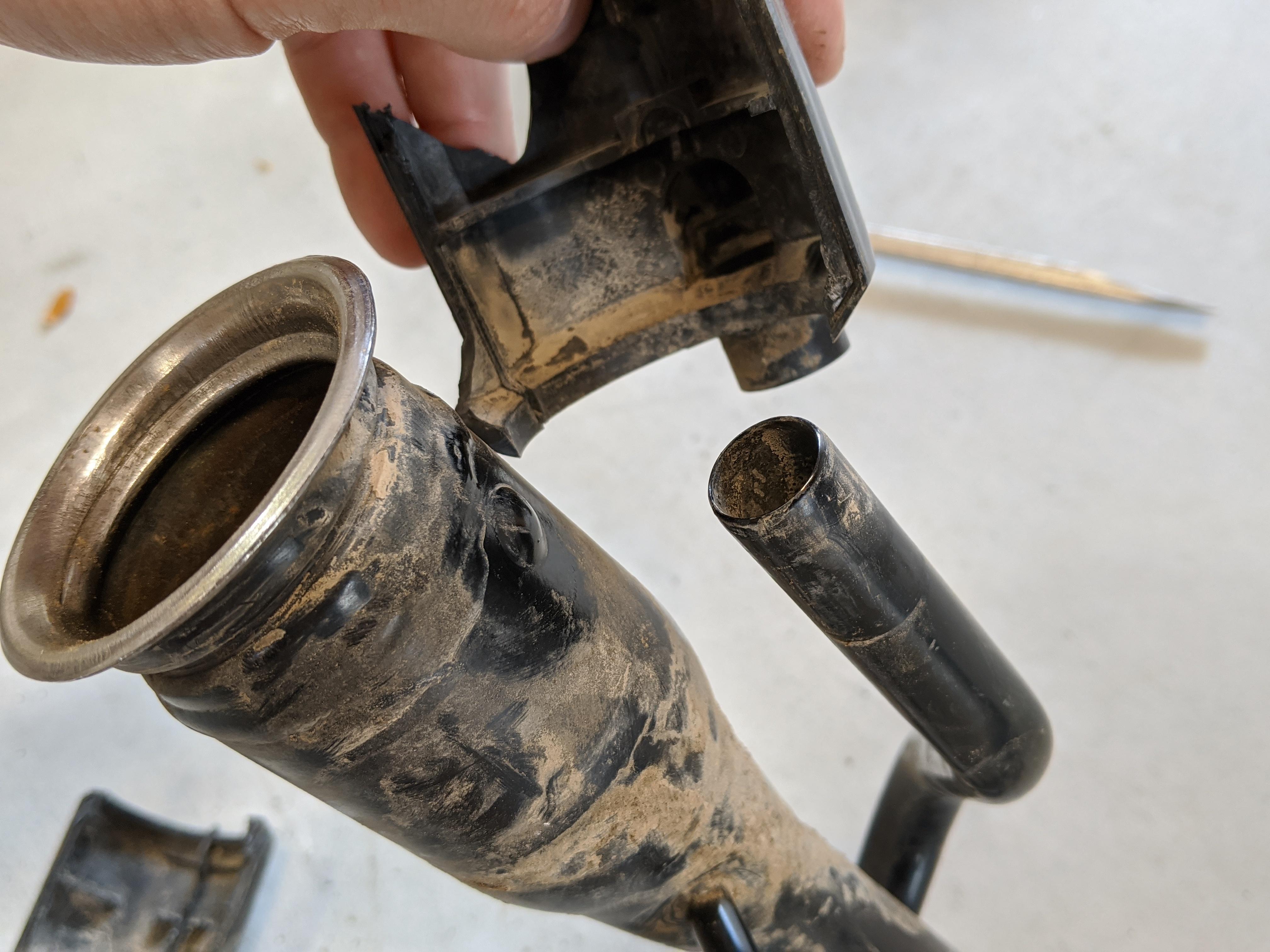
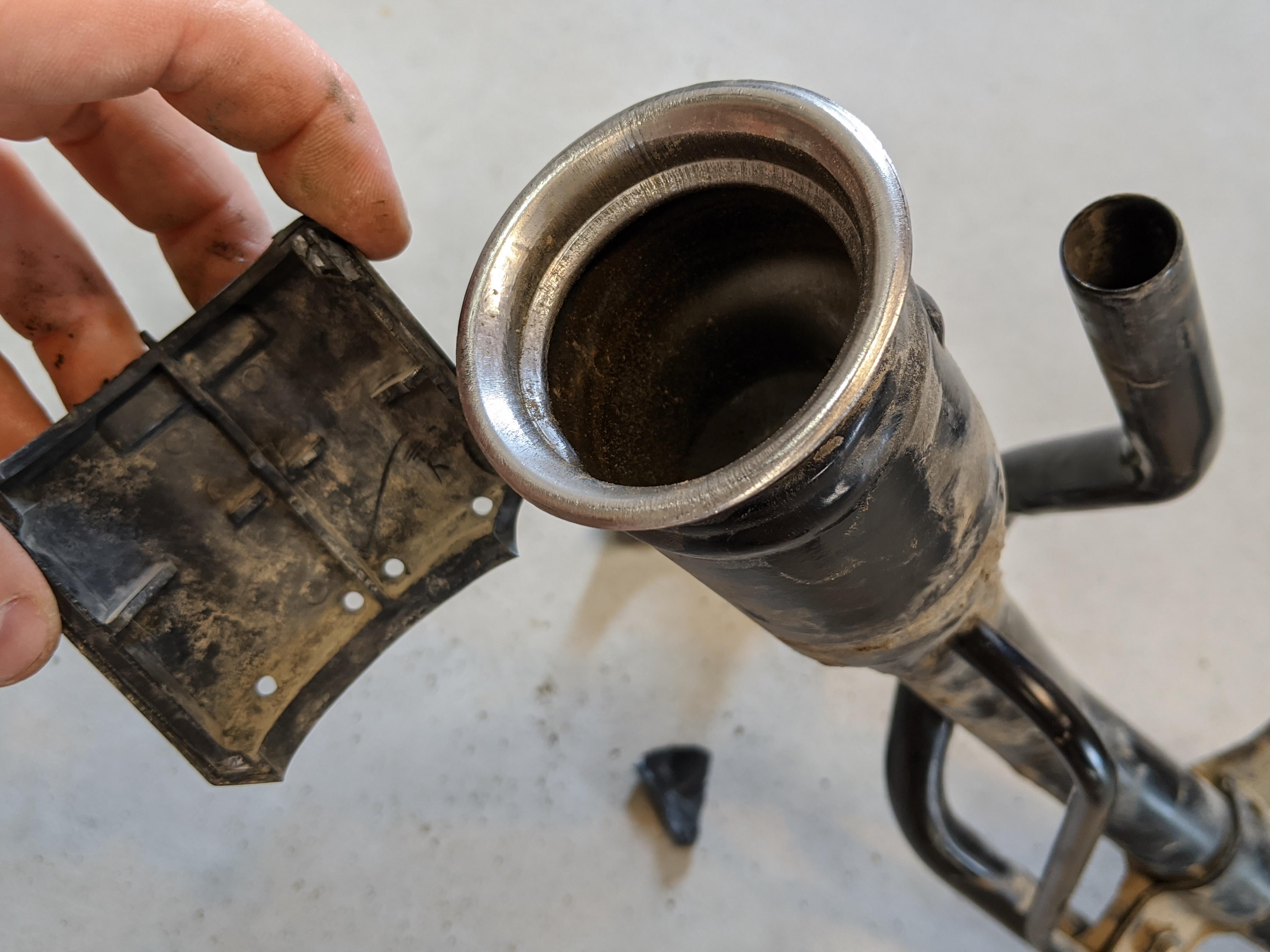
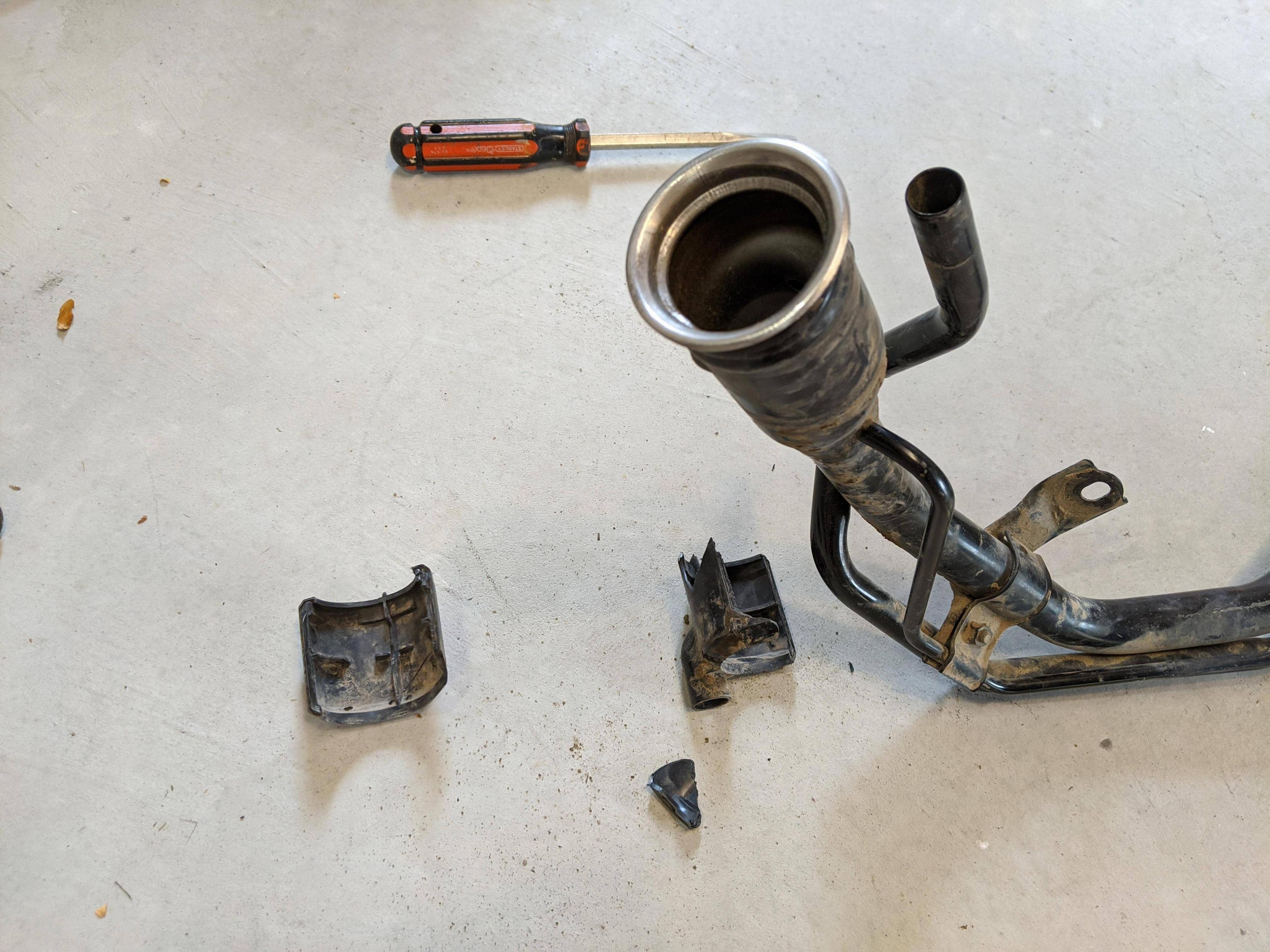
Got to work on my truck again finally and pulled my filler neck. I had it on good authority from @hoser that there was no possible way it could be leaking so imagine my surprise when I took it apart and it was 100% leaking!

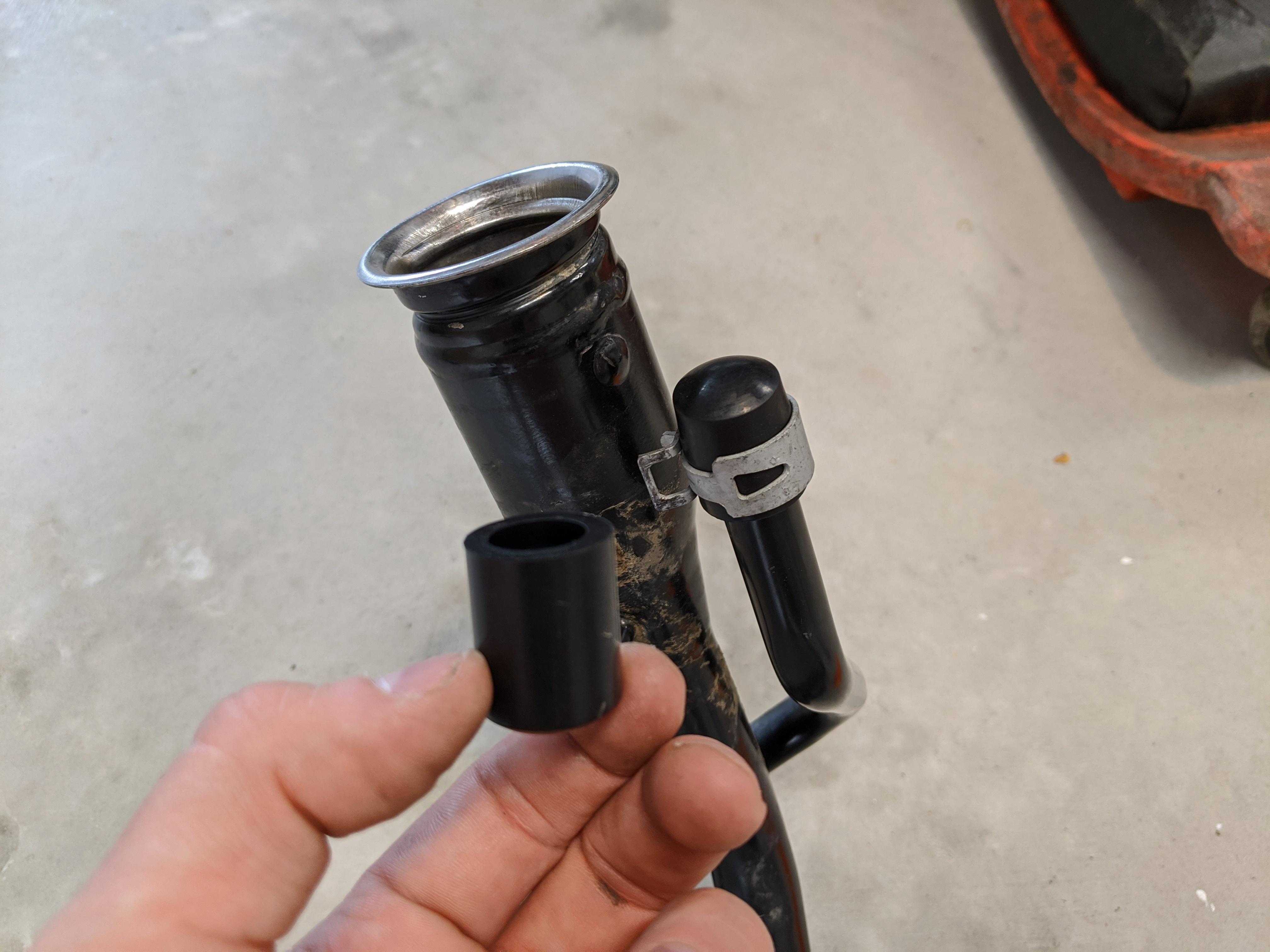
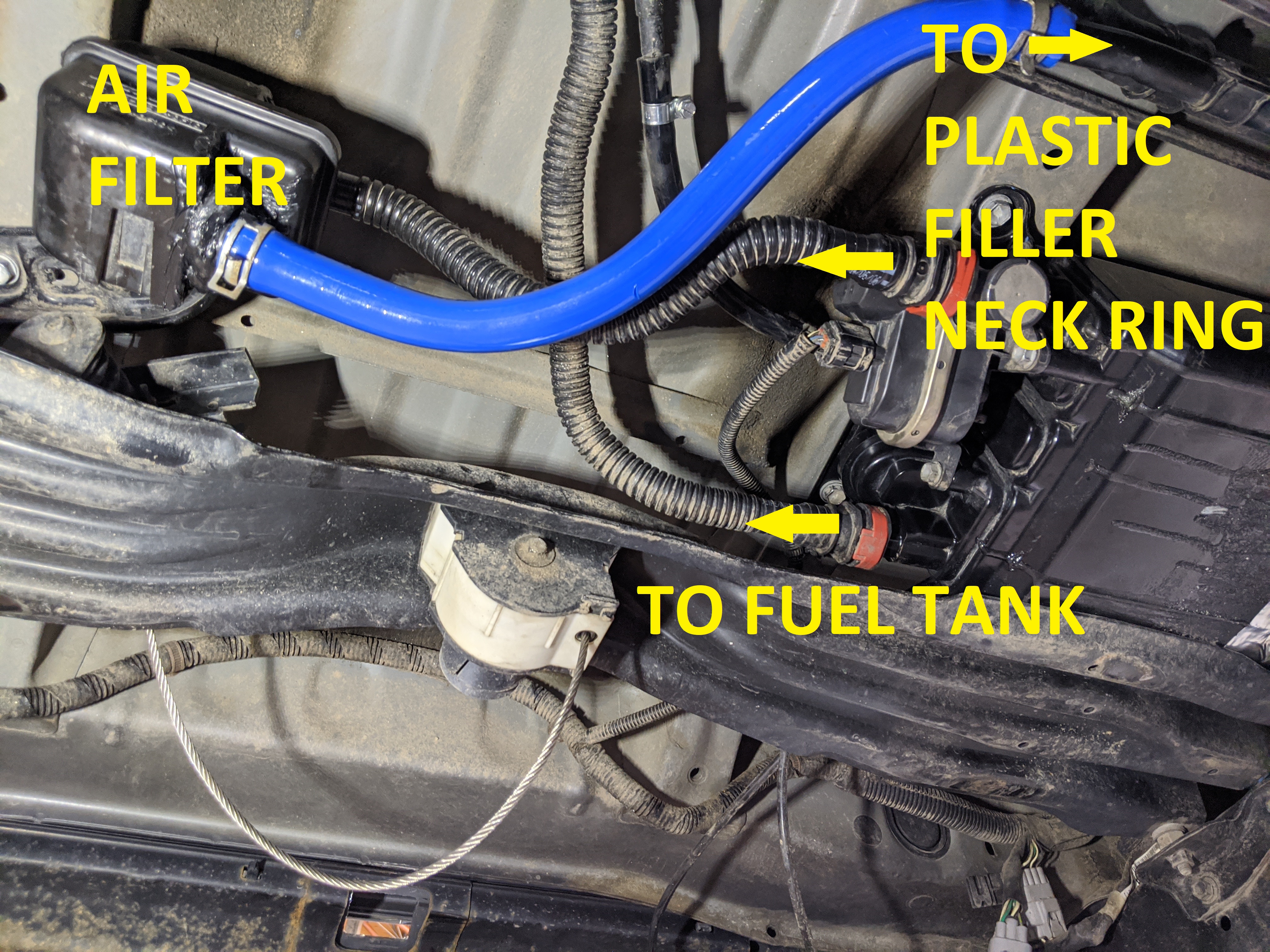
What is going on here? This is one of the vent lines that goes to the EVAP canister as shown below. My only guess is that I still have maybe an internal leak or other issue in my charcoal canister like a damaged check valve as this can't possibly be legal. The EPA has very strict regs about fuel tanks and how they must be sealed from leaking to the atmosphere.

For now I am just going to cap off the leaking vent tube and drive my truck. On a hot day after a long drive you could practically catch the gasoline vapors coming out of here. It's $$$ floating away IMO. I will cap it off and see if I get a CEL or not, measure my MPG, and go from there.

tqpTtLl.jpg


usFsVRc.jpg


MKLMPpq.jpg


74Unxw3.jpg


TiMfZLB.jpg


By8PNIb.jpg
 
Where’s the leak?
It seems like it would have to be coming from the canister, based on those pictures. I don't have the diagram for the later models, but I would guess that line is designed to draw air into the system (hence the air filter) as needed to keep from getting too much negative pressure in the tank, and there's probably a check valve and/or a solenoid valve that's leaking by.
 
It seems like it would have to be coming from the canister, based on those pictures. I don't have the diagram for the later models, but I would guess that line is designed to draw air into the system (hence the air filter) as needed to keep from getting too much negative pressure in the tank, and there's probably a check valve and/or a solenoid valve that's leaking by.
That's my guess too. I tested the valves in the charcoal canister on the bench and they appeared to work.

I capped it off for now just to see what happens. Immediately on the first drive it had normal pressure and a normal hiss when opening the gas cap.

One symptom appeared: now the tank is extremely hard to fill, you must fill very slowly with the gas pump or it will shut off every 3 seconds. I filled up anyhow and will do some more testing but this means that the tube I capped off is at least supposed to vent outward when filling up the tank.

CmGDZ7H.jpg
 
That's my guess too. I tested the valves in the charcoal canister on the bench and they appeared to work.

I capped it off for now just to see what happens. Immediately on the first drive it had normal pressure and a normal hiss when opening the gas cap.

One symptom appeared: now the tank is extremely hard to fill, you must fill very slowly with the gas pump or it will shut off every 3 seconds. I filled up anyhow and will do some more testing but this means that the tube I capped off is at least supposed to vent outward when filling up the tank.

CmGDZ7H.jpg
That's interesting about the issue with pumping gas. I would have guessed it would be venting through that other small line while filling.
 
That's interesting about the issue with pumping gas. I would have guessed it would be venting through that other small line while filling.
It's probably just too small on it's own. I havent driven much but if I don't get a CEL with it like this I am going to drill out the neck where that little bump is near the vent tube and then JB Weld in some 90 degree tubing to seal it into the filler neck tube. Then it will be open to vent during fuel up but capped off and internally venting the fuel tank at other times. Maybe this was the original intention but other reasons lead to a design change? (Little bump nipple near the tube is interesting...) Also, that's how I thought it worked until I took it apart.
 
Recent trip back to the San Juan's and arrived Aug 22.
2000 Land Cruiser
Was running non-ethanol 91 octane. Had full tank on first trail.
Ran a number of trails and checked tank pressure at high passes.
No tank pressure at any of the check points.
Outside temperatures were 70-80
ECT 188-198
Maximum altitude Imogene Pass 13,134

Past couple of years I have run these trails using non-ethanol 91 octane and had no issues with tank pressure.
No modification to EVAP system or shielding. Believe all of system is original, no changes since I bought it in 2008.
Full skid plates Slee steel front, Dissent aluminum middle and rear plates.

Ran these trails in 2017 with similar outside temps using E10 fuel and had high tank pressures and some gas blowing out when venting.

Have a fuel ethanol octane/temp sensor I will be installing so I can judge mods to address tank pressure with E10.
 
Last edited:
the one thing watching the rail temp does is point out the fact that if the tank didn't cool it (as moderate as it is) we'd be even more ****ed.
 
Well damn. I noticed this after doing Medano Pass in my 06 LX last week. ~10k elevation and temp was 75-85F most the trail. I noticed gas smell earlier in the day during a highway stop, but there was no residue at that point. I didn't witness any venting, but found this during a stop later in the day post-trail.

Looks like I need to give the fuel system an overhaul.

1599139436280.webp
 
One issue in modified rigs may be trapped heat.

1) Belly pan seem to be retaining & radiating "road" and "CAT" heat in tunnel created by belly pan. The fuel lines may be heating more than on stock due to this. It appears to have caused heat damage in Dans 07LX, to his wire housing sheathing.

2) The trapped CAT and Road heat feeds directly onto fuel tank.

My thinking, is:
As fuel temp goes up the molecules expand. Thus less fuel in a given cubic inch. This may be creating a lean condition, where cylinder head temp and thus exhaust temps go up.. ECU works to correct by richening mixture. But still, the fuel system can only carry and deliver a given amount of raw fuel. We may be getting a loop effect, as CAT temp rise. Of increasingly heating fuel, cause cylinder head temp to rise, cause higher exhaust temp, cause more fuel expansion from heat. Monitoring CAT temps may be helpful clue..:hmm: Which is possible in the 06-07!
 
One issue in modified rigs may be trapped heat.

1) Belly pan seem to be retaining & radiating "road" and "CAT" heat in tunnel created by belly pan. The fuel lines may be heating more than on stock due to this. It appears to have caused heat damage in Dans 07LX, to his wire housing sheathing.

2) The trapped CAT and Road heat feeds directly onto fuel tank.

My thinking, is:
As fuel temp goes up the molecules expand. Thus less fuel in a given cubic inch. This may be creating a lean condition, where cylinder head temp and thus exhaust temps go up.. ECU works to correct by richening mixture. But still, the fuel system can only carry and deliver a given amount of raw fuel. We may be getting a loop effect, as CAT temp rise. Of increasingly heating fuel, cause cylinder head temp to rise, cause higher exhaust temp, cause more fuel expansion from heat. Monitoring CAT temps may be helpful clue..:hmm: Which is possible in the 06-07!
I can start logging cats on my next trip. I have full dissent skids so I'm trapping as much heat as possible, haha.

Potentially related: I noticed my cooling system couldn't keep up sitting in the Ikea garage a couple weeks back. I was idling for 30 minutes, ambient temp 90F. AC stopped being cool and I pulled up torque and noticed coolant temp was over 200. Intake air temp was around 160F (eek). I guess the ECU turns off the AC compressor around that point. I shut it down and let it cool and all was well only 10 minutes later. Thermostat should be good, coolant is newish, radiator looks perfectly clean, but I haven't pressure washed it. I do think I have an exhaust manifold leak which would contribute to high engine bay temps.
 
I can start logging cats on my next trip. I have full dissent skids so I'm trapping as much heat as possible, haha.

...
True that on trapping heat.

I have full skids, the middle and rear skids are Dissent. Last time I had them off noticed that the corrugated split loom on wires to transmission and t-case had been baked and was flaking off. I punched some more holes in the rear plate, but I really need to put some heat sensors in places to see if I have fixed the problem.
 
True that on trapping heat.

I have full skids, the middle and rear skids are Dissent. Last time I had them off noticed that the corrugated split loom on wires to transmission and t-case had been baked and was flaking off. I punched some more holes in the rear plate, but I really need to put some heat sensors in places to see if I have fixed the problem.

I think you could really swiss cheese those rear plates and still have a ton of protection. I'll probably do the same, but as you say, I'll want to measure that first before blindly drilling.
 
I just replace a radiator in a 03 w~259K. I power washed before removing. I did that to get the other 2 radiators (Trans oil & Condenser) washed. I felt I had gotten very clean, as dirt seemed to stop washing down my driveway. I then pulled into shop and pulled the engine coolant radiator.

I found all 3 radiator still needed more cleaning. I found cottonwood cotton, bird feather, grass, hair, dirt and who knows what flushing out of the fins.

Cleaning radiators is something I need to do more often. I found just a garden hose works well.


Today I drove my 07LX w/164K across town to Slee to pick up parts. The coolant system has not yet been serviced. Has been sitting without starting for 3 months (hard on injectors & FPR).

OAT 74-81F sunny 10:30AM to 1:15PM 18%Humidity no A/C

ECT 187 to 192 F. Touche on 185 and 194 never longer the ~20 seconds even touch 196F for 2 seconds. Average 189F

CAT ~590 F idling to 1,450 F HWY
 
Last edited:
Alright @2001LC , count me in for helping with experiments. I'm giving my LX470 1 year and less than $1,000 to fix this venting garbage or she's being traded for a Jeep or Land Rover. We just got back from a camping trip and she gassed me and my son in the cab (headaches the rest of the night), and vented for a good half hour at camp, including brief twists of the cap to vent it quicker. My dad just laughed and unscrewed the cap on his JK, not so much as the faintest whisper of pressure. All of this after having previously worked on it last year (including a mod dream-crushing $600 charcoal canister swap in Ridgeway Colorado.)

Anyway, I'm going to give the LX one more winter to sort this out, but if it barfs again, it's going on the trading block.

Here is what I've done so far. Vehicle is a 2003 LX470 with 150k miles. Dealer serviced it's whole life, and I've been DIYin' it since I bought it at 120k.

-New solenoid valve on the intake (still need one more to do, are they the same part #?)
-New Charcoal Canister
-New Gas Cap
-Timing belt done (including new radiator, fan clutch, thermostat, radiator cap, etc)
-Vehicle is lifted with diff drop, stock skid plates, but the diff drop puts nearly a 1" gap between the bottom skid and the engine bay (I think that'd help with cooling, not trap more heat?)

Some notes:

-Running the tank 1/2 full does nothing. I actually think it makes it worse (more "boiling/gurgling" rather than just venting).
-Running ethanol-free does nothing. She boils and spits not matter what grade/ethanol content is fed to her.
-Altitude/ is a red-herring. Sure it can make it worse if you make a huge climb after recently filling, but my worse boiling was on the highway (not off road) stuck in traffic in road construction at 7kft at half a tank AND running ethanol free. Whereas I've done a few trips up to 10kft on a full tank of E10 without issue.
-Ambient temps and whether or not I'm idling a lot play more of a role. If it's 50F outside and I'm at 10kft, I'm fine. If it's 97F and I'm idling extensively at 5kft, I'm hosed. Idling seems to be the culprit, which makes me think it's gotta be some sort of heat-entrapment issue, or speed allows natural cooling of the gas tank.

My plan:
-Try to trend whatever numbers @2001LC wants me to trend and share them here. I have an OBDII screen from my Land Rover days so watching coolant temps in realtime is easy, it will even show realtime O2 sensor values, but I'm not good at interpreting them. I can also grab IAT and ambient temps. How do I get information on my fuel-trims and exhaust temps?

-Look into the fuel pump and the other VSV valve. The fuel pump is the only thing that makes sense that could be applying that much heat into the tank consistently. Once those two are swapped, pretty much all my entire evap system has been replaced (that I'm aware of), sans the rubber hoses.

I put the lift on my LX470 last year. I have money for a roof rack or front bumper. I WANT to build this into a fun over-landing rig.....but I can't do that if I'm going to gas out my passengers at best or burn down the mountain at worse. :(.
 
Alright @2001LC , count me in for helping with experiments. I'm giving my LX470 1 year and less than $1,000 to fix this venting garbage or she's being traded for a Jeep or Land Rover. We just got back from a camping trip and she gassed me and my son in the cab (headaches the rest of the night), and vented for a good half hour at camp, including brief twists of the cap to vent it quicker. My dad just laughed and unscrewed the cap on his JK, not so much as the faintest whisper of pressure. All of this after having previously worked on it last year (including a mod dream-crushing $600 charcoal canister swap in Ridgeway Colorado.)

Anyway, I'm going to give the LX one more winter to sort this out, but if it barfs again, it's going on the trading block.

Here is what I've done so far. Vehicle is a 2003 LX470 with 150k miles. Dealer serviced it's whole life, and I've been DIYin' it since I bought it at 120k.

-New solenoid valve on the intake (still need one more to do, are they the same part #?)
-New Charcoal Canister
-New Gas Cap
-Timing belt done (including new radiator, fan clutch, thermostat, radiator cap, etc)
-Vehicle is lifted with diff drop, stock skid plates, but the diff drop puts nearly a 1" gap between the bottom skid and the engine bay (I think that'd help with cooling, not trap more heat?)

Some notes:

-Running the tank 1/2 full does nothing. I actually think it makes it worse (more "boiling/gurgling" rather than just venting).
-Running ethanol-free does nothing. She boils and spits not matter what grade/ethanol content is fed to her.
-Altitude/ is a red-herring. Sure it can make it worse if you make a huge climb after recently filling, but my worse boiling was on the highway (not off road) stuck in traffic in road construction at 7kft at half a tank AND running ethanol free. Whereas I've done a few trips up to 10kft on a full tank of E10 without issue.
-Ambient temps and whether or not I'm idling a lot play more of a role. If it's 50F outside and I'm at 10kft, I'm fine. If it's 97F and I'm idling extensively at 5kft, I'm hosed. Idling seems to be the culprit, which makes me think it's gotta be some sort of heat-entrapment issue, or speed allows natural cooling of the gas tank.

My plan:
-Try to trend whatever numbers @2001LC wants me to trend and share them here. I have an OBDII screen from my Land Rover days so watching coolant temps in realtime is easy, it will even show realtime O2 sensor values, but I'm not good at interpreting them. I can also grab IAT and ambient temps. How do I get information on my fuel-trims and exhaust temps?

-Look into the fuel pump and the other VSV valve. The fuel pump is the only thing that makes sense that could be applying that much heat into the tank consistently. Once those two are swapped, pretty much all my entire evap system has been replaced (that I'm aware of), sans the rubber hoses.

I put the lift on my LX470 last year. I have money for a roof rack or front bumper. I WANT to build this into a fun over-landing rig.....but I can't do that if I'm going to gas out my passengers at best or burn down the mountain at worse. :(.
You asked: "-New solenoid valve on the intake (still need one more to do, are they the same part #?)" I'm not sure what solenoid you're asking about. A dealership or www.partsouq.com with your VIN # will help you make that determination. Your scanner may or may not have ability to log data and generate a report in realtime. Most (hard wired) scanners can just see few data points, but do not log the data. I'm using BlueDriver & iphone or Tech stream & PC. These can log data and generate a reports.

I'm unsure if CAT temps can be read before VVT (2006) which have a A/F sensor. I'll need to check the years in my scans when I get chance in well tuned stock.

Right now what I'm most interested in is getting a baseline for ECT, by year. :hmm:

Other data like OAT, Fuel trims, RPM, MPH, CAT temps, etc. will help in seeing conditions at time. Those may also give clues to other issues. Reason being is, first one that came to me, engine was running way to hot. I managed to get ECT down by ~15F and steady. Once that was done, the fuel boiling condition greatly improved. Now I can start looking elsewhere on that one. It may have taken some damage from boiling fuel and extreme pressure caused be such boiling.

Differences in years, I believe we can break down into 3 groups:
98-02: 184F to 187F ECT in this engine configuration, in all pure stock well tuned rigs.
03-05: ECT ?
06-07: ECT ?

I first want to know, that engine is running at optimal design and engine coolant temps and fuel trims help me see that at a glance. That way I'll not chases my tail looking at EVAP and Fuel system.


Toyota has a few ways to change ECT and the range. One will likely never know the is the software in the ECM code. But others are little more apparent in parts used.
98-02 First generation; has different throttle body, ECT sensors (2) and CC (charcoal canister) in engine bay.
03-05 First major change to throttle body. Only one ECT sensor used. CC move to rear.
06-07 VVT. Change in Fan clutch & Fan blade design. Many other changes also. Some very aprentent others not so much. This engine, we're seeing runs hotter and temp has greater spread. But need more examples of well tuned stock.

We then need to look at built rigs, to compare. So all data from all configuration, is key.

This is going to take until next summer at least. As summer heat is key to most as is altitude.;)
 
Back
Top Bottom