Gas tank building excessive pressure & fuel smell. Dangerous for sure! Why does this happen?

This site may earn a commission from merchant affiliate
links, including eBay, Amazon, Skimlinks, and others.

I can't speak for 100 series, that have been modified with LRA. As this does through a bit of a monkey wrench in the mix. It "may" need more venting, than stock EVAP provides, IDK. A fluid engineer, may be able to answer. My guess is, it does.

For that matter. I can't speak for any 100 series that has had much of any part of fuel, air/fuel mixture, EVAP systems modified or component of any part pollution system.

But here's what I can say, specific to the Unicom. Which came to me, from low altitude (TX & GA) with blown engine at 127K mile, ~8 years ago:
  • Clue where at 127K miles. It's engine ran very hot, likely for about 20K miles over ~18 mo. period, prior to blowing its engine from overheating. Due to clogged radiator fins and low coolant level.
  • Than at 127K, engine severely over-heated. Worst I've every seen before and since.
  • The gas fill area door was bent. Likely, from blow-out of gas cap. At the time I did recognize as such.
  • The gas fill area around gas cap and door. looked very mucky. At the time I did recognize as fuel boiling and a Charcoal Canister (CC) issue.
At the time I restored the Unicorn. I hadn't learned the signs of fuel boiling. Which number one walk around inspection, is mucky gas cap area. This is a sure sign charcoal canister is saturated. That CC was unable to remove vapor fast enough, result in excessive vapor and pressure within fuel tank. In the 03-07. You can bet, CC is toast, when this mucky sign/clue seen at fuel fill area. They only get worst from there. I did not replace the CC, as all seem good after I replaced engine. Had I known, what I do today. I would have R&R CC and its pre filter.


________________________More general to all 100 series.

Why do the charcoal canister become saturated.
  1. Miles/time. They are a service item. They can last perhaps ~1 million miles or more, in ideal conditions.
  2. CC life is greatly reduce. If any raw fuel enters the CC.
  3. Quality of fuel, plays a roll. Some fuel produce dirty vapor. Some produce more vapor. Some boil at lower temp.
  4. Fuel itself, building up excessive heat. Increase vapor which load on CC.
Raw fuel being dump into CC is number one killer of CC. How does this happen:
  1. Over filling gas tank in the 03-07 is number one caused. How, 1) squeezing gas pump handle after auto shut off (topping).
  2. Heat expansion. By filling tank on a hot day sunny day. Then parking over a hot ground. Without driving to burn off same gas.
  3. Filling tank, then ascending steep hill/pass. More so ascending rocky road which on a hot day. Not only slashing into CC, but fluid friction increasing from slashing creates heat (volume, heat expansion).
  4. Engine running hot, heating return fuel. Compounded on a hot day where fuel lines and tank are also contributing to fuels heat.

Why do off-road vehicle see fuel boiling issues, more often. Take in considerate above. Also engine and AT running hotter. High RPM, pulling more load at lower speeds. Radiators, engine, AT and exhaust. All then have less air flow around them, to carry heat away. In many build rigs, they've under armor, retaining and holding in heat in a tunnel. A tunnel fuel lines are in and ends at fuel tank, dumping heat onto tank. Even those iron bumpers, hold more heat and block air flow.

High altitude, reduce temperature at which fuel boils.

So it not usually just one thing. We start correcting issues up-stream at front of vehicle work our way back, and stop doing things damaging. Then we replace the CC. CC is the most common cause, and is common to all 03-07, that have boiled fuel. A one and done!

I drowned the CC in the first round of LRA testing so it likely needs to be replaced now. But I’m not too keen on dropping $700+ on one. I’m certain the exhaust is heating up the tank and triggering at least one of the codes, the fix is cheap and easy.
 
Toyota Engg in their "send it" (no one will ever know) wisdom, placed the CC LOWER and IN BACK OF the fuel tank too from 03+. On a hill, the CC is bloody below the fuel level and lines. Add in folks who run ethanol + high-test fuel at altitude and this is just a recipe for gasoline disaster.

I've never overfilled my 06's tank, nor did the PO who was my father and also knew better. I run low-test, E0 (exhibits worse if not) when going to altitude or high passes, and I still regularly get the boil, stall, and no restart issue. We can't just fanboi our way out of this. Even if everyone of us overfilled our tanks, this is still a Toyota issue. The clearly non-tested CC placement, EVAP sensitivity, and heat generation is non-comprehensive testing by Toyota. Emissions suck for sure, I'll guess that the emissions compliance were the 11th hour, but other manufacturers don't have this problem. What a brilliant vehicle; the 2UZ is even quite good considering it is a V and a gasser, but this was a miss on the Toyota Engg group.
Moving CC to rear, was a bad idea! IMHO. Worth a note: OM, does say. Some build-up of gas cap pressure, normal.

EVAP burns off fuel vapor, working in conjunction with CC. The entire system must be kept at peak performance.

Pakhaat, You may have more than one issue, that needs addressing.

For one:
The 06-07 has a very specific, stall condition. Which is due to bad fuel pump (FP). Where FP, fails to produce adequate fuel flow/pressure, when its hot in low speed (during engine lower RPM's)

EVAP:
Regardless of why you first boiled fuel. It's very likely, once you did. CC was flooded, it was certainly over loaded. They only get worst.
One easy test, before buying a new one. Weight it. I find new CC: 06-07 ~87.5oz. 03-05 ~80.5oz.

One clue, I sometimes get. Is smell of rancid gas walking around LH rear 1/4 area. That indicates a CC been clogged a very long time.

I'd also run logs while driving, To get real world data, on: CAT temps. ATF temps, ECT and fuel trims. Along with RPM & MPH and MAF temp. Those, give insight, when view logs. As to driving condition.

Any build rig with under-armor. Should consider increasing air flow with holes and air diverters, also reflective shielding. Also, as talked about extensively throughout this thread. Built rigs, which vary in build. Are heavier with more heat retain components and less air flow. They run hotter.

I'll note a different subject:
I recently created an alert on. Automatic transmission (AT) PM. AT case wire housing block, wicking ATF from AT. The wire coming out case from Valve body connecting solenoids. Is next to exhaust pipe. Heat from exhaust, may be a factor in capillary action. That's draws fluid from AT. So build rigs should be even more than stock, on lookout.
 
So...I can't get through 50+ pages of this thread and keep everything straight so I'm just going to ask:

I get fuel smell on first start up (not in the cabin but discernible from open DS window) and I DO build
pressure in the tank that is evident when removing the gas cap, although nothing crazy like the boil off
hair dryer effect I once experienced on the trail in my 80 Series. And finally, It seems to run better
with more than half a tank compared to when it's below a quarter full.

The tailpipe has black soot indicating rich running but it never smokes visibly.

I'm assuming that's because there's less room for pressure to build in the tank but that could be
anecdotal...

Does this sound like failing EVAP? It has 300,340 miles and I have not evidence that it isn't the original.

I'm wondering about buying a used one on a lower mile truck "part out"...or replacing the charcoal.
 
I drowned the CC in the first round of LRA testing so it likely needs to be replaced now. But I’m not too keen on dropping $700+ on one. I’m certain the exhaust is heating up the tank and triggering at least one of the codes, the fix is cheap and easy.
Check my posts in this thread.
 
I was under my truck doing some more mods. And since I have a fuel temperature sensor, I can tell what works and what doesn't. If you want to argue with me then just put me on ignore, please. If you want to prove me wrong, get your own fuel temperature sensor. Here's two good ones: Amazon.com: Innovate Motorsports 3904 MTX-D Dual Gauge Kit -Ethanol/Fuel Temp, 1 Pack: Automotive and Amazon.com: Zeitronix ECA-2 Ethanol E% Content Analyzer Kit with Blue Display Gauge: Automotive If you have constructive criticism, please post it.

Reminder, this thread is about boiling fuel. Your #1 point of reference should be the fuel's temperature. Everything else is secondary. No, I do not expect everyone to have fuel temperature because it's not available stock or without some elbow grease but I've got one.

The following are my mods to combat fuel temperature in order of their effectiveness. I have also done lots of work on my evap system which I've detailed in this thread: 100 Series Charcoal Canister Replacement Truck is well maintained and has many new parts over the last 1-2 years, too many to list but if you are thinking "but did you replace your _____" the answer is probably YES!


#1: Extensive heat shielding. Earlier in this thread there was talk about extra shielding on the catalytic converters, but I found recently over the past few weeks that there are far more important areas to add heat shielding. I've been doing this by driving a lot and then scooting under the truck on my creeper and feeling around with my hands and figuring out where things are hot and where they aren't and then doing it again.

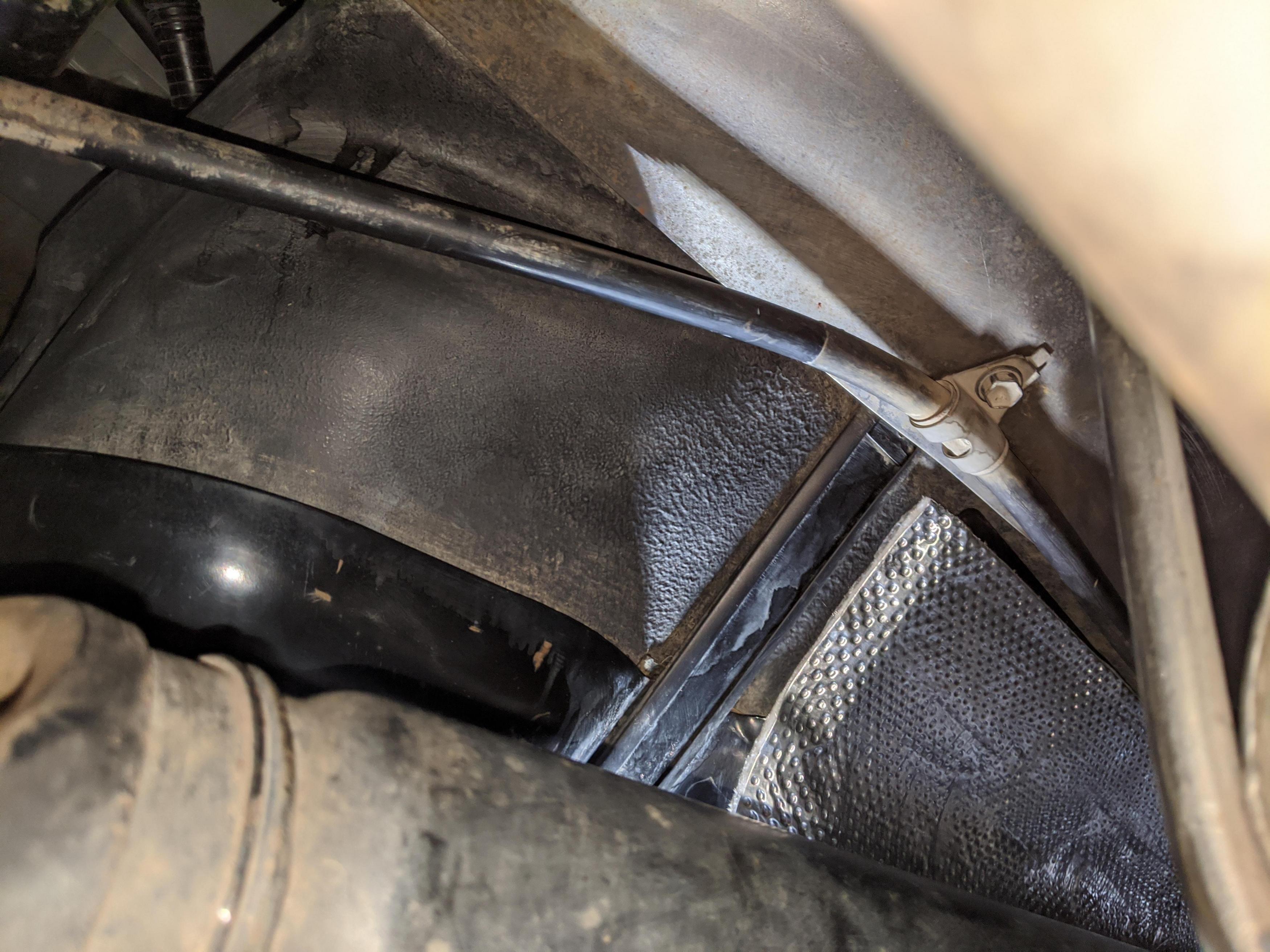
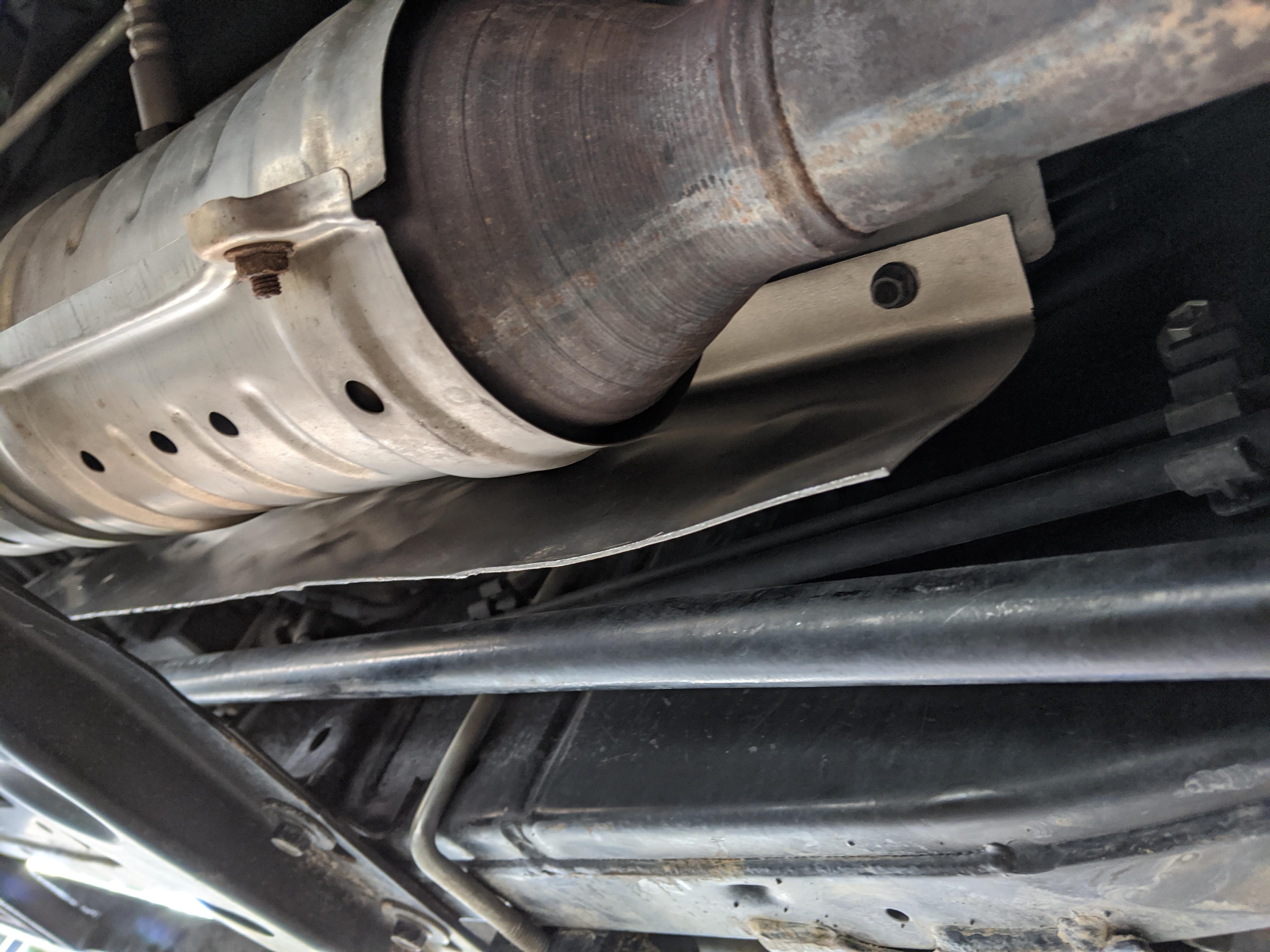
There is an area here on the fuel tank where the stock metal guard doesn't cover and there is no heatshield between it and the exhaust pipe.

Bare fuel tank exposed within 12" of exhaust pipe (darker tank shield seen below exposed tank side with rough texture):
HQUOBO6.jpg


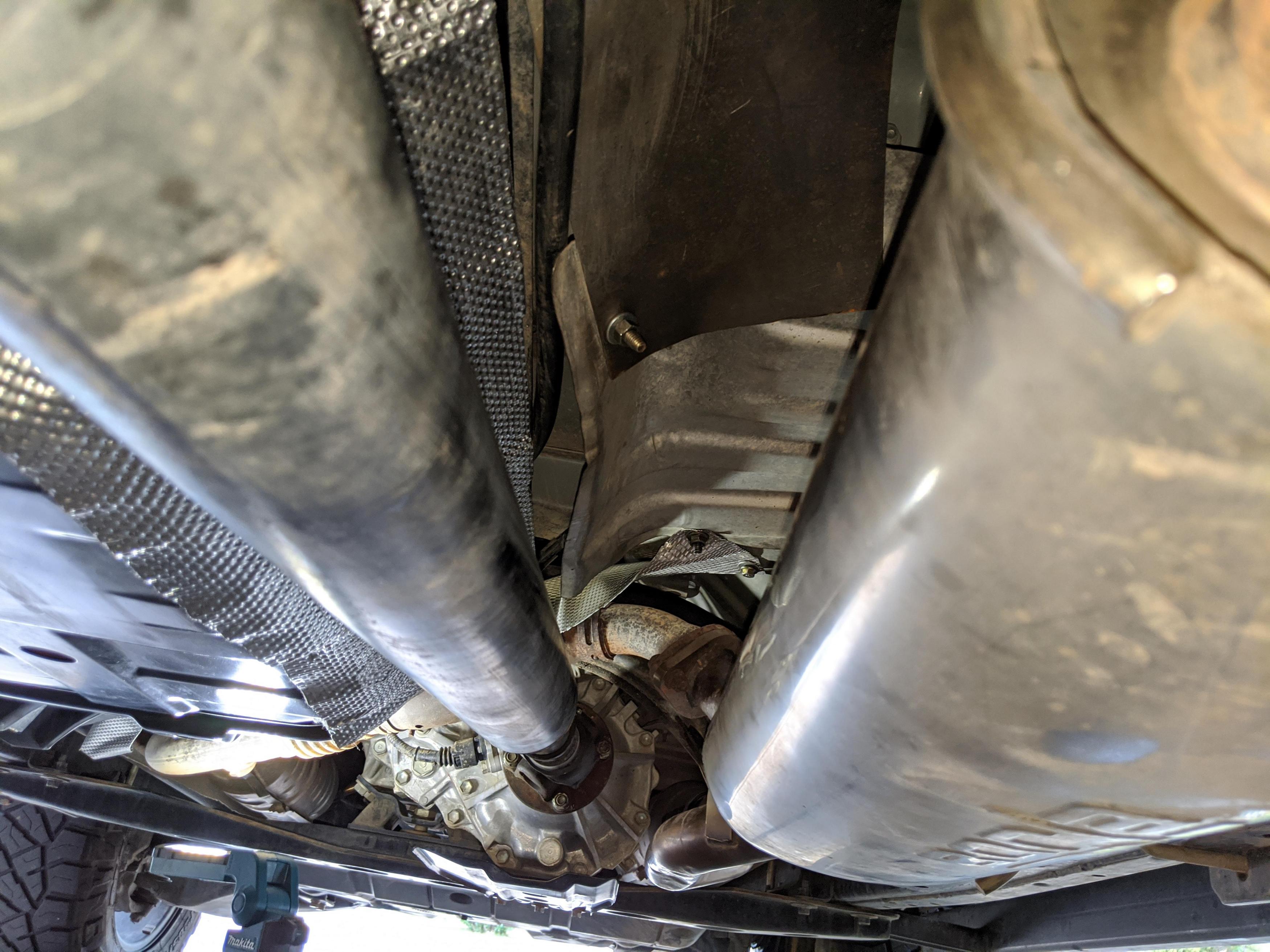
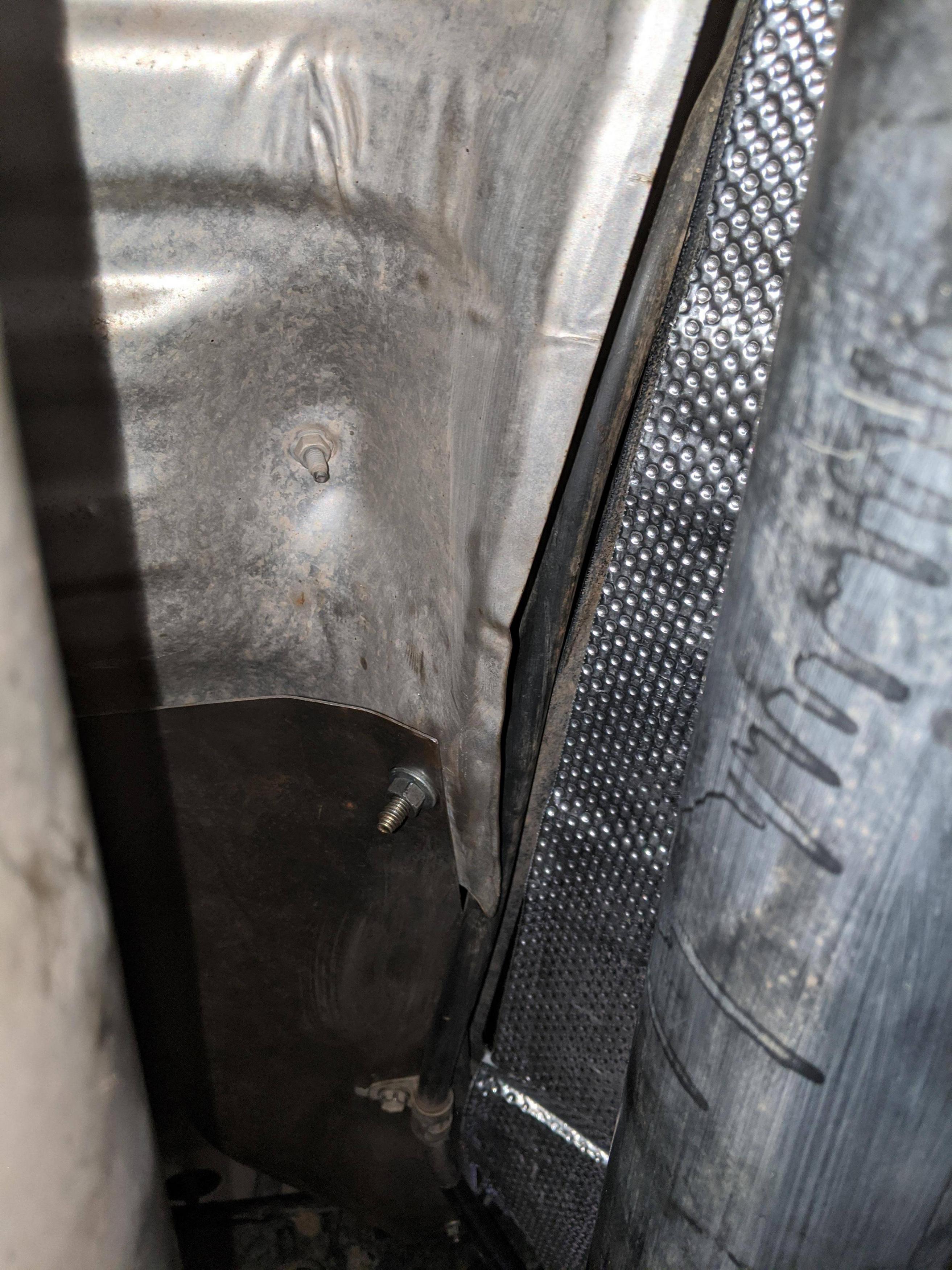
Here and on the tank shield itself I used adhesive backed heatshield material: Amazon.com: Second Skin Thermal Block - Automotive Heat Shield - Reflective Aluminum, Insulation & Adhesive (8 sq ft, 4 Sheets) - Made in USA: Automotive - https://www.amazon.com/Second-Skin-Thermal-Block-Automotive/dp/B084BS715K?dchild=1&keywords=heat%2Bshield%2Badhesive&qid=1625150357&sr=8-3-spons&spLa=ZW5jcnlwdGVkUXVhbGlmaWVyPUFOSlhCTUM0TFgzMFUmZW5jcnlwdGVkSWQ9QTA4MjQ4NzIyT0lDSzYwOVRJSlVIJmVuY3J5cHRlZEFkSWQ9QTA0NDc2MjczRTJCQTlWRUxMMUYyJndpZGdldE5hbWU9c3BfYXRmJmFjdGlvbj1jbGlja1JlZGlyZWN0JmRvTm90TG9nQ2xpY2s9dHJ1ZQ&th=1&linkCode=sl1&tag=imddd-20&linkId=9544ff7a8047c7e764ef98b1e1d93c9d&language=en_US&ref_=as_li_ss_tl This stuff blocks the radiant heat with the silver metal barrier but also insulates with a cloth layer underneath and sticks with adhesive which makes it easy to put anywhere. I use this small roller to help get a good bond: Amazon.com: LUMITECO Automotive Car Audio Sound Deadening Application Wheel Roller, Heat Abatement Mat Wallpaper Application PU Smoothing Tool Seam Roller: Automotive

I did the whole side of the fuel tank. I also extended the factory heatshield in a few more places:

iT5xzwc.jpg


G2vlILI.jpg


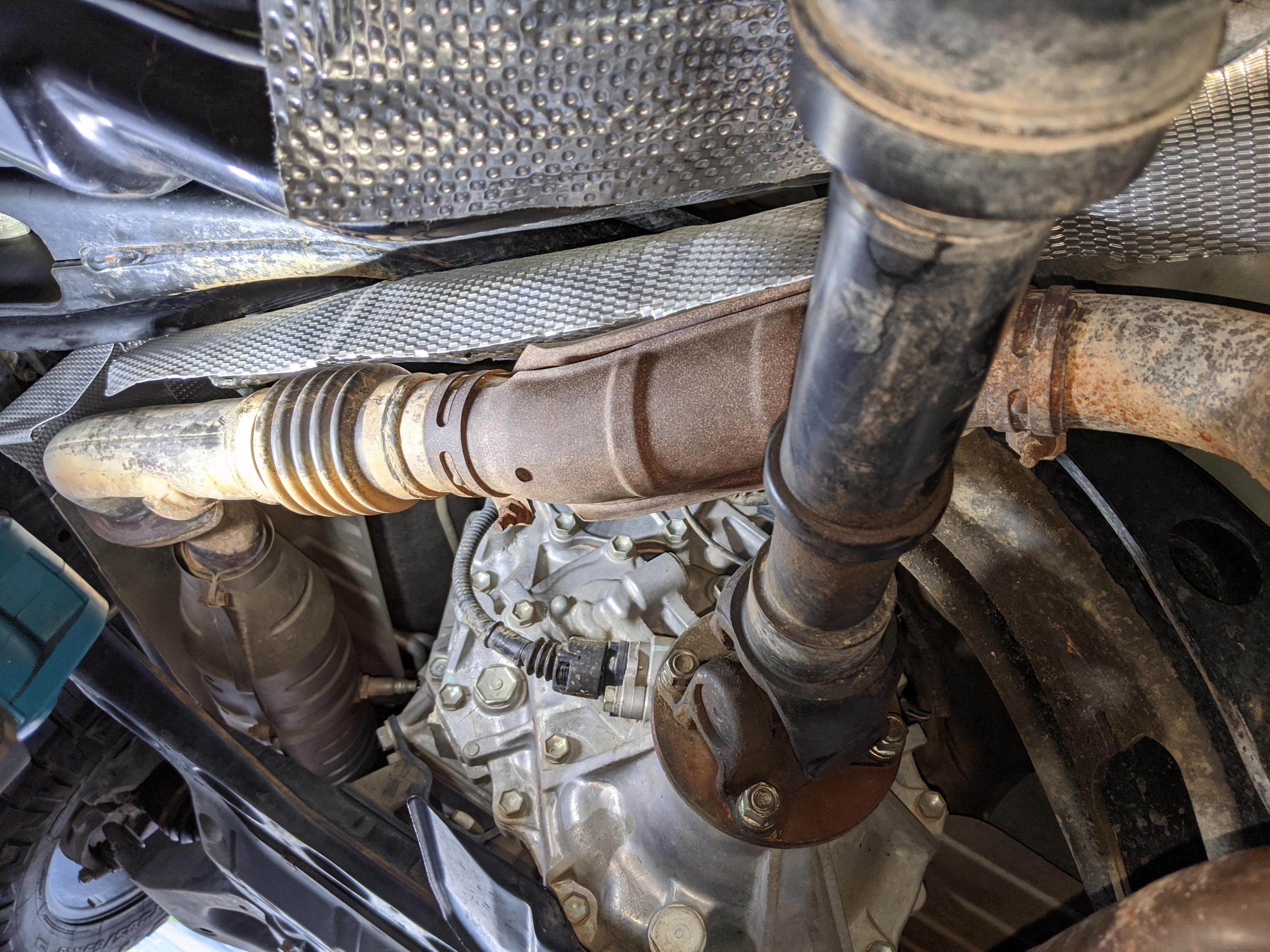
Lastly, I used some embossed heatshield material to shield the front crossover y-pipe from the front of the fuel tank: Amazon.com: Design Engineering 050503-16 Floor and Tunnel Shield: Automotive This stuff is really lightweight and easy to bend and and cut and work with but also extremely effective at blocking radiant heat.

A0TkgQu.jpg


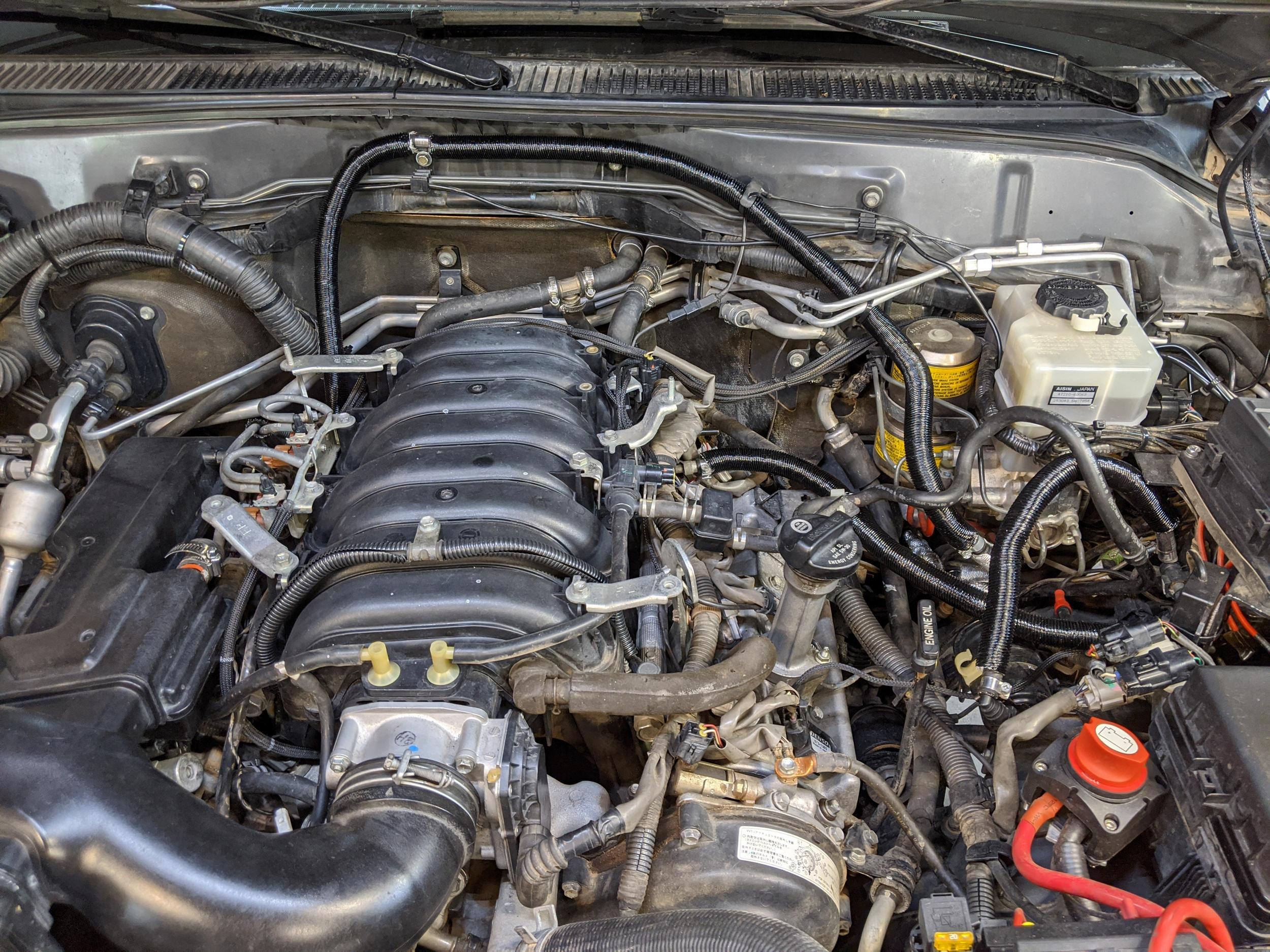
#2: Moving return fuel line off the engine to the firewall. This just eliminated the steel return fuel line that is bolted directly to the engine cylinder heads on the rear of the engine reducing the amount of heat returned to the tank from the fuel rails. I also covered the fuel line as well as the rest of the lines with heatshield: Amazon.com: Design Engineering 010448 Cool-Tube Extreme Heat Reflective Sleeve, 0.75" x 9' - Black: Automotive - https://www.amazon.com/gp/product/B0039Z3R76/ref=as_li_ss_tl?ie=UTF8&psc=1&linkCode=sl1&tag=imddd-20&linkId=6a63ffcea02ab838474c6eb0ace27470&language=en_US

vy5qrJq.jpg


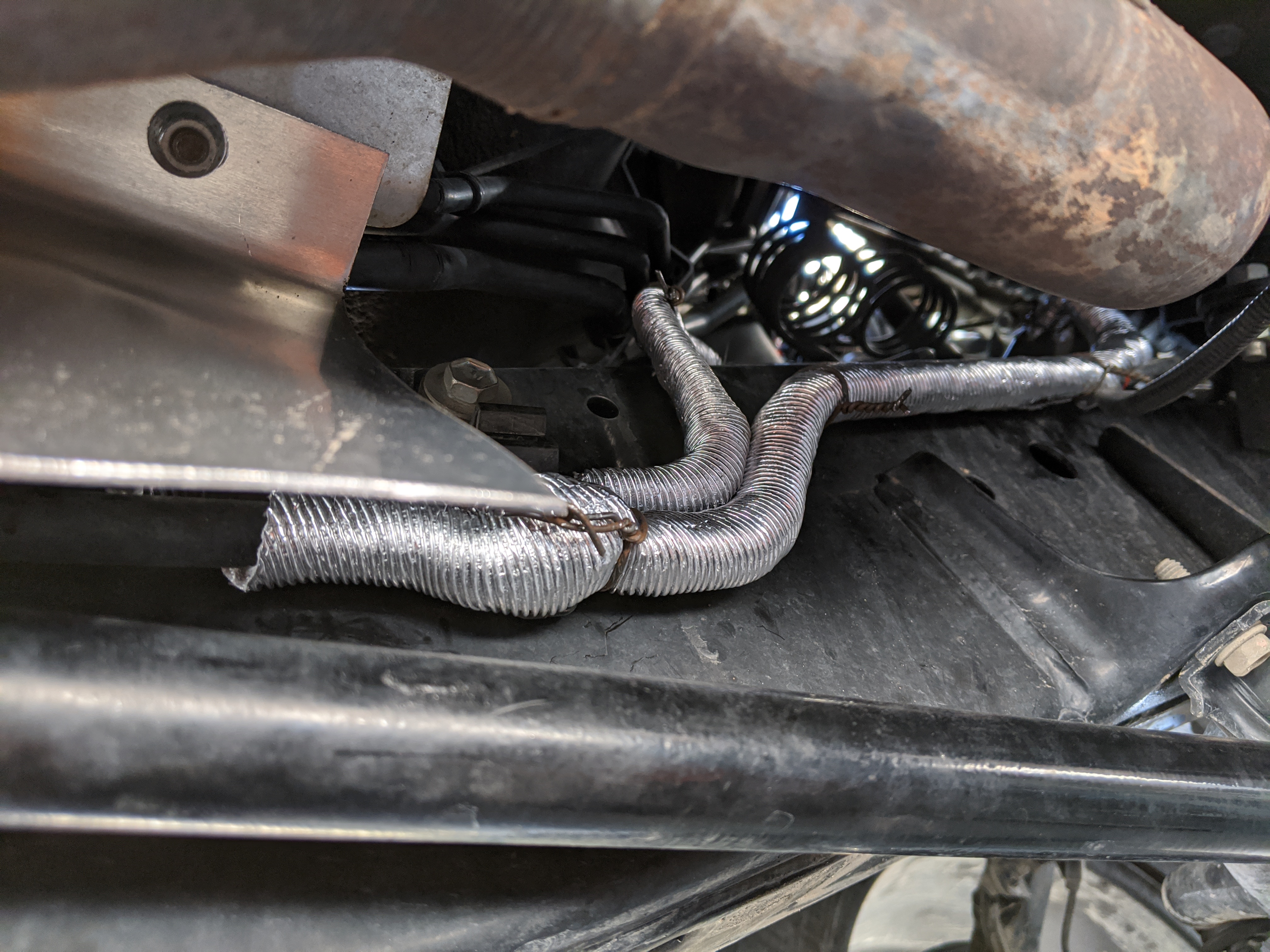
#3: Catalytic converter and fuel line shielding: These were the first mods I did to try and combat fuel temperature, but I would only rate them #3 on my list. Every other mod was more effective at lowering the fuel temperature. I have no doubt this mod is effective in some way, but not as much as the others. If doing heatshielding under the vehicle, then this should be done no matter what anyway IMO. It's also the easiest of all the mods. I used this heatshield for the fuel lines: Amazon.com: DEI 010441 Cool-Tube Extreme Heat Reflective Sleeve, 0.5" x 9' - Silver: Automotive - https://www.amazon.com/gp/product/B000CEO5T6/ref=as_li_ss_tl?ie=UTF8&psc=1&linkCode=sl1&tag=imddd-20&linkId=73d500d53bcced0c63a4e631de12290b&language=en_US

ocMorbo.jpg


mhcxnSs.jpg


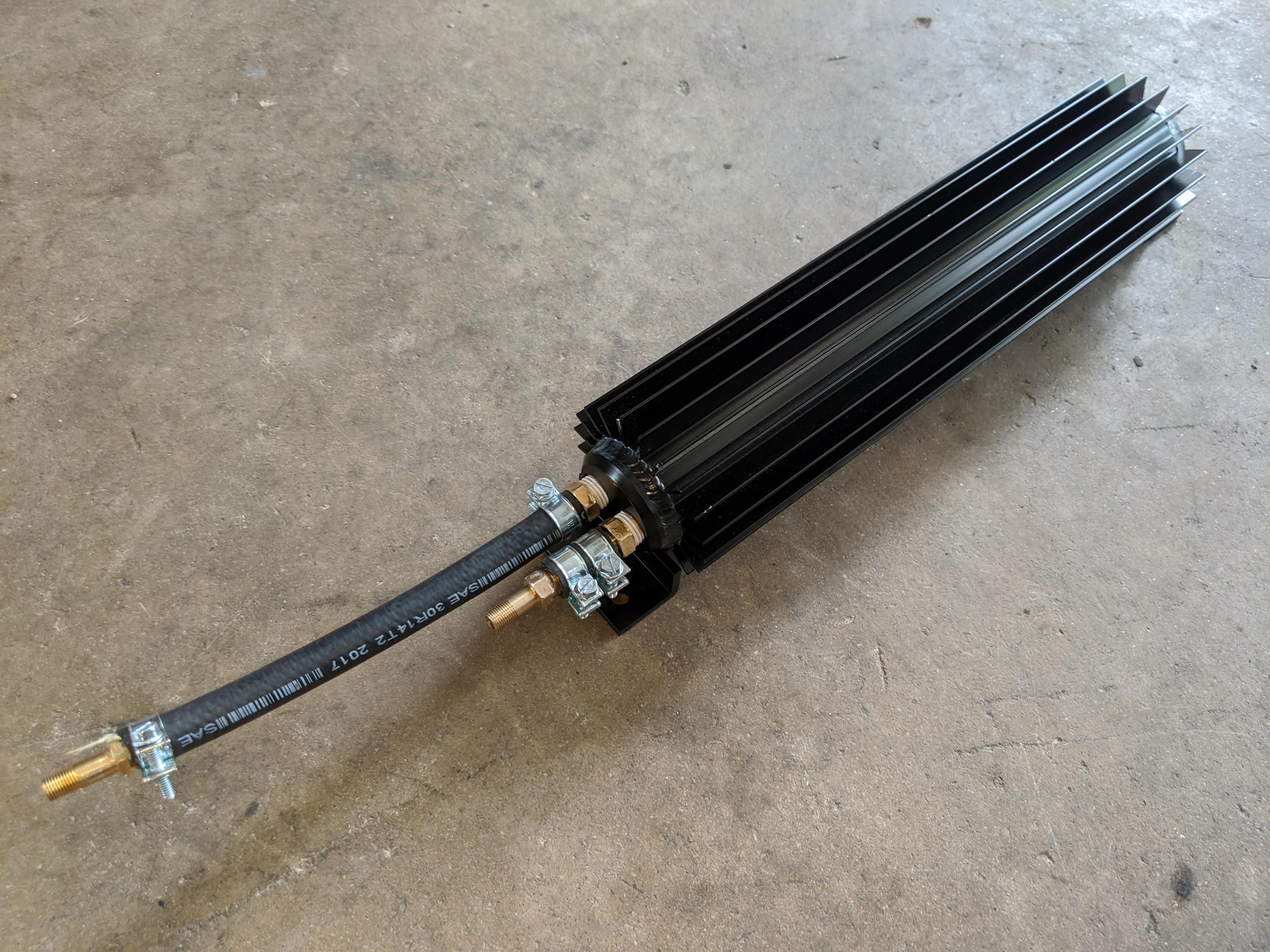
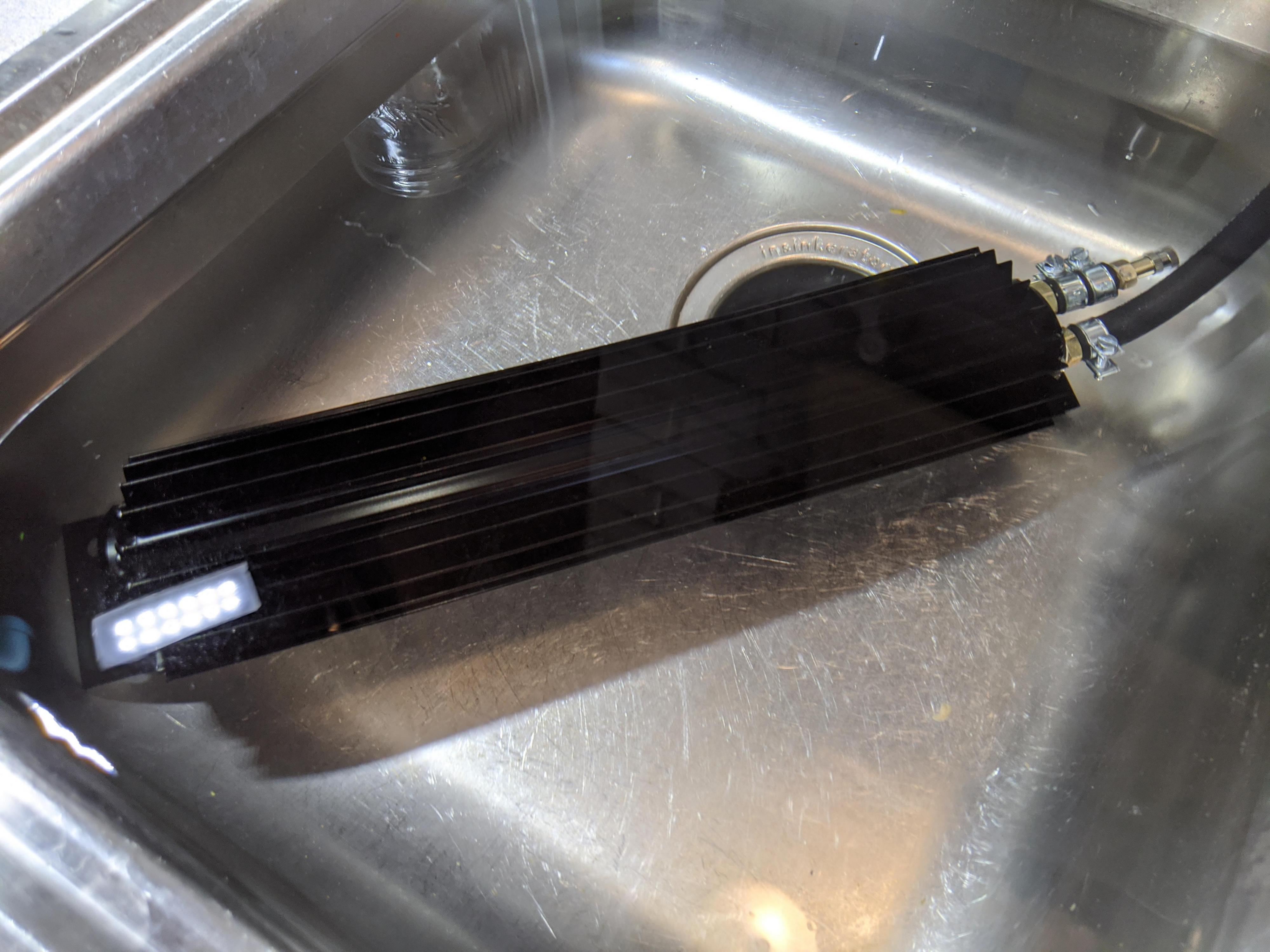
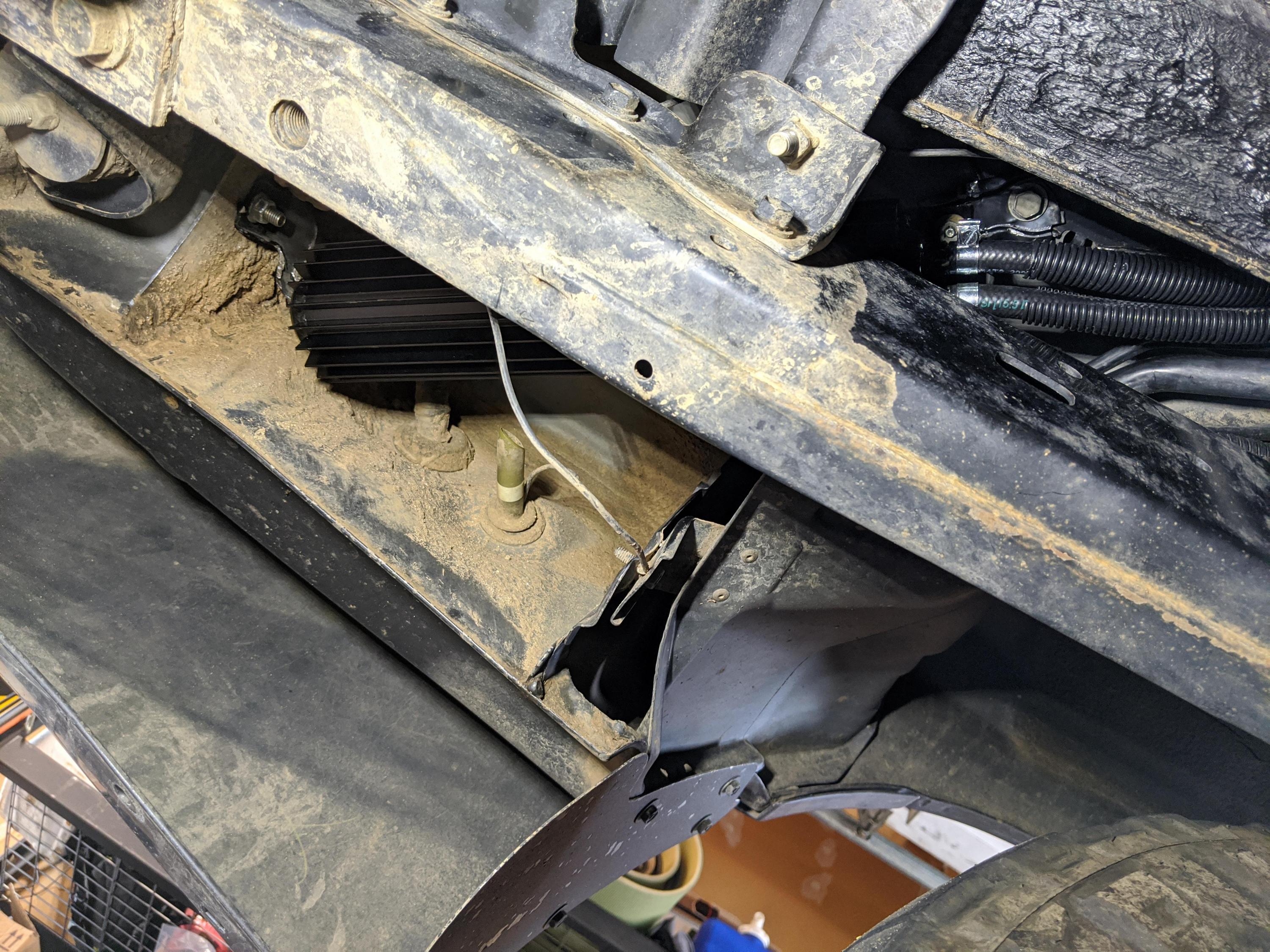
#4: Passive dual-pass finned fuel cooler. More of an experiment than anything I bought this inexpensive multipurpose cooler and plumbed it to the return line right before the fuel tank. I used quick connect fuel connectors so that if there is ever a problem with the cooler I can simply disconnect it and return the lines to stock without any tools. I placed it in the rear area above the frame rail. This area is always cool to the touch compared to the rest of the vehicle when I have been poking and probing for the last few weeks, it gets a surprising amount of air flow.

First I set it up to pressure test:
RmrckKt.jpg


It passed.

c6MauyE.jpg
I

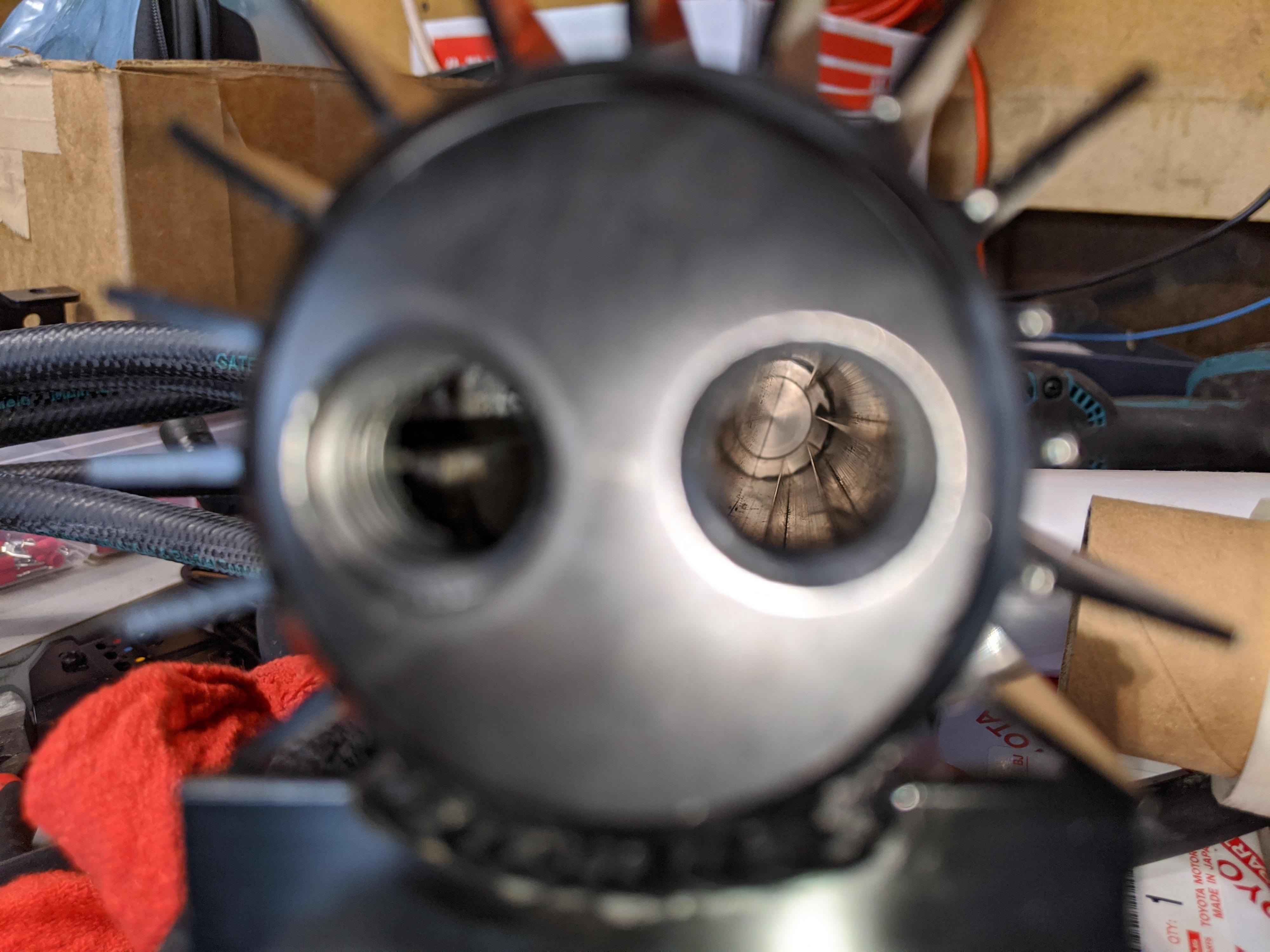
Looking inside:

rCg87hD.jpg


Mounted above the frame rail by the evap canister away from danger.

wdMoOjf.jpg


I used this 12" fuel cooler: Amazon.com: HotRod99 12" Satin Aluminum Finned Dual Pass Heat Sink Cooler Transmission Cooler Black Includes Two 1/4 NPT Fittings: Home & Kitchen - https://www.amazon.com/gp/product/B01EC4G9JA/ref=as_li_ss_tl?ie=UTF8&psc=1&linkCode=sl1&tag=imddd-20&linkId=f9f4aee61114b21d3399ffb5bb9bb99a&language=en_US
Some 5/16 Gates fuel hose: https://www.amazon.com/gp/product/B0058XDL0K/?tag=ihco-20
and 1/4 NPT to 5/16 fittings: https://www.amazon.com/TUOREN-Barb-Brass-Fitting-Adapter/dp/B07RKM6VR8/?tag=ihco-20


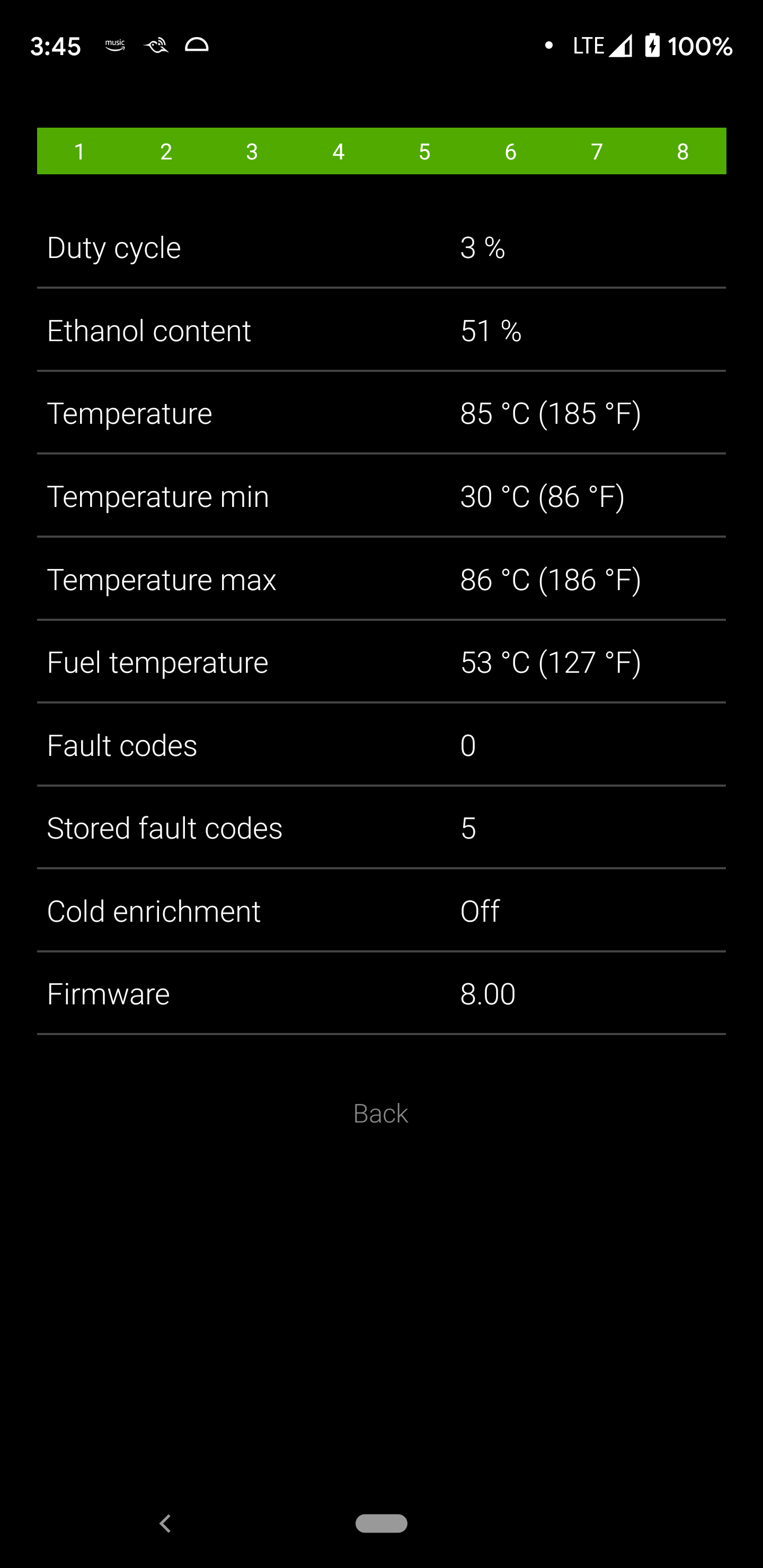
Before doing these mods my fuel temperature would routinely get to be 30-40F higher than ambient and sometimes even 50F or more if the tank was low and/or it had been hours on the trail etc. After doing these mods the fuel now stays between 10-20F above ambient even when low, though I have not done a long offroad trip with the newest mods.

This is about the hottest fuel temp I've recorded to date (127F), though I would bet it gets even hotter. This was before mods. This was at 1/4 tank of fuel driving home in 95F ambient temperature probably 3-4 hours running non-stop. I'm waiting for similar conditions to record a snapshot of the temperature now after all of the mods.

A0nUab7.png
Any update on this?
 
Care to narrow it down? You've got a ton of posts in this thread.
Well that’s kind of the rub… I’ve done a lot and you can see I still experience excessive fuel smell and venting problems on occasion.

This is an incredibly frustrating design flaw that doesn’t have a guaranteed diagnosis or procedure that will work for everyone. You can see in my photos my LRA tank is reasonably shielded from exhaust and my LX runs at normal temps.

I just saw you mentioned CC and I was hoping to save you a few bucks before you go that route. Just be cautious about being certain of anything related to this problem as it is a rabbit hole.
 
Pakhaat, You may have more than one issue, that needs addressing.

The 06-07 has a very specific, stall condition. Which is due to bad fuel pump (FP). Where FP, fails to produce adequate fuel flow/pressure, when its hot in low speed (during engine lower RPM's)

FP replaced. With all due respect to our hobby and our vehicles, it is a design issue, not a "me" issue. Clapped out you-name-its are driving around working just fine at alpine passes. And there is my immaculately maintained 100 sitting on the side of the trail cooling off before it can restart.

I look at this thread, the effort trying to solve this, I feel like I'm in a Jeep or GM forum. This really shouldn't be an issue with Land Cruiser.
 
FP replaced. With all due respect to our hobby and our vehicles, it is a design issue, not a "me" issue. Clapped out you-name-its are driving around working just fine at alpine passes. And there is my immaculately maintained 100 sitting on the side of the trail cooling off before it can restart.

I look at this thread, the effort trying to solve this, I feel like I'm in a Jeep or GM forum. This really shouldn't be an issue with Land Cruiser.
So all your buddies with 100 series, are sitting at side of road cooling with you.
 
Last edited:
Wow this thread has got into the weeds ha.

Just an update... I've ran some trails throughout our heatwaves here in southern california the last couple months and had zero issues. I haven't even got around to replacing the $500ish worth of EVAP parts I bought over the summer. I'm calling this issue fixed for me. I'll replace the EVAP stuff over the winter whenever I can find the time.
So what do you think was the root cause, after all was said and done? I looked through all your posts and couldn't find a definitive solution.
 
Last edited:
Ohhh I"m bored offshore
I'm guilty. It's hard not to read and post. Without your fuel temp you're flying blind and don't know how far to mitigate.
The very idea that,
as long as your 100 is maintained to a factory perfect spec you won't have this issue
is absurd.

Where's that monkey guy that locks everything
 
So what do you think was the root cause, after all was said and done? I looked through all your posts and couldn't find a definitive solution.
Sorry I'm never on here anymore. All these years later and no boiling issues! I think the key was a well maintained cooling system (fan clutch, radiator and fuel pump) then I wrapped the fuel lines and built the metal shield I posted about. I think it was a combo of bringing the cooling system back to new and fixing the design flaw by wrapping the fuel lines and protecting them from the CAT. I haven't thought about it in years.

Also that Landcruiser Phil fan kit helps a lot on those slow 4WL summer trails. Not sure if he makes it anymore. But when I turn it on I normally see my ECT drop about 5-10 degrees.
 
Back
Top Bottom