



The objective here is to inform some others who are new to or who may be considering the purchase of a 1990’s cruiser. If you’re not hunting for one, the objective is for some time-killing entertainment- so enjoy. Like so many other things, this isn’t a be-all end-all but rather a collection of things I’ve had to do. I’m sharing with the hope that it helps others who are or will be in my situation. This is a guide I wish I'd absolutely found before buying a cruiser as it would have made me think twice about the expenses but since I've got it, here we are.
I spent a great deal of time reading up on many different vehicles (80 series, 100 series, 60 series, Samurai, Tacoma, Range Rover Classic, Joop XJ CJ TJ YJ SJ, Isuzu Trooper, and a few I’m forgetting.) And I visited a great many different corners of the interwebs before deciding on an 80. I came across countless threads on what to look for, what to baseline, when and what to flush/change, etc etc. If I’m being entirely honest, the huge support and culture backing the Land Cruiser series was extremely comforting. The community did have a measurable impact in our decision making process. Some of the better bits of wisdom are posted here for reference.
Slee - 80 Series Land Cruiser Newbie Guide
80-series FAQ
Comprehensive Baselining List
New owner beginning baseline
Should I buy an 80, costs of ownership?
I spent about two years crawling online postings for vehicles. Finding one with minimal rust was paramount as I’d decided that I would be performing as much maintenance as I could. This would allow me to have a better knowledge of the truck in case it had a serious failure in a remote location. AAA can be a godsend if they can get to you. And that’s a big if.
Enter: The 80. Presented as it was when we first met:
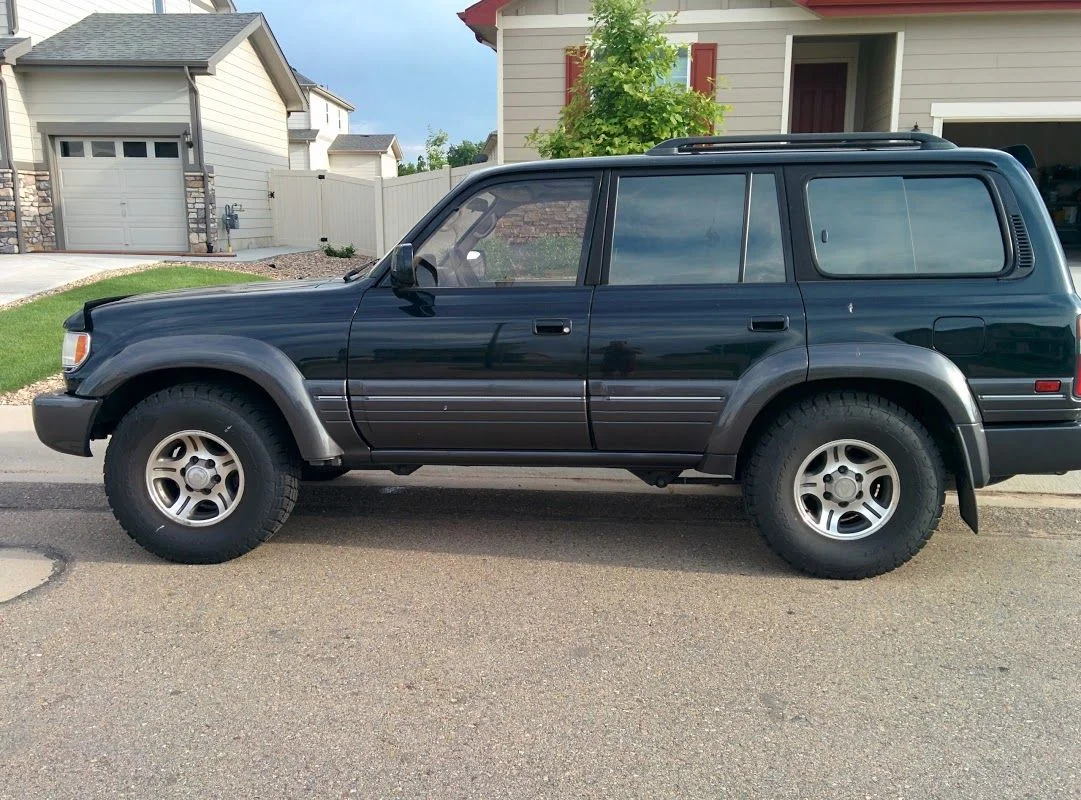
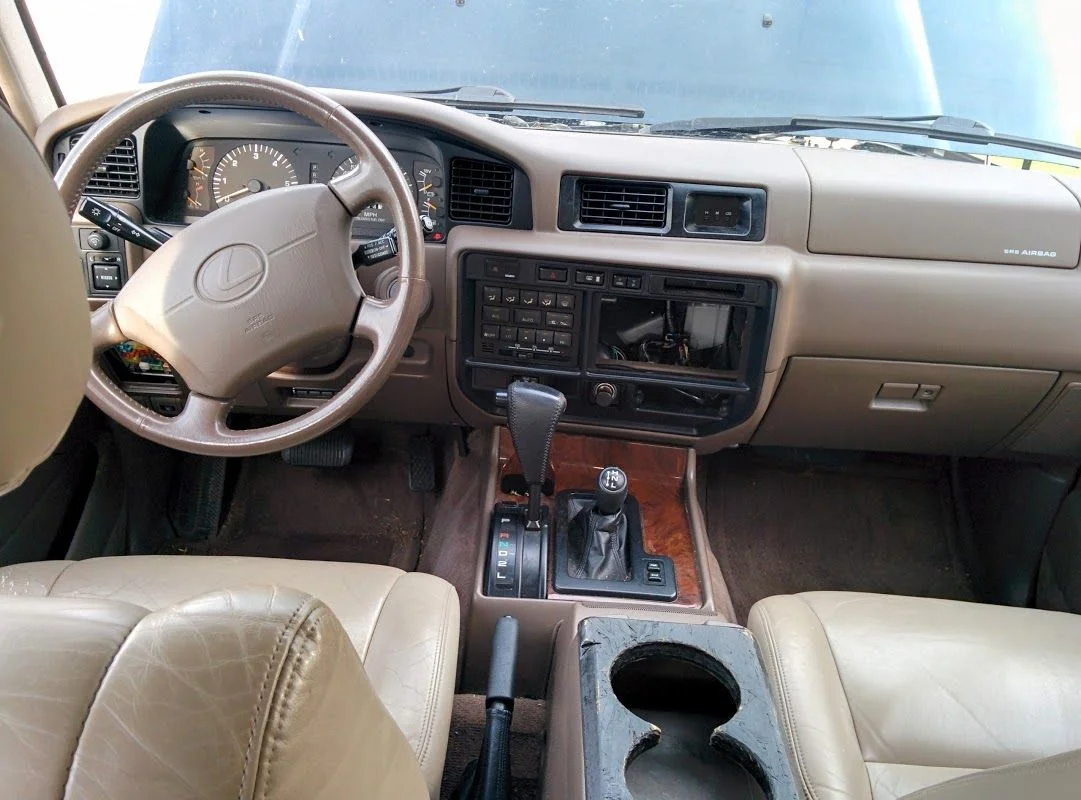

I picked it up in a private sale in June 2016. It’s affectionately named the Four And a Half as per the Notorious BIG. It came with 132,000 miles and was entirely stock apart from some essentially new 305/70R16 tires. I got the sense that the previous owner had big hopes and dreams that just never really panned out. I think he put about 3k miles on it in two years of ownership. He seemed like an upstanding honest guy but had no paperwork, no documentation, and was the type to sorta shrug and say “I dunno, I took it to XX place and they did stuff and things to it.” It was a bit of a gamble but too clean to pass up.
In the past 11-ish months, we’ve put just a hair over 20,000 miles on it. I’ll preface this with my fond appreciation of following the factory service manual to a T. Torque spec is life and if some questionable associated bolts/washers/pins in the parts diagram are under a dollar, I’ll often replace them to reduce risk of dealing with a stripped fastener in the future. I like to keep extensive documentation to make my life easy.
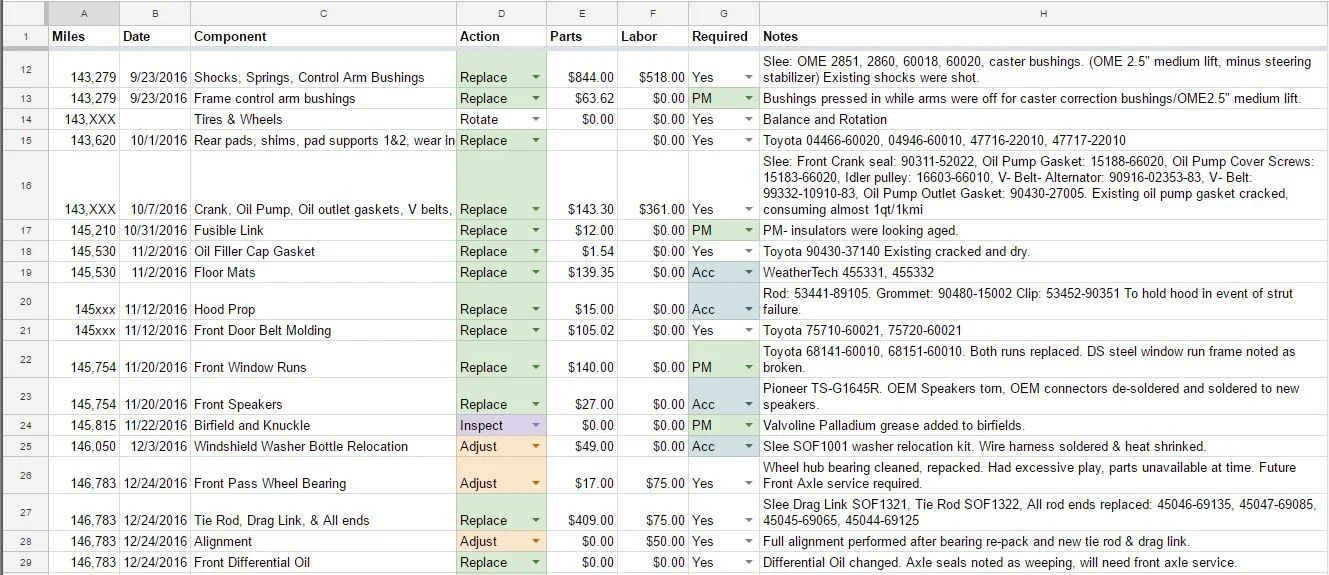
Last tire rotation? Eh, I dunno. CTRL+F. Oil change? CTRL+F. You get the idea. So, here’s the skinny:
Since purchasing it, I have installed/changed/done:
$6,555.86.
Yes, that's USD.
Breakdown:
$1089.00 in labor costs were for jobs that I either lacked the tools, space, or time to process myself. This includes alignments, tire balancing, shocks/springs ($518) for which I didn’t have a workspace, as well as a front of engine service (crank seal, oil pump gasket, belts, idler pulley) replacement ($316) for which I was too short on time.
$3522.86 in parts includes all of the parts purchased for the above labor jobs as well as everything done myself. Examples include oil and filters, spark plugs, dizzy cap and rotor, light bulbs, wheel bearings, axle seals, pads and rotors, diff oils, and trans fluid.
$1944.00 in accessories is the leftover category. It’s essentially anything deemed an unnecessary improvement. This list includes a roof rack, rock sliders, speakers, a radio, 2nd battery tray, and some differential plugs that I could have done without but were hella nice.
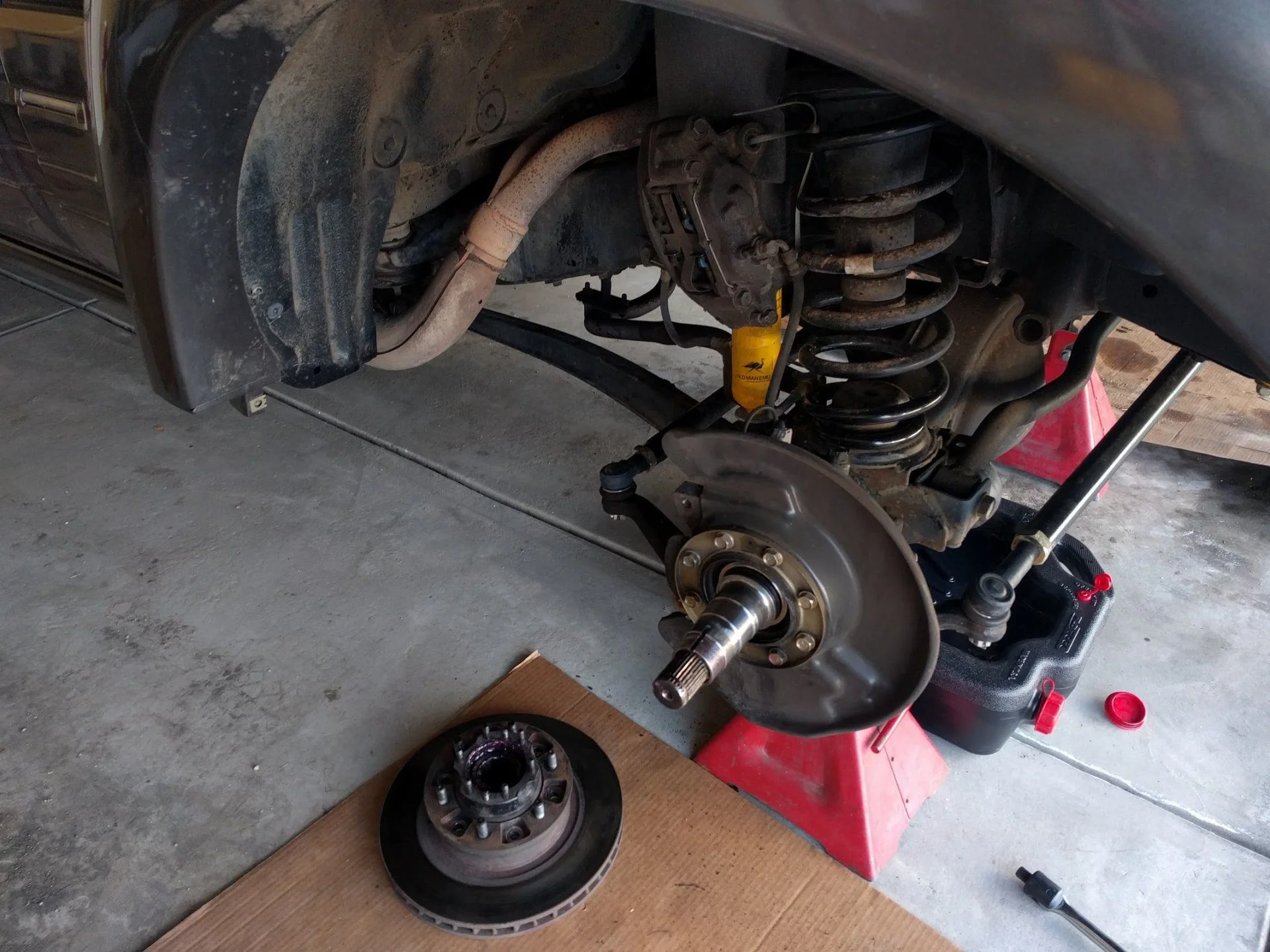
I know what you’re thinking: “Holy s*** that’s a ton of cash! I thought Toyotas were supposed to be reliable as hell!” And I’m thinking that too. Quite frankly, this list has addressed close to 80ish% of common failures and neglected maintenance issues for the 80 series. This has put the Four and a Half to a place where I feel entirely confident taking it to remote and challenging areas and knowing that we won’t be stranded. I’d rather make the same repair three times at home than try to sort it out for the first time in the backcountry. As a @NLXTACY put it:
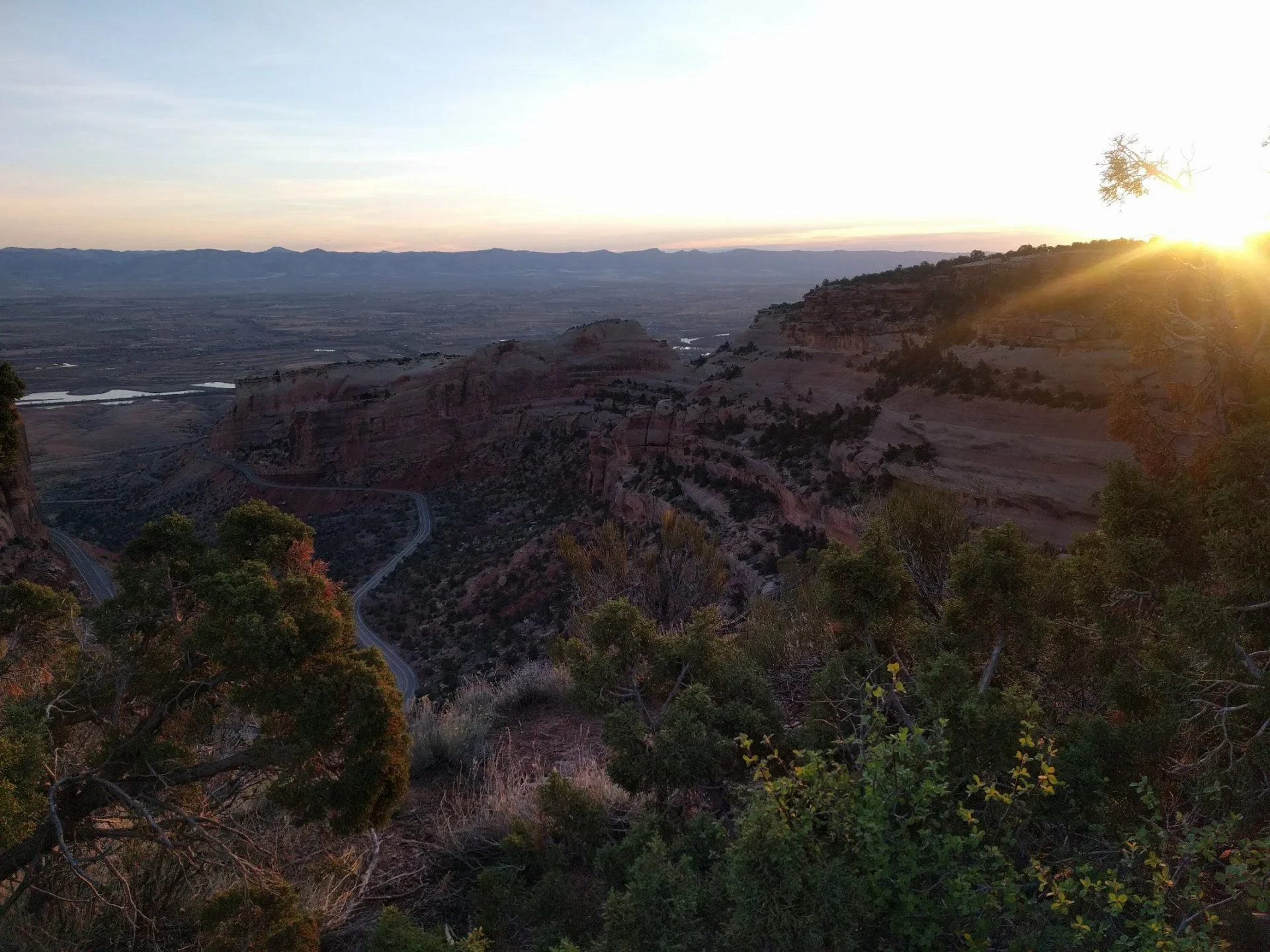
We can collectively justify this because the Four and a Half has been rock solid for our duration of ownership. It’s not only our transportation, but it’s primarily our leisure and vacation. The ability to explore and travel with such ease and confidence has been mind-blowingly satisfying. There’s no comparison to tossing your gear in, filling the tank, and immediately starting another epic adventure. And if we were to be renting a Joop or flying cross country multiple times a year, I’ve got no doubt that we would have already exceeded $6500 in cars, flights, hotels, and rental gear. Rinse and repeat? Rent it again. We still own the 80. And we plan on keeping it that way for a long, long time.

A version of this was originally published on Overland & Expedition, a blog which gracefully allows me to plague its readers with my ramblings. I thought it would be equally, if not more applicable and useful here as this is, after all, one of the most influential websites I visited and helped to make all of this possible.
I spent a great deal of time reading up on many different vehicles (80 series, 100 series, 60 series, Samurai, Tacoma, Range Rover Classic, Joop XJ CJ TJ YJ SJ, Isuzu Trooper, and a few I’m forgetting.) And I visited a great many different corners of the interwebs before deciding on an 80. I came across countless threads on what to look for, what to baseline, when and what to flush/change, etc etc. If I’m being entirely honest, the huge support and culture backing the Land Cruiser series was extremely comforting. The community did have a measurable impact in our decision making process. Some of the better bits of wisdom are posted here for reference.
Slee - 80 Series Land Cruiser Newbie Guide
80-series FAQ
Comprehensive Baselining List
New owner beginning baseline
Should I buy an 80, costs of ownership?
I spent about two years crawling online postings for vehicles. Finding one with minimal rust was paramount as I’d decided that I would be performing as much maintenance as I could. This would allow me to have a better knowledge of the truck in case it had a serious failure in a remote location. AAA can be a godsend if they can get to you. And that’s a big if.
Enter: The 80. Presented as it was when we first met:
I picked it up in a private sale in June 2016. It’s affectionately named the Four And a Half as per the Notorious BIG. It came with 132,000 miles and was entirely stock apart from some essentially new 305/70R16 tires. I got the sense that the previous owner had big hopes and dreams that just never really panned out. I think he put about 3k miles on it in two years of ownership. He seemed like an upstanding honest guy but had no paperwork, no documentation, and was the type to sorta shrug and say “I dunno, I took it to XX place and they did stuff and things to it.” It was a bit of a gamble but too clean to pass up.
In the past 11-ish months, we’ve put just a hair over 20,000 miles on it. I’ll preface this with my fond appreciation of following the factory service manual to a T. Torque spec is life and if some questionable associated bolts/washers/pins in the parts diagram are under a dollar, I’ll often replace them to reduce risk of dealing with a stripped fastener in the future. I like to keep extensive documentation to make my life easy.
Last tire rotation? Eh, I dunno. CTRL+F. Oil change? CTRL+F. You get the idea. So, here’s the skinny:
Since purchasing it, I have installed/changed/done:
- New plugs, plug wires, dizzy cap and rotor
- Engine oil, filter, and crush gasket changes
- Oil filler cap gasket
- Differential and t-case oil and crush gasket change
- Transmission fluid and crush gasket change
- Front crank seal, oil pump seal and screws
- New belts and idler pulley.
- Coolant change
- OME 50mm lift (Shocks, springs, steering damper, 2 degree bushings)
- Replaced all (except dashboard) lights with LED
- Front window runs and door belt molding
- New Slee tie rod, Slee drag link and all 4 ends
- Rotate and balance tires
- Fusible link
- New battery
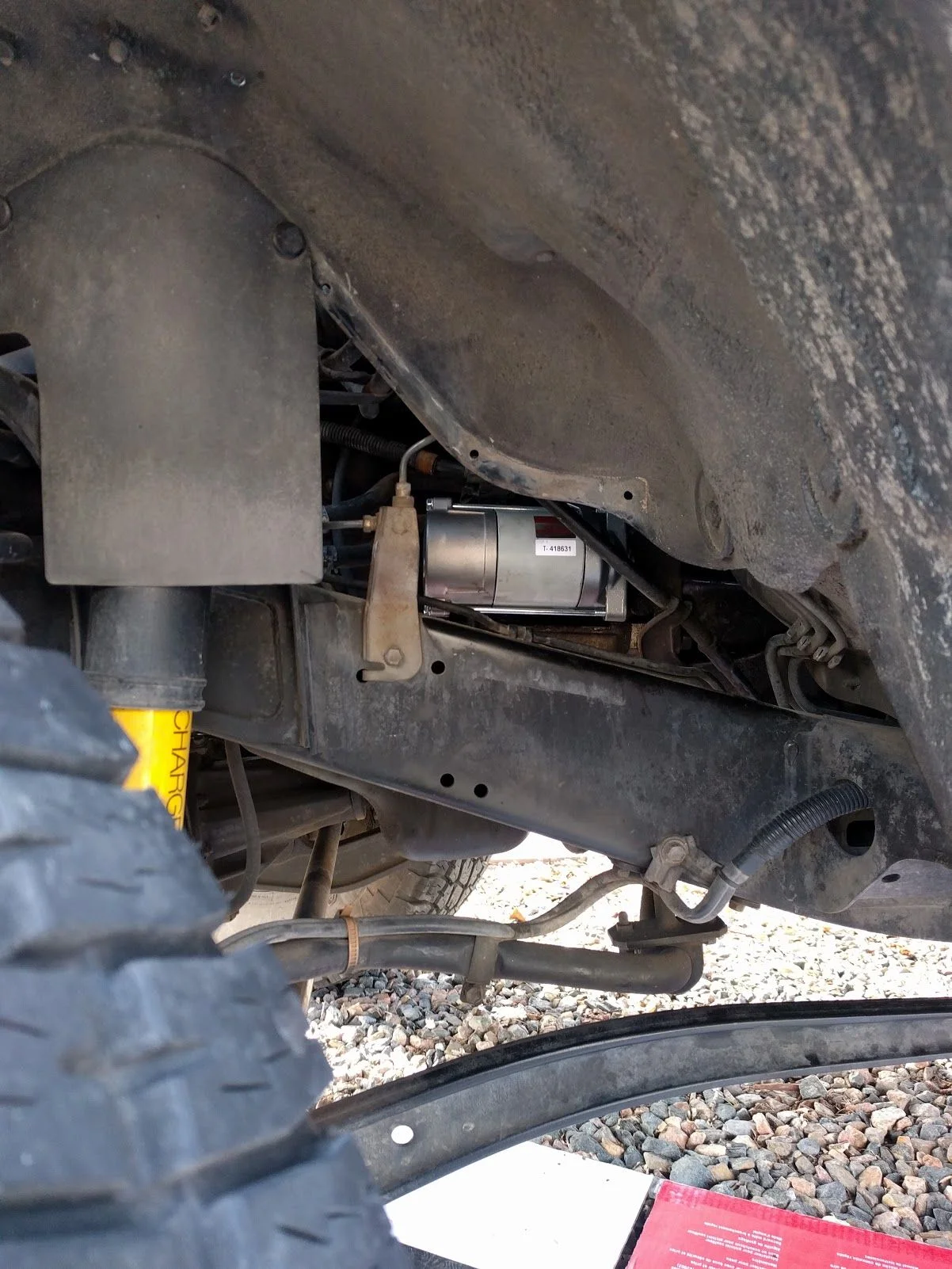
- Reman’d Denso starter
- Weathertech floor mats (totally worth it)
- All new pads, shims, springs, etc.
- New front rotors
- Brake fluid flush
- $15 Hilux hood prop because I’m not paying $200 for hood struts.
- Full knuckle rebuild- all new seals and bearings, knuckle studs, etc.
- Washer bottle relocation and second battery tray
- Air filter replacement
- Install a radio head unit and 4x speakers
- Double-stack in-dash CB + antenna mount
- Prinsu Roof rack after removing factory rack. Probably could have gone without, but group buy made it difficult to pass up.
- Slee Sliders
- Other small and misc maintenance as required
$6,555.86.
Yes, that's USD.
Breakdown:
$1089.00 in labor costs were for jobs that I either lacked the tools, space, or time to process myself. This includes alignments, tire balancing, shocks/springs ($518) for which I didn’t have a workspace, as well as a front of engine service (crank seal, oil pump gasket, belts, idler pulley) replacement ($316) for which I was too short on time.
$3522.86 in parts includes all of the parts purchased for the above labor jobs as well as everything done myself. Examples include oil and filters, spark plugs, dizzy cap and rotor, light bulbs, wheel bearings, axle seals, pads and rotors, diff oils, and trans fluid.
$1944.00 in accessories is the leftover category. It’s essentially anything deemed an unnecessary improvement. This list includes a roof rack, rock sliders, speakers, a radio, 2nd battery tray, and some differential plugs that I could have done without but were hella nice.
I know what you’re thinking: “Holy s*** that’s a ton of cash! I thought Toyotas were supposed to be reliable as hell!” And I’m thinking that too. Quite frankly, this list has addressed close to 80ish% of common failures and neglected maintenance issues for the 80 series. This has put the Four and a Half to a place where I feel entirely confident taking it to remote and challenging areas and knowing that we won’t be stranded. I’d rather make the same repair three times at home than try to sort it out for the first time in the backcountry. As a @NLXTACY put it:
Baselining is getting your truck to square one basically:
It means getting your truck to a point where if anything else goes wrong you can say, "well its not the hose cuz I just changed that".
We can collectively justify this because the Four and a Half has been rock solid for our duration of ownership. It’s not only our transportation, but it’s primarily our leisure and vacation. The ability to explore and travel with such ease and confidence has been mind-blowingly satisfying. There’s no comparison to tossing your gear in, filling the tank, and immediately starting another epic adventure. And if we were to be renting a Joop or flying cross country multiple times a year, I’ve got no doubt that we would have already exceeded $6500 in cars, flights, hotels, and rental gear. Rinse and repeat? Rent it again. We still own the 80. And we plan on keeping it that way for a long, long time.
A version of this was originally published on Overland & Expedition, a blog which gracefully allows me to plague its readers with my ramblings. I thought it would be equally, if not more applicable and useful here as this is, after all, one of the most influential websites I visited and helped to make all of this possible.
Last edited:


