Steel vs. Aluminum Wheels

This site may earn a commission from merchant affiliate
links, including eBay, Amazon, Skimlinks, and others.

Joined
Dec 2, 2014
Threads
24
Messages
183
Location
San Jose, CA
Hi folks:

I am considering upgrading my stock 16" wheels to 18". I am seeing Tundra 18" steel wheels and Michelin LTX tires for $400.

What are your thoughts on steel vs. aluminum tires? I have also seen on this forum some folks who have the steel tires powder coated.

Appreciate your thoughts - thanks in advance!
 
Steel wheels are heavier and can impact fuel economy slightly more than a comparable alloy wheel. They add rotating mass and some feel this can impact acceleration and handling.

In real world terms, larger wheels will impact braking, acceleration and fuel economy. You probably won't notice much difference with the stock Tundra steel wheels and base model street tires. As you increase tire size, aggressiveness, and wheel weight, the effects are compounded and you notice them more and more.
 
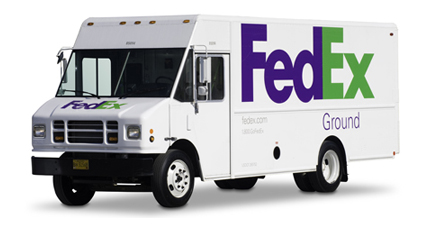
Quick! Someone call the FedEx, UPS... Toyota, Nissan engineers and tell them their burning money!

Products_Landing_FedEx-Ground(1).jpg


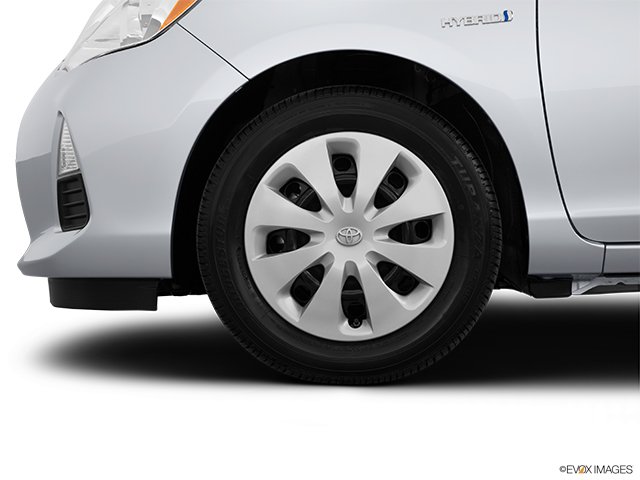
Yes, that's a Prius - they come with mini Tundra steelies... right from the factory
9558_st0640_042.jpg


I'm going to go on a limb and guess that if FedEx and UPS - you know, the guys who limit left turns because of efficiency - could swap to alloy wheels and see a noticeable improvement in efficiency, they'd be on it.

I've had Tundra steelies for over 10,000 miles (only change, previous tires were also 275/70/18s BFG ATs). I did not notice any change in how the truck accelerates, drives, brakes or the MPG. I did notice the reduction in gearing (slightly slower off the line) when I went from the stock tires to the larger tires.
 
Thank you for supporting my point; ie that tire size and tread pattern impact fuel economy more.
 
Aluminum advantages:
weight (sometimes) OEM Wheel Weights
aesthetics​

Steel advantages:
price
ability to beat it back into a shape that will hold air, with a hammer/rock​
 
Thanks everyone. Any pros or cons while off-roading?
 
Yes. You will want max rubber between the rims and the ground, so 16 is better off road. Traction when aired down will also be better on 16, with the same tire size.
Nother thing is: tire size is not necessarily bigger if you go from 16 to 18.
 
I wrestled with the sidewall differences - 16" vs 18". My other off-road toys have had 15s and typically 35s. So, when you're used to this...
IMG_2354.jpg


33s on 18s looks much better suited for the street
IMG_7944.jpg


But then, when I ran the math... and accepted that I spend 99.94% of my miles on pavement, well... 18s and 33s seemed like the pragmatic way to go
 
Side wall difference is 1" between 16&18's. Tire choices aside. I have a hard time believing there is a perceptible difference between the two on a 33" tire. It would seem that tire pressure would make a greater impact than splitting hairs between a 7.5" sidewall and a 8.5" sidewall. Looks sure, like one over the other, I get that, but one a vastly better off road performer? That's a tough sell.
 
Offroad people go to great lengths just to go 1 inch down, from 17 to 16 or 16 to 15, by grinding or changing calipers in order to fit a smaller rim. More is better when it comes to rubber (edit) , when offroading.
 
Last edited:
18s are a downgrade in my opinion...

Steel wheels are heavy and that added unsprung weight will negatively impact ride quality... But, I prefer steel wheels. Finding a 16x7 or 16x8 steel wheels in the U.S. is impossible so I am running my factory 16s..
 
Last edited:
Remember the heavier the wheel tire package has to be stopped with the brakes. On my 60 I downsized overall diameter by 1.5 inches. Also went aluminum wheels. Tire was 1.5 inches narrower too. Probably at least 20 30 lbs per corner. Spin that up to 50 mph and the and there is a significant difference slowing them down. The day after I made the swap I had to make a panic stop for a kid running into street. I'd have run the kid over with the old set up.
 
Remember the heavier the wheel tire package has to be stopped with the brakes. On my 60 I downsized overall diameter by 1.5 inches. Also went aluminum wheels. Tire was 1.5 inches narrower too. Probably at least 20 30 lbs per corner. Spin that up to 50 mph and the and there is a significant difference slowing them down. The day after I made the swap I had to make a panic stop for a kid running into street. I'd have run the kid over with the old set up.
There is no difference between putting that weight on the wheels or anywhere else on the car, when it comes to braking. 100 lbs extra is 100 lbs extra, doesn't matter where you put it. It only matters if you put all the wheels in the air and then want to stop them.
The weight of the truck spins the wheels just as well as the weight of the wheels does.

Tire diameter does have an effect on breaking though. But going from 16 to 18 inch rims doesn't mean that you have to increase the tire size.
 
Last edited:
There is no difference between putting that weight on the wheels or anywhere else on the car, when it comes to braking. 100 lbs extra is 100 lbs extra, doesn't matter where you put it.

^That^ goes against all I've thought regarding unsprung weight. Admittedly, that is based on what I've read on forums like this - car and cycling. Can you explain this to a lay person. I really thought heavier wheels required more "effort" to accelerate and decelerate.

Side note: I wonder if I really needed to spend $1,000 on those 1,370 gram wheels for my bike ;)
 
Unsprung weight and GVW are two different things. Wheel weight is a part of the unsprung weight, but unsprung weight doesn't make it harder to stop anymore than any other weight on/of the vehicle.
Unless, of course, if an increased unsprung weight makes the suspension system under-perform, and thereby making the wheels loose contact with the road.

Side note: I thought the idea of cycling was to get exercise, so add another lb or ten to your bike, and you get more exercise (=happiness) for your $$. :)
 
On a 60, (old truck, no ABS) a reduction of the tire size by 1.5" will increase your stopping power by about 5%, which could be noticable. That they were narrower as well could also have given you better friction.
 
Back
Top Bottom