Build 1st FJ40, '76 - SMOKEY - Puttin’ her Back Together

This site may earn a commission from merchant affiliate
links, including eBay, Amazon, Skimlinks, and others.

Strong work VV. I am about to tear into my brake as well and appreciate the write up. Please post any other tips during the rebuild.
Money adds up quick doesn't it? I just got my first 40 a few weeks ago and figured out I needed a MIG welder, plasma cutter, HVLP gun, compressor, etc......

Also, I have a weber and i'm thinking about changing out the carb to TrollHole's unit. This weber seems weak- rough idle, dies unless it's really warmed up and just not very impressive. Figured it would be cheaper and easier to get the new one versus tinkering with the weber.
 
Loving the excruciating detail you're going into in this thread. Keep up the good work!
 
Strong work VV. I am about to tear into my brake as well and appreciate the write up. Please post any other tips during the rebuild.
Money adds up quick doesn't it? I just got my first 40 a few weeks ago and figured out I needed a MIG welder, plasma cutter, HVLP gun, compressor, etc......

Also, I have a weber and i'm thinking about changing out the carb to TrollHole's unit. This weber seems weak- rough idle, dies unless it's really warmed up and just not very impressive. Figured it would be cheaper and easier to get the new one versus tinkering with the weber.

Although I won't vouch 100% for his opinion, Bob at TPI Motorsports in Nashville swears that the "right" Weber carb and header is a great combo. I'm actually going back to stock because I got so much advice to the contrary in this very thread.
 
Loving the excruciating detail you're going into in this thread. Keep up the good work!

It's so excruciating because I go so darn slow! But thanks for letting me know you guys are reading this stuff. I know I read everyone's postings with great interest.
 
All due respect to Bob (and I do respect him), I've never seen that combo. What Weber guys seem to do is spend thousands on carbs, headers, exhaust, dizzys, plugs and god knows what else to proclaim that it now runs as well as it did with a properly tuned factory carb and well-tuned engine.....until you change altitude.

My Weber was awesome on my 22r, but after two years of seeking the perfect setup of Weber and header on my '76 fj40, I bought a new non-US carb from specter (one could do such a thing back in the 20th century) and was nearly in tears at how well she ran simply by bolting it on.
 
All due respect to Bob (and I do respect him), I've never seen that combo. What Weber guys seem to do is spend thousands on carbs, headers, exhaust, dizzys, plugs and god knows what else to proclaim that it now runs as well as it did with a properly tuned factory carb and well-tuned engine.....until you change altitude.

My Weber was awesome on my 22r, but after two years of seeking the perfect setup of Weber and header on my '76 fj40, I bought a new non-US carb from specter (one could do such a thing back in the 20th century) and was nearly in tears at how well she ran simply by bolting it on.

THAT'S what I want to hear! Say it again Chamba!! :clap:

(Oh, and thanks for agreeing to mail the rear LED lights to the US for us. Looking forward to getting those.)
 
My mate Dan is sending them to me in the US, I'm just forwarding them to the assorted glorious states such as Tn. from Santa Fe in the Land of Enchantment. Thank Dan as he's doing all the leg work!
 
My mate Dan is sending them to me in the US, I'm just forwarding them to the assorted glorious states such as Tn. from Santa Fe in the Land of Enchantment. Thank Dan as he's doing all the leg work!

I hope Dan gets a free set out of the deal, or charges us enough to buy a good case of Moose Drool or the AU equivalent (Kangaroo Spit?).
 
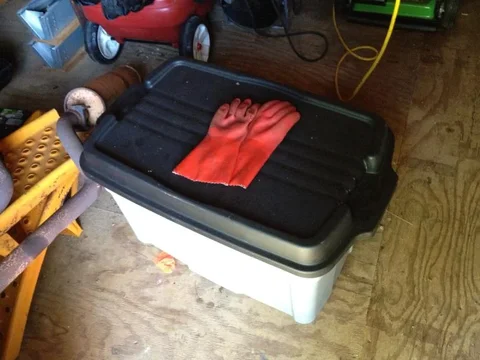
Showing off more of my awesome tools. Today, my new parts washer.


I picked it up at the local Home Depot. It has a 40 gallon capacity, and was really quite inexpensive.


It is also very portable, and uses little power when washing the parts.


image-575898212.webp
Redneck Parts Washer $18

image-2685114161.webp
Shown with Optional Attachments - long handled parts scrubber, short handled heavy duty grease remover, Rubber Parts Manipulator (Previous Photo)
image-575898212.webp
image-2685114161.webp
 
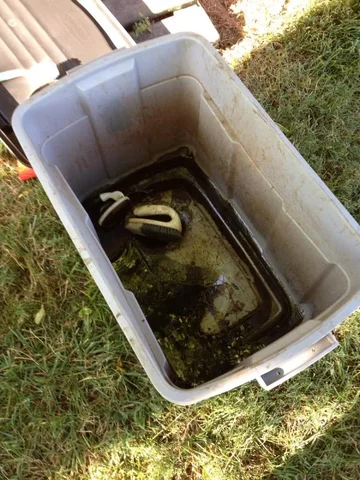
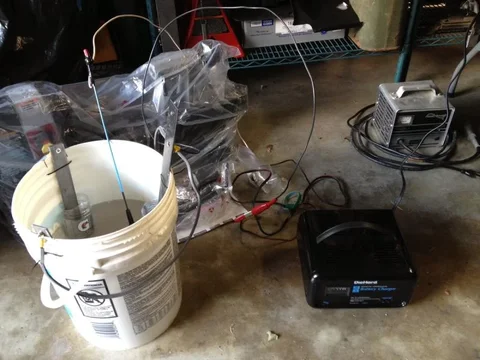
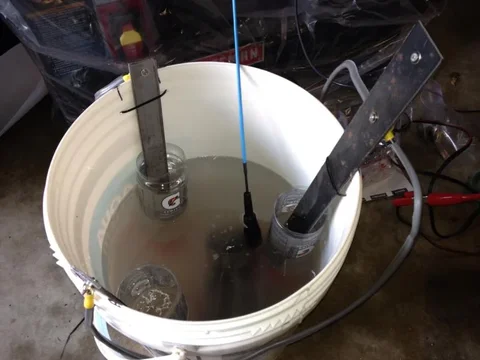
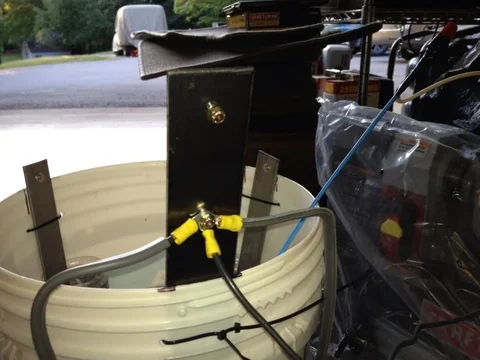
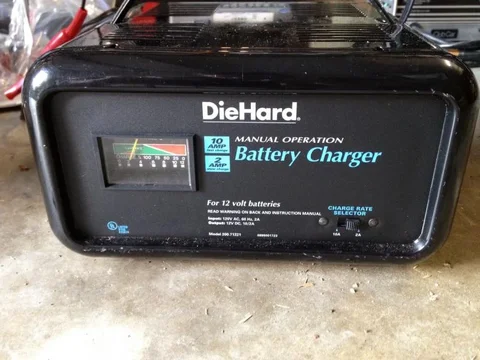
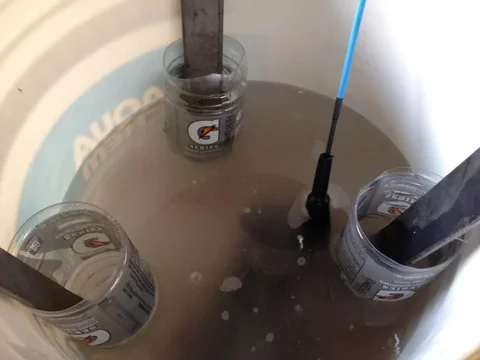
Followed CoolerMan's build idea and put together an electrolysis de-rusting rig today. Had the Soda Ash on hand and set it up. Going to post a new thread and find out if 2 amps is too high! From what Coolerman said, I think it may be.


image-54528517.webp


image-1861615887.webp


image-1596280311.webp


image-2833592846.webp


image-1326367676.webp
image-54528517.webp
image-1861615887.webp
image-1596280311.webp
image-2833592846.webp
image-1326367676.webp
 
It seems that the Trollhole carbs and distributors have greatly improved on what the factory intended for these engines , without sacrificing the use of stock linkage, and air cleaners. Marshall has really worked hard to put a superior product out there.
 
It seems that the Trollhole carbs and distributors have greatly improved on what the factory intended for these engines , without sacrificing the use of stock linkage, and air cleaners. Marshall has really worked hard to put a superior product out there.

Looking forward to using them. Maybe within the calendar year.

Craig, glad you piped in! I forgot to ask you about your electrolysis setup - I think you mentioned it on the phone.

Really enjoyed visiting with you. Your work is amazing. I wish you'd share it with the community - it would help many folks (like me). It's going to be a beautiful truck when you are done. And, you've done 95% of the work yourself.
 
Hmmm, just been reading on the Transmission rebuild. Why didn't anyone warn me not to do it? Looks like a real PITA.

I'm thinking I'll just skip it for now. Buy a used one if I need. I do have to get the ball bearing out of it that I dropped in though.

Anyone need a rebuild kit? Only waited 7 weeks for it.
 
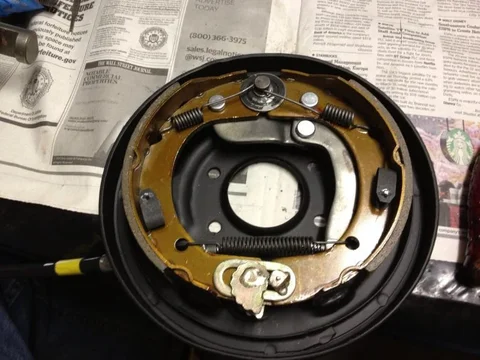
Worked on the parking brake rebuild tonight. Finally got the backing plate cleaned and painted, and started rebuilding.

Found where Coolerman had written this up (missed it before). Picked up some tips. Suggest you use it http://www.globalsoftware-inc.com/coolerman/fj40/34G.htm.
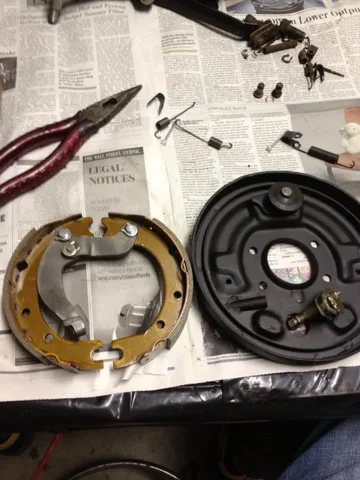

image-3070814707.webp

image-3119415400.webp
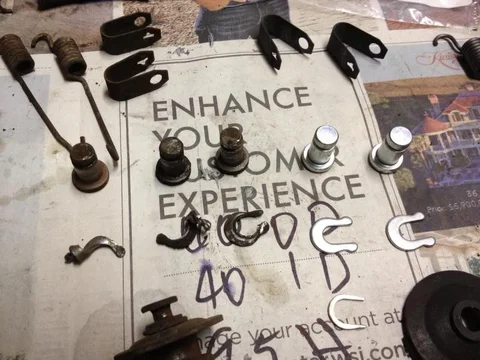
Put the pins and clips in to the shoes and two metal arms. 3 sets of pins/clips in total. Note the pads are upside down in the first photo to show how they are assembled.

I had to enlarge the holes in the pads to get the new pins to fit. Used a round file.
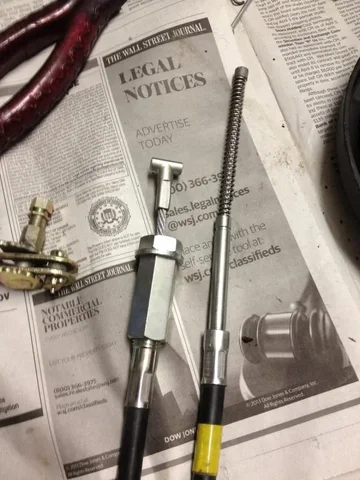
image-1924918976.webp
image-948050652.webp
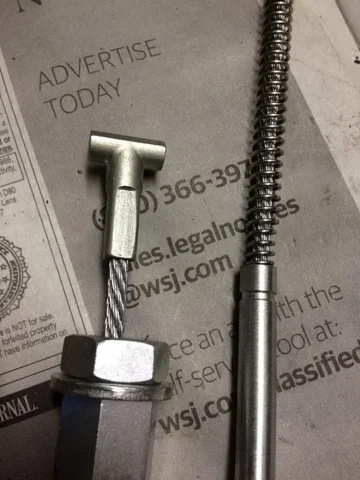
New Brake Cable

image-4200468646.webp
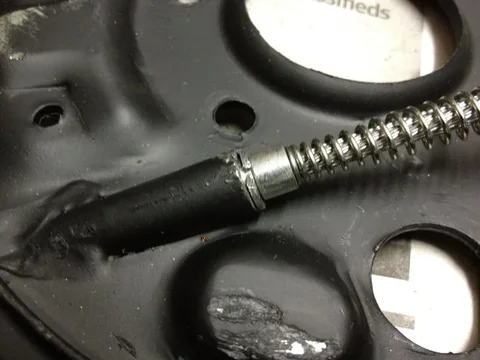
Then insert the brake cable thru the housing from the outside, attach using the thin clip, shown already wrapped around the indent in the cable.

Screw in the top spring retaining post with the large nut and washer, which goes on the outside back of the backing plate.

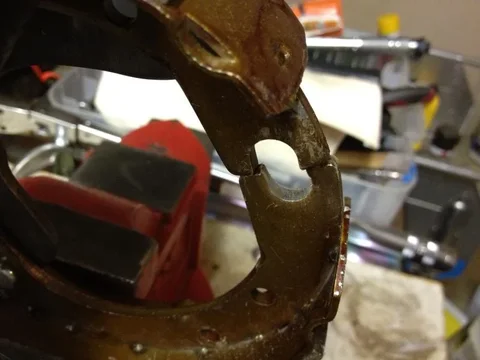
NOTE: Before assembling, go ahead and put some grease on the end of the pad backing plates where the notches meet the big post at the top, and where the sizing adjuster fits between the pads. Grease the surface where metal meets metal as in these two photos:
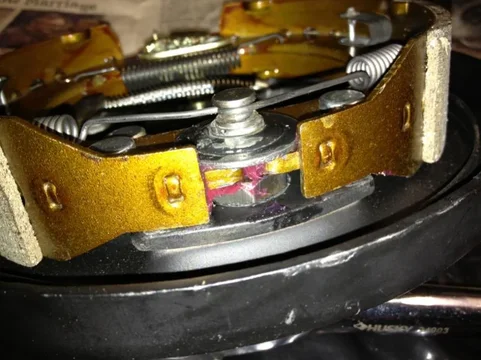
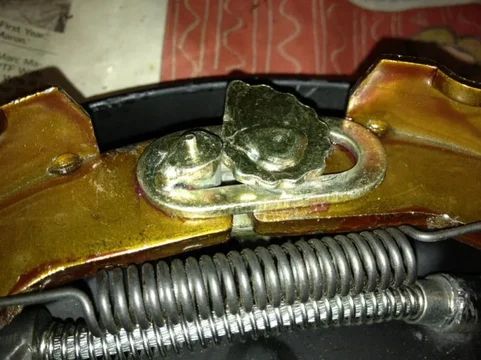
image-1496678266.webp

image-1560995058.webp
Grease me!


Put the assembled pads and arms onto the backing plate. The small notches on the end of the pads goes toward the large post. The large notches go toward the spacing adjuster at the bottom. Go ahead and file down the notches to make them larger, as your pads are going to drag on the brake drum, and you'll need every mm you can get.
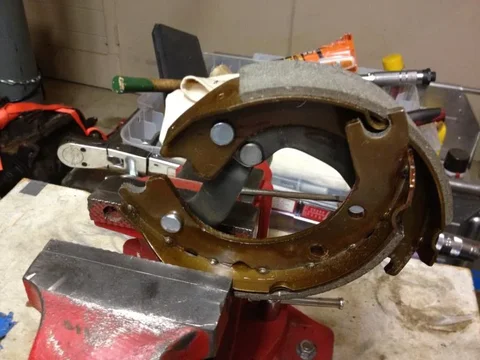
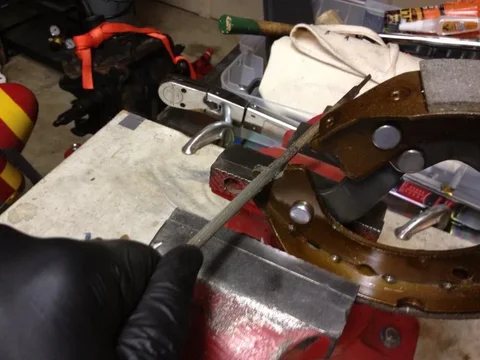
image-2282415515.webp
image-1511269631.webp
Filing the notches
image-1913201364.webp
image-3398204352.webp
These are what need to be greased - the flat surfaces and curved surfaces near the ends.
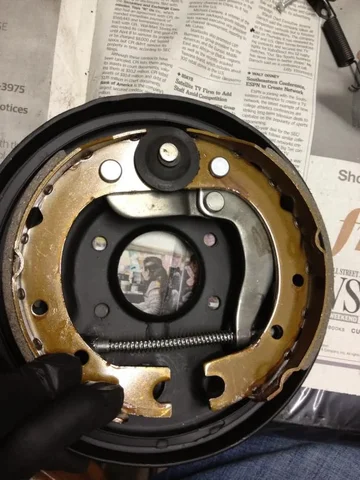
image-3841035926.webp
Large notches at the bottom. Small notches fit around the top post first.
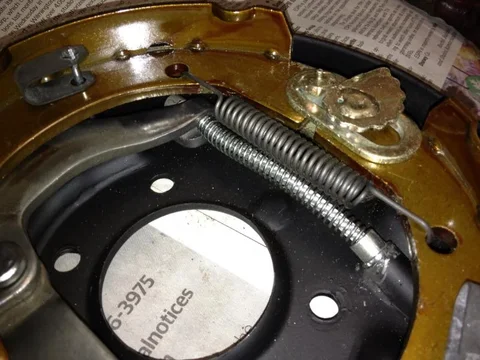
image-1290113292.webp
Attach the brake cable to the large arm in the small curved metal notch. You must pull the spring back from the button in the end of the cable and then slip the cable in the notch described above.

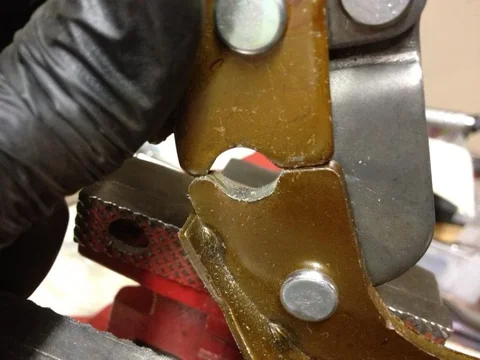
My cable kept slipping out. Suggest pulling out the slack from the handle end of the cable and wrapping a piece of tape around the exposed cable or using a vice grip to hold tension on the cable to hold some tension on the button end so it won't slip out again.
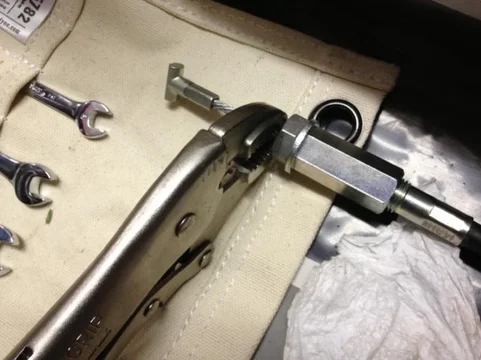
image-2103890165.webp
Vice Grips


image-1247757183.webp
Now insert the spacing adjuster between the bottom notches of the pads. Set it to the smallest gap, as shown. Don't forget to grease!
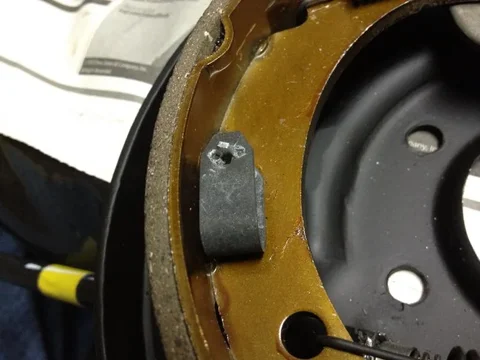
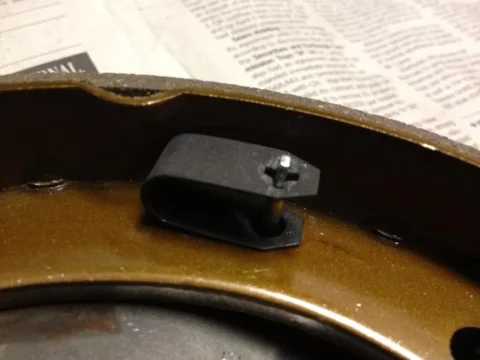
image-3916588537.webp
image-1478256493.webp
Attach the small pins through the rear of the backing plate to the holes in the pads. Secure with the v shaped clips. Push down with needle-nose pliers until the pin comes thru the notch, and then twist the pin tail 90 degrees to secure it.
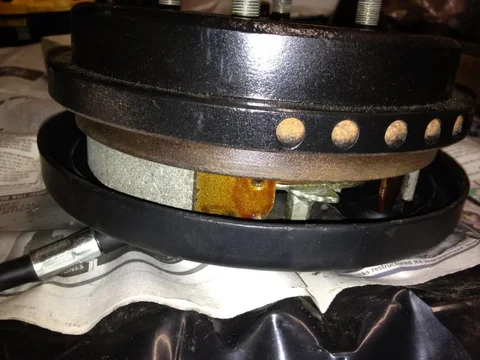
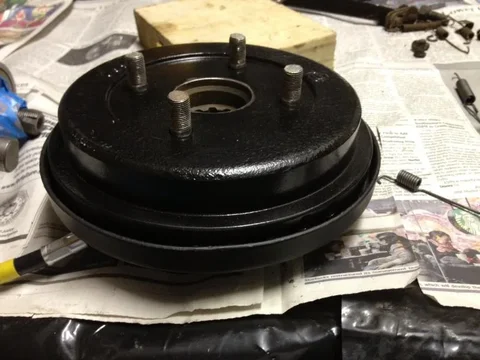
image-2539925283.webp
image-2227757745.webp

Before you proceed, test fit the brake drum. Mine was really tight even after adjusting the gaps, but I could get it on and off. If it is tight, either get the gaps a bit larger by grinding the gaps on the metal backing of the pads, or grind down the pad surfaces a bit. Harder, but precision isn't necessary as it is just a parking brake.

After test fitting and being satisfied, re attach the springs. Needle nose pliers again do the trick. Hard, but strong thumbs to push the pliers help.
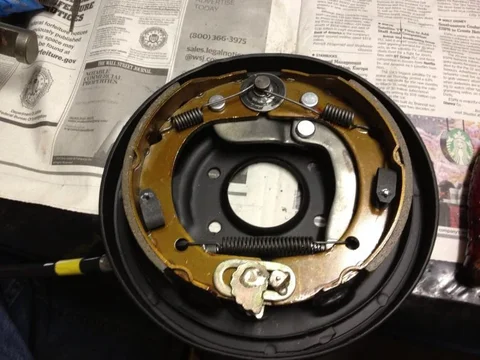
image-28012091.webp

If you have it, put the rubber diaphragm on the adjuster screw to keep the elements out.
image-3970263612.webp
Rubber diaphragm came in the kit.

Finished

image-3070814707.webp
image-1924918976.webp
image-948050652.webp
image-4200468646.webp
image-3841035926.webp
image-2282415515.webp
image-1511269631.webp
image-1913201364.webp
image-3398204352.webp
image-1290113292.webp
image-1247757183.webp
image-3916588537.webp
image-1478256493.webp
image-2539925283.webp
image-2227757745.webp
image-28012091.webp
image-3119415400.webp
image-1496678266.webp
image-1560995058.webp
image-3970263612.webp
image-2103890165.webp
 
Last edited:
Awesome. My one request is that you use as much detail when it goes back on the truck (setting the load on the bearing, and speedi-sleeving, adjusting the cable if necessary, etc.

Particularly checking the preload with a fish scale as I've always wondered exactly how that works.

That would make this probably the most complete parking brake rebuild step-by-step I've seen. Great work!
 
Last edited:
Awesome. My one request is that you use as much detail when it goes back on the truck (setting the load on the bearing, and speedi-sleeving, adjusting the cable if necessary, etc.

Particularly checking the preload with a fish scale as I've always wondered exactly how that works.

That would make this probably the most complete parking brake rebuild step-by-step I've seen. Great work!

Next step is the pre-load. My brake drum has a nice smooth shaft, so no speedi-sleeve.

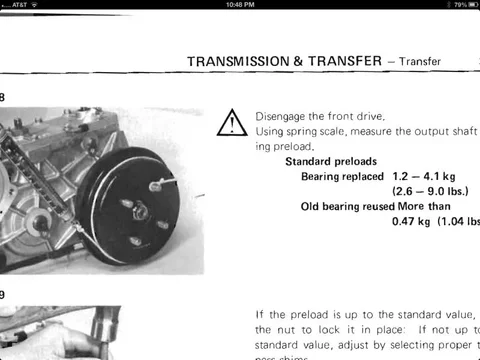
FSM has a great photo of how to set up the fish scale.

image-3442723484.webp
Fish Scale


Adjusting the cable, oh joy. We will learn together.
image-3442723484.webp
 
Used the fish scale tonight to test the pre load. Finally.

Referred to this http://www.globalsoftware-inc.com/coolerman/fj40/34F.htm from Coolerman for the how to.

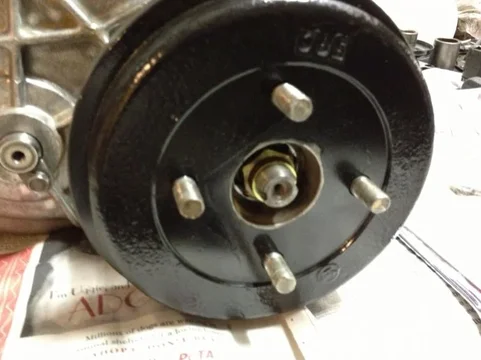
First, you have to attach the brake drum to the shaft and tighten it down - 100 ft/lbs is pretty hard to do if your transfer case isn't secured to something, or if your leverage on the brake drum is too short. I bolted a closed end wrench to one of the bolts as Coolerman shows in his HowTo but it needed to be a lot longer. I set my torque wrench to 115 lbs, and I couldn't pull it. The tcase was just sitting in the ground - I was standing on it, grabbing the bottom of it with my left hand, but I couldn't keep enough weight on it to pull it. I finally found a way to strap it to my portable welding table (don't have a good work bench at the moment, just a folding table), and was able to pull 105 lbs, just enough.

image-1849294068.webp
image-2055907149.webp
Note - brake backing plate not needed at this time.

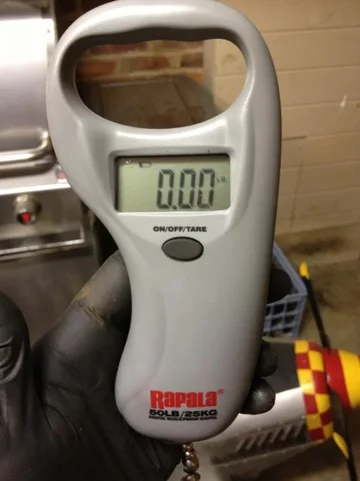
Here is the digital fish scale I bought:


image-370374301.webp
Rapala

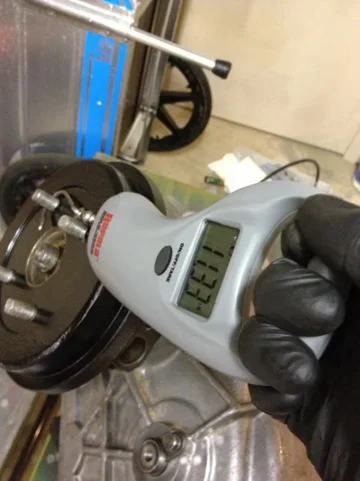
Once you have the nut on, you can test the pressure required to turn the brake drum. Mine came in between 10-11 lbs. Just right! Pull it very slowly - don't jerk it (minds out of the gutter).

image-1009810470.webp
11.3 lbs

Was too lazy to locate string and try that method.

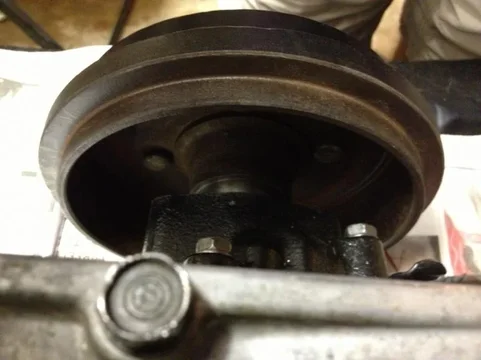
Next I removed the stake nut again, removed the drum, and made ready to install the speedo housing and bracket/nut.

Knocked off for the night.
image-1849294068.webp
image-2055907149.webp
image-1009810470.webp
image-370374301.webp
 
Last edited:
Used the fish scale tonight to test the pre load. Finally.

Referred to this http://www.globalsoftware-inc.com/coolerman/fj40/34F.htm from Coolerman for the how to.

First, you have to attach the brake drum to the shaft and tighten it down - 100 ft/lbs is pretty hard to do if your transfer case isn't secured to something, or if your leverage on the brake drum is too short. I bolted a closed end wrench to one of the bolts as Coolerman shows in his HowTo but it needed to be a lot longer. I set my torque wrench to 115 lbs, and I couldn't pull it. The tcase was just sitting in the ground - I was standing on it, grabbing the bottom of it with my left hand, but I couldn't keep enough weight on it to pull it. I finally found a way to strap it to my portable welding table (don't have a good work bench at the moment, just a folding table), and was able to pull 105 lbs, just enough.

View attachment 778989
View attachment 778990
Note - brake backing plate not needed at this time.

Here is the digital fish scale I bought:


View attachment 778992
Rapala

Once you have the nut on, you can test the pressure required to turn the brake drum. Mine came in between 10-11 lbs. Just right! Pull it very slowly - don't jerk it (minds out of the gutter).

View attachment 778991
11.3 lbs

Was too lazy to locate string and try that method.

Next I removed the stake nut again, removed the drum, and made ready to install the speedo housing and bracket/nut.

Knocked off for the night.

correct me if i'm wrong but when you measure with the fishscale from the rod end as you do in the picture, in stead of measuring with the string wrapped around the drum you reduce the distance to the pivot point by half. And since F = M x A ( Force = mass x distance) I think that when you measure with the string wrapped around the drum the force required to rotate the drum will be around 5-6 lbs :hhmm:
 
correct me if i'm wrong but when you measure with the fishscale from the rod end as you do in the picture, in stead of measuring with the string wrapped around the drum you reduce the distance to the pivot point by half. And since F = M x A ( Force = mass x distance) I think that when you measure with the string wrapped around the drum the force required to rotate the drum will be around 5-6 lbs :hhmm:

Well, now, this could turn into an interesting discussion. I don't think I've seen anyone assert that before, and if it is accurate, it is significant.

From the image I posted from the FSM, you can see that the string is actually tied to one of the bolts on the drum, then wrapped some number of times around the drum. I don't think the number of times matters - what matters is applying pressure to get the drum moving. You could wrap the string 100 times and that should not add to your distance.

The F=MA equation does have distance as a factor, but remember that the equation for Work = Force x Distance.

F = Mass * Acceleration
W = Force * distance = M * A * d

I think we are talking about the W = Fd equation, right? I made Cs in physics, and that was 24 years ago so some engineer jump in here (micdon you started this).

The mass we are overcoming is the resistance of the bearings and the weight of the drum (less significant but present). The resistance is collected about 2" in radius (4" in diameter) around the center of the shaft. So the further out from the center that we measure the Force required to move the mass, the less force will be required. In that, yes, I think you are right. If we attached a fish scale or a string to a bolt and pull at the same angle - I think it only matters that we are pulling from the bolt.

But, in the picture posted in the FSM they pull from the edge of the drum, which is about 2" further away from the center from where I pulled on the bolt. So, yes, you are probably correct, I am measuring a bit high when I measure the mass required to overcome the resistance from the bolt vs the edge of the drum.

Anyone want to redline this assertion and turn this C into an A?

That's the best I've got at the moment.
 
Last edited:
Back
Top Bottom