

Navigation
Install the app
How to install the app on iOS
Follow along with the video below to see how to install our site as a web app on your home screen.
Note: This feature may not be available in some browsers.
More options
Style variation
You are using an out of date browser. It may not display this or other websites correctly.
You should upgrade or use an alternative browser.
You should upgrade or use an alternative browser.
My 1980 BJ40
- Thread starter Pearly
- Start date
This site may earn a commission from merchant affiliate
links, including eBay, Amazon, Skimlinks, and others.


Thank you very much.
- Thread starter
- #103
Well, I've done it this time..........
There I was, happily going about a few visits on Saturday. Started her up after a short stop at the hardware store and....... GDGDGDGDGDGDGDGDGDGD!!!!! Really does not sound good! Consencus is that the cam shaft bearing has gone.
So decision time.....
Re-build the B engine (dunno how much, but probably around USD1500)
Change the engine out. Looking for a decent diesel, but can also get a 1JZ 2.5L Turbo. That is the usual engine of choice in these parts. Trouble is, it is about MYR15K (USD4,600) with a 5 speed box, PTO and all the work. That's more than you guys pay for a decent FJ40!!
There I was, happily going about a few visits on Saturday. Started her up after a short stop at the hardware store and....... GDGDGDGDGDGDGDGDGDGD!!!!! Really does not sound good! Consencus is that the cam shaft bearing has gone.
So decision time.....
Re-build the B engine (dunno how much, but probably around USD1500)
Change the engine out. Looking for a decent diesel, but can also get a 1JZ 2.5L Turbo. That is the usual engine of choice in these parts. Trouble is, it is about MYR15K (USD4,600) with a 5 speed box, PTO and all the work. That's more than you guys pay for a decent FJ40!!
Last edited:
- Thread starter
- #104
Called into Ah Choy's workshop at Sungai Buloh last night. They picked up my BJ early afternoon and the engine was already out when I got there....
The half-cut was delivered around 3:30 and they were just finishing the removal at 5:30!!!!


The half-cut was delivered around 3:30 and they were just finishing the removal at 5:30!!!!


Interesting swap! Be keen to see how it goes once she's done. I know exactly what you mean about the B diesel being noisy too. I have my stereo cranked up loud so i can hear it and then once you stop at lights or something it is too loud, so you have to turn it down. Can't be good for my ears either! 

So, just out of curiosity, was it the cam bearing/s that went? I'm just wondering what kind of damage occurred from this. My cam bearings were bad in my 3B, but other than low oil pressure, I didn't have any other symptoms.
So, is that other engine out of a Prado? Just curious. Being from the USA, I never get to see any of those cool diesel engines that Toyota put in so many of their vehicles.

So, is that other engine out of a Prado? Just curious. Being from the USA, I never get to see any of those cool diesel engines that Toyota put in so many of their vehicles.
- Thread starter
- #108
My B had been getting increasingly difficult to start. Keep in mind that it is always around 90oF out here, I was having to glow for about 20 seconds. On starting, I would get a cloud of black smoke, but if idling cold would get blue smoke. Once it was hot, it would run sweet, but damn noisy. I've had a knocking for a while - if you put you finger on the injector pipes, the 3rd on from the left would always have a "clicking" feeling - dunno how else to describe it.
It got very noisy all of a sudden when re-starting it hot. Haven't stripped it down yet - too busy with the swap!
This is a 1JZ - the same as the Toyota Crown, etc. The power can be increased with different mapping, but stock power will be plenty.
The 1KZ alternative is the same engine as the Prado, Hilux, etc. Yes it would be quieter than the B, more low down torque and more waterproof. Yes I maybe would be better off with a 1KZ, but I may buy another BJ and use that for hardcore off-road instead of my daily driver!
Choy says my BJ should be finished on Tuesday.......................
Wikipedia -
1KZ-TE
The 1KZ-TE is a 3.0 L (2982 cc), 4 cylinder, SOHC, 2 valves per cylinder turbo diesel engine with indirect injection. Bore is 96 mm and stroke is 103 mm, with a compression ratio of 21.2:1. Maximum output is 130 hp (97 kW) @ 3600 rpm with maximum torque of 287 N·m (211 lb·ft) @ 2000 rpm. Redline is 4400 rpm. First produced in 1993, it is still used in new model vehicles today. The 1KZ-TE also adopts the electronically controlled fuel injection, ETCS-i (Electronic Throttle Control System - intelligent) technology which is similar in basic construction to a modern gasoline injector, although utilizing considerably higher injection pressures, it is an indirect injection engine which gives it a significant efficiency and fuel consumption penalty. It was replaced in most markets with the 1KD-FTV engine which uses common-rail direct injection and delivers more power while using considerably less fuel.
Used in KZJ71W, KZJ78W, KZN160 and KZN165R (Australian & South African delivered model).
The intercooler equipped version of the engine increases the output of the engine 145 hp (108 kW) [Aust. 130 hp (96 kW)] @ 3600 rpm and maximum torque of 343 N·m (253 lb·ft) @ 2000 rpm.
Applications:
The third generation of the 1JZ-GTE was introduced around 1996, still as a 2.5-litre turbo, but with Toyota's BEAMS architecture.[2] This included a reworked head, newly developed continuously variable valve timing mechanism (VVT-i), modified water jackets for improved cylinder cooling and newly developed shims with a titanium nitride coating for reduced cam friction.[3] The turbo setup changed from parallel twin turbo (CT12x2) to a single turbo (CT 15B). The adoption of VVT-i and the improved cylinder cooling allowed the compression ratio to be increased from 8.5:1 to 9.0:1. Even though the official power figures remained at 280 metric horsepower (210 kW) at 6200 rpm, torque was increased by 20Nm to 379 newton metres (280 lbf·ft) at 2400 rpm. These improvements resulted in increased engine efficiency that reduced fuel consumption by 10%. The adoption of a much higher efficiency single turbocharger than the twins as well as different manifold and exhaust ports were responsible for most of the 50% torque increase at low engine speeds . This engine was used primarily in Toyota's X chassis cars (Chaser, Mark II, Cresta, Verossa), the Crown Athlete V (JZS170) and in the later JZZ30 Soarer, as the JZA70 Supra was long discontinued by this time.
Applications:
It got very noisy all of a sudden when re-starting it hot. Haven't stripped it down yet - too busy with the swap!
This is a 1JZ - the same as the Toyota Crown, etc. The power can be increased with different mapping, but stock power will be plenty.
The 1KZ alternative is the same engine as the Prado, Hilux, etc. Yes it would be quieter than the B, more low down torque and more waterproof. Yes I maybe would be better off with a 1KZ, but I may buy another BJ and use that for hardcore off-road instead of my daily driver!
Choy says my BJ should be finished on Tuesday.......................
Wikipedia -
1KZ-TE
The 1KZ-TE is a 3.0 L (2982 cc), 4 cylinder, SOHC, 2 valves per cylinder turbo diesel engine with indirect injection. Bore is 96 mm and stroke is 103 mm, with a compression ratio of 21.2:1. Maximum output is 130 hp (97 kW) @ 3600 rpm with maximum torque of 287 N·m (211 lb·ft) @ 2000 rpm. Redline is 4400 rpm. First produced in 1993, it is still used in new model vehicles today. The 1KZ-TE also adopts the electronically controlled fuel injection, ETCS-i (Electronic Throttle Control System - intelligent) technology which is similar in basic construction to a modern gasoline injector, although utilizing considerably higher injection pressures, it is an indirect injection engine which gives it a significant efficiency and fuel consumption penalty. It was replaced in most markets with the 1KD-FTV engine which uses common-rail direct injection and delivers more power while using considerably less fuel.
Used in KZJ71W, KZJ78W, KZN160 and KZN165R (Australian & South African delivered model).
The intercooler equipped version of the engine increases the output of the engine 145 hp (108 kW) [Aust. 130 hp (96 kW)] @ 3600 rpm and maximum torque of 343 N·m (253 lb·ft) @ 2000 rpm.
Applications:
- Land Cruiser Prado KZJ90, KZJ95, KZJ120L[1]
- Hilux Surf KZN130, KZN185
- Hilux KZN165
The third generation of the 1JZ-GTE was introduced around 1996, still as a 2.5-litre turbo, but with Toyota's BEAMS architecture.[2] This included a reworked head, newly developed continuously variable valve timing mechanism (VVT-i), modified water jackets for improved cylinder cooling and newly developed shims with a titanium nitride coating for reduced cam friction.[3] The turbo setup changed from parallel twin turbo (CT12x2) to a single turbo (CT 15B). The adoption of VVT-i and the improved cylinder cooling allowed the compression ratio to be increased from 8.5:1 to 9.0:1. Even though the official power figures remained at 280 metric horsepower (210 kW) at 6200 rpm, torque was increased by 20Nm to 379 newton metres (280 lbf·ft) at 2400 rpm. These improvements resulted in increased engine efficiency that reduced fuel consumption by 10%. The adoption of a much higher efficiency single turbocharger than the twins as well as different manifold and exhaust ports were responsible for most of the 50% torque increase at low engine speeds . This engine was used primarily in Toyota's X chassis cars (Chaser, Mark II, Cresta, Verossa), the Crown Athlete V (JZS170) and in the later JZZ30 Soarer, as the JZA70 Supra was long discontinued by this time.
Applications:
- Toyota Chaser/Cresta/Mark II Tourer V (JZX81, JZX90, JZX100, JZX110)
- Toyota Soarer (JZZ30)
- Toyota Supra MK III (JZA70, Japan only)
- Toyota Verossa
- Toyota Crown (JZS170)
- Toyota Mark II Blit
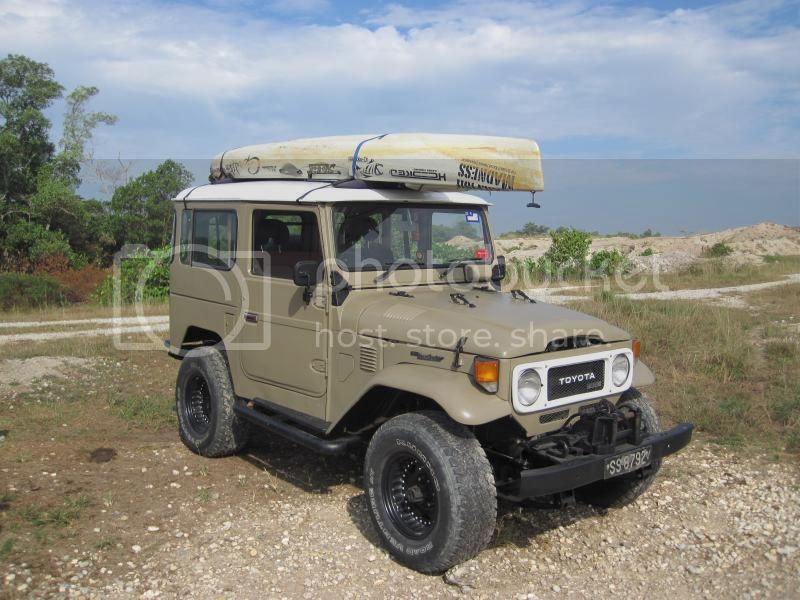
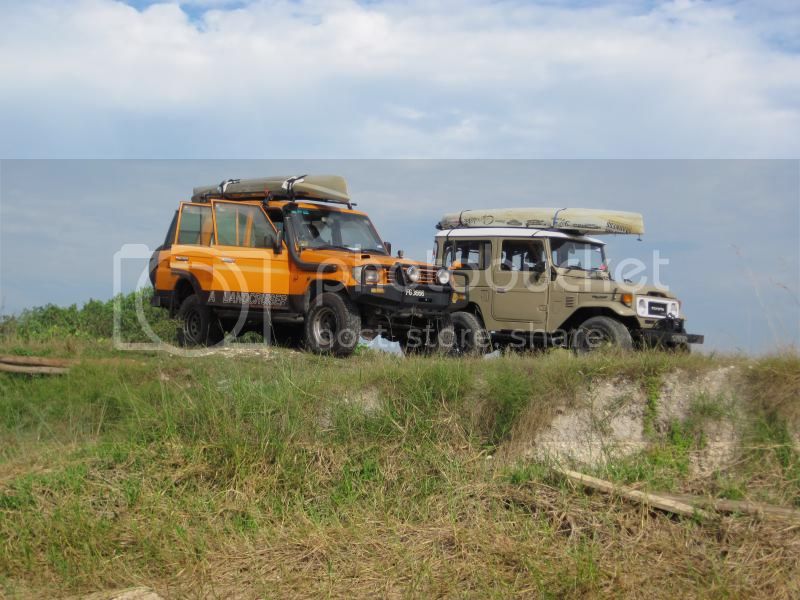
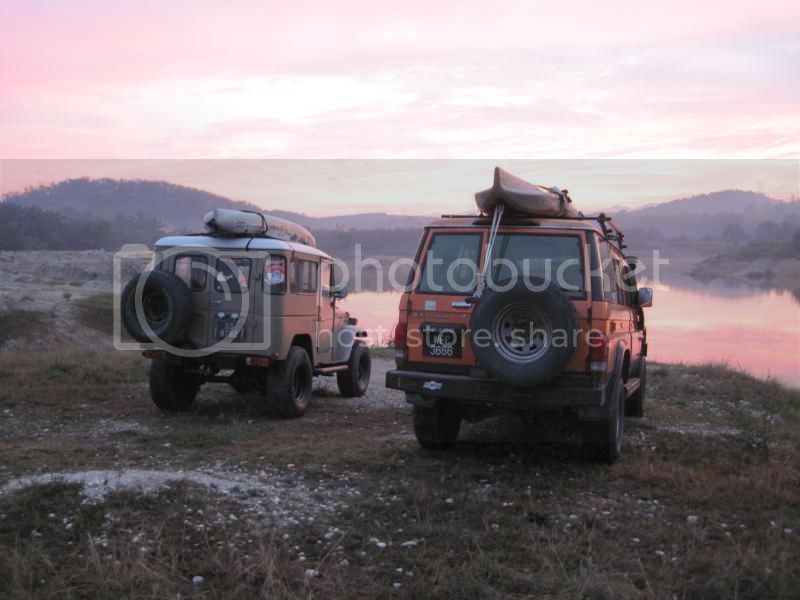


Very cool @Pearly . You have done a sensational job on this resto.
Just curious, any rust coming through from the spray job?
Just curious, any rust coming through from the spray job?

pearly,
sorry to read about your engine troubles. But the rest sure does look nice. I'm sure your going to love the extra power
From the pictures in post #110, i noticed that your license plate holder looks a different from mine eventhough we both have BJ40 from the 1980. Mine has another bit spotwelded to the bottom of it , causing it to extend beyond the ressecesd part of the door.
Does anybody know??
I'll take a picture when I get home and post it tonight. (sorry for the hijack)
sorry to read about your engine troubles. But the rest sure does look nice. I'm sure your going to love the extra power
From the pictures in post #110, i noticed that your license plate holder looks a different from mine eventhough we both have BJ40 from the 1980. Mine has another bit spotwelded to the bottom of it , causing it to extend beyond the ressecesd part of the door.
Does anybody know??
I'll take a picture when I get home and post it tonight. (sorry for the hijack)