Gas tank building excessive pressure & fuel smell. Dangerous for sure! Why does this happen?

This site may earn a commission from merchant affiliate
links, including eBay, Amazon, Skimlinks, and others.

@sunfic After the 100, the 2UZ-FE went to live on into the 200 and Tundra. There, it went back to a 3-speed, ECU controller for the fuel pump but with added fuel pump monitoring.
That good to know. I really don't know the logic of toyota engineer's choice.

the same thing happened to toyota AC controller signals as well. only in certain 2UZ-FE LC100 models toyota utilized A/CS ALED signals to control compressor while all the other toyota models around that time using AC1 ACT signals. really frustrating.

For me I always think the 3-speed fuel pump ECU/AMP is much better than analog resistor.
 
Drove back from Denver to Omaha last Sunday and temps were ~100 the whole way. Not towing or carrying anything. Traveled light. Mostly stock ‘05 LX470 with LRA 40 gallon tank.

About 3 hours in, I stopped at a rest area and noticed faint fume smell when I got out.

Took a piss and got back to start her up and she started and stopped. Turned the key off and cranked it again and she started right up without issue.

Couple hours later we stopped at a gas station. No signs of boiling at the gas cap. No venting. No issue starting after fueling up.

However, there has been a faint smell of gas when standing near the rear ever since.

Maybe my charcoal canister is shot?

Btw, the coolant temp never got over 194.
 
Well after having been following this thread preventatively, it looks like I need to work on this now.

Was in the mountains for the past week and during some slow 4x4 travel at high elevation in 100F days we had fuel boiling. I could hear boiling near the rear and smell fumes. I did not try to vent the gas cap and had no issues restarting the truck after we took a lunch break. I did pop the hood and hear gurgling from the charcoal canister.

I probably need to go back and reread the thread since I have forgotten a lot, but what are the signs the charcoal canister needs to be replaced for the earlier model years with the CC in the engine bay? I am hoping the heat shielding will solve the issues, but wanted to understand that.
 
It’s actually the fuel inside the tank that is boiling. The exhaust pipe is just a few inches away from the tank which heats up the fuel. Once you insulate the tank, about 99% positive that will address the boiling fuel / increased tank pressure / fuel overflow on the fuel filler inlet.
 
Toyota has flow/pressure test for Charcoal Canisters. But just increase in weight can, is indicator it's on last leg.

Increase weight, is fuel stautation of charcoal. This reduce flow, and increase pressure within fuel tank. Which "pressure" is a big contributor to fuel boiling.

Pressure=heat. Heat=pressure.

I'll start recording CC weights of the different year CC. I'll post them up.
 
If fuel is boiling in the tank from exhaust pipe heat, would it be effective to insulate the exhaust pipe instead of the big fuel tank?

I would take an IR thermometer and follow the fuel system to look for hot spots that would cause trouble.
 
If fuel is boiling in the tank from exhaust pipe heat, would it be effective to insulate the exhaust pipe instead of the big fuel tank?

I would take an IR thermometer and follow the fuel system to look for hot spots that would cause trouble.
Yes you can, I toyed with the idea of thermo-wrapping my exhaust pipe system after I insulated my tank in case that won’t fix the problem. But it did, for less than $100.
 
Rare look inside a late model fuel tank.

This is from my 07 LC (10/06 build date). I don't know exactly what it is that I'm looking at, but I assume those bits connected to the fast fill vent are essential in keeping the evap system happy. I'm going to swap said bits from the OEM tank over to a 40g LRA tank.

IMG_6085.jpeg


IMG_6086.jpeg


IMG_6087.jpeg
 
Last edited:
This happened to my wife today when she took the LX up to Grouse Ridge lookout off Hwy 20. Filled the tank in Sacramento, drove straight up the mountain to 7700ft, the high is 111 today. Canister was making a gurgling sound at the top and taking the gas cap off it actually vented for several minutes. Funny thing is I took up to Laurel lakes outside of Mamoth last week, 9600ft, and it did not happen to me. I'm thinking maybe because of a more gradual climb + only in the high 80s.

Is the general consensus that insulating the gas tank is our best bet to help the issue? @OEMGUY0720 what did you use to insulate? Are there any easy tests I can perform on the canister (98-02 in engine bay) to tell if it needs replacing?
 
This happened to my wife today when she took the LX up to Grouse Ridge lookout off Hwy 20. Filled the tank in Sacramento, drove straight up the mountain to 7700ft, the high is 111 today. Canister was making a gurgling sound at the top and taking the gas cap off it actually vented for several minutes. Funny thing is I took up to Laurel lakes outside of Mamoth last week, 9600ft, and it did not happen to me. I'm thinking maybe because of a more gradual climb + only in the high 80s.

Is the general consensus that insulating the gas tank is our best bet to help the issue? @OEMGUY0720 what did you use to insulate? Are there any easy tests I can perform on the canister (98-02 in engine bay) to tell if it needs replacing?
Filling gas tank full and then climbing a mountain. Is bad idea! That can lead to fuel getting into charcoal canister. Is kinda like squeezing fuel pump handle, after auto handle shut off. Even more so, adding ~60F fuel to the gas tank, than heat to ~130F (road temp), expanding.
 
Last edited:
This happened to my wife today when she took the LX up to Grouse Ridge lookout off Hwy 20. Filled the tank in Sacramento, drove straight up the mountain to 7700ft, the high is 111 today. Canister was making a gurgling sound at the top and taking the gas cap off it actually vented for several minutes. Funny thing is I took up to Laurel lakes outside of Mamoth last week, 9600ft, and it did not happen to me. I'm thinking maybe because of a more gradual climb + only in the high 80s.

Is the general consensus that insulating the gas tank is our best bet to help the issue? @OEMGUY0720 what did you use to insulate? Are there any easy tests I can perform on the canister (98-02 in engine bay) to tell if it needs replacing?
This is what I used: https://www.amazon.com/dp/B084BS715K?tag=ihco-20
 
Took a couple weeks, but I finally finished re-reading this thread.

I am not going to rehash all the discussion that has occurred and just want to share the solutions that seem to have worked for most people assuming the rest of your vehicle systems (cooling, fuel, evap, etc.) are operating as they should. @J1000 tested the system to identify the primary locations where the fuel is heated and proposed fixes. You can read more and see the pictures in this post quoted below (post #206 on page 11); I have highlighted the main points:

I was under my truck doing some more mods. And since I have a fuel temperature sensor, I can tell what works and what doesn't.

[ . . . ]

#1: Extensive heat shielding. Earlier in this thread there was talk about extra shielding on the catalytic converters, but I found recently over the past few weeks that there are far more important areas to add heat shielding. I've been doing this by driving a lot and then scooting under the truck on my creeper and feeling around with my hands and figuring out where things are hot and where they aren't and then doing it again.

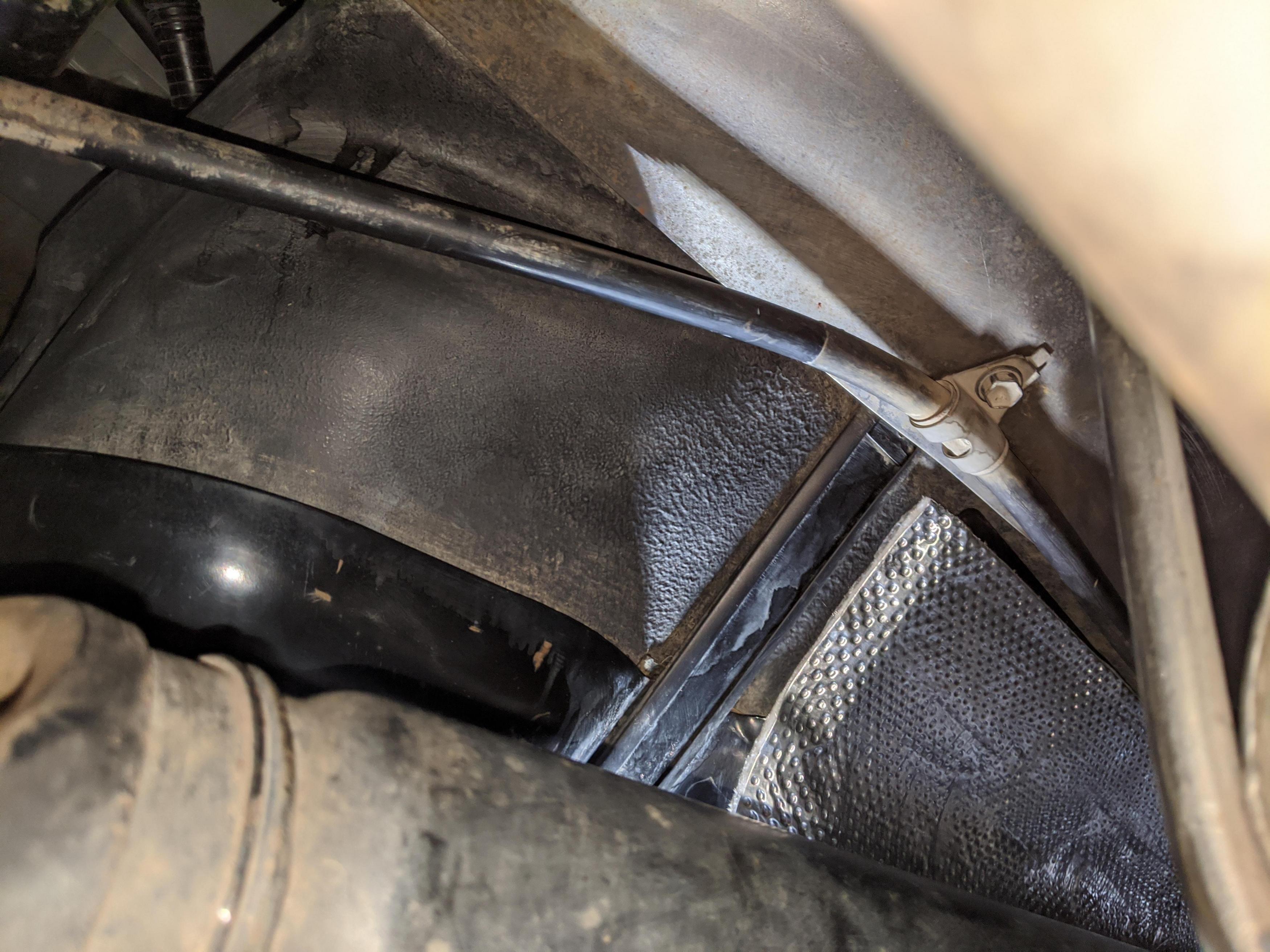
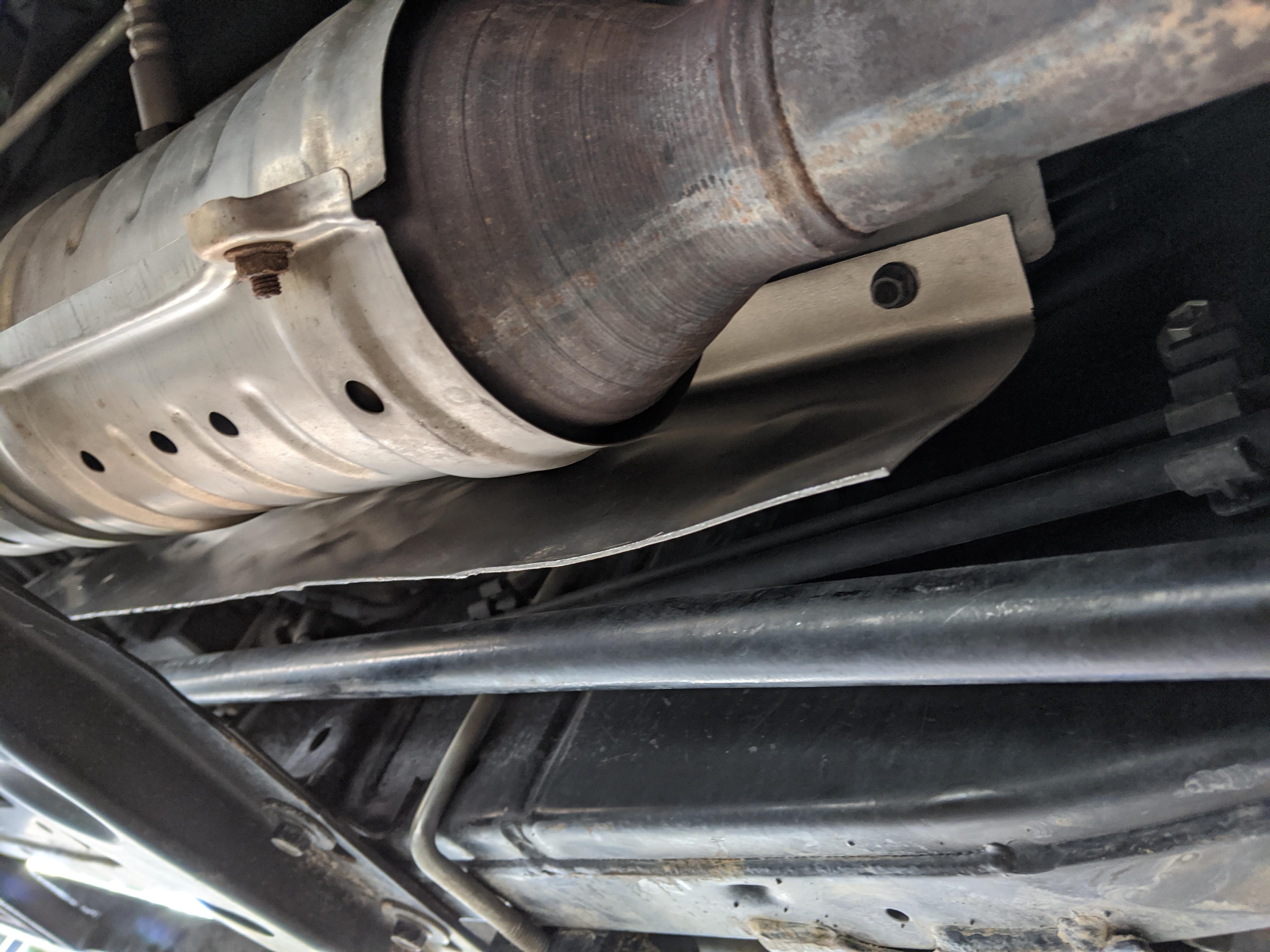
There is an area here on the fuel tank where the stock metal guard doesn't cover and there is no heatshield between it and the exhaust pipe.
Bare fuel tank exposed within 12" of exhaust pipe (darker tank shield seen below exposed tank side with rough texture):

HQUOBO6.jpg


Here and on the tank shield itself I used adhesive backed heatshield material:
Amazon.com: Second Skin Thermal Block - Automotive Heat Shield - Reflective Aluminum, Insulation & Adhesive (8 sq ft, 4 Sheets) - Made in USA: Automotive - https://www.amazon.com/Second-Skin-Thermal-Block-Automotive/dp/B084BS715K?dchild=1&keywords=heat%2Bshield%2Badhesive&qid=1625150357&sr=8-3-spons&spLa=ZW5jcnlwdGVkUXVhbGlmaWVyPUFOSlhCTUM0TFgzMFUmZW5jcnlwdGVkSWQ9QTA4MjQ4NzIyT0lDSzYwOVRJSlVIJmVuY3J5cHRlZEFkSWQ9QTA0NDc2MjczRTJCQTlWRUxMMUYyJndpZGdldE5hbWU9c3BfYXRmJmFjdGlvbj1jbGlja1JlZGlyZWN0JmRvTm90TG9nQ2xpY2s9dHJ1ZQ&th=1&linkCode=sl1&tag=imddd-20&linkId=9544ff7a8047c7e764ef98b1e1d93c9d&language=en_US&ref_=as_li_ss_tl
This stuff blocks the radiant heat with the silver metal barrier but also insulates with a cloth layer underneath and sticks with adhesive which makes it easy to put anywhere. I use this small roller to help get a good bond:
Amazon.com: LUMITECO Automotive Car Audio Sound Deadening Application Wheel Roller, Heat Abatement Mat Wallpaper Application PU Smoothing Tool Seam Roller: Automotive

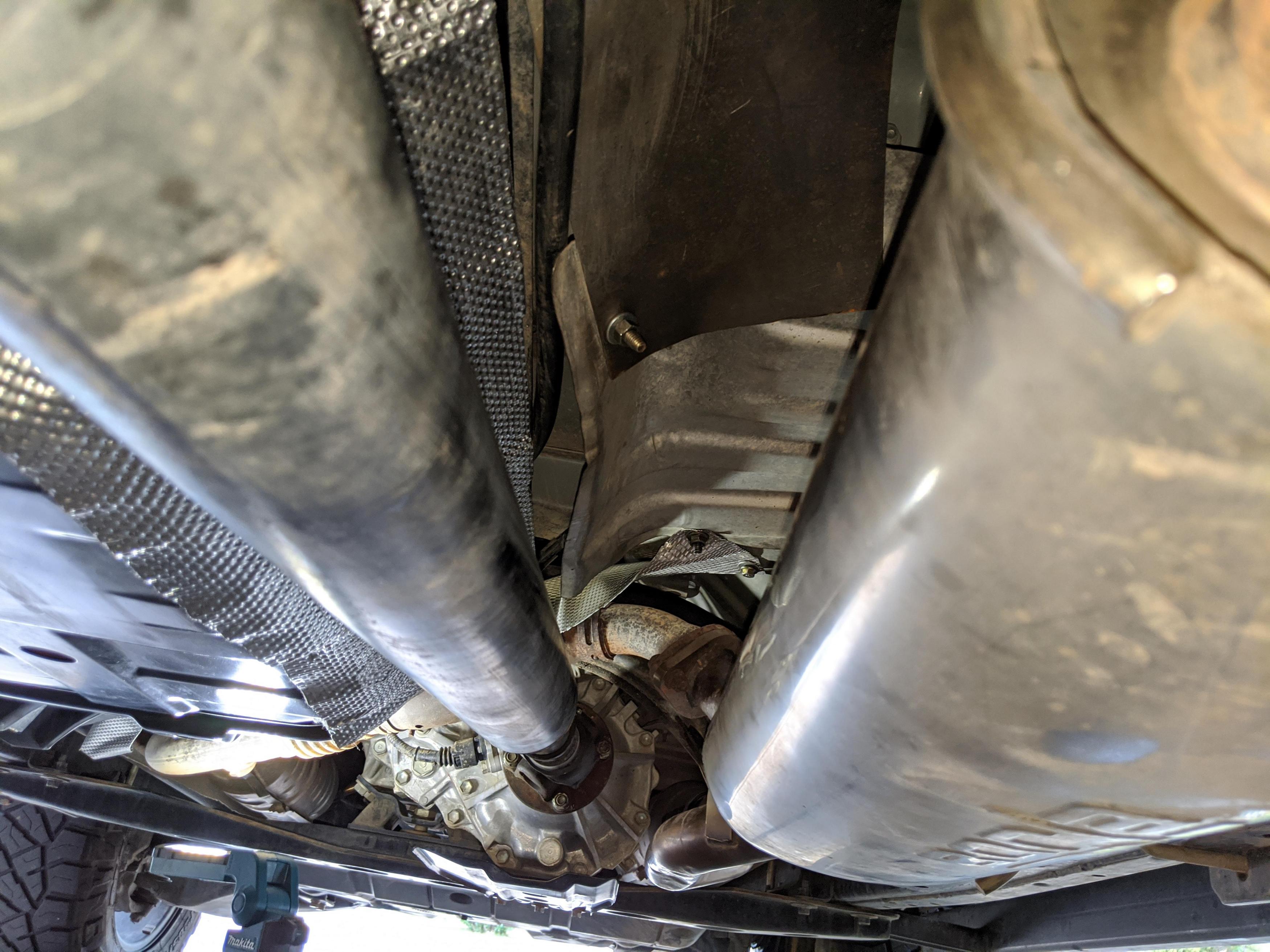
I did the whole side of the fuel tank. I also extended the factory heatshield in a few more places:
iT5xzwc.jpg


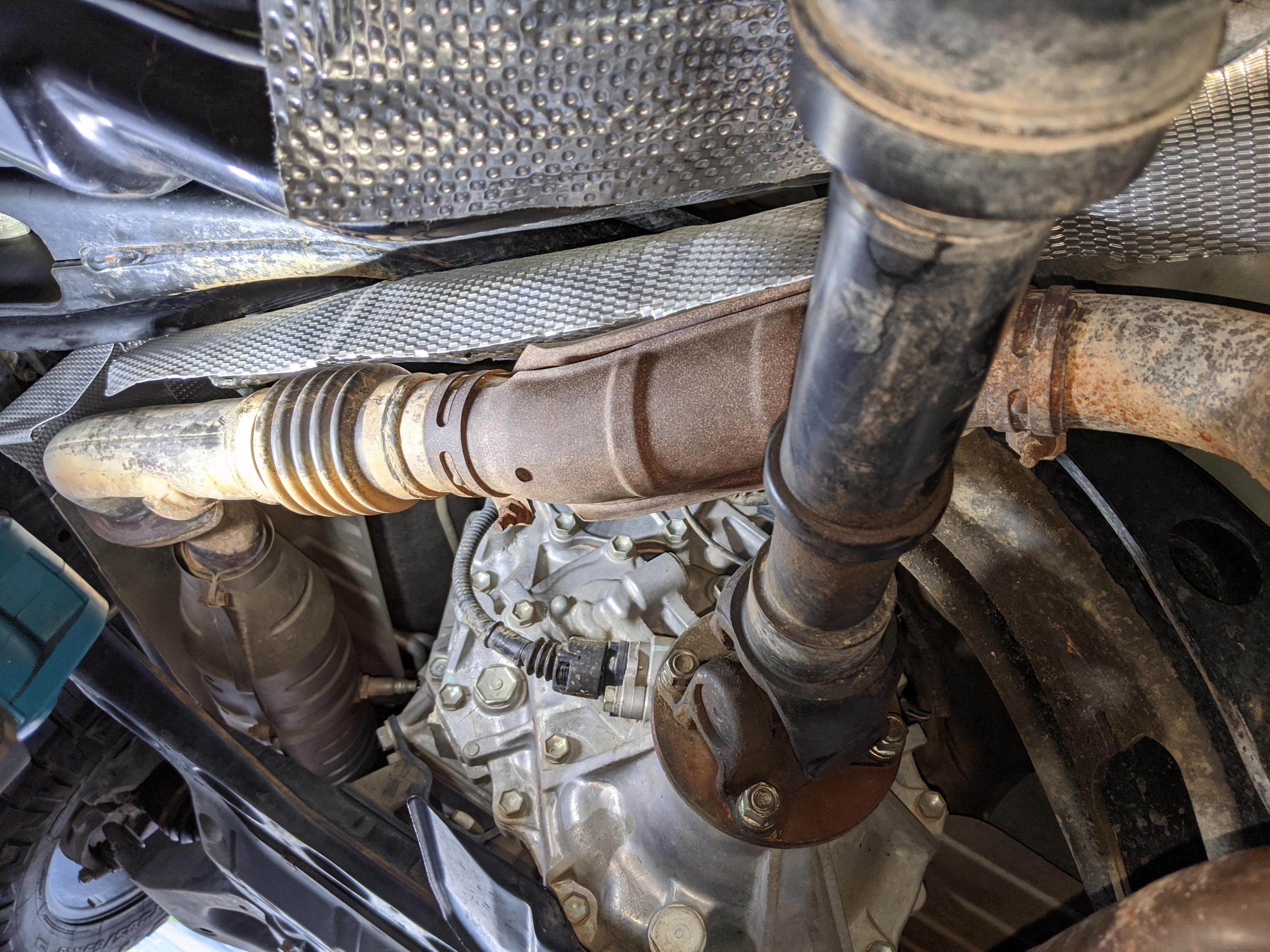
Lastly, I used some embossed heatshield material to shield the front crossover y-pipe from the front of the fuel tank:
Amazon.com: Design Engineering 050503-16 Floor and Tunnel Shield: Automotive
This stuff is really lightweight and easy to bend and and cut and work with but also extremely effective at blocking radiant heat.
A0TkgQu.jpg


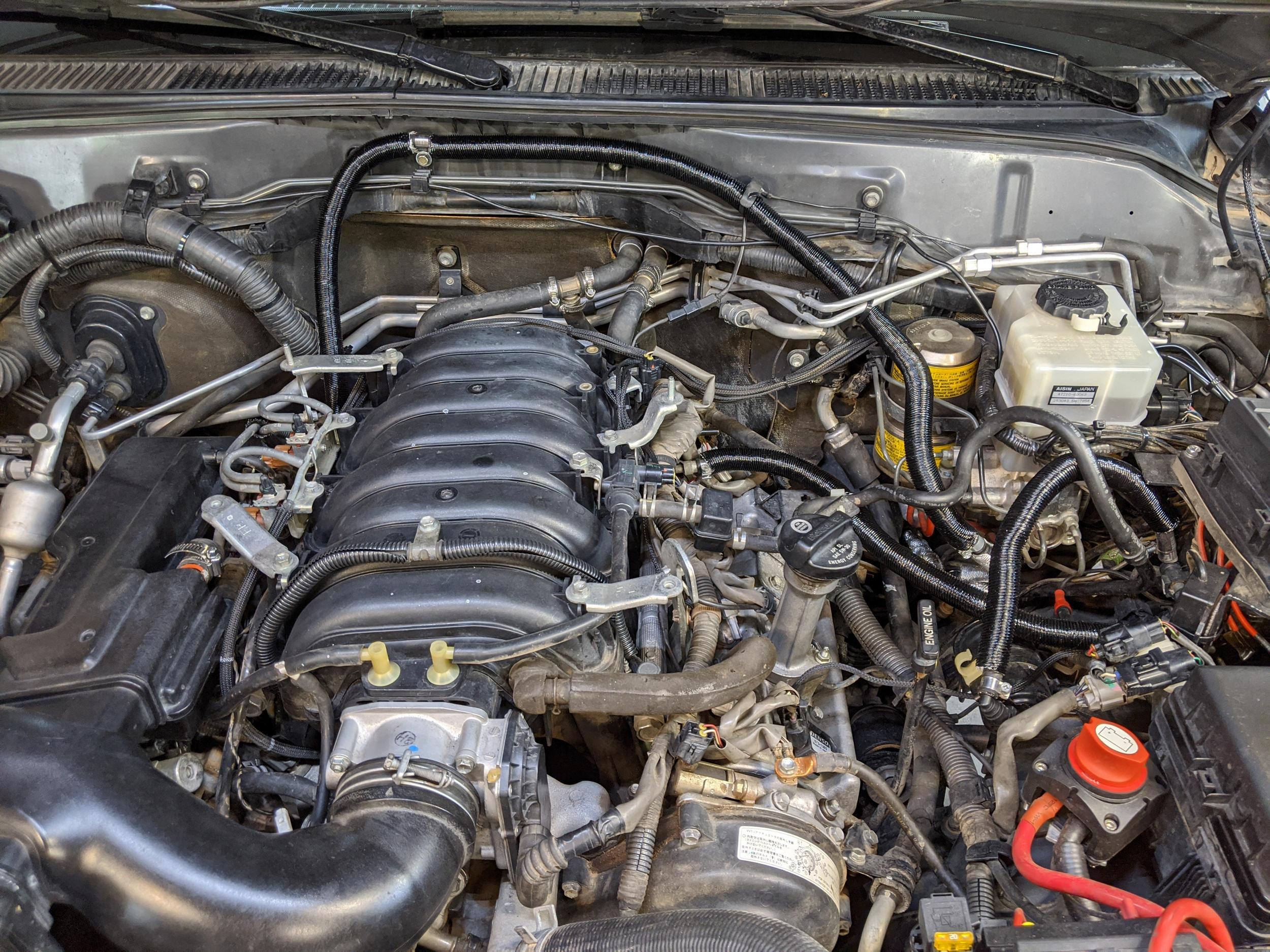
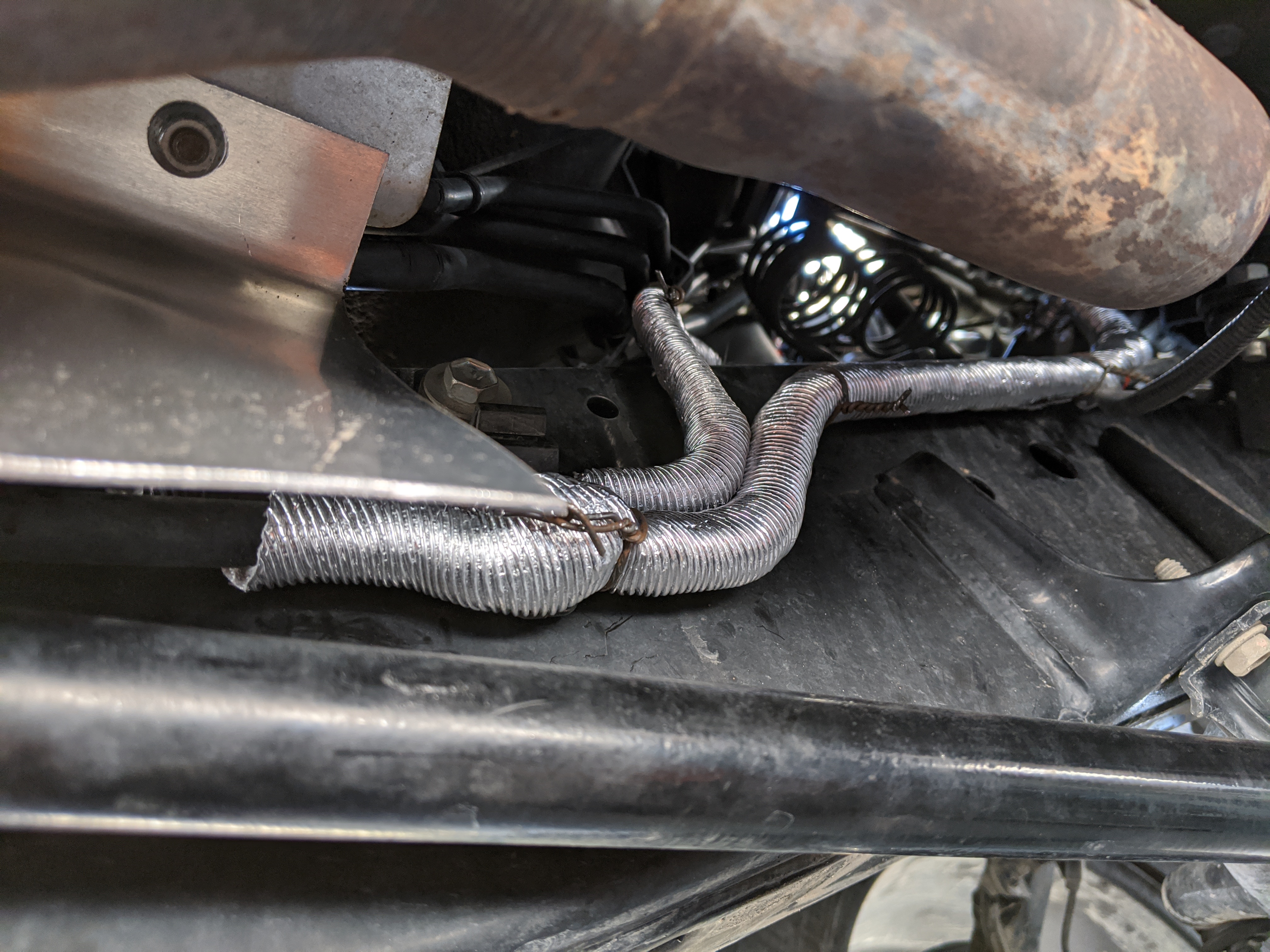
#2: Moving return fuel line off the engine to the firewall. This just eliminated the steel return fuel line that is bolted directly to the engine cylinder heads on the rear of the engine reducing the amount of heat returned to the tank from the fuel rails. I also covered the fuel line as well as the rest of the lines with heatshield: Amazon.com: Design Engineering 010448 Cool-Tube Extreme Heat Reflective Sleeve, 0.75" x 9' - Black: Automotive - https://www.amazon.com/gp/product/B0039Z3R76/ref=as_li_ss_tl?ie=UTF8&psc=1&linkCode=sl1&tag=imddd-20&linkId=6a63ffcea02ab838474c6eb0ace27470&language=en_US

vy5qrJq.jpg


#3: Catalytic converter and fuel line shielding: These were the first mods I did to try and combat fuel temperature, but I would only rate them #3 on my list. Every other mod was more effective at lowering the fuel temperature. I have no doubt this mod is effective in some way, but not as much as the others. If doing heatshielding under the vehicle, then this should be done no matter what anyway IMO. It's also the easiest of all the mods. I used this heatshield for the fuel lines: Amazon.com: DEI 010441 Cool-Tube Extreme Heat Reflective Sleeve, 0.5" x 9' - Silver: Automotive - https://www.amazon.com/gp/product/B000CEO5T6/ref=as_li_ss_tl?ie=UTF8&psc=1&linkCode=sl1&tag=imddd-20&linkId=73d500d53bcced0c63a4e631de12290b&language=en_US

ocMorbo.jpg


mhcxnSs.jpg


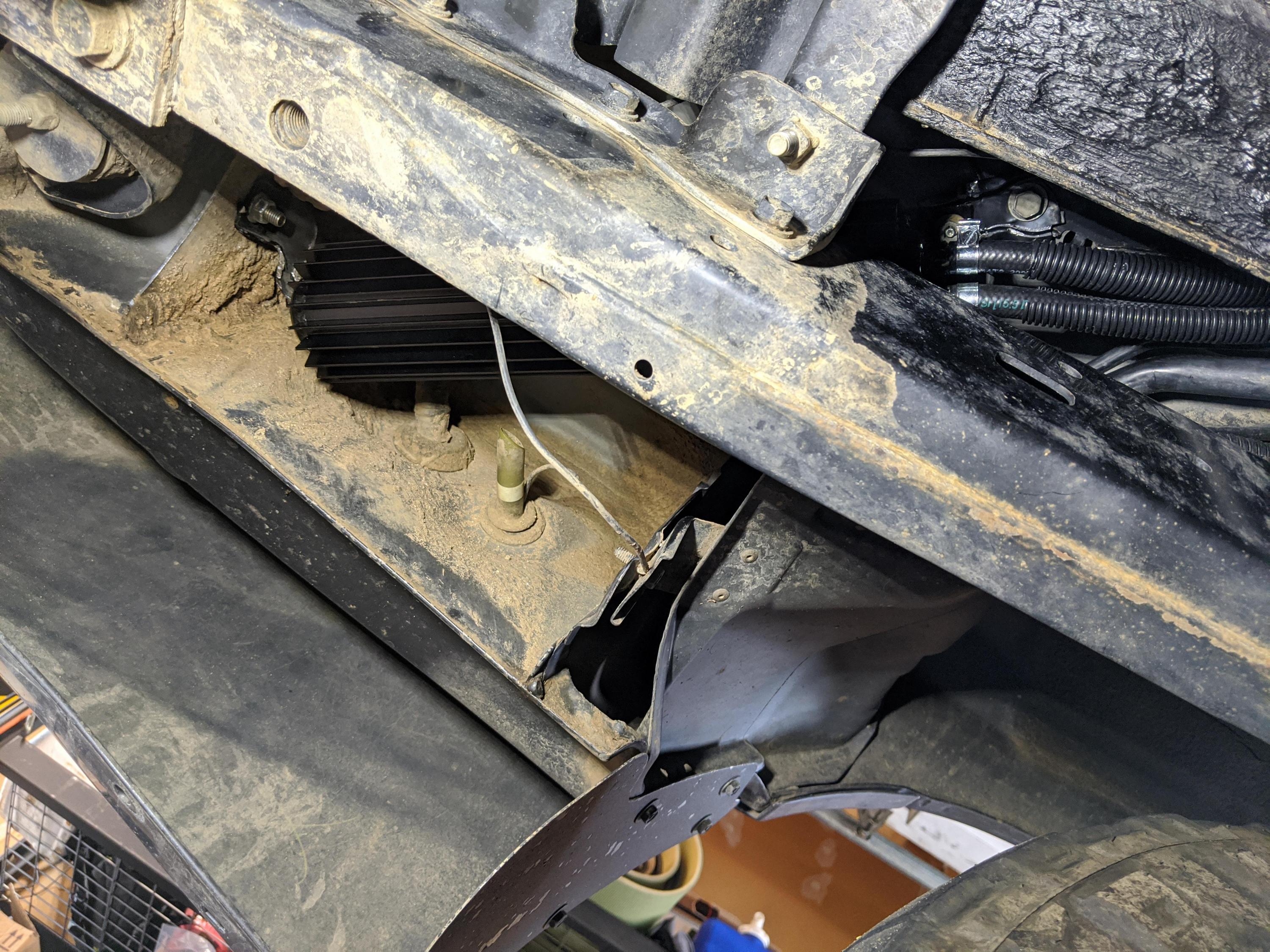
#4: Passive dual-pass finned fuel cooler. More of an experiment than anything I bought this inexpensive multipurpose cooler and plumbed it to the return line right before the fuel tank. I used quick connect fuel connectors so that if there is ever a problem with the cooler I can simply disconnect it and return the lines to stock without any tools. I placed it in the rear area above the frame rail. This area is always cool to the touch compared to the rest of the vehicle when I have been poking and probing for the last few weeks, it gets a surprising amount of air flow.

Mounted above the frame rail by the evap canister away from danger.

wdMoOjf.jpg


I used this 12" fuel cooler: Amazon.com: HotRod99 12" Satin Aluminum Finned Dual Pass Heat Sink Cooler Transmission Cooler Black Includes Two 1/4 NPT Fittings: Home & Kitchen - https://www.amazon.com/gp/product/B01EC4G9JA/ref=as_li_ss_tl?ie=UTF8&psc=1&linkCode=sl1&tag=imddd-20&linkId=f9f4aee61114b21d3399ffb5bb9bb99a&language=en_US
Some 5/16 Gates fuel hose: https://www.amazon.com/gp/product/B0058XDL0K/?tag=ihco-20
and 1/4 NPT to 5/16 fittings: https://www.amazon.com/TUOREN-Barb-Brass-Fitting-Adapter/dp/B07RKM6VR8/?tag=ihco-20

I am going to proceed suggestions #1, #2, and #3. I am not going to do #4. If I have left over pipe insulation I may add it to the transmission hard lines that run past the passenger side cat.

I am going to deviate from the above recommendations in #2 and #3 by using the DEI Heat Shroud instead of the Cool-Tube Extreme Heat Reflective Sleeve for the fuel lines. The Heat Shroud comes split with velcro attachment so I do not have to cut it or disconnect the fuel lines for install. It also has an insulating glass fiber layer which I think will help with heat soak over long periods of use better.
https://www.designengineering.com/heat-shroud-0-75-x-36/

Responding to my original question about knowing when the charcoal canister (CC) needs to be replaced:
The FSM has a few test procedures for the VSVs and the CC and using vacuum/air pressure and gauges in different arrangements to see if everything is working properly. Earlier in this thread it was suggested by some that the devices appeared to pass testing but still may have been faulty. I know weight of the CC has been discussed a few times and one that is loaded with fuel and possibly clogged will weigh more than a new one. I do plan to weigh mine as well when I test it. This thread is a good reference for some that have cut open their CC's to replace the charcoal as well as others who have found cheaper alternatives:
https://forum.ih8mud.com/threads/charcoal-canister-replacement-option.1006708/
 
Took a couple weeks, but I finally finished re-reading this thread.

I am not going to rehash all the discussion that has occurred and just want to share the solutions that seem to have worked for most people assuming the rest of your vehicle systems (cooling, fuel, evap, etc.) are operating as they should. @J1000 tested the system to identify the primary locations where the fuel is heated and proposed fixes. You can read more and see the pictures in this post quoted below (post #206 on page 11); I have highlighted the main points:


I am going to proceed suggestions #1, #2, and #3. I am not going to do #4. If I have left over pipe insulation I may add it to the transmission hard lines that run past the passenger side cat.

I am going to deviate from the above recommendations in #2 and #3 by using the DEI Heat Shroud instead of the Cool-Tube Extreme Heat Reflective Sleeve for the fuel lines. The Heat Shroud comes split with velcro attachment so I do not have to cut it or disconnect the fuel lines for install. It also has an insulating glass fiber layer which I think will help with heat soak over long periods of use better.
Heat Shroud™ - 0.75" x 36" - https://www.designengineering.com/heat-shroud-0-75-x-36/

Responding to my original question about knowing when the charcoal canister (CC) needs to be replaced:
The FSM has a few test procedures for the VSVs and the CC and using vacuum/air pressure and gauges in different arrangements to see if everything is working properly. Earlier in this thread it was suggested by some that the devices appeared to pass testing but still may have been faulty. I know weight of the CC has been discussed a few times and one that is loaded with fuel and possibly clogged will weigh more than a new one. I do plan to weigh mine as well when I test it. This thread is a good reference for some that have cut open their CC's to replace the charcoal as well as others who have found cheaper alternatives:
Charcoal Canister Replacement Option - https://forum.ih8mud.com/threads/charcoal-canister-replacement-option.1006708/

Also used the DEI stuff. It's worked well, although it's permanently crap looking thanks to the velcro collecting dirt.
 
Did some slow 4x4 crawling yesterday 2mph for a few hrs. Got to camp and was gonna top up the fuel. I took the cap off and it was pushing a steady fume for a few minutes. The fume temperature you could not put your finger in the path of the fumes or it would burn you. The fume flow rate was somewhat like someone blowing air from a puckered mouth. The fuel was indeed boiling in the tank.

The next day was just hwy roads and 60mph. No boiling. So, I think the muffler heated the tank due to proximity and no air cooling due to low speed. And maybe the charcoal canister line is plugged. Canister was rebuilt last fall.

Pretty freaky. I haven't read this thread yet. Hopefully there is some info in there. The above is just a guess at this point.

1997 Landcruiser 80. 1fz-fe

100f ambient temp, 4000ft elevation
 
Last edited:
The fuel boiling issue is not isolated with Toyota. If you look up Nissan Patrols in Middle East countries (YouTube), they experience the same. I did some basic reading and learned that petrol holds heat a little longer than water because of its chemical properties.
 
I’ve had this issue for the whole time I’ve owned my 100. In the last year I have replaced the fuel pump, filter, fuel cap, relays, charcoal canister, cat back exhaust, cat shielding, and fuel tank shielding. This week drove from OKC to Durango first trip without boiling and engine vapor lock / no start.
 
Last edited:
Drove back from Denver to Omaha last Sunday and temps were ~100 the whole way. Not towing or carrying anything. Traveled light. Mostly stock ‘05 LX470 with LRA 40 gallon tank.

About 3 hours in, I stopped at a rest area and noticed faint fume smell when I got out.

Took a piss and got back to start her up and she started and stopped. Turned the key off and cranked it again and she started right up without issue.

Couple hours later we stopped at a gas station. No signs of boiling at the gas cap. No venting. No issue starting after fueling up.

However, there has been a faint smell of gas when standing near the rear ever since.

Maybe my charcoal canister is shot?

Btw, the coolant temp never got over 194.
Smelling strong vapor in the cabin today. Just normal driving. Not even hot out.
 
Smelling strong vapor in the cabin today. Just normal driving. Not even hot out.
What year? In my '99 with the charcoal canister under the hood, I will smell fuel vapors in the cabin if the fuel boils (well over 100°F and hard driving) from the over pressure vent line that comes out of the front of the canister and runs down into the fender. I had that the other day and when I parked and popped the hood I could hear/feel that line gurgling.
 
Back
Top Bottom