I looked at link you supplied and have a couple of question:
Can the lacquer thinner be used to clean and work excise Touch-up paint I have from Toyota/Lexus Dealer? Or is there something better I can use?
I'm thinking I could wipe messes and high spots before paint is dry with the lacquer thinner.
What grit(s) of wet sand paper is best for chip and small scratch touch up?
Usually once that touch-up paint is on there it's a beotch to take off. The point of a toothpick is to prevent messes and high spots which show up when you're trying to perfect a scratch with touch-up paint. People make the mistake of using a brush and just glom it all on and say, done, but it's a bit more involved than that. When you apply it with a toothpick, the paint itself pulls the touch-up paint into it, leaving you with no brush marks and minimal raised areas. After applying clearcoat, sand down and buff as necessary.
Sandpaper I use varies from 5000-1000 grit depending on surface prep and also surface material, ie: plastic bumper, metal door, etc... I'll start with the highest first and work my way down to the courser ones until I find one that levels the paint with the surrounding area.
Time to make some room for a home high pressure washer. Then washing at home and using a Leaf blowers would be a very good idea, THX.
Just pick up a load of various micro fiber towels. My cotton towel just became grease rags.
In terms of not touching your paint at all, washing is key with a good soap that provides plenty of lubricity. Meguiars 62 provides a huge amount of lubricity, and it doesn't suds a lot. People are misled into thinking suds = better cleaning, but that's not necessarily the case. Use this with the double-bucket method with soap in one and pure water in the other with grit guards on the bottom and you'll be fine!
When you rinse, do a final rinse with the "flood" method, with the nozzle off the garden hose, allowing the water to flow over and flood each body panel (this works best if you keep up with waxing your paint). Do it from top to bottom and you're left with barely any water droplets, and any if at all blow right off with a shop vac blower, leaf blower, etc.
Watch out for microfibers, a lot of the ones sold at places like Walmart or Autozone are not really good quality, they are more for janitorial and high-volume use where a soft pile isn't really necessary. They are decent for interiors as there is not a lot of easily-scratchable surfaces, (well at least on our trucks, the newer ones... don't get me started). I usually order them through my supplier or through the autobody parts store near my work.
Plus, as you probably know, never use fabric softener sheets when drying them. The fibers and oils from the sheets get stuck in the microfibers and they become essentially useless as they won't absorb anything. And as usual, wash in cold water with only other microfiber towels, and dry on low or an air-only setting if your dryer has it.
Edit: just saw the post on your wheels, don't know how I didn't see it before... Ummm, yeah, if you want them stock-looking, you're gonna have to refinish them. If you go that route and decide to have a shop do them, make sure they media blast ALL surfaces of the wheel, including the inner area and spokes, as that's where a lot of shops overlook and will only do the faces. This leads to clearcoat failure from the inside area of the wheel to the outside, especially if you use acid-based wheel cleaners (which I don't endorse using). The shop I recommend people for bodywork charged me around $100 for each wheel (the Tundra 18s for my summer tires) and they look brand new. You can always refinish them yourself by sanding, playing carding the rim around the tire, and spray canning as well!




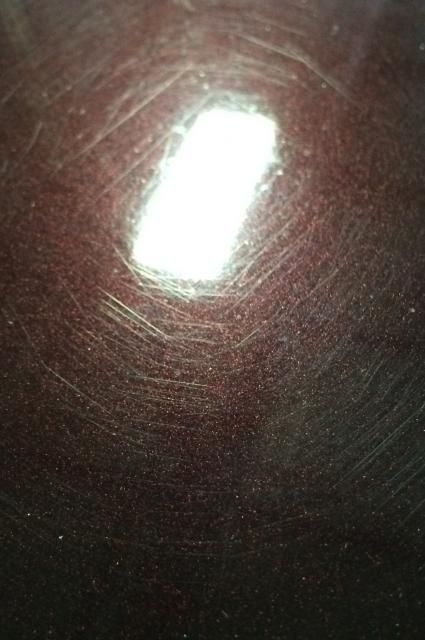
 Don't use terrycloth to dry the car/truck. I thought I was babying my 100 by using nice (okay, formerly nice) towels. One of the guys who restored the paint on my 100 said "Hmmm... got a nice stack of terrycloth towels at home" as he held a small light over the paint... which I'd thought looked good, 'til he pointed this out: