Future Land Cruiser directions

This site may earn a commission from merchant affiliate
links, including eBay, Amazon, Skimlinks, and others.

It would be clear from my avatar that I tow. It's a pretty heavy rig, over the 200-series spec GCWR of 14,645lbs when I'm on extended vacation.

You make some good points and I agree with them in general against many gas motors. The difference here is that the 5.7L is a brute. With solid low end and ~130hp on the diesel, it will absolutely climb a grade, considerably faster than the diesel. Climbing is all about HP - the very definition of which is doing work to against time. It is immensely capable and pleasant (albeit thirsty) when climbing the many many grades I've done over the Rockies here in the west. Or passing. 268hp would have me sitting with the big rigs in the slow lane at my rigs weight.

The thing about torque is that it can be multiplied with gearing. Re-gearing as you did mention. Because what really matters is torque at the wheels. I'm on 33's and stock gears, which would be a disadvantage. Towing above rating rated spec. Yet performance is still solid and pleasant. Credit to the 5.7L lug underhood.

Importantly, a diesel driveline is generally heavier, further subtracting from payload. In the 200-series case, I believe the diesel configurations I've seen are significantly de-contented to save weight and preserve payload.

I don't dislike the 5.7l...it's a solid gasoline engine. Certainly it has a proven track record at this point.

The 4.5l v8 though is in a different league...it doesn't have to work as hard nor does it expend the same amount of fuel to accomplish the same tasks as the 5.7l v8. And while million mile gasoline v8's create a stir here in North America, Toyota diesels hit the mark all the time, often in much more arduous working conditions with very limited maintenance. Million mile gasoline engines are marketing sensations here in North America; for overseas diesels, there is no celebration because such longevity is simply expected from the end-user.

You say that 268hp wouldn't be enough to go up certain grades out west at a reasonable speed? Well, I'll point out that you're not likely getting the full 381hp from your 5.7l at that scenario (horsepower loss due to elevation and thinner air). The turbo-diesel, while it suffers a penalty at elevation, doesn't encounter the same magnitude of loss. As well, the diesel is giving you 480lb-ft of torque at 1600 RPM's...you're getting more horsepower at much lower RPM's, and that low-end grunt is what helps you get started and transition from one gear to the next. Will the 5.7l start to outperform as it revs higher & higher? Yes, with the caveat that the engine is extremely loud and thirsty while "outperforming" (some people prefer to avoid that kind of experience). That doesn't mean the 4.5l is a slouch by comparison.

I really think you owe it to yourself to drive one of those 4.5l's before you judge it so harshly.
 
I've been in those conditions you've described. Notably Kingbury Grade in Tahoe CA, pulling my trailer on a long roadtrip, which goes into 7,000ft+ elevation with 8%+ grades to match. Working hard with 80%-100% throttle for miles at a time. Yes agreed there is significant power degradation at altitude, likely more than a turbo powerplant.

It's generally said elevation reduces power by 3-4% / 1000ft. At 7k ft, we'll call it aggressively 28% power loss, or 274HP output. Which is a bigger number to the diesel on its best day, without power sapping DEF emissions equipment that would be fitted in the states.

There was one situation where I pulled alongside a longer turnout to allow a car to pass. Pulling back in, I did wish I had more low end, or perhaps the diesels low end torque. I could re-gear too to get that added wheel torque. Interestingly, the car behind me never mustered enough power to pass anyways as it was that ridiculous of a grade at elevation. The diesel would need to work really hard too, tapped out, but not be able to maintain even the 45mph pace the 5.7L kept up the mountain.

You make some great points. Don't get me wrong as I'm not judging the diesel, in so much as praising the 5.7L. The point is moot anyhow as we only have the gasser in the states, and I believe Toyota to have made the right decision.

The future generation should see improvements on all fronts. With a turbo enhanced torque curve and hybrid augmented efficiency, it'll be by objective measures the best drivetrain ever to be fitted in a Land Cruiser. I trust Toyota to be able to build this beast with continued exceptional reliability and durability.
 
Last edited:
I just wish I could pull with a 5.7 gas and the 4.5 diesel back to back, so I can truly feel the difference...

I have experienced pulling with the duramax diesel... lol 450+ horsepower and 900+ lb feet of torque makes towing feel like nothing is back there hardly a comparison I know..

that being said the 5.7 is a beast for what it is!
 
Toyota Auto Body team won Dakar 7 times with Land Cruiser J200 run on diesel engine and biodiesel that is a mixture of vegetable oil and algae.
I think they are not going to dump the diesel anytime soon.
 
I've been in those conditions you've described. Notably Kingbury Grade in Tahoe CA, pulling my trailer on a long roadtrip, which goes into 7,000ft+ elevation with 8%+ grades to match. Working hard with 80%-100% throttle for miles at a time. Yes agreed there is significant power degradation at altitude, likely more than a turbo powerplant.

It's generally said elevation reduces power by 3-4% / 1000ft. At 7k ft, we'll call it aggressively 28% power loss, or 274HP output. Which is a bigger number to the diesel on its best day, without power sapping DEF emissions equipment that would be fitted in the states.

There was one situation where I pulled alongside a longer turnout to allow a car to pass. Pulling back in, I did wish I had more low end, or perhaps the diesels low end torque. I could re-gear too to get that added wheel torque. Interestingly, the car behind me never mustered enough power to pass anyways as it was that ridiculous of a grade at elevation. The diesel would need to work really hard too, tapped out, but not be able to maintain even the 45mph pace the 5.7L kept up the mountain.

You make some great points. Don't get me wrong as I'm not judging the diesel, in so much as praising the 5.7L. The point is moot anyhow as we only have the gasser in the states, and I believe Toyota to have made the right decision.

The future generation should see improvements on all fronts. With a turbo enhanced torque curve and hybrid augmented efficiency, it'll be by objective measures the best drivetrain ever to be fitted in a Land Cruiser. I trust Toyota to be able to build this beast with continued exceptional reliability and durability.

Time will tell...Toyota may yet introduce a diesel to North America. The emissions technologies, as finicky as they've been have made tremendous improvements in just the last 10 years. Efficiency and power delivery is much better versus where it was back in 2008-2009. Toyota makes diesel for world markets, with varying degrees of emission compliance....if anyone can make a diesel reliable and robust for the North American market, its Toyota.

Turbo gasolines and hybrids have some merit, but they'll only yield so much in the way of fuel efficiency. Turbo gasolines are especially notorious for losing all of their efficiency when under load...hence why the 3/4 tons and Japanese companies (Toyota & Nissan) have avoided putting them into the engine bays thus far.

Frankly, for all the faults I levy at Toyota, I do credit them for sticking to their guns with the Tundra, LC 200 and Prado/GX/4runner...when the rest of the market is trying every little trick to make their vehicles more efficient (light weight materials, higher gearing, turbo gasoline engines, low-hanging air dams), Toyota insists of keeping their stuff functional and reliable. The 5.7l, for all of its faults, is a reliable workhorse. The same can't be said for some of the newer engines the other truck makers are putting out.

I just wish I could pull with a 5.7 gas and the 4.5 diesel back to back, so I can truly feel the difference...

I have experienced pulling with the duramax diesel... lol 450+ horsepower and 900+ lb feet of torque makes towing feel like nothing is back there hardly a comparison I know..

that being said the 5.7 is a beast for what it is!

It is a beast, for sure.
 
Toyota has spent far too much money and time marketing hybrids as the mileage/emissions solution to bring diesels back to the American market. And those advances in diesel exhaust treatment are very expensive, especially when expected to meet Toyota’s durability standards.

A diesel toyota isn’t coming back to the states any time soon.

That said I totally agree on the turbo gas engines losing the efficiency gains when under load.
 
My wife had a 2012 Volkswagen Touareg with the 3.0 V6 Turbo Diesel. That damned thing was fast and would drive straight up a wall. We sold it back to VW during the emissions scandal. But it was absolutely the best engine of any vehicle we've ever had. I hated dealing with the bluedef additive. Other than that, it was fantastic. My wife actually cried when we turned it in to vw.

I have a 2016 tundra with the 5.7 and my wife now has a 2020 heritage. I'm a huge fan of the 5.7 but would consider the diesel due to the great experience with the vw. The torque was absolutely ridiculous in that thing.
 
I love Diesels and have owned one for a significant amount of time but they are not built the same as they were 30 years ago.
The fuel rails and high pressure pumps don’t work well with high sulphur diesel fuel, and while we have gone to low sulphur diesel there is still the chance that people may fill up with high sulphur somewhere. I think Toyota has weighed the possibilities of this happening and decided it isn’t worth the risk.
 
Time will tell...Toyota may yet introduce a diesel to North America. The emissions technologies, as finicky as they've been have made tremendous improvements in just the last 10 years. Efficiency and power delivery is much better versus where it was back in 2008-2009. Toyota makes diesel for world markets, with varying degrees of emission compliance....if anyone can make a diesel reliable and robust for the North American market, its Toyota.

Turbo gasolines and hybrids have some merit, but they'll only yield so much in the way of fuel efficiency. Turbo gasolines are especially notorious for losing all of their efficiency when under load...hence why the 3/4 tons and Japanese companies (Toyota & Nissan) have avoided putting them into the engine bays thus far.

Frankly, for all the faults I levy at Toyota, I do credit them for sticking to their guns with the Tundra, LC 200 and Prado/GX/4runner...when the rest of the market is trying every little trick to make their vehicles more efficient (light weight materials, higher gearing, turbo gasoline engines, low-hanging air dams), Toyota insists of keeping their stuff functional and reliable. The 5.7l, for all of its faults, is a reliable workhorse. The same can't be said for some of the newer engines the other truck makers are putting out.


It is a beast, for sure.

Even if diesels were a good technical solution, I would find it hard to believe Toyota or Lexus would want what is now tainted technology to be a part of their image. I believe diesels time has come and gone, at least here in the states. They didn't make their rest of world diesels available in the best of times in the last few decades.

I do question whether turbo powerplants would be the right direction for a heavy use vehicle that is the 300-series. Agreed that they generally fall quickly out of stoichiometric combustion ratios with load, especially with smaller displacement. Perhaps with the application of hybrid tech, that it can help it stay within the engines efficiency zones longer. But how long? For heavy hauling, it's potentially always in high load for which then turbo and hybrid will eventually fall out of its efficiency zone.

It's wholly possible the 300-series engine will not be that
- Lexus trademarked the LX600 nameplate back in Oct '19. Notably without a 'h' suffix.
- Toyota/Lexus has been working on Dynamic Force engine tech for its new global architectures (TNGA) which should underpin its next generation of SUV/trucks. It's been openly said that this super high thermal efficiency (>40%) technology will be applied to future engines for its cars and trucks

Then again, it's wholly possible that the 300-series will have multiple engines. Perhaps one for the LC and one for the LX?

There's been too many rumors of a 3.5L TT V6 (hybrid or not) that this may very will be one driveline option.
Perhaps even a more potent 4.0L TT V8 that may see fitment to the ultra-spec'd LX.

It's all speculation really, but Toyota/Lexus has plenty of experience and technology in their portfolio that we'll surely see something in the 400hp range while being more efficient in the new cruisers.
 
I have a 60 series - it is slow, noisy, rough, almost comfortable, tough as nails, and goes anywhere I want it to.
I can't afford an 80 series, let alone a 300, and that's just as well, because I love my old truck, and my wife loves the old truck, and my girls love the old truck.
And truth be known, mine is a Sahara (top spec version in Oz) and it has some of the creature comforts, and most of them still work, and it is not half bad on the road, and great off it.
But enjoy your new fluffy (and still good off-road) 200+series. (And yes there is a little bit of jealousy in there, but hey, most of you are also quietly jealous of my 60 too! :rofl: )
 
My wife had a 2012 Volkswagen Touareg with the 3.0 V6 Turbo Diesel. That damned thing was fast and would drive straight up a wall. We sold it back to VW during the emissions scandal.
That is because VW was cheating on the diesel emissions. You probably wouldn't have liked it as much if it had truly met the emissions standards. The emissions equipment reduces fuel economy and power.
 
I have a 60 series - it is slow, noisy, rough, almost comfortable, tough as nails, and goes anywhere I want it to.
I can't afford an 80 series, let alone a 300, and that's just as well, because I love my old truck, and my wife loves the old truck, and my girls love the old truck.
And truth be known, mine is a Sahara (top spec version in Oz) and it has some of the creature comforts, and most of them still work, and it is not half bad on the road, and great off it.
But enjoy your new fluffy (and still good off-road) 200+series. (And yes there is a little bit of jealousy in there, but hey, most of you are also quietly jealous of my 60 too! :rofl: )
I love the styling of the 60, but what I would really like is a 142 -- 62 on top of an 80 frame with a Chevy V8 motor. Icon/TLC has done some conversions. All I would need is several armored cars full of cash.
 
That is because VW was cheating on the diesel emissions. You probably wouldn't have liked it as much if it had truly met the emissions standards. The emissions equipment reduces fuel economy and power.

The 3.0, especially the later 240hp variant, was very close to hitting emissions targets with the primary issue being NOx, from inadequate DEF usage volume. VWs likely reason for this was wanting to go a full oil change interval on one tank of DEF.

Post-fix my 13 guzzled the stuff.

Similar story for the 14 2.0. They had a small DEF tank to avoid cutting into trunk space, and at the time there was a rule that passenger cars had to go a full oil change (10k on these cars) on one tank.

Otherwise my understanding is the def-equipped emissions controls did their job.
 
I love the styling of the 60, but what I would really like is a 142 -- 62 on top of an 80 frame with a Chevy V8 motor. Icon/TLC has done some conversions. All I would need is several armored cars full of cash.

There is a guy from a 4x4 magazine over here who has just done a 60 series cut back to a cab, onto a an 80 series chassis, with the TD engine from a 100, and and aftermarket autobox of some kind, and even body mounts from the 200? (I think).
It is going to be a weapon, and it is a combo of everything he wants in a 4x4.
I don't know how the search will go from that side of the world, but it is called the "Dirty 30" - as in half of a 60 series. His original Dirty 30 was all 60 series, so don't mistake the two. I think it is 4x4 Australia, and if you look up something like "Shauno's dirty 30" you should find it. Youtube series on the build.
 
I used 4 diesel 200 series (and 3 70 series) overseas for a couple years. They are not as reliable as what is being discussed in this thread. I lost several turbos over that time and dealt with fuel issues. But whatever, not like I paid for repairs (or fuel). Just had to plan around a down truck.

That was my introduction to the 200. I’m obviously a big fan of the vehicle. Done somethings with them that impressed me, so I saved for some time and bought a used one.

For the future, modern diesels suck. They are not reliable, DEF, EGRs, and low sulfur fuel really kills the reliability of a compression fired motor. And when an American sees putheticly low torque number of a the twin turbo V8, it wouldn’t sell well. We can buy 1,000+ ft lbs of buff torques off a dealer lot.

Sure, we know that a LC is more reliable than those domestic one tons. But that’s how marking works. Look at the 8 speed in 2016+. It’s not behind a diesel oversees (last I checked, could of changed). It’s an NA thing, because more is better. Even though MPG, towing, ect hasn’t changed, more is better, and that’s what will sell to the masses.

Where the next LC goes, I’m sure it will be more capable and more compfortsble, and more reliable than the 200. The same as every cruiser before it. Then whatever will be next will be said to “not be a real cruiser.” And after some years, it will be loved, and the 400 series will be criticized for “not being a Land Cruiser.”
 
Last edited:
Sorry off topic...

........there is still the chance that people may fill up with high sulphur somewhere.

Where can I get some high sulfur diesel?? I think my old 7.3L PSD would like that!
 
Where the next LC goes, I’m sure it will be more capable and more compfortsble, and more reliable than the 200. The same as every cruiser before it.

So true and maybe this is the conundrum for Toyota with the LC and why its taking so long?

From what I understand, its kind of a culture thing with Toyota and Japan in general. Every new edition has to be better in EVERY way, or they just won't do it. Unlike the US where maybe it just needs a styling update, and people will buy it and so thats all that matters.

The comfort part, tech, features etc....all that stuff is easy to update.

But I think it comes down to the powerplant and you have 3 main factors there:

1. Power, 2. Mileage, 3. Reliability.

You can get more power and mileage from a TT V6, but adding that complexity has to lower the reliability. In general, rule of thumb, right? You can get more mileage from a smaller gas V8, but lose power. You could get more power from a bigger V8, but lose mileage.

So the question for Toyota is what motor configuration, gas/diesel/turbo/hybrid/supercharger(?) could possibly make more power AND better fuel mileage AND more reliability than the the 3UR-FE? Right?

Add to all this the uncertainty in the US on emissions standards. The standards that were attempting to be implemented by the previous administration are being rolled back by the current one. Will the current administration remain for another 4-5 years? I know they think long term, but at the same time, the power plant has to meet current standards. Those standards just changed right at the moment one would have thought Toyota would roll out a new LC. LC 200 going to be at least 14 model years (14!) before new series. We thought the 100 series lasted long at 10!

Yes they only sell a few LCs a year in the US, but for the last 23 model years, the engine in the LC has also been used for a lot of other vehicles in the Toyota/Lexus lineup making up 100s of thousands of vehicles, a significant amount.

I have to think that Toyota would like to put the same engine in the Tundra, Sequoia, LX and LC. But recent rumors are suggesting they are taking the LX upscale and LC downscale.

So maybe they put the V6TT in the LX and put a smaller displacement (than 5.7) normally aspirated gas V8 in the LC? So it gets better mileage and is able to maintain the amount of power and reliability of the 3UR? That would be "better" in my book. It would seem to me that the one factor out of the 3 they could LEAST afford to compromise in THE Toyota Land Cruiser would be the reliability factor. The reliability HAS to remain. The FIRST one of the 3 I would trade in would be the power factor.

The 3UR-Fe is hard to beat, but the Chevy L83 is a 5.3L making over 350HP and almost 400ft/lbs and closer to 20 MPG. That lump is powering millions of Silverados and Suburbans and Tahoes all over the place. Give me Toyota's version of THAT! You know if Chevy can do that, Toyota can do it better.

So Toyota, put the fancy, techy TTV6 in the Lexus and just give me a 5.0 or 5.3 NA V8 that gets a little better mileage in my LC and everyone is happy!

This has been my line of thinking on the subject with a little opinion thrown in for good measure!
 
Where can I get some high sulfur diesel?? I think my old 7.3L PSD would like that!

Truck stops in Central America, Iraq, Afghanistan, Sudan, Somalia, India, Pakistan, ... All the garden spots.
 
The place where I want more torque is at grade when towing, particularly from low RPM. The 5.7 does great pulling on the highway through the mountains under load at 4-5k RPMs, but if you're forced to slow down temporarily (behind a slower vehicle or starting from a stop) it's an absolutely miserable experience. Better gearing would help for sure.

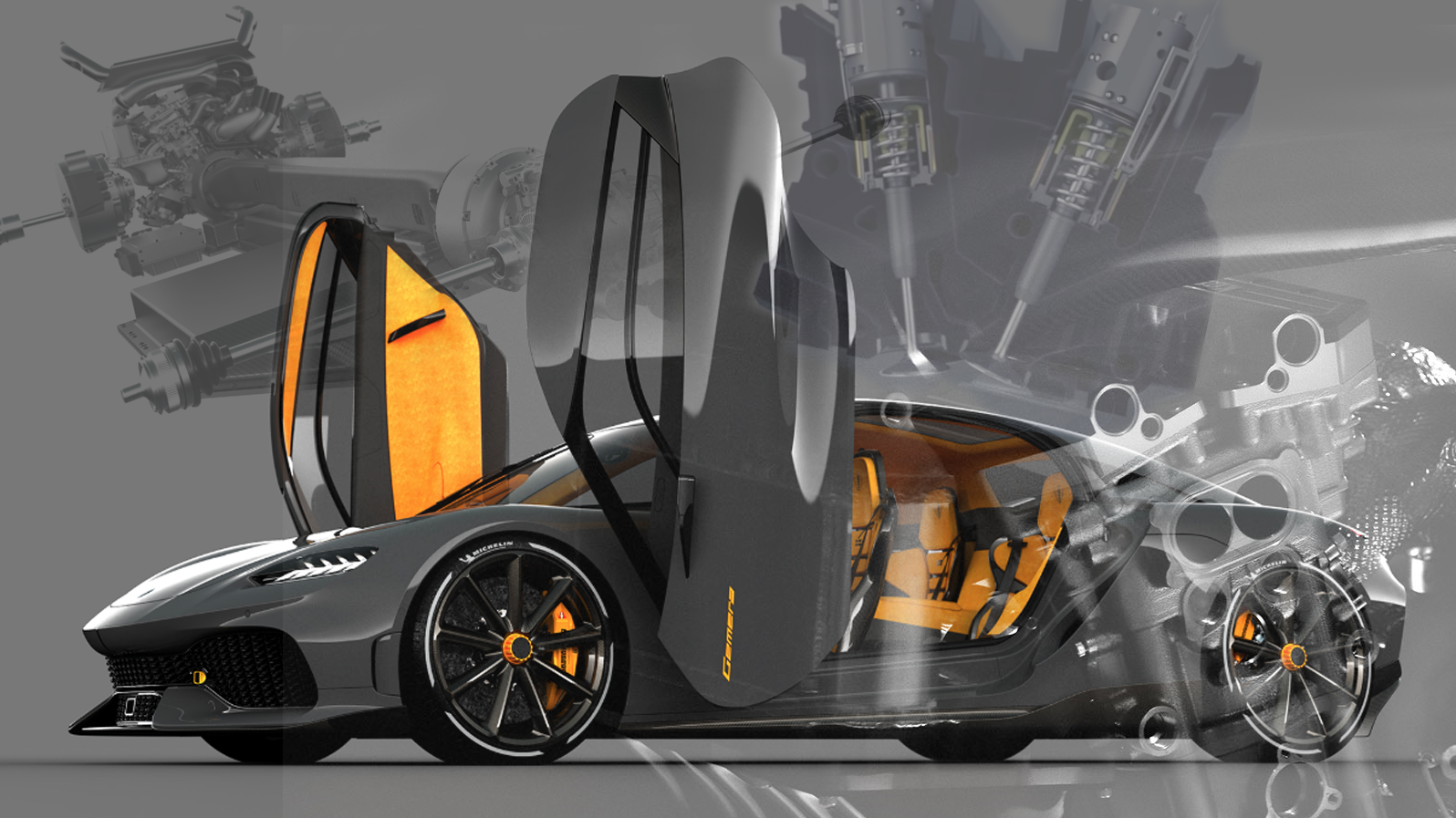
That said if Koenigsegg can get 600HP and 443 ft/lb of torque from a 2L 3-cyl petrol motor, I'm confident toyota can build a reliable engine which will outperform the current 5.7L V8.

 
Sorry off topic...


Where can I get some high sulfur diesel?? I think my old 7.3L PSD would like that!

A lot of factories and industrial zones still have massive high sulphur Diesel reserves. Knowing diesel owners, someone is bound to throw that sh!t in to their tank sooner or later. 😂
 
Back
Top Bottom