

Bumps on my 78’s rear tub/fenders?

This site may earn a commission from merchant affiliate
links, including eBay, Amazon, Skimlinks, and others.

I guess you could say Toyota had the important parts for the spare carrier :meh:. Still couldn't get a few things I wanted (red circles). I need to locate some good neoprene type material to make up parts like 51907B. Used some thin (too thin) gasket stuff for a temporary setup earlier.

Is the hinge pin the same size as a door pin?
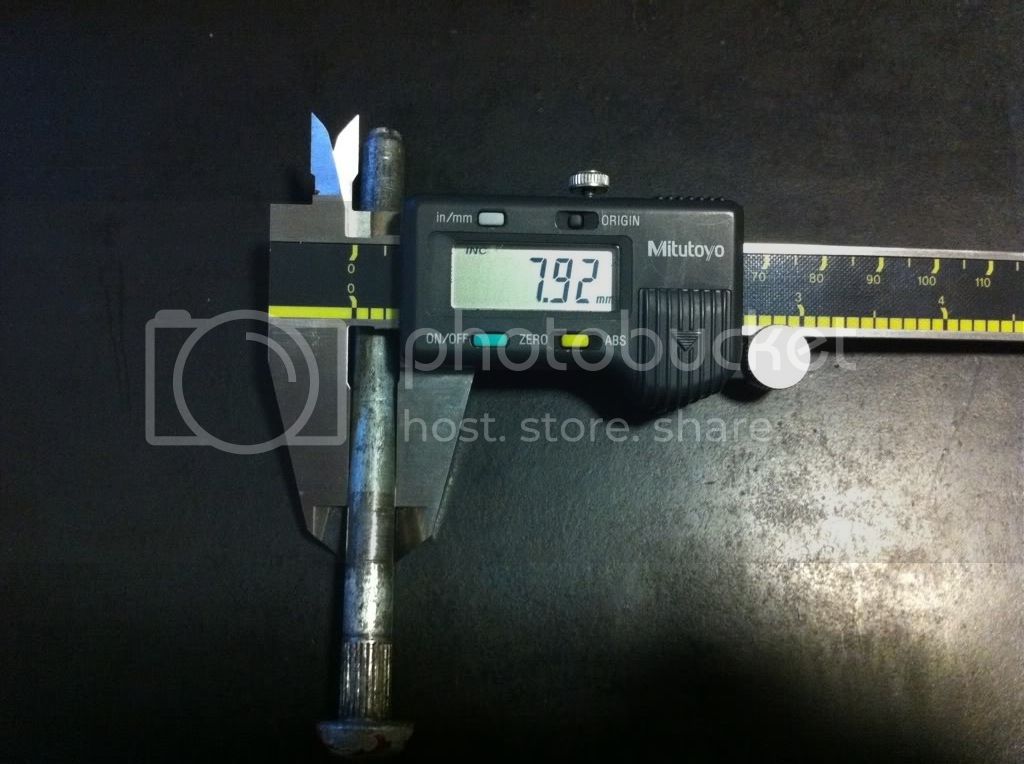
5cb4a1ac541c830889293035decaebe4.jpg
 
Is the hinge pin the same size as a door pin?

Nice calipers - your Mitutoyo's are a little newer than mine :grinpimp:. You're referring to the hood hinge pin - the spare carrier pins are a lot bigger of course? I never measured the hood pin but the door style bushings from Kurt went on the hood pins with a nice slip fit - kind of a "press fit" into the hinge body though - tight overall. Ran a .375 inch reamer (loose - they're more like .390) through the hinge body to clean them up and polished a little with a die grinder (small rubber abrasive wheel).
 
Nice calipers - your Mitutoyo's are a little newer than mine :grinpimp:. You're referring to the hood hinge pin - the spare carrier pins are a lot bigger of course? I never measured the hood pin but the door style bushings from Kurt went on the hood pins with a nice slip fit - kind of a "press fit" into the hinge body though - tight overall. Ran a .375 inch reamer (loose - they're more like .390) through the hinge body to clean them up and polished a little with a die grinder (small rubber abrasive wheel).

I know that the hood hinge uses the same size pin as the door, but I haven't seen a newer style tire carrier pin, so I wasn't sure. I was curious if my brass door bushings would fit the carrier, but I guess not.
 
Filled up my empty tank in the 40 today and then noticed on the way home the gas gauge had stopped working. :hhmm:

Experimented a little in the garage with a make-shift brake and some 18GA ambulance door patches. Two bars of cold-roll steel clamped together - not the most productive methodology. :grinpimp:
brake1.webp
brake2.webp
brake3.webp
 
Last edited:
Working up part of the outside door skin. One thing that seems hard to avoid is shrinking/stretching that happens when banging that small lip (note the bow/gap under the scale) in the long piece. Something a real brake would probably avoid. Maybe another use for the Lancaster shrinker/stretcher - working the lip to counteract the bend/bow.
brake4.webp
brake5.webp
brake6.webp
 
Out in the 40 today and watching the gas gauge. First it stayed down on empty - until about the time the engine warmed up and the needle slowing moved to around a quarter tank. Then a bit later it slowly moved back down to empty. Ten minutes in and the needle moved all the way up to full tank and stayed there. I’ll need to drive more (tank is pretty full) to be sure but it seems now like it’s staying all the way up at full. Always worked well up to now. :rolleyes:

Putting a little steel back on the door. Some of these tacks seem light right now (welded from the other side) but that’s kind of by design. Using a heavy copper backing until everything’s in place and aI can tell how things are moving around. The PO sprayed the door with some kind filler paint/primer after they got through packing the bottom of the door with Bondo and screen mesh. That’s the white stuff under the paint, PITA to get off.
ride1.webp
steel-on.webp
 
Last edited:
Pretty sweet patches for not having a brake! Prolly straighter than the factory ;-)

Cheers on some impressive resto!
 
Great job.:cool:
A schrinker stretcher is a great tool for what you are doing, makes dealing with curves a lot more fun.:cheers:

Just be aware that cheap shrinker/stretchers produce some pretty cheap results - not as clean as what you've been doing albeit "the hard way" . If you have the extra time - just keep on the current methods .
Sarge

Thanks for the feedback. Yeah, I was thinking the cheap ones might not be worth the trouble. From what I've read, all shrinker/stretchers are a copy of the Made in USA, Lancaster. I've located the Lancaster with 2 bodies, 2 handles, etc. for around $400 total - shipping/tax included. Eastwood, etc. is less ...

I may see how close I can get before I make the plunge.
 
Thanks for the feedback. Yeah, I was thinking the cheap ones might not be worth the trouble. From what I've read, all shrinker/stretchers are a copy of the Made in USA, Lancaster. I've located the Lancaster with 2 bodies, 2 handles, etc. for around $400 total - shipping/tax included. Eastwood, etc. is less ...

I may see how close I can get before I make the plunge.

Two body's make working a lot faster, you might want to look at the foot pedal version. You keep 2 hands on the project and you can apply more force. Also the kind that lets you stick the metal in further, so you can not only schrink/strech on the edge, gives more possibility's.
 
Few more hours in the garage, inside "box" almost tacked together.Trying to work out the small radius on the inside corners (without shrinker/stretcher, etc.) patch. Some angles are not perfect, but sizes are holding pretty close - overall shrinkage is an issue.

Gave the box a "Metal Ready" clean/etch after grinding down a few tacks. That's the strange dark coloring on the steel. I think it seems to improve the weld puddle a bit even though it's probably a good reason for a mask/ventilation when welding. Probably clamp the part back up to the door (again) before continuing the corner patches and balance welds.
corner.webp
right-corner.webp
left-corner.webp
 
Back
Top Bottom