

Why do single sided beadlocks work?

This site may earn a commission from merchant affiliate
links, including eBay, Amazon, Skimlinks, and others.

Joined
Sep 2, 2003
Threads
1,820
Messages
14,106
Location
Metro NY
I understand that they hold that one side from wanting to break a bead but isn't the other side still as at-risk as without any beadlock? Is there really enough of an advantage? (I would presume so but I'm not understanding the physics behind it)
 
The stress on the outside bead is significantly higher than the stress on the inside bead. Think of a off camber corner wanting to fold your tire under the rig.

How often have to seen a tire stressed outwards?


No inner lock will burp occasionally, but most of the time it'll still hold.
 
Are there viable double beadlocks and if so what is the downside to them?

I can visualize the extra stress on an outside bead vs inside off camber but there are still situations where rocks will want to push an inside bead away from the rim when one is deep in the rocks...
 
A down side to double beadlocks is that when it comes to maintaining them you don't have access like on the outside ones and depending on how much room you had you may even have to remove the rim to get to all the inside bolts.
 
The beadlock is there to keep the tire from spinning on the wheel.

Low horsepower applications do just fine with one side locked.


This is incorrect for wheeling. It is correct for dirtbikes with tube tires and drag racing.

If you look at the way a rim is built there is a indentation where the tire goes when it is mounted and dismounted. It is close to the outside of the wheel. The rim has bumps called safety beads to hold the tire against the bead and it takes some force to get them over these bumps. On the outside if the tire is forced past the safety bead it will fall into the depressed area designed for mounting the tire. The inside bead has a few inches or more before this happens. Even if a inner comes off, it will very rarely fall into the indentation if the outer stays attached.

Between this and what Mace says, inners generally hold on well without the beadlocks. In extreme situations double beadlocks are nice. I think I've lost an inner bead once. In that case the tire stayed up on the raised area and it was easily re-inflated.

stock-photo-old-car-wheel-rusty-car-alloy-rim-isolated-on-white-background-355122320.jpg


Untitled.webp
 
Last edited:
Are there viable double beadlocks and if so what is the downside to them?

A down side to double beadlocks is that when it comes to maintaining them you don't have access like on the outside ones and depending on how much room you had you may even have to remove the rim to get to all the inside bolts.
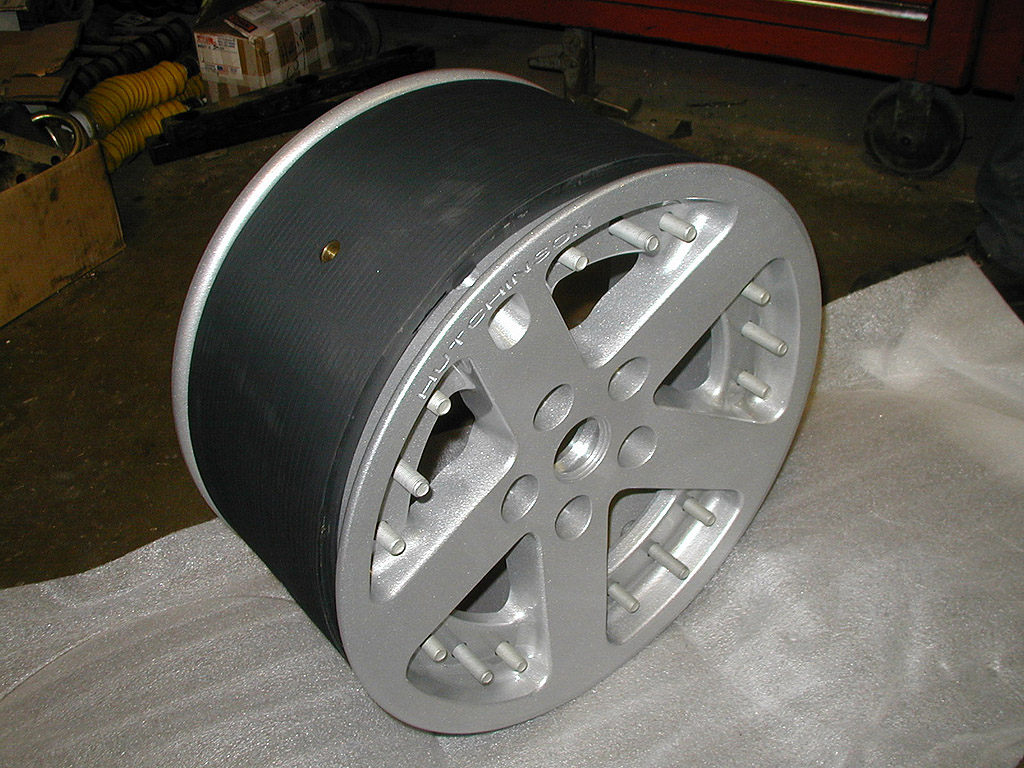
Very few double beadlocks utilize a bolt on ring like most single outer beadlocks do. Most double beadlock rims use a doughnut in the middle of a Two piece rim that bolts together. Just like Hummer beadlocks, Stazworks or Hutchison beadlocks.
HUTCHBEADS-100.jpg

0709or_02_z%2B2007_jeep_wrangler_jk_beadlocks%2Bmopar_hutchinson_wheels.jpg


But even with the designs that actually do have a ring on the inside and the outside, it's not hard to get to the bolts (and most are competition rigs anyway).

0904or_18_z%2Bchosing_beadlock_tires%2Bbeadlocks_on_inside.jpg


If you look around you will find that there is almost no reason to run a inside locking ring on a rock rig.
 
A down side to double beadlocks is that when it comes to maintaining them you don't have access like on the outside ones and depending on how much room you had you may even have to remove the rim to get to all the inside bolts.


They also collect a s*** ton of mud and junk.
 
Next time you have a set of tires put on, watch the guy break the beads, you let the air out, pop the outer bead (with a hydraulic/air tool) these pop easy and will pretty much come completely loose once you pop it, then you flip the tire around and do the same to the back side, much harder, same process but you have to apply more pressure and work it around the circumference to get it to come loose. This is kinda why I assumed they never needed beadlocks on the rear.
 
Thanks all. I trust that the general use of singles does the job, I was just looking for a better understanding... and now I have it!

And now I have a second question:
When using DIY weld-on kits these seem to have you welding the inner ring to the outside of the existing wheel. This pushes the tire bead out by (I'm going to guess) about 1/2-3/4 inches? Would it be "a thing" to cut off the existing wheel's flared out outer lip to move the weld point inboard some - or is it really irrelevant?
 
Most weld on beadlocks center on the outer rim lip. Removing it would make centering complex.

Additionally, the formed lip is significantly stronger than a piece of flat plate. removing it would actually make for a weaker rim.
 
typically folks use tires wider than stock so it's not a disadvantage. Keeps stock backspacing while widening the wheels.

Im not sure I would do weld ons again. It's a lot harder than you would think to get all the pinholes sealed.
 
But my welding beads are perfect so I wouldn't have a problem... ;-)
 
I have the H1 beadlocks on my 40. From what I understand they are dual and DOT approved. They are also very heavy and cheap as well. Problematic items include rim size of 16.5", 8 bolt GM pattern and the offset, although you can get them re-centered as everyone knows.
 
recentered?
 
Guess I don't have the right term. Center cut out of the H1 wheel and a 6 bolt (or other) center welded in at the offset you select. I kept mine stock but:
Custom Hummer Wheels
 
Last edited:
Modified then, the company that certified them as dot wouldn't any more.

In original configuration they are compliant with DOT regulations. They aren't any more..


Still a good rim.. just heavy..
 
Back
Top Bottom