



In the LX one of the wires in the 3rd row seat harness is a switched 12v, I'm planning to use that to power trigger a relay for any switched outputs I'm doing. Probably not too helpful since the LC doesn't have this harness...
Follow along with the video below to see how to install our site as a web app on your home screen.
Note: This feature may not be available in some browsers.
This site may earn a commission from merchant affiliate
links, including eBay, Amazon, Skimlinks, and others.

In the LX one of the wires in the 3rd row seat harness is a switched 12v, I'm planning to use that to power trigger a relay for any switched outputs I'm doing. Probably not too helpful since the LC doesn't have this harness...

There's no need to split the switched line to multiple relays. Just run the main line (as thick a cable as you're comfortable running) and the switched line (this can be pretty thin as it will just trigger a relay on and off) to the back.Yeah I think I follow. One relay and two fuse blocks, or one fuse block and multiple relays. Either way I can use the same + run I think, and either way I only need to tap a switched source once, just a question of whether I split the 8AWG + line to 2 fuse blocks or I split the switched line to multiple relays

The "not cutting" part is pretty easy. I used a vampire tap for that to handle switch illumination and would do the same here. It does puncture the insulation but you can remove it and just apply some electrical tape over the wiring in the future to undo it.It would be really nice if there was a way to easily hook into a switched connection that's already in the cargo area (ideally without cutting any factory wires). You could then use a relay triggered by that switched connection to handle as many switched circuits as you desire from the main power feed(s) you ran from the engine bay. Circuits that don't go through the relay will be always on. Obviously, you need to make sure the cable coming from the engine bay is properly fused and capable of the combined switched and unswitched load AND the relay used is capable of handling the total switched load.
I don't believe you need to have separate relays for each switched load - the key is making sure the relay you use can handle the total load you're going to run through it.
I already have outlets wired up on both sides of the cargo area and I've been thinking about how to make some of them switched. I'll be installing a cellular router soon to provide my EC Offroad Android unit with a good Internet connection, so I'm going to need to figure out where to mount it and how best to get switched power to it as I definitely won't want it running 24/7.
3rd row seats? What are those? LOLIn the LX one of the wires in the 3rd row seat harness is a switched 12v, I'm planning to use that to power trigger a relay for any switched outputs I'm doing. Probably not too helpful since the LC doesn't have this harness...
I see some wisdom in runnning through a Switch-Pros like someone here did, maybe @TeCKis300? The big benefit I see is that it gives you protection from running the battery down too far. The Switch-Pros only has a handful of 35 amp relays though, so I think that would put limitations on your wire size and circuit capacity. And I suspect you’d still want to protect the wires going back to the cargo area with fuses or circuit breakers. Maybe too complex. I’m still mulling how I want this one set up.
There's no need to split the switched line to multiple relays. Just run the main line (as thick a cable as you're comfortable running) and the switched line (this can be pretty thin as it will just trigger a relay on and off) to the back.
Connect the main power cable to a buss terminal to split it. One of the splits goes to the main power input on the relay. The other goes to a fuse block that serves your unswitched circuits. The main power output of the relay can go to a 2nd fuse block that serves your switched circuits.
The thin gauge wire goes to the trigger input on the relay.
Yeah I thought about that, it just means 2 fuse blocks instead of 2 relays. I was hoping there was a creative way to do it with one relay and one block somehow. I don't think what I Was hoping is possible.There's no need to split the switched line to multiple relays. Just run the main line (as thick a cable as you're comfortable running) and the switched line (this can be pretty thin as it will just trigger a relay on and off) to the back.
Connect the main power cable to a buss terminal to split it. One of the splits goes to the main power input on the relay. The other goes to a fuse block that serves your unswitched circuits. The main power output of the relay can go to a 2nd fuse block that serves your switched circuits.
The thin gauge wire goes to the trigger input on the relay.
I'm not a huge fan of those vampire taps. One option could be to use a fuse tap as that does no harm to any of the wiring.The "not cutting" part is pretty easy. I used a vampire tap for that to handle switch illumination and would do the same here. It does puncture the insulation but you can remove it and just apply some electrical tape over the wiring in the future to undo it.
I have a 12-slot blue sea fuse block in the engine bay, though IIRC each slot has a 30A limit... which is probably fine for my purposes anyway but if not it sits directly behind a circuit breaker... though IIRC that is 100A which would be too much for a short on the longer run to the rear accessories.
I'm not sure about the relays. @TeCKis300 posted the following in another thread. I would assume I could run pin 87 to a second fuse block but I'm not clear on how I'd run it to multiple individual circuits without using multiple relays.
Dual 2.4A USB ports, eventual CB radio mount, 12V cig lighter socket for accessories, and cleaning up/moving the air bag air compressor wiring (which currently drops under the chassis). So maybe 30A if everything was fired up and full at once, but unlikely to use anywhere near that. And even that is <60 seconds since the air compressor is pretty quick and only used when hitching up.Yeah, I guess it depends on what you are doing back there. you may not need 35 amps for many things. It also assumes you have SwitchPros, but you can always add a switching panel back there as well.
The "not cutting" part is pretty easy. I used a vampire tap for that to handle switch illumination and would do the same here. It does puncture the insulation but you can remove it and just apply some electrical tape over the wiring in the future to undo it.
I have a 12-slot blue sea fuse block in the engine bay, though IIRC each slot has a 30A limit... which is probably fine for my purposes anyway but if not it sits directly behind a circuit breaker... though IIRC that is 100A which would be too much for a short on the longer run to the rear accessories.
I'm not sure about the relays. @TeCKis300 posted the following in another thread. I would assume I could run pin 87 to a second fuse block but I'm not clear on how I'd run it to multiple individual circuits without using multiple relays.
If you aren't tied to a specific fuse block, there are options that can handle switched/unswitched circuits in a single block. Here's 1 example I found that might be a good option:Yeah I thought about that, it just means 2 fuse blocks instead of 2 relays. I was hoping there was a creative way to do it with one relay and one block somehow. I don't think what I Was hoping is possible.
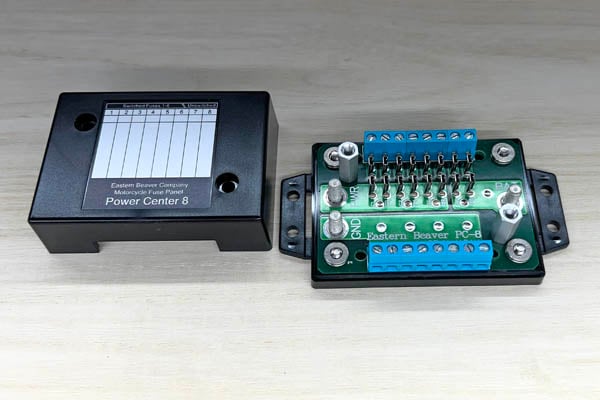
 www.easternbeaver.com
Dual 2.4A USB ports, eventual CB radio mount, 12V cig lighter socket for accessories, and cleaning up/moving the air bag air compressor wiring (which currently drops under the chassis). So maybe 30A if everything was fired up and full at once, but unlikely to use anywhere near that. And even that is <60 seconds since the air compressor is pretty quick and only used when hitching up.
No switchpros for me, just a battery.
Yeah just not sure what's available in the back on the LC that is switched. Worst case I'll tap under the dash and run it along with the main wiring, just hoping to avoid a long run...Yeah, then I think your best option is a low amperage "tap-a-circuit" or reuse something existing in the back, run into a relay. Then run a nice big main directly from the battery. Once you have done all that, then you can put everything together in back. It is a pain to have two fuse blocks, but I think it would give you more flexibility in the long run.

Lx570 2014 here I am planning to camp with super light offroad,
do you think changing tyres from stock to AT enough ?

Yeah just not sure what's available in the back on the LC that is switched. Worst case I'll tap under the dash and run it along with the main wiring, just hoping to avoid a long run...
Yeah just not sure what's available in the back on the LC that is switched. Worst case I'll tap under the dash and run it along with the main wiring, just hoping to avoid a long run...
The long run inside really isn’t too bad. If it’s fused at the battery, it‘s pretty safe.Yeah, I'm with you. I didn't do this specifically because I didn't want to make long runs inside. It might be easier to tap in one of the boxes in the engine compartment and run it outside and then up. One of my previous SQODs was about going up through the rear and apparently there are a couple of decent options.


