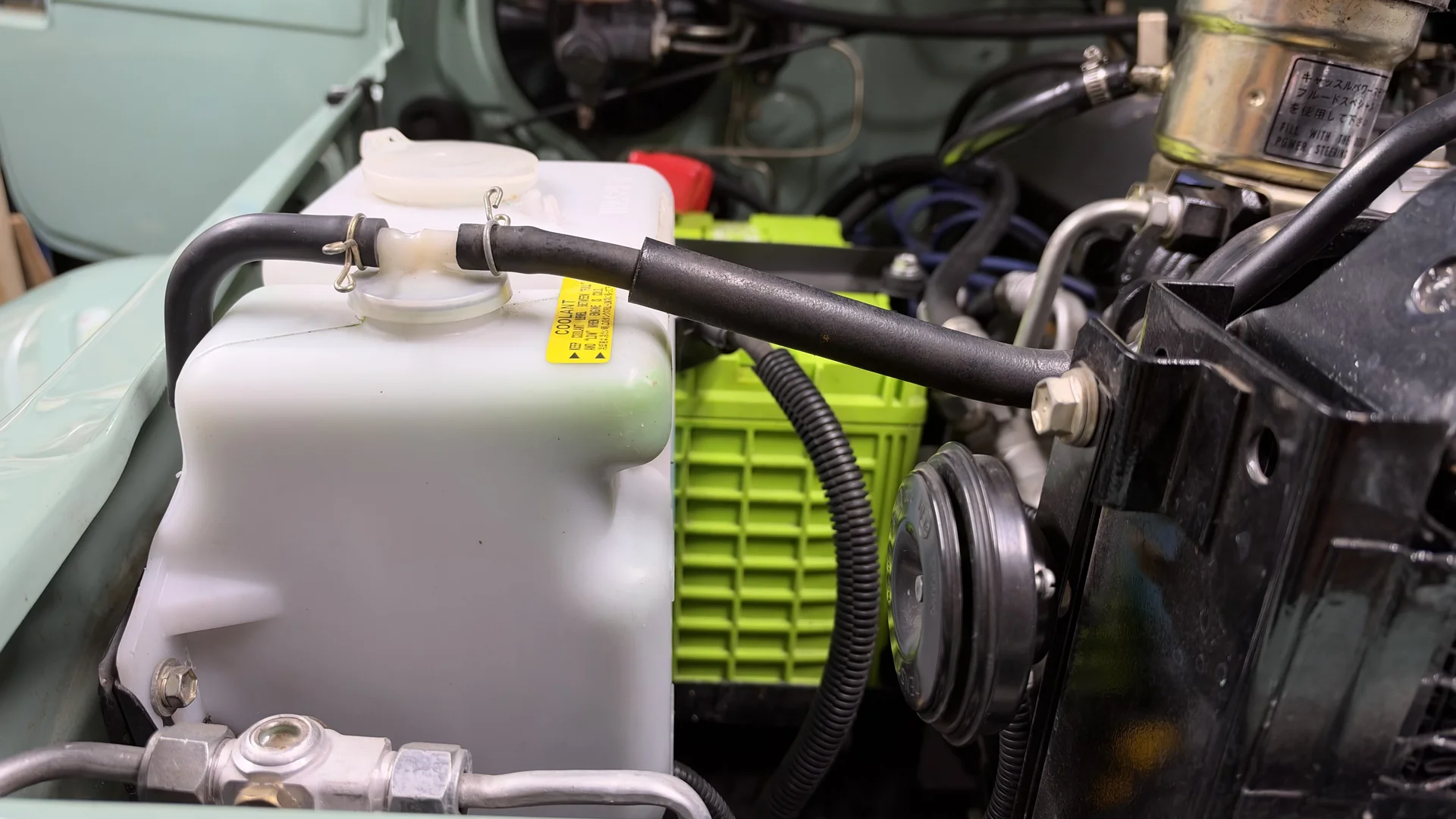
Radiator overflow tank full

This site may earn a commission from merchant affiliate
links, including eBay, Amazon, Skimlinks, and others.

Joined
Jun 20, 2026
Threads
5
Messages
13
Location
Wales, UK
Hi all,
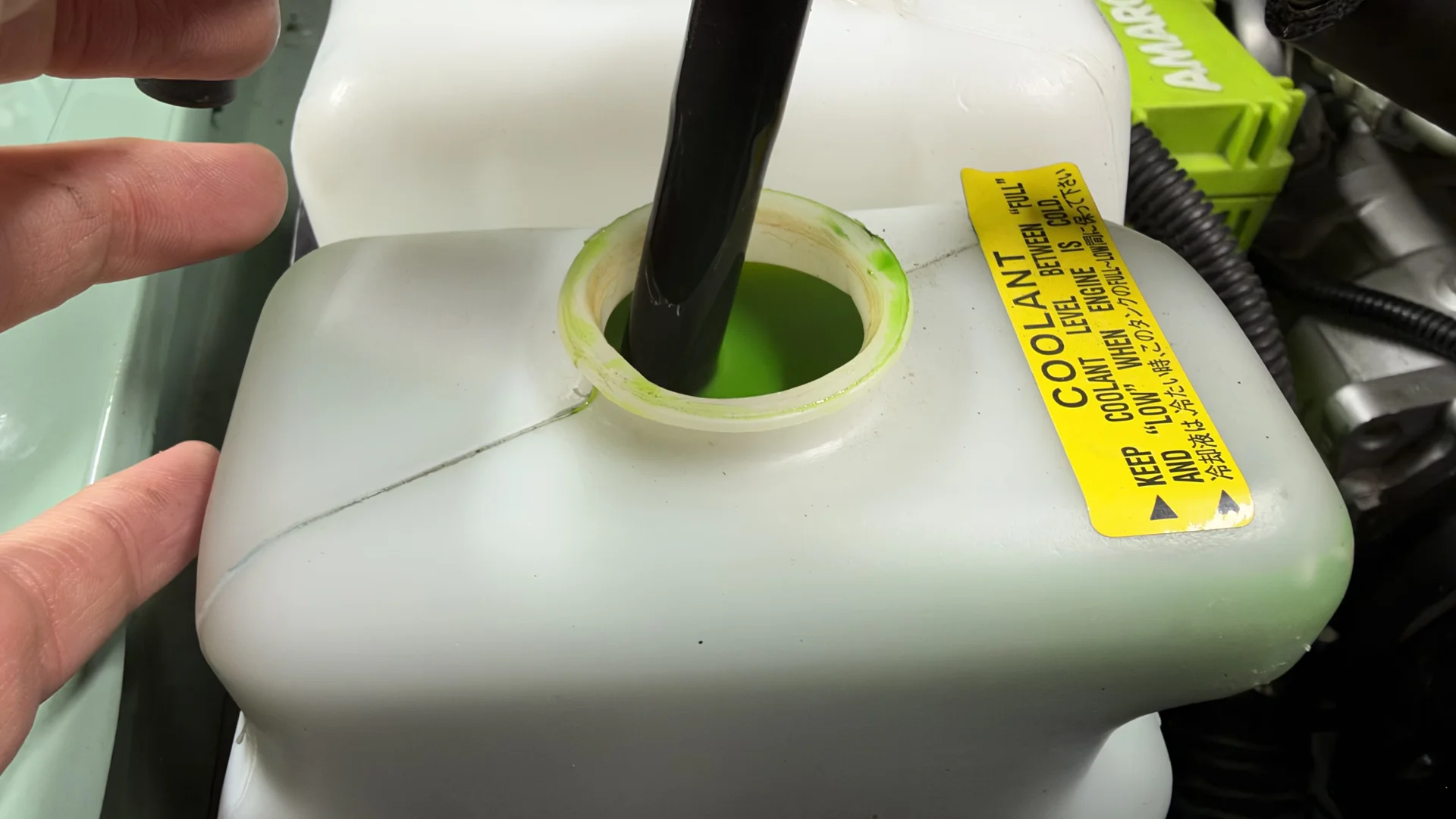
Just noticed on my 1980 FJ40 that the radiator expansion / overflow tank is full.

I’m not sure it’s due to overfilling because when I first purchased the vehicle approx 6 months ago, the levels looked good.

Seems something is pushing coolant into the tank.

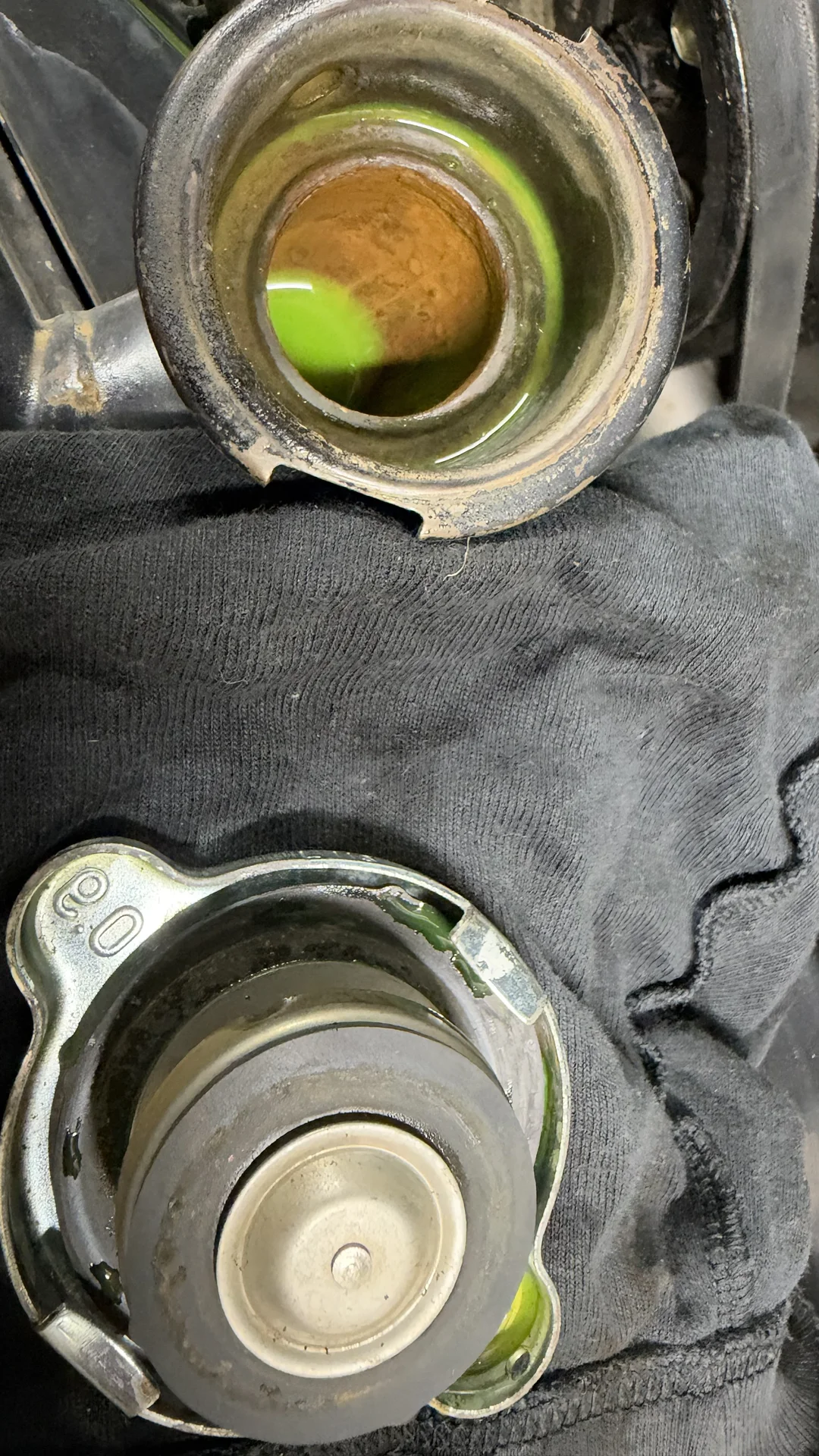
Rad cap looks to be in good condition.

Also noticing the engine struggling at higher revs and when going up a hill but I’ll drop that one on a separate post ( hoping it’s not connected)

Engine starts and runs fine otherwise and temp hardly moves from stop, but it never gets that warm here in Wales.

Any advice welcome.
IMG_0136.webp
IMG_0137.webp
IMG_0138.webp
 
Coolant expands when hot - it pushes out of the radiator and into the expansion tank; if the system is working correctly the coolant will be sucked back into the radiator when its cold. Fill the cold radiator, and say 1/3 of the expansion tank. Go for a good long drive. Hot coolant will push into the e tank - if it over flows some so what. After it cools completely the e tank should not be full anymore but the radiator should be. The fluid level in the the e tank will cycle up and down between those two points. If not the rad cap could be bad or the overflow seat is bad.
 
I try my best to change my coolant every year or every other year. Did the Cruiser earlier this month, about 15 months from when I did it before. The manual suggests every other year. The Peak-brand bottle claims ten years. I've never flushed the coolant, just change it like oil. If I was to flush, I'd use only distilled water, never a garden hose. I will never introduce a significant quantity of tap-water into it, the chlorine disinfectants can damage hoses, and the manual says to never use hard water, like what I get from the tap.

On my rig, I just drain the block, and radiator, and empty and rinse the overflow tank by taking it out of the truck. Refill with distilled water (always distilled) and green coolant from O'Reilley. I don't burp the system, it has never needed it even when the rig is parked facing downhill, it just means that the overflow will need a tad bit more later. The block is easy to drain on my rig, the aftermarket CFS radiator is a bit more work. I approximately measure how much I take out, so I can estimate how to do a 50/50 fill.

Apparently, old coolant, or contaminated coolant can have a lower boiling point.

The worst thing could be a blown head gasket. It either contaminates coolant or pushes air or oil into the system.

A new cap every time is ideal because the two gaskets quickly deform, and the radiator might have inperfections or loose particulates. They are affordable, and I stocked up a few years ago. Any particulate matter can compromise the inner seal, which compromises the pressurization ability, and would lower the boiling point. For your situation, I'd hope that you just need a new cap, and use the situation to do routine maintenance.

The issue I see is that when coolant cools, there should be a lower pressure/volume in the radiator, and the inner poppet should open allowing coolant from the reservoir to be drawn back into the radiator. Why is there two diameters of tube apparently connected between the radiator and the overflow tank?
 
Your radiator was most likely overfilled and when heated to temp the fluid expanded and pushed an amount into overflow, If that is your radiator fluid level in the pic after you noticed the full overflow then the rad was most certainly too full.
 
Rad cap looks to be in good condition.

Start with a new radiator cap (the cheapest route) and inspect carefully the hose and clamps between the radiator neck and the overflow bottle, including the dip tube.

There must be a tight seal for the coolant to move back and forth between the bottle and the radiator, as designed. If the coolant is low in the radiator neck at the same time it's overfull in the bottle (as your photos indicate), this almost guarantees a bad cap. The outer gasket (larger one) in the radiator cap is what seals the radiator neck top to the overflow bottle (effectively), but of course, both gaskets and the spring must all work in concert.
 
Back
Top Bottom