



Hi mudders,
First, thanks to all who previously made suggestions, which were helpful, especially SRGould41 who has stuck with me through thick and thin on this thing. So here's the situation:
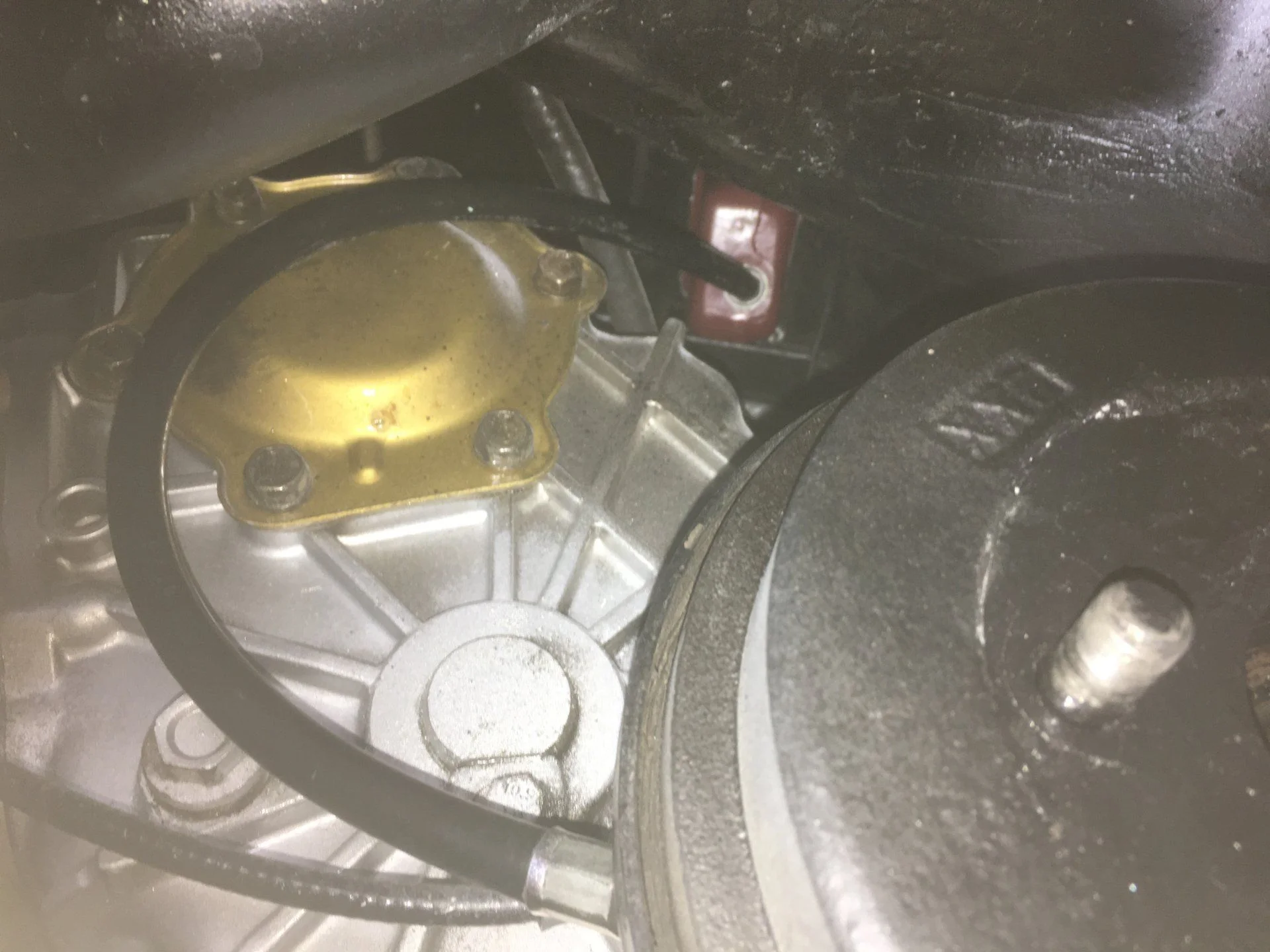
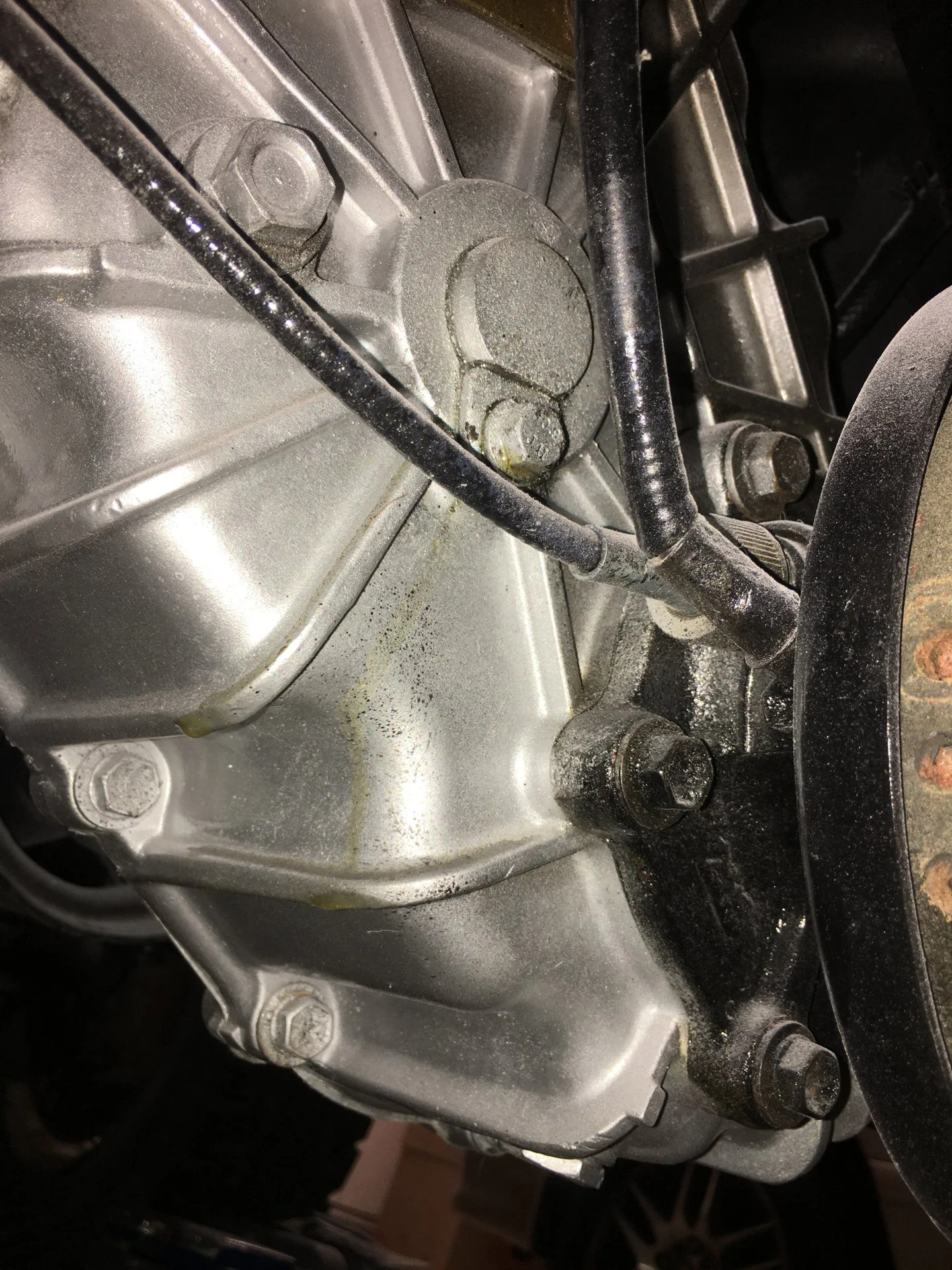
My e-brake wasn't working (I'll spare you the details) so I went about correcting the problem with a lot of help. Drained the t-case, took off the drive shaft, etc. to get access to the drum. I have replaced all the springs and put OEM brake shoes on it. Because the 4-speed was swapped for a 5-speed, the longer front drive shaft moved the front part of the drivetrain back, which seemed to be too much for the original cable and it appeared a bit kinked right where it enters the drum (see second pic below), plus it was just old and the spring on the end in the drum was all kinked up from appearing to be too compressed too long too many times. I replaced the cable with a 33" one instead of the original 29" one because of the longer distance from the brake handle assembly to the drum from the 5-speed being installed. No kinks (see first pic).
To set the e-brake, I clicked the nut outside the backing plate and at about 5 clicks, it gets very, very hard to try to turn it anymore and the drum is immobilized--at least by trying to turn it by hand. I then backed off two clicks (also tried one but the drum wasn't turning freely really) and then went topside to pull the brake handle. It will stop the drum from turning (don't know about under load, though, because it's on a flat surface in my garage) but the handle has to be all the way at the top to stop the drum from turning. Half-way up and the drum turns with no problem. Only when the handle is all the way up does it stop the drum from turning.
That's the essence of it. I've gone back and forth with SRGould41 but we're kind of out of ideas at this point about why the handle isn't engaging earlier. For those who wonder if the cable is too long and so it's not compressing enough, it doesn't appear to be the case. When I pull on the cable up top (with my hand), it seems to have an immediate effect on the cable below, so there doesn't seem to be a lot of play in the cable. Overall, though, for the 2+ or so inches (haven't measured it exactly) the cable gets pulled when I lift the brake handle topside, it compresses the cable below a little over 1/2 inch. I don't know if that's normal. There's some resistance in the spring, so I would imagine the ratio wouldn't be 1:1. We are sure the installation of all parts is correct inside the drum (or at least not the problem).
This first pic shows the cable as it now looks (the longer cable) from top to drum. The second pic shows the original cable that looks kinked as it enters the drum.
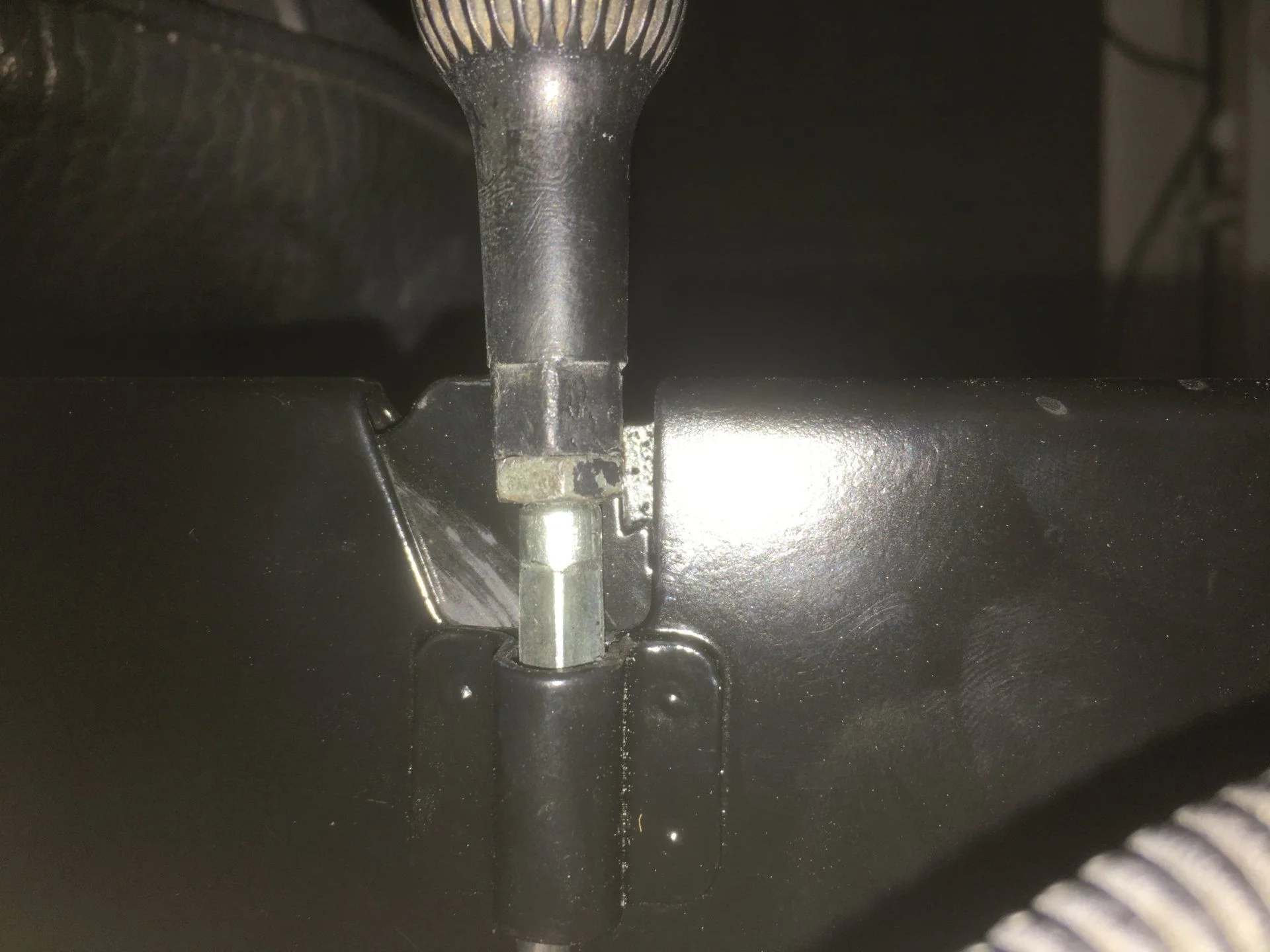
These pics are just to illustrate the narrative, not to indicate they are part of the solution going forward. This next pic shows the cable that sits off where it normally should seat completely down the black metal sleeve. That's what it looks like when I lower the brake handle to release the brake. So a good half inch of upward movement on the brake handle is lost in just getting the cable to meet up with the black sleeve. That explains some of the loss of the cable movement topside vs. in the drum (the 2+ inch upward movement vs. the 1/2+ inch movement in the spring on the cable I the drum. Thanks for any additional ideas. I've been restoring this over 3.5+ years and this is the last thing to resolve. I am anxious to start driving it!!!
First, thanks to all who previously made suggestions, which were helpful, especially SRGould41 who has stuck with me through thick and thin on this thing. So here's the situation:
My e-brake wasn't working (I'll spare you the details) so I went about correcting the problem with a lot of help. Drained the t-case, took off the drive shaft, etc. to get access to the drum. I have replaced all the springs and put OEM brake shoes on it. Because the 4-speed was swapped for a 5-speed, the longer front drive shaft moved the front part of the drivetrain back, which seemed to be too much for the original cable and it appeared a bit kinked right where it enters the drum (see second pic below), plus it was just old and the spring on the end in the drum was all kinked up from appearing to be too compressed too long too many times. I replaced the cable with a 33" one instead of the original 29" one because of the longer distance from the brake handle assembly to the drum from the 5-speed being installed. No kinks (see first pic).
To set the e-brake, I clicked the nut outside the backing plate and at about 5 clicks, it gets very, very hard to try to turn it anymore and the drum is immobilized--at least by trying to turn it by hand. I then backed off two clicks (also tried one but the drum wasn't turning freely really) and then went topside to pull the brake handle. It will stop the drum from turning (don't know about under load, though, because it's on a flat surface in my garage) but the handle has to be all the way at the top to stop the drum from turning. Half-way up and the drum turns with no problem. Only when the handle is all the way up does it stop the drum from turning.
That's the essence of it. I've gone back and forth with SRGould41 but we're kind of out of ideas at this point about why the handle isn't engaging earlier. For those who wonder if the cable is too long and so it's not compressing enough, it doesn't appear to be the case. When I pull on the cable up top (with my hand), it seems to have an immediate effect on the cable below, so there doesn't seem to be a lot of play in the cable. Overall, though, for the 2+ or so inches (haven't measured it exactly) the cable gets pulled when I lift the brake handle topside, it compresses the cable below a little over 1/2 inch. I don't know if that's normal. There's some resistance in the spring, so I would imagine the ratio wouldn't be 1:1. We are sure the installation of all parts is correct inside the drum (or at least not the problem).
This first pic shows the cable as it now looks (the longer cable) from top to drum. The second pic shows the original cable that looks kinked as it enters the drum.
These pics are just to illustrate the narrative, not to indicate they are part of the solution going forward. This next pic shows the cable that sits off where it normally should seat completely down the black metal sleeve. That's what it looks like when I lower the brake handle to release the brake. So a good half inch of upward movement on the brake handle is lost in just getting the cable to meet up with the black sleeve. That explains some of the loss of the cable movement topside vs. in the drum (the 2+ inch upward movement vs. the 1/2+ inch movement in the spring on the cable I the drum. Thanks for any additional ideas. I've been restoring this over 3.5+ years and this is the last thing to resolve. I am anxious to start driving it!!!
Last edited:


