Wheel spacer question

This site may earn a commission from merchant affiliate
links, including eBay, Amazon, Skimlinks, and others.

Joined
Aug 4, 2016
Threads
46
Messages
340
Location
New Mexico
And before all you search nazis make the comment yes I have used the search option for two days before I finally decided to make my first post a question.

My question is, I'm putting fjc steels on my 80 with 285/75s and I'm wanting to know if 1" spacer require any modification to studs or replace studs with shorter?

I think you should be fine with existing studs, I have 1.5" spacers. If they protrude too much you can easily cut them shorter. You won't use your acorn lug notes to mourn the spacer, it should come with nuts to mount the spacer to the existing lugs.
 
Good chance you will also need a thin wall socket to install the nuts that fit down inside the spacers. Most brands of spacers leave very little excess space in the holes. I always torque spacers to 106# aand no lock tight. Always still tight on re-checks.
 
As someone that has 1" spacers you will be fine with whatever sockets you have for installing them. As far as the studs it will depend on the wheel. If there is a small dimple in the wheel between in lug hole you will be fine. The stock studs only stick out about 1/16" of an inch so as long as there is some sort of depression in the wheel you should be fine. And for torquing them this is where I differ from the FSM and say what you want but I haven't had any issues, I use 85 FT LBS.

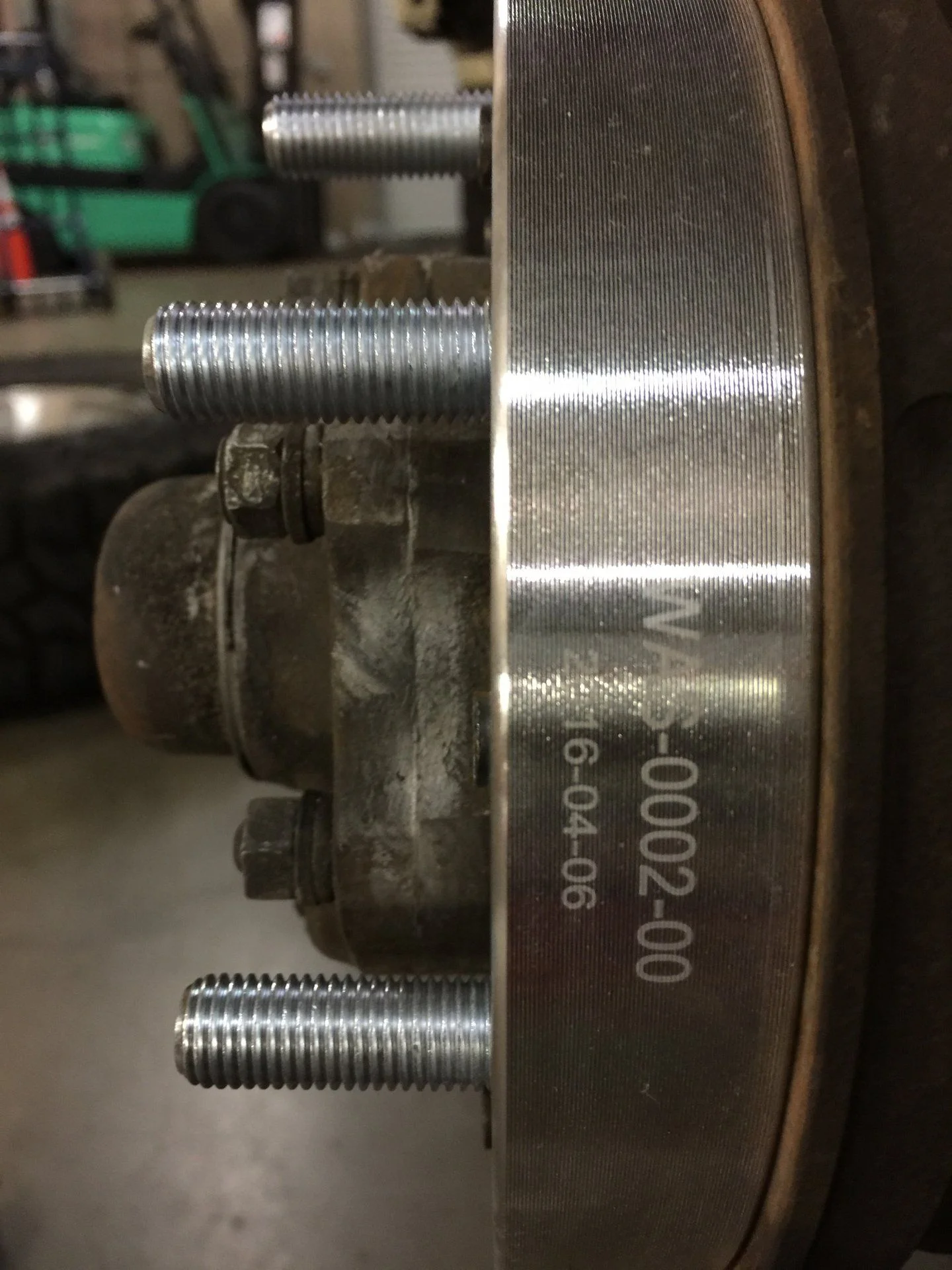
Here is a picture showing how much the stud sticks out. This is the front studs and could be ground down if needed, rears have threads all the way to the end so it's up to you on how you want to solve that issue if you need to.
full
 
Factory wheels/nuts using the 106# torque setting have steel inserts in the wheels.. I'm assuming most spacers won't have these.. and as a result 106 would make me nervous.
 
Factory wheels/nuts using the 106# torque setting have steel inserts in the wheels.. I'm assuming most spacers won't have these.. and as a result 106 would make me nervous.

106 LBS sounds really high, everything I've seen is around 76 FT LBS which would be around 106 Nm.
 
Factory wheels/nuts using the 106# torque setting have steel inserts in the wheels.. I'm assuming most spacers won't have these.. and as a result 106 would make me nervous.

So would you run LESS torque on the spacer nuts and then 106 on early wheels with steel inserts?
 
So would you run LESS torque on the spacer nuts and then 106 on early wheels with steel inserts?

Personally, yes. I've worked on a lot of cars and can't seem to remember a manufacturer specifying something that high on a tapered nut directly into an aluminum wheel.

Not telling anyone else to do that.. just that if I were running them I'd have to do some research and decide on a value between the spec for tapered nuts into steel inserts, and what is published for the later flat-washer type.

The whole point of my post was to bring up that the spacer fasteners aren't designed like either version of the factory wheels, and that neither of the torque values for those fasteners is necessarily appropriate.
 
Back
Top Bottom