



I know I saw some aftermarket heavy duty screws for the oil pump cover at some point. Does anyone know who was selling them.. I think they were star driven instead of Phillips.. I thought I would put those on instead of the stock ones assuming I can even get them out without stripping the heads....
Navigation
Install the app
How to install the app on iOS
Follow along with the video below to see how to install our site as a web app on your home screen.
Note: This feature may not be available in some browsers.
More options
Style variation
You are using an out of date browser. It may not display this or other websites correctly.
You should upgrade or use an alternative browser.
You should upgrade or use an alternative browser.
Oil Pump Cover Screws
- Thread starter danman78
- Start date
This site may earn a commission from merchant affiliate
links, including eBay, Amazon, Skimlinks, and others.


When you're pulling out the original screws use a #3 philips driver.
A trick that worked for me was to tighten the screw first. It will "tick" and after that, you can loosen it very easily. I discovered this by accident as I had one that cammed out loosening and I couldn't get a bite on it any more. I tried tightening, heard it break free, then removed it easily. I used this method on all the rest of the screws with great success.
I went back with OEM screws. They don't need to be really really tight. A dab of blue loctite would probably help if you're worried.
I've seen too many of those hex or torx type Flat Head Machine Screws break right at the bottom of the socket part. There isn't much material left by the time they get that hex swaged in there.
Have fun!


Beno or Cdan. both members that support this forum with Mr T. parts

If you have a local hardware store you can just go get some screws from them. They will have the proper pitch and length with an allen or socket type head.

- Joined
- Jun 12, 2004
- Threads
- 44
- Messages
- 231
I offer the torx replacements as allen heads can strip easily also. Torx can't, unless you do it very very wrong!

Putting a little valve grinding compound on the tip of the driver proved useful. Be sure the screw heads are cleaned out first. I forget who mentioned that to me but it made the job way easy. Clean, clean, clean, and then in my opinion, if the screws look pretty, re-use them. (IMO)


I offer the torx replacements as allen heads can strip easily also. Torx can't, unless you do it very very wrong!
I would think if you strip an allen head, you're doing something very wrong too. You shouldn't be putting them on nearly that tight. More than anything, that "kit" takes all the guess work and leg work out of the equation, and reasonably priced IMO.
I checked at least a dozen different style/brand Phillips #3 bits using a new Toyota screw, the bit that fit the best was a Bosch PH#3 1" bit, came in a two pack from Home-Depot or Lowe-s, I forget. The blades were fatter and had some ribbing, they fit into the screw head snugly. As mentioned above clean the screw heads out completely before starting, tap the bit into the screws lightly and all the screws should come out easily. I went with new Toyota screws using low strength (purple) thread locker; no leaks three years later. FWIW
https://forum.ih8mud.com/80-series-tech/72514-how-replace-oil-pump-seal-w-pics.html
https://forum.ih8mud.com/80-series-tech/72514-how-replace-oil-pump-seal-w-pics.html
Last edited:
I went with new Toyota screws using low strength (purple) thread locker; no leaks three years later. FWIW
https://forum.ih8mud.com/80-series-tech/72514-how-replace-oil-pump-seal-w-pics.html
Whaaa? Thread Locker?? I wouldn't put thread locker on those in a million years. You're just asking for headaches the next time you have to remove them. The leak occurs because the seal gets old and cracks through. I don't think it has anything to do with whether you use thread locker or not, if that is what you mean.

The reason for the difficulty removing the screws has to do with the style of head. The tapered shape of the flat head locks into position as the aluminum oxides. As anyone who has had to drill the head off can attest , the threaded portion is easily removed with your bare hands usually. The torx screws should be better for this as I've seen this first hand on the equipment I service professionally.
Rookie2: the original screws had thread locker on them, figure the Toyota engineers knew what they were doing so when I installed new Toyota screws I used low strength (purple) thread locker; it's used for screw diameters of ~6mm or less, like for a carburetor set screw or something like this. Idea is not to stop a leak past the screws but to help keep the screws from loosening due to vibration.
As anyone who has had to drill the head off can attest , the threaded portion is easily removed with your bare hands usually.
Rookie2: the original screws had thread locker on them,
I'm not sure how both of these statements can be true, but maybe I don't have a good enough understanding of how thread locker works.
I didn't use it. Hope mine don't come out.
It might be more accurate to say that the original screws appeared to have a black coating on the threads, at least in my truck, which I assumed was a thread locker or sealer of some sort. The low strength thread locker I used is just that, very low strength, don't know how much it helps if at all, just figured it wouldn't hurt. Going on three years later the pump cover is still leak free.

It might be more accurate to say that the original screws appeared to have a black coating on the threads, at least in my truck, which I assumed was a thread locker or sealer of some sort. The low strength thread locker I used is just that, very low strength, don't know how much it helps if at all, just figured it wouldn't hurt. Going on three years later the pump cover is still leak free.
When toyota provides fasteners that are supposed to use a thread locking material they come pre-coated. Replacement oil pump cover screws are not pre-coated.
Now that you mention it the new Toyota screws I got (from some guy out in New Mexico) did not have any locker or sealer on them, so maybe the PO or a previous mechanic used a thread locker or sealer on them?? IDK. The photo doesn't show it well, but the black coating shown on the screws did not appear to be oil, it peels off like a thin paint (photo was taken after cleaning the screws). Either way maybe in ten years when I have to replace the oil pump cover O-ring again I may be drilling these screws out.
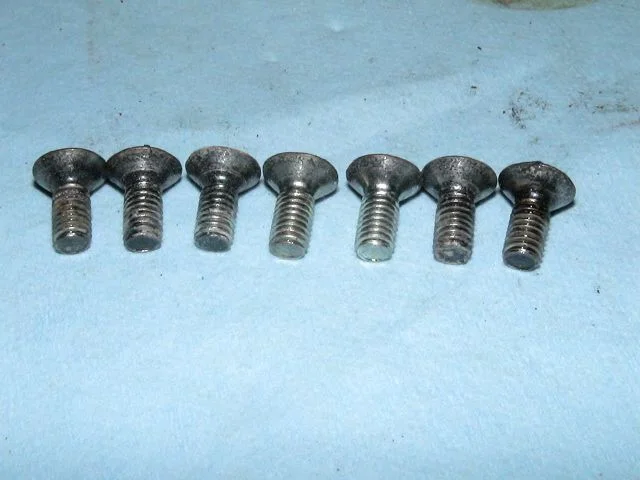
Last edited:

Do you still offer?I offer the torx replacements as allen heads can strip easily also. Torx can't, unless you do it very very wrong!