Build Isuzu 4BD1T Lexus LX450 (Land Cruiser) Build

This site may earn a commission from merchant affiliate
links, including eBay, Amazon, Skimlinks, and others.

I found this site and it looks like the Mobil Delvac I have has a decent amount of zink and well as most other additives. Not as high as the Delo but not as low as the Rotella I normally run.

http://www.pqiamerica.com/May 2013/consolidatedhdeo.html

I have had issues breaking in engines in the past to want to do everything I can ensure its a successful break in on this engine.

Thanks for all the comments.
 
After 30 years of fixing cars I finally lost a camshaft on break-in, not in my shop but I spec'd the engine and did the initial startup, FE 428 ford.
Big brand parts and all, after replacing cam, lifters and complete tear down to inspect and clean we started using break-In oil from torco, edelbrock sells it too.
Not sure about diesel breaking needs as the valve spring loading is a fraction of the H. P. gasser but we use Delo and will use a bottle of zinc additive in all diesel break in's ( just did a 6.0 psd) with no troubles....did t sleep for a week thought, thinking of having to do that over.
 
After 30 years of fixing cars I finally lost a camshaft on break-in, not in my shop but I spec'd the engine and did the initial startup, FE 428 ford.
Big brand parts and all, after replacing cam, lifters and complete tear down to inspect and clean we started using break-In oil from torco, edelbrock sells it too.
Not sure about diesel breaking needs as the valve spring loading is a fraction of the H. P. gasser but we use Delo and will use a bottle of zinc additive in all diesel break in's ( just did a 6.0 psd) with no troubles....did t sleep for a week thought, thinking of having to do that over.

Thank's! I have never had a cam issue (all DOHC motors in the past) but I have had rings not seat. In this engine the cam is stock and so are 6 of the 8 lifters, its a solid lifter motor so I'm not sure that will make a difference.

I'll run the Mobil Dalvac I have with a ZDDP additive bottle just to be safe. My main nightmare is a engine with rings that will not seat again.
 
Did you get the cam redone Jereme? Alot of what I have read about cam break in and engine break in are at odds with each other. I would definately not run moly for ring break in as it will not let them seat properly. Its whole use in engines it to prevent metal on metal contact as does zink. They both are last ditch critical wear barriers once fluid film integreity is lost. Now for cam break in its great. I had my last 2 cams moly coated and for a flat tappit set up its great for longevity. My cam builder swears by zink additive for cam break in. When I pulled my first coated cam it was pristine. Now for ring seating you sort of want the exact opposite as you want those rings to wear and fit the cylinder in pretty short order. If you interfere with the friction, your seating might not happen as you feared. Again we spoke about the take it easy deal for a couple hundred kms then load it up on a hill all day to heat up the bore and rings to essentially weaken them to allow for rapid seating. Highish water temps with safe high egts for a long time would be ideal. 1000F egt? 210f water temp? That is what I was shooting for. Good safe high water temps with egts high enough to soften things up but not flash the oil onto the cylinder and glaze it.

I love moly and synthetics and additives like that and never let any of that into my oil after my rebuild for 20k specifically for ring seating.
 
Nope cam was not touched, I wanted to have it gone through but it measured out within spec. I did replace two lifters.
 
My thoughts this morning in reading this is as follows, Diesel engines have low lifter loads, but low rpm (rpm help oil splash and help prevent galling at the lifter contact point which is smaller than one thinks).
With this in mind I would worry more about ring seating than cam break in.....which is already broke in!
Leave the adds out and get that thing warmed up quick and run at elevated rpm for the first few hours of operation....thermal cycles help breaking in rings as well.
Good quick ring seating is a product of the cylinder finish matching the ring material, (chrome (moly) - smooth finish) Iron rings- rougher finish.
Keep delvac in it with no additives for first 20 hours of operation, cut filter after 2 to 5 hours just for your own curiosity, don't be alarmed at all the rag cuz and other items you find in the filter though, we aren't as clean as we think we are!
Forge on, all is worrying only helps to a point.
 
Loading the engine quickly after startup is the most important thing you can do. I would not be too concerned about the cam or additives because the diesel flat tappet lobe profiles are very conservative.

Don't take it easy on the engine. Lots of heavy acceleration up hills is what it needs.

The breakin procedures outlined in most diesel engine repair manuals go something like start engine, shut off, check fluids, start engine 50% rated HP load at 75% RPM for 10 minutes, shut off and let cool, start engine 75% rated HP load at 75% RPM for 10 minutes, shut off and cool down, restart and apply 100% rated load at full rated speed for 10 minutes. Change oil and filter, drive it hard for a few thousand miles then it's ready for a long happy life.
 
Loading the engine quickly after startup is the most important thing you can do. I would not be too concerned about the cam or additives because the diesel flat tappet lobe profiles are very conservative.

Don't take it easy on the engine. Lots of heavy acceleration up hills is what it needs.

The breakin procedures outlined in most diesel engine repair manuals go something like start engine, shut off, check fluids, start engine 50% rated HP load at 75% RPM for 10 minutes, shut off and let cool, start engine 75% rated HP load at 75% RPM for 10 minutes, shut off and cool down, restart and apply 100% rated load at full rated speed for 10 minutes. Change oil and filter, drive it hard for a few thousand miles then it's ready for a long happy life.

Without a dyno/prison record, how does one achieve a 100% rated load for 10 minutes? B-)
 
Without a dyno/prison record, how does one achieve a 100% rated load for 10 minutes? B-)

Long, steep grade. If it isn't long or steep enough then accelerate, brake, accelerate, repeat.

I try to coordinate engine breakins with visiting family in CA. The Siskiyous are fantastic for seating rings.

I used to live in Marysville and have good friends in Roslyn/Cle Elum. Snoqualmie pass is a great ring seater too.
 
Long, steep grade. If it isn't long or steep enough then accelerate, brake, accelerate, repeat.

I try to coordinate engine breakins with visiting family in CA. The Siskiyous are fantastic for seating rings.

I used to live in Marysville and have good friends in Roslyn/Cle Elum. Snoqualmie pass is a great ring seater too.

Does 100 percent rated load refer to a period of peak boost, or is it wide open throttle? If it's just peak boost, I could lug it up the pass while maintaining full boost- but I've always understood with a gas engine that lugging is not a preferable thing when it comes to the break in period. Are diesel engines contrary to this?

Full throttle up the pass for 10 minutes with 400+ foot-lbs of torque on tap might cost me my commercial drivers license lol. Maybe I'd just need to hook up a heavy trailer and climb the grade.
 
I have access to a dual retarder dyno capable of stalling a 800ft/lb of torque at full load. So I have the ability to do that to seat my engine in. I will need to drive it there (5min from my home). I guess if I do that I better make damn sure I do all this right the first time round with making sure all lines are 100% as well as every other component that would possibly have issues in those conditions.

Cheers guys thanks for all the input.

I'll keep mulling it over and continue on with the rest of this engine build and swap.

I found a few 3" exhaust parts last weekend while cleaning up my shop. I found a 3" 180* mandrel and 6ft of 3" pipe. So that gets my exhaust started and at least back to the T case. My hope is I can go inside frame past the bell of the trans but if needed I may need to go out the wheel well and down the rocker. Again another project that I need to do once the engine is actually in the engine bay. I have a commercial application 12V starter on the way form a guy on 4BTSwaps, it stands the starter up tight to the block. This will give me a bit of breathing room between the fram and the starter and also hopefully allow me a bit more room for exhaust.

I still need to get a few 3" v bands and a muffler (3030XL AaroTurbine).

:cheers:
 
Does 100 percent rated load refer to a period of peak boost, or is it wide open throttle? If it's just peak boost, I could lug it up the pass while maintaining full boost- but I've always understood with a gas engine that lugging is not a preferable thing when it comes to the break in period. Are diesel engines contrary to this?

Full throttle up the pass for 10 minutes with 400+ foot-lbs of torque on tap might cost me my commercial drivers license lol. Maybe I'd just need to hook up a heavy trailer and climb the grade.


The procedure I outlined is a condensed version of exactly what is in the B series Cummins engine manual. It's for a dyno, but if you keep that procedure in mind and use common sense you can come close to the same thing with the engine in the vehicle.

A 3.9L engine is a small engine, it's not difficult to load them heavily in a 7000+ SUV with an automatic transmission and a steep grade.

When I do it I hit the base of the grade in high gear at a speed that's on the low end of what the engine will pull, lets say 45 MPH in OD with converter unlocked. I give it full throttle, lock the converter when appropriate and when I reach about 10 MPH over the speed limit I hit the brakes until 45 MPH is seen and repeat this until you crest the top of the hill.

A 3.9 Diesel with fuel, turbo and intercooling for 200+ HP is going to see 25-30 PSI. Non intercooled or an undersize intercooler will see higher boost numbers and higher intake temps so I would keep the boost around 25 PSI for those engines. I don't feel really hot high boost pressure does the engine any favors.

400 lb/ft is not a lot of power and is not going to propel a loaded 80 series like a rocket up a mountain. It's adequate power. You can pass people if you want, but you won't be the quickest thing out there.
 
So got my last bits I was waiting on for my motor today. So over the next few days I hope to get the last of it together and test fire this weekend.

Engine was filled with straight Mobil Delvac last weekend with no added ZDDP. I plan to run this oil for about 3-500kms depending how it looks then do a filter/oil change. Filters will be inspected for anything out of the norm.

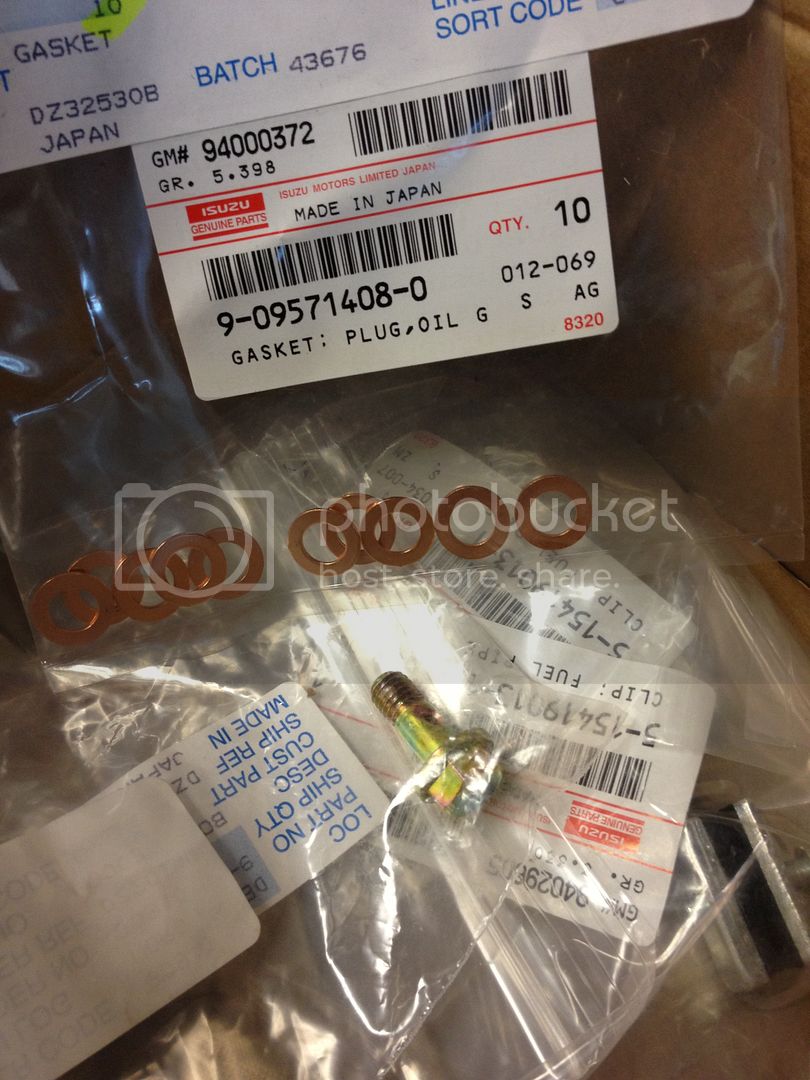
The Isuzu parts that slowed everything....

null_zps053e7fd9.jpg


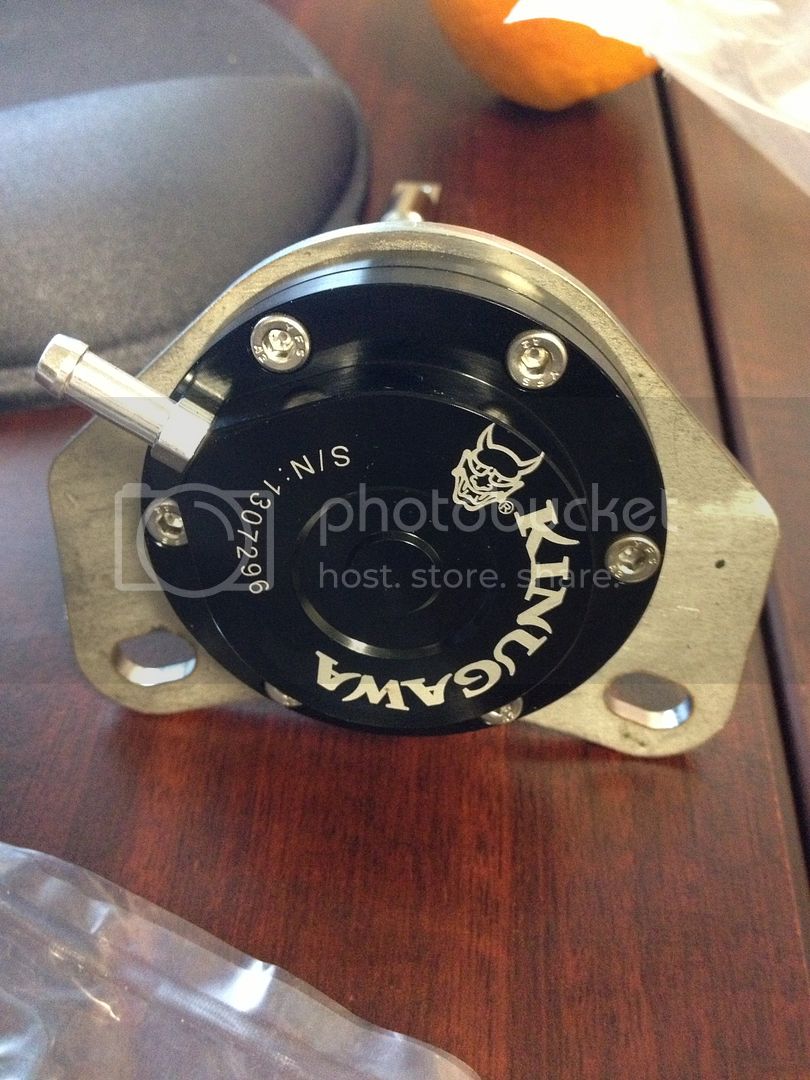
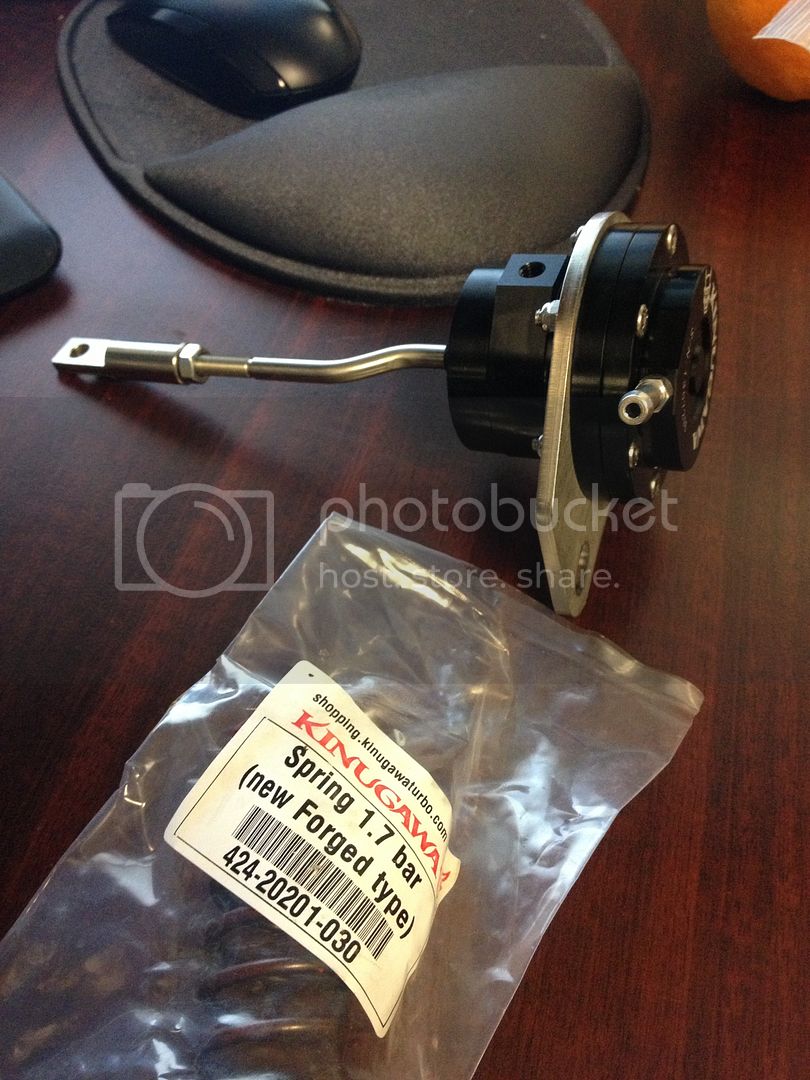
My Kinugawa WGA

null_zps2c06d64f.jpg


Decent looking little unit, looks like it was well built.

Low profile mounting so the actuator will not stick out to far in front of the turbo (intake tube room). Also my 1.7 bar spring (25psi) for later on.

null_zps6cae40ad.jpg


I also pick up my completed TD04HL-19T tonight.
 
SO last night I got my newly rebuilt turbo and turbine housing with the Volvo part machined off.

Decent and should seal well, it even lined up surprisingly well with the T3 gasket.


New 19T wheel in the turbo and balenced on a VFR machine.


TD04HL turbine wheel


No too shabby, got both the compressor cover and turbine bolted on. Then fit it to the manifold for test fitting all good there. Went to bolt on the WGA and it did not fit at all, I ordered the Saab 93 actuator bracket and I should have ordered the 9000 :( I will need to make a mounting bracket for it. I also need to cut the length on the rod for correct engagement. Slight setback but not too bad. Today I need to get some 10mm manifold studs to attach the turbo, the ones I got a far to long. I'll also get the fuel return buttoned up tonight.

My Alternator is out getting rebuilt since it was tested and found to not be charging. Hope to get that back tomorrow or Friday.

Talked to my turbo buddy when I got the turbo from him and the CMM machine he is using to scan my bell housing is swamped with work till mid next week. Then he can get it scanned and the adapter CNCed.
 
So I ran into a few road blocks last night. First the good news is my Alternator only needed a good clean and new bearings, looked like the blocked vac pump oil drain forced oil into the brushes making it not charge.

I got to work planing the turbo installation and I keep running into clearance issues. Not so much with the engine but the engine bay and the pictures I have seem of the minimal room for the turbo and break booster. karlsn12 posted some pictures in his build thread showing the limited space for the turbo, its tight to say the least. I have almost entirely ruled out the possibility of a setting the turbo up front facing like I had wanted. There is just far to many things preventing that, the intake pipe would need to run directly over the oil filler on the valve cover, the A/C compressor is 3" away from the inlet, when the waste gate actuator is put on the turbo that space drops to less than 2.25", there is limited room for a down pipe with the fire wall right there as well as the starter right below where the down pipe needs to go. Having the turbo rear facing eliminates a lot of those issues, there is ample room for a 3" down pipe, the inlet pipe will pass over the rear of the valve cover. The only issues with rear facing is break booster clearance to the compressor cover, the actuator mounting and the turbo to intercooler pipe. All of them look workable if I can move the engine ahead 2-3"
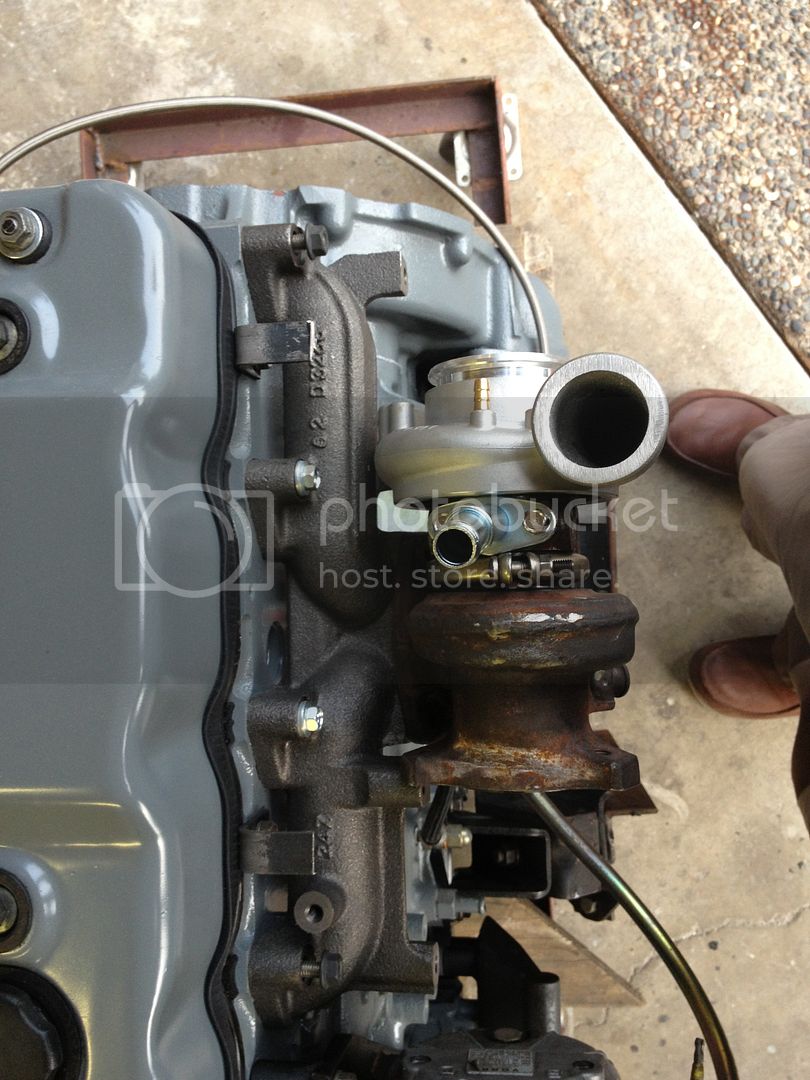
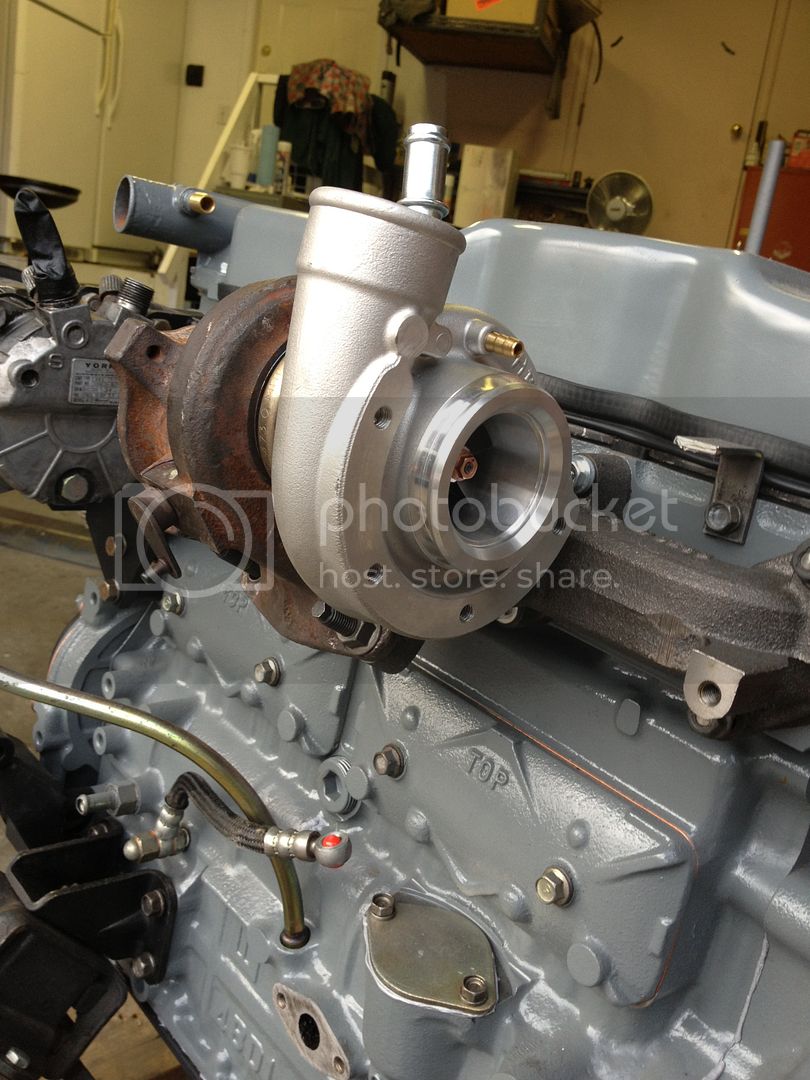
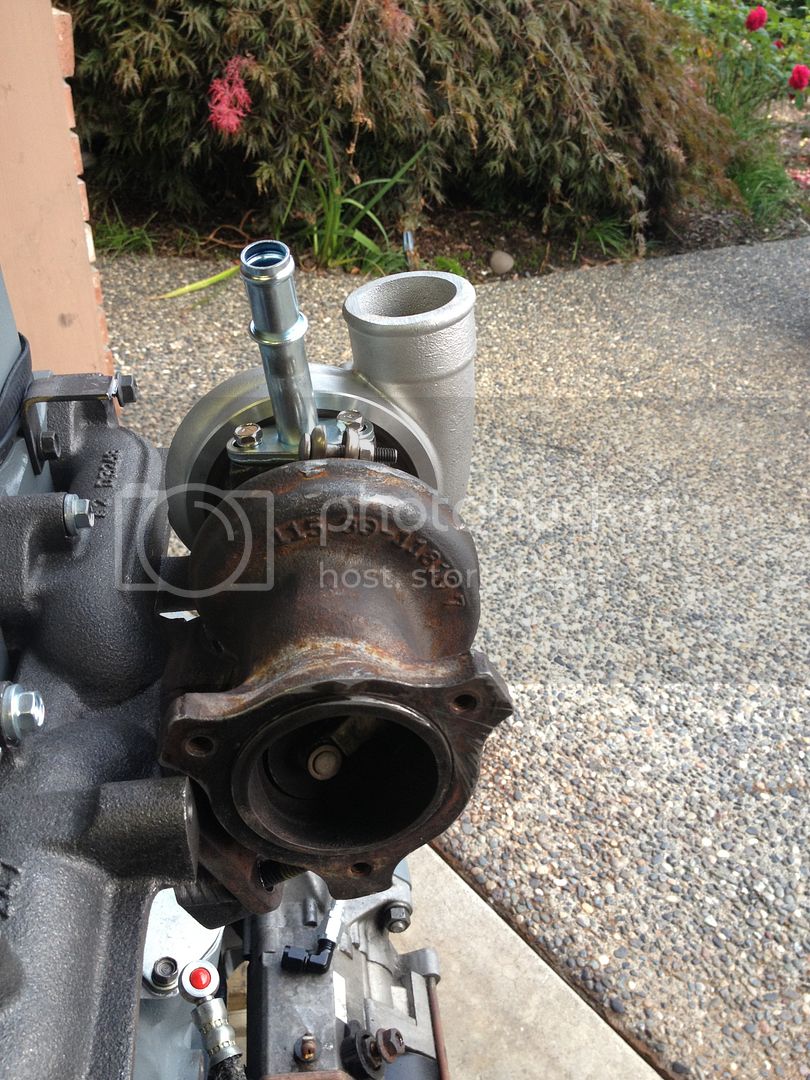
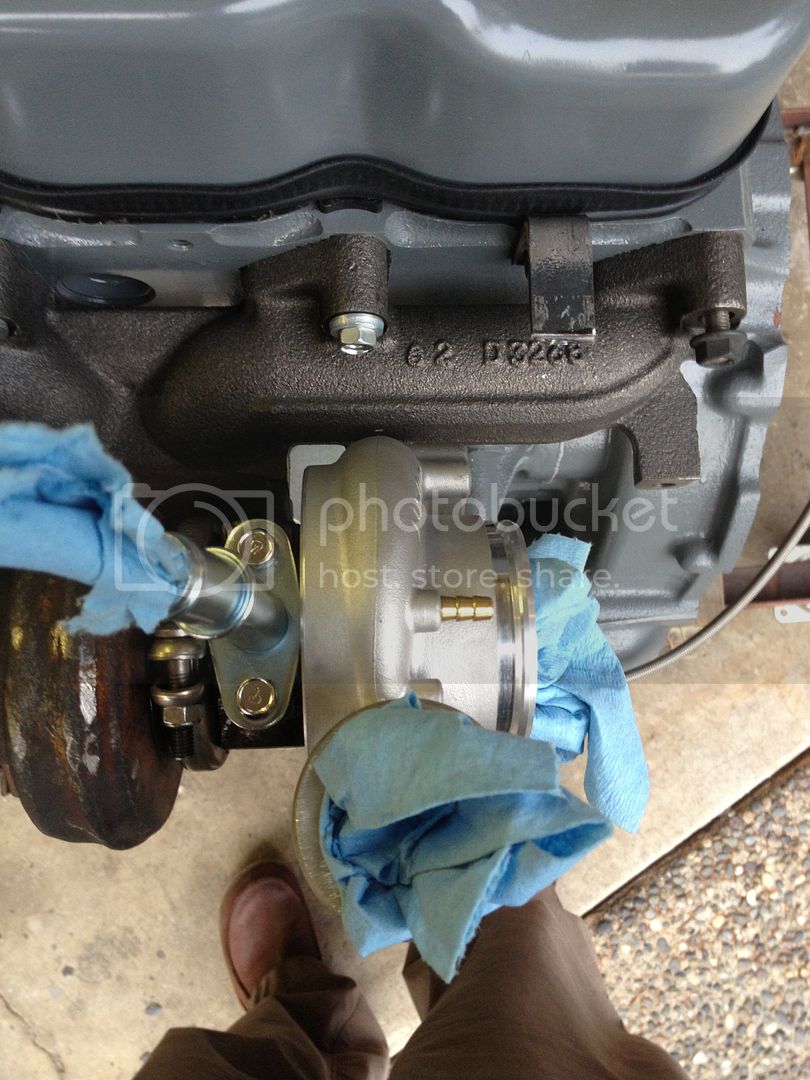


Measurement from the head on the side where the exhaust manifold mounts, the compressor cover is even with the 2nd exhaust runner from the back of the head.
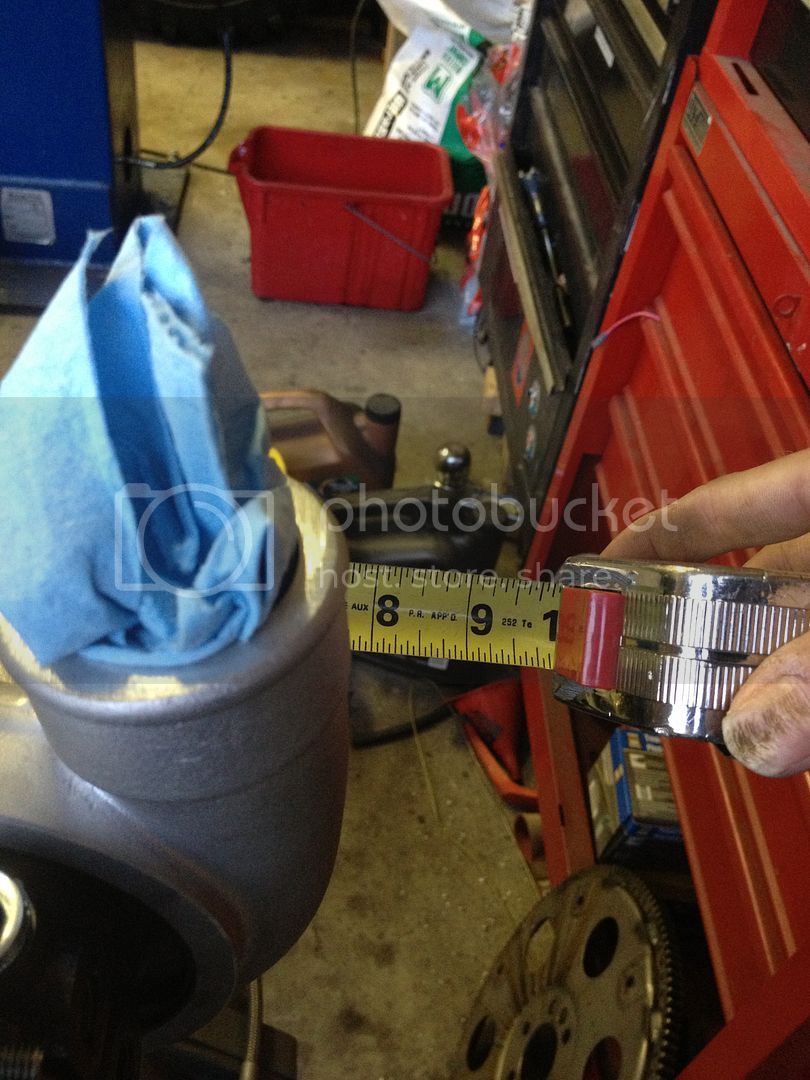


Measured from this spot for a total of 8" from the side of the head.


If I have less than 8" clearance there is a few things I can do, I can as said move the engine ahead a couple inches (if I have the oil sump clearance), build an adapter to move the turbo up and roll it in towards the valve cover. Or if all else fails make a manifold and mount the turbo where ever I want and can fit. I'm going to measure my engine bay on the truck tonight to try and find centre from that I can measure for clearance, I know that the turbo sticks 12" form centre of the Isuzu towards the driver side.

I also measured all my radiators last night.

The Griffin 3 core aluminium rad is 27.5" wide by 19.75 tall
Toyota HJ60 rad is 26.25" wide by 21" tall
FZJ80 rad (factory) is 30.5 wide by 22" tall.

I think the Griffin rad will be plenty of cooling for anything this engine will pump out. It should be short enough to allow me to move it back a good amount, at least enough to fit the intercooler in front. The inlet and outlets are in a perfect location for the engine too. The HJ60 rad will work too I think, I need to check how the much and steeply the frame moves up. With it being a bit narrower its slightly easier to fit the intercooler pipes past it. if I use the Griffin I'll need to pass the intercooler pipes below the battery boxes but that's not a big deal.

 
I know you've invested plenty of time into getting your turbo oil lines right, but have you considered the rear mount turbo option? This would simplify a lot of your engine fitment issues, lower your under hood temps, maximize your intercooler efficiency, and uses the turbo you already have while only taking up the space of your spare tire mount.

It's probably been mentioned before but at this point where you're talking about relocating the engine (modified driveshafts, possible pinion angle issues, etc) I thought it might bear revisiting.
 
I know you've invested plenty of time into getting your turbo oil lines right, but have you considered the rear mount turbo option? This would simplify a lot of your engine fitment issues, lower your under hood temps, maximize your intercooler efficiency, and uses the turbo you already have while only taking up the space of your spare tire mount.

Doesn't it also maximize turbo lag?
 
I think intake in the rear would work. Mine is that way, and it looks like it would work for you also.

Here is a shot of my install, it looks like both turbos are in about the same location. As an idea, maybe locate a stock Isuzu intake pipe and modify it to allow a band clamp to your turbo? It looks like it would fit and tucks in well. I know the intake pipe may not be the best flowing, but the shape helps clearing the firewall and bolts nicely to the engine.

As usual, the project looks great.

Carry on.

Doug

P1070760.webp


P1070766.webp
 
Take a look at my build thread for some ideas on the turbo. I had similar problems on my FJ60.

I ended up folding it up next to the valve cover and make a basic but strong brake booster spacer to give the actuator clearance. I also had to cut away part of the firewall and having an intake thing made. So far it's worked great!
 
Back
Top Bottom