



Ok, there has been a lot of discussion about this, mostly trying to dispute the facts and how the system works. In an effort to show people what really happens, here are the facts with pictures.
We hooked a pressure gauge to the fuel system just past the fuel filter. This is before the fuel pressure regulator (FPR). The FPR is at the end of the fuel rail. So the pressures measured is essentially that of the fuel rail.
Here are the pictures. The first series is with the two speed fuel pump relay stock (ie, running in low voltage mode at idle)
Photo 1. - Fuel pressure at idle. All systems Stock. FPR connected to intake manifold, so it would be receiving a vacuum signal at this point. Pressure ~ 37.5 PSI
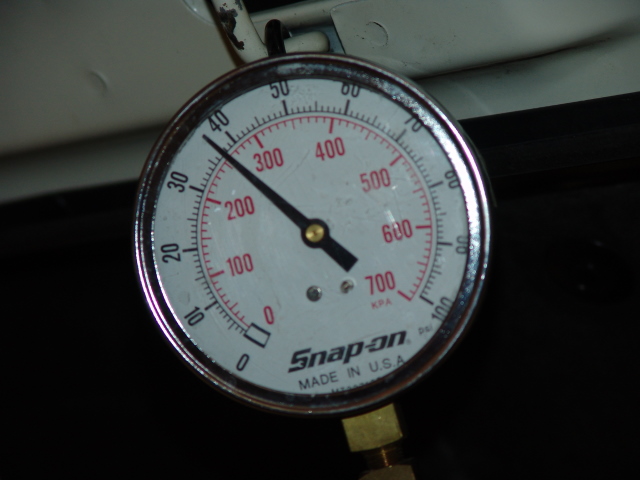
Photo 2. - Fuel pressure at idle with the reference vacuum line on the FPR disconnected. Pressure ~ 45psi
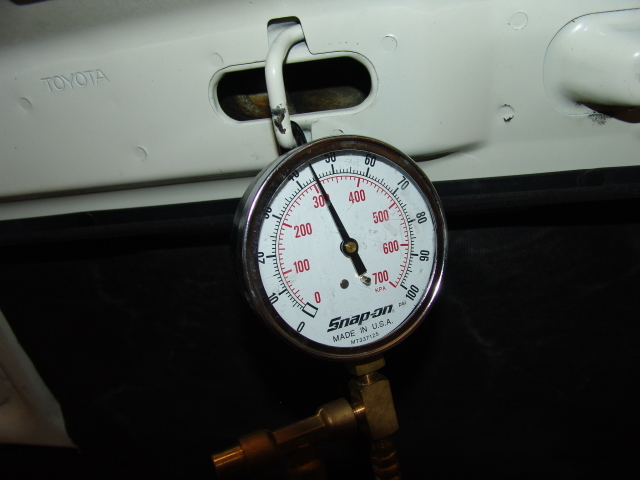
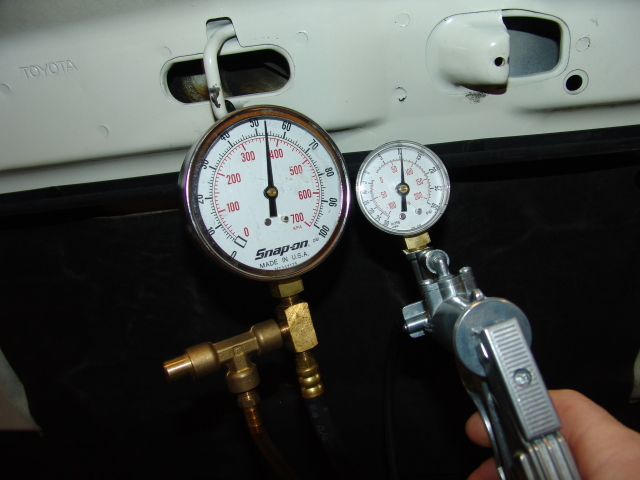
Photo 3 - Here we connected a pump to the reference line on the FPR and pressurized it to approx 10 PSI. Pressure ~ 54psi
-------------------------
Next we jumped the low speed fuel pump relay to ensure that the fuel pump gets 100% voltage.
Photo 4. - Again all systems stock. FPR connected to the intake manifold. Pressure ~ 40psi
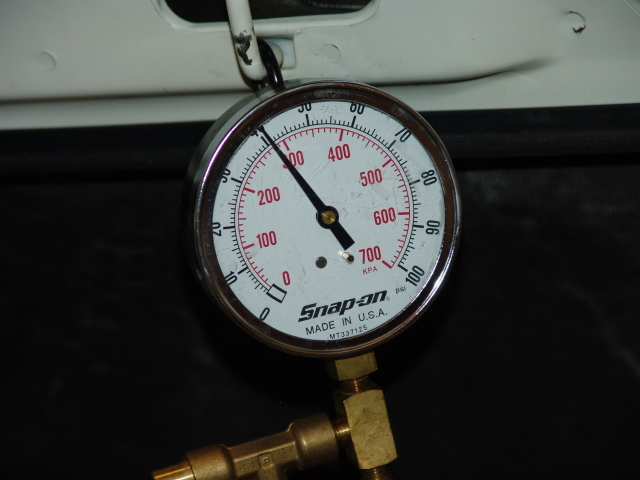
Photo 5. - Here we disconnected the FPR again and the reference line is vented to atmosphere. Pressure ~ 47 PSI
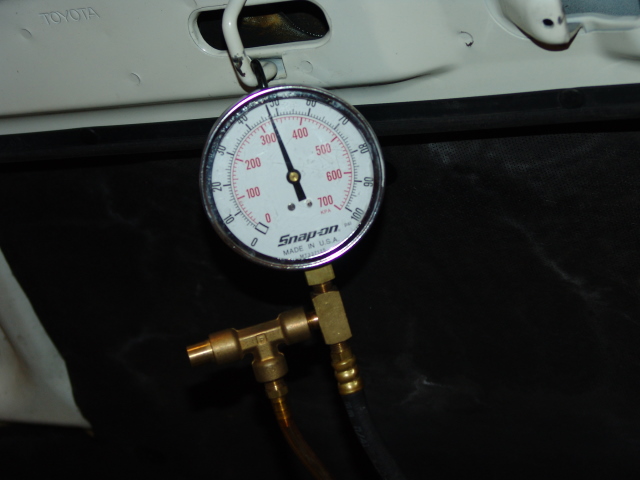
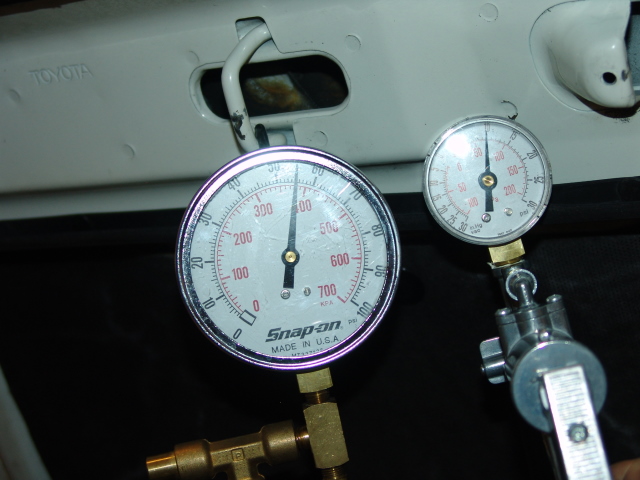
Photo 6. - Again pump hooked to reference line and pressurized to approx 10 PSI. - Pressure ~ 55 psi.
So, why did we do this. We have maintained all along that the FPR is a 1:1 regulator and thus, when under boost, the truck will increase the fuel pressure. Landtank said he tested and found a 1.5 psi increase with 8 psi applied to the FPR. It turned out he calculated the value from fuel trim. This is the relevant post about that.
Well, plain and simple you can not do that. These are measured values on a 1995 truck. This clearly shows that disconnecting the FPR sensing on the FPR is not a good idea, much less for a boosted truck.
I hope this puts to rest the suggestions that we are wrong about how the system works.
We did all these test at idle due to logistics. Since the low speed relay comes into play, that is why we did the test with the relay jumped.
We hooked a pressure gauge to the fuel system just past the fuel filter. This is before the fuel pressure regulator (FPR). The FPR is at the end of the fuel rail. So the pressures measured is essentially that of the fuel rail.
Here are the pictures. The first series is with the two speed fuel pump relay stock (ie, running in low voltage mode at idle)
Photo 1. - Fuel pressure at idle. All systems Stock. FPR connected to intake manifold, so it would be receiving a vacuum signal at this point. Pressure ~ 37.5 PSI
Photo 2. - Fuel pressure at idle with the reference vacuum line on the FPR disconnected. Pressure ~ 45psi
Photo 3 - Here we connected a pump to the reference line on the FPR and pressurized it to approx 10 PSI. Pressure ~ 54psi
-------------------------
Next we jumped the low speed fuel pump relay to ensure that the fuel pump gets 100% voltage.
Photo 4. - Again all systems stock. FPR connected to the intake manifold. Pressure ~ 40psi
Photo 5. - Here we disconnected the FPR again and the reference line is vented to atmosphere. Pressure ~ 47 PSI
Photo 6. - Again pump hooked to reference line and pressurized to approx 10 PSI. - Pressure ~ 55 psi.
So, why did we do this. We have maintained all along that the FPR is a 1:1 regulator and thus, when under boost, the truck will increase the fuel pressure. Landtank said he tested and found a 1.5 psi increase with 8 psi applied to the FPR. It turned out he calculated the value from fuel trim. This is the relevant post about that.
LANDTANK ~ I applied 8psi to the diaphragm at idle and watched little change in the FT%. If the system was setup up for a constant pressure differential that 8Psi should have increased the fuel pressure by 8psi which would mean about an 18% increase in differential.
There was a methodology. I'm trained to use on board components to evaluate system performance. It comes from being a field technician and not being able to carry a complete lab with you on a service call.
Well, plain and simple you can not do that. These are measured values on a 1995 truck. This clearly shows that disconnecting the FPR sensing on the FPR is not a good idea, much less for a boosted truck.
I hope this puts to rest the suggestions that we are wrong about how the system works.
We did all these test at idle due to logistics. Since the low speed relay comes into play, that is why we did the test with the relay jumped.
Last edited:


