Errols FJ40 Build x4

This site may earn a commission from merchant affiliate
links, including eBay, Amazon, Skimlinks, and others.

Checked the bronze bush (no wear)


Thermofan%2014_zpsnwmqgldm.jpg


Reinstalled the core


Thermofan%2015_zpsrfngyri9.jpg


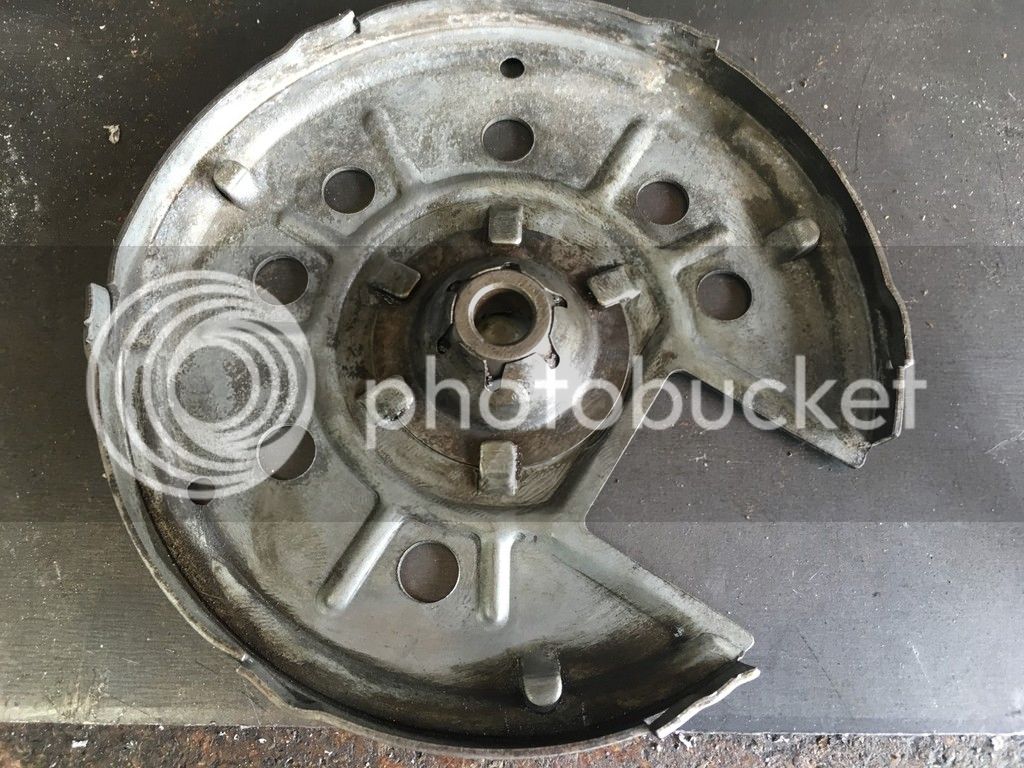
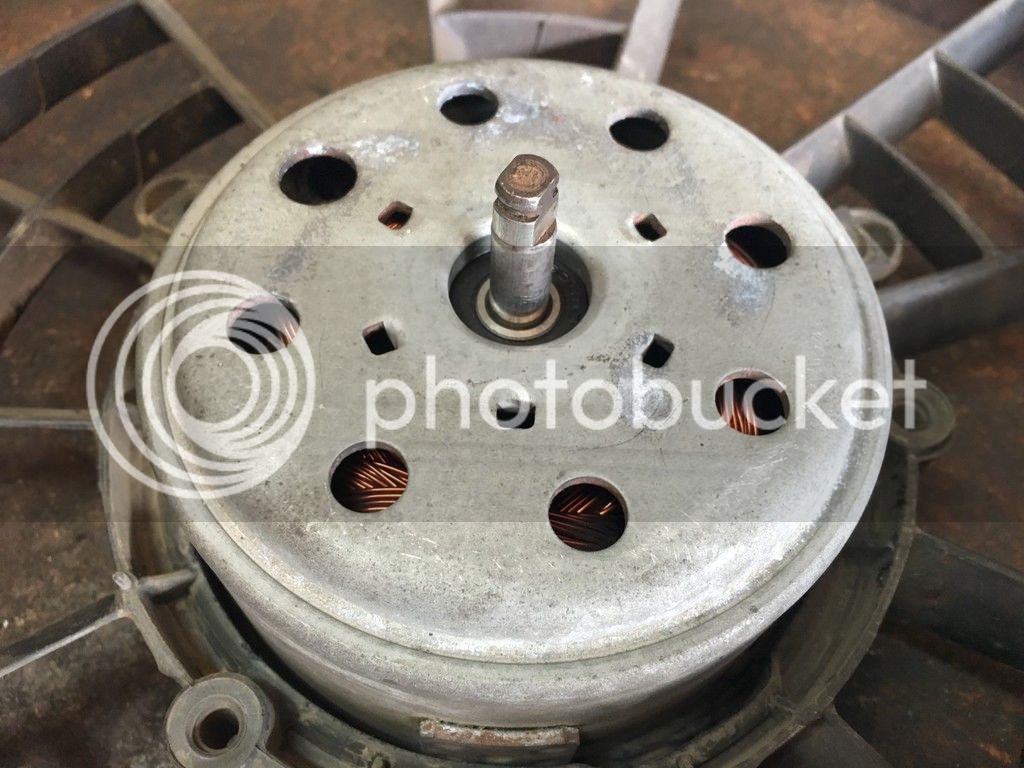
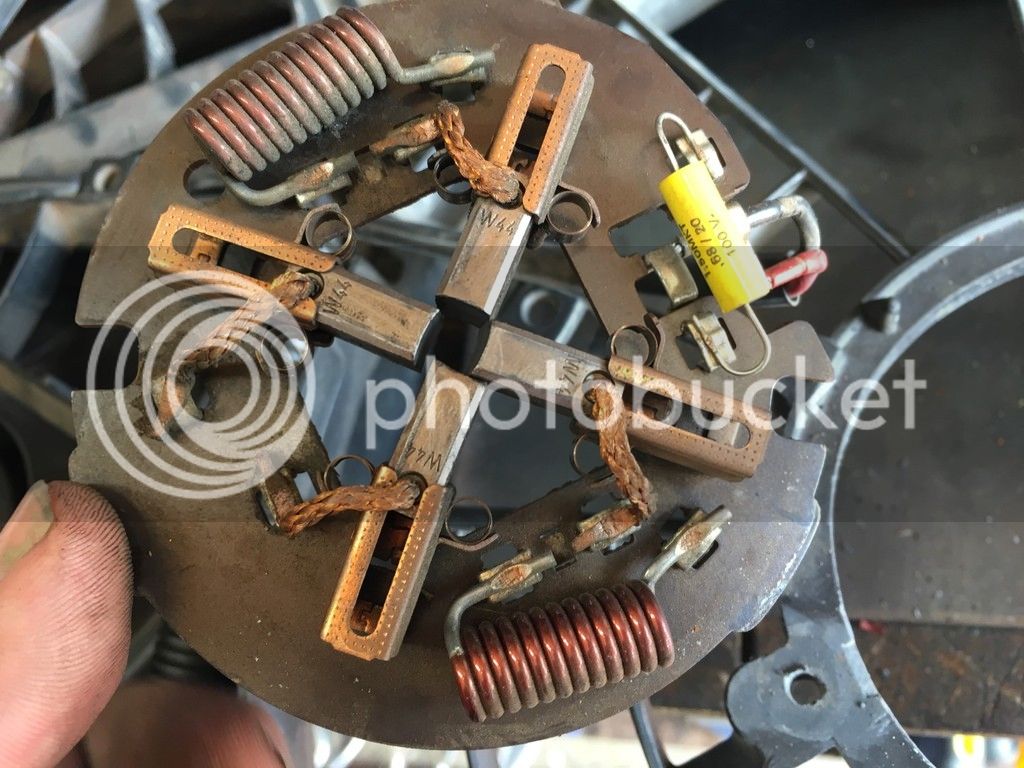
Checked the bushes for wear, these still had heaps of life but were gummed up a bit. I think it was only running on 3 of the 4 brushes previously. Cleaned it up so the bushes move freely.

Thermofan%2016_zps7yqmvn4b.jpg


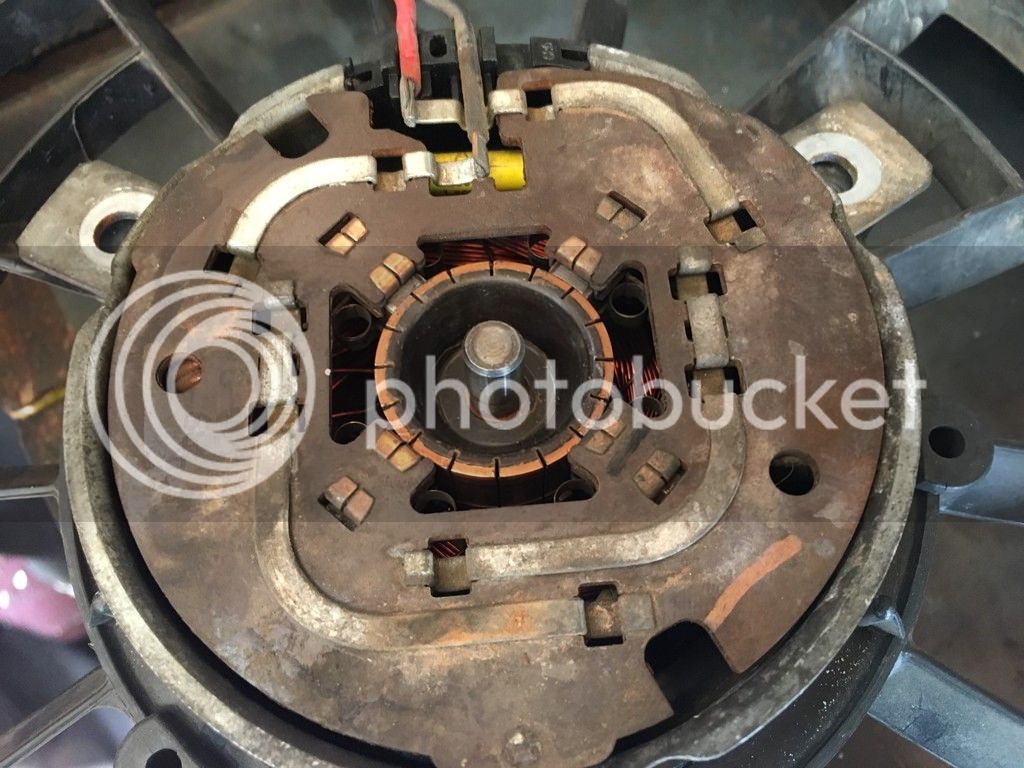
Reinstalled the circuit board and rear cover

Thermofan%2017_zps0xrytqfw.jpg


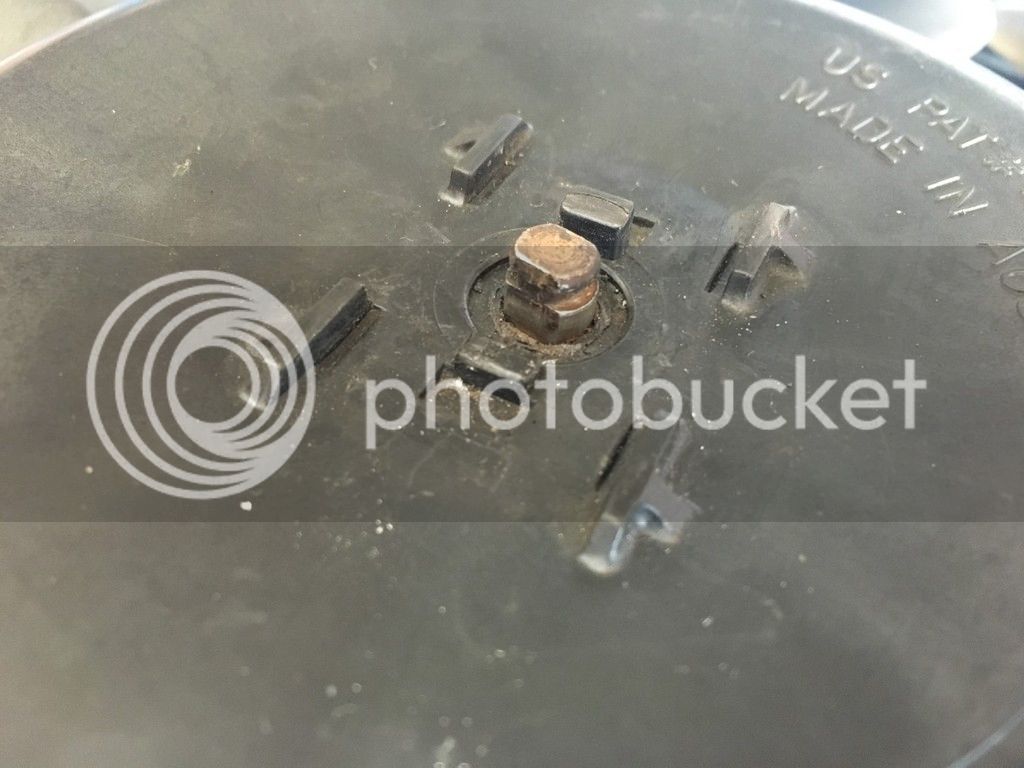
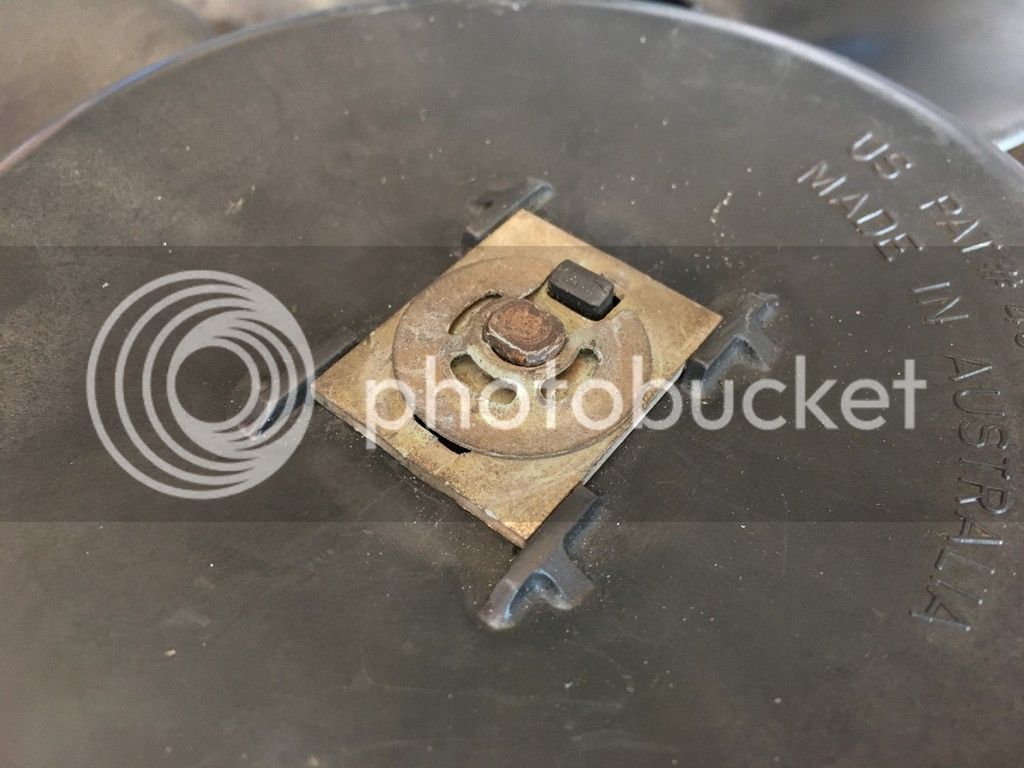
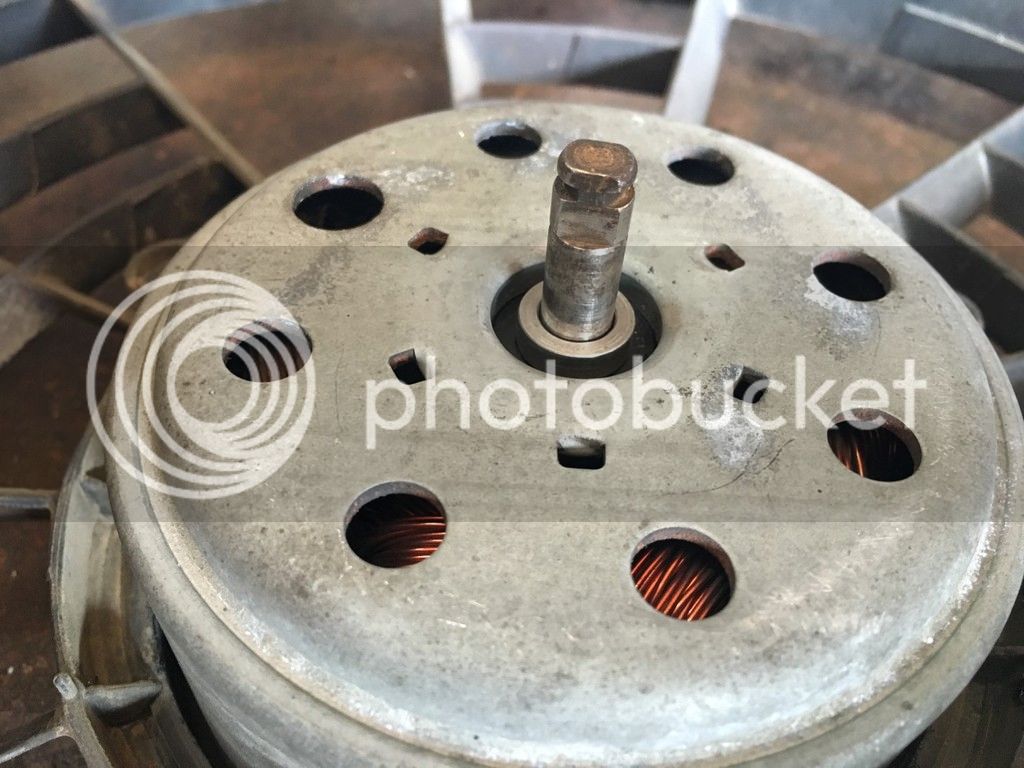
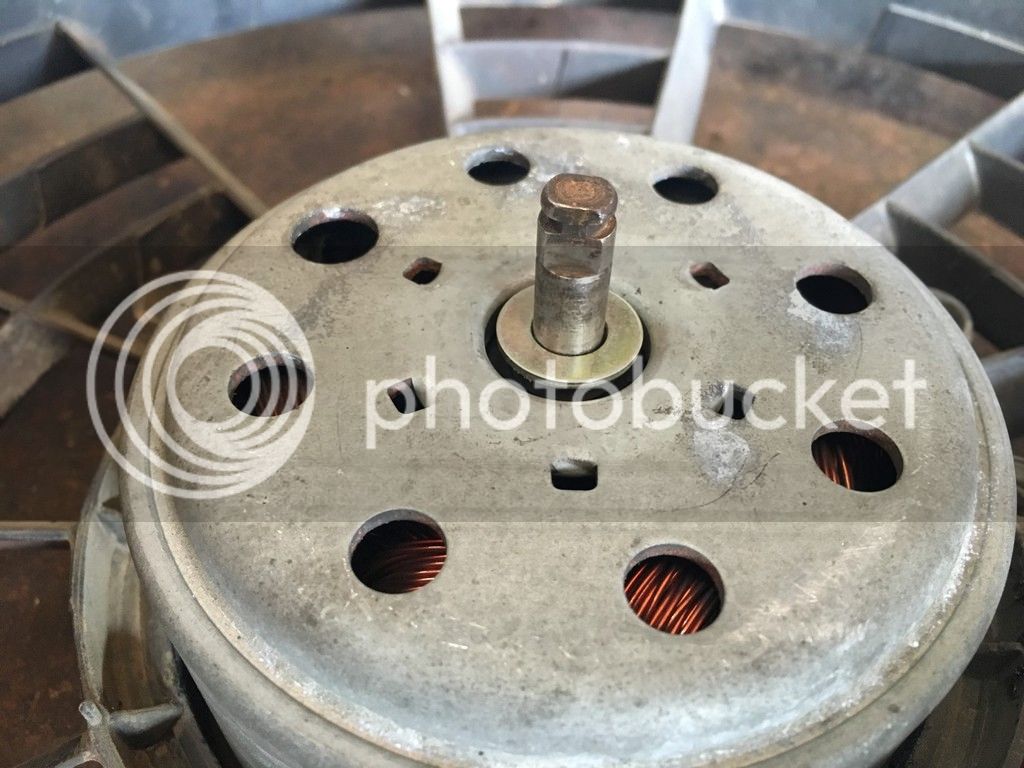
Now the newer motor offset was slightly different, so I had to use a small collar and washer to get the offset correct.
Thermofan%2018_zps735i3yqj.jpg


Thermofan%2019_zpsirprq7s8.jpg


Then reinstalled the fan blade


Thermofan%2020_zpsenhtatgg.jpg


And the clips to hold the blades on


Thermofan%2021_zpsjnyxyfow.jpg


Then just went through the remaining motors and did the rest of the thermofan housings. It’s a little bit of a waste as effectively I needed to sacrifice 4 sets of BA thermofans to create 4 sets of “super” AU thermofans, but I did get the lot for less than $50 (At a wreckers “all you can carry for $50” day).
 
Power Steering Bracket:


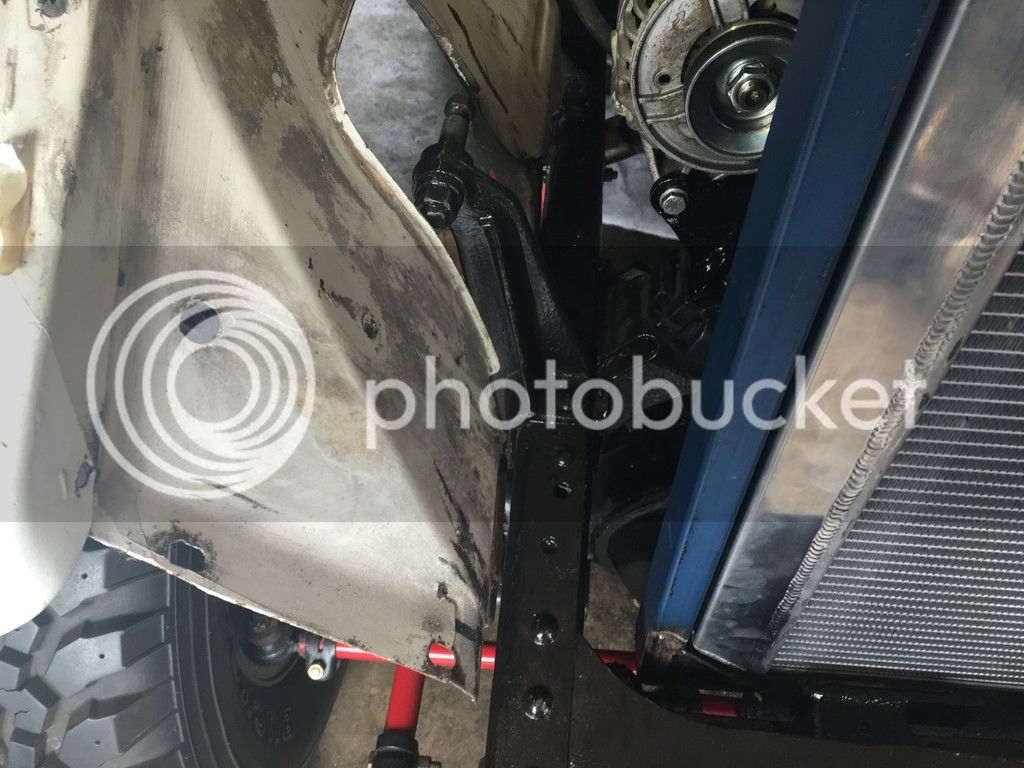
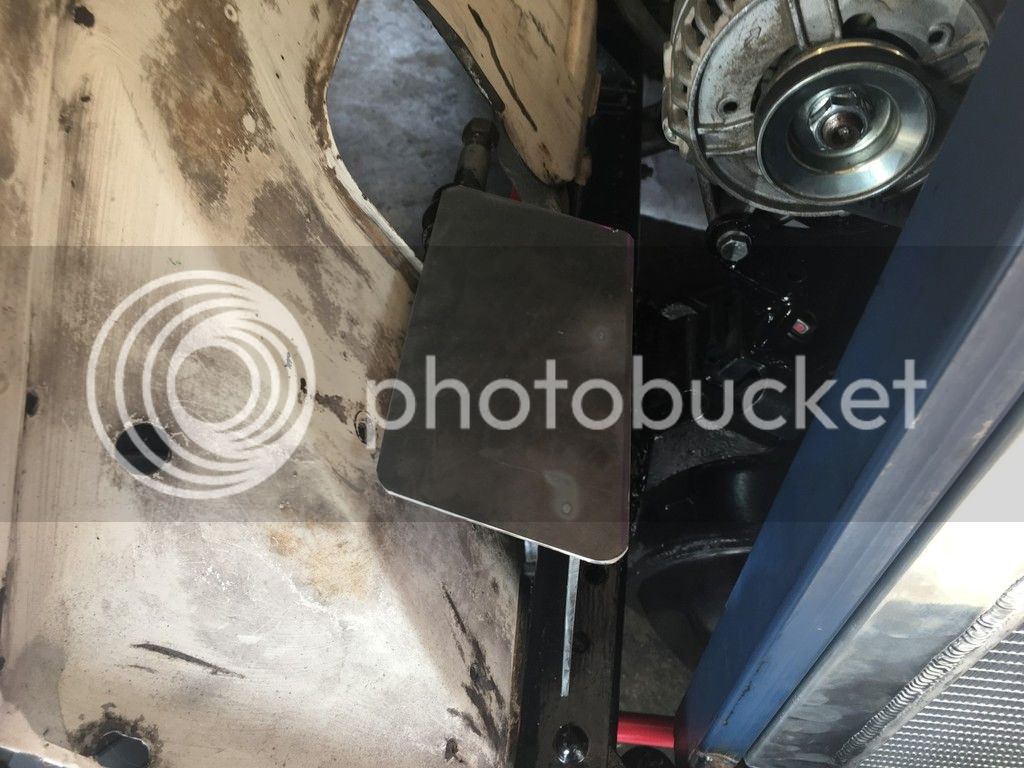
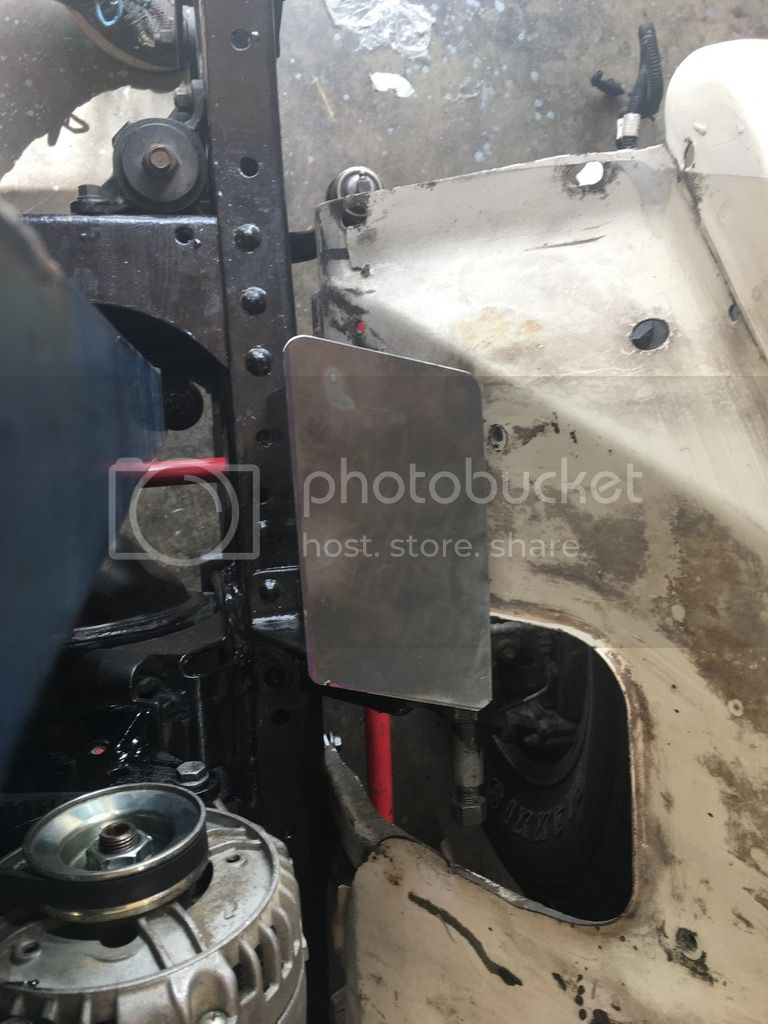
Next stage was a mount for the electric power steering pump. On the Green FJ40 I bolted a mount to the 60 series power steering box conversion bolts, but as we are using the standard 40 series box I didn’t have this mounting points, so instead decided to make and weld a bracket directly to the chassis.


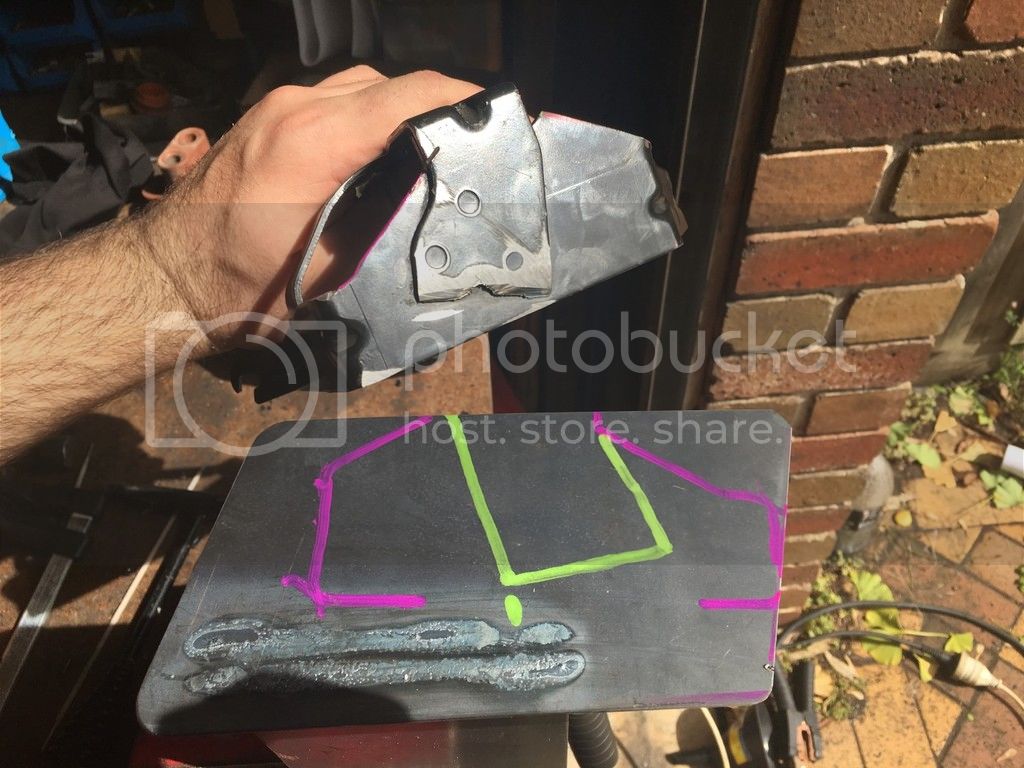
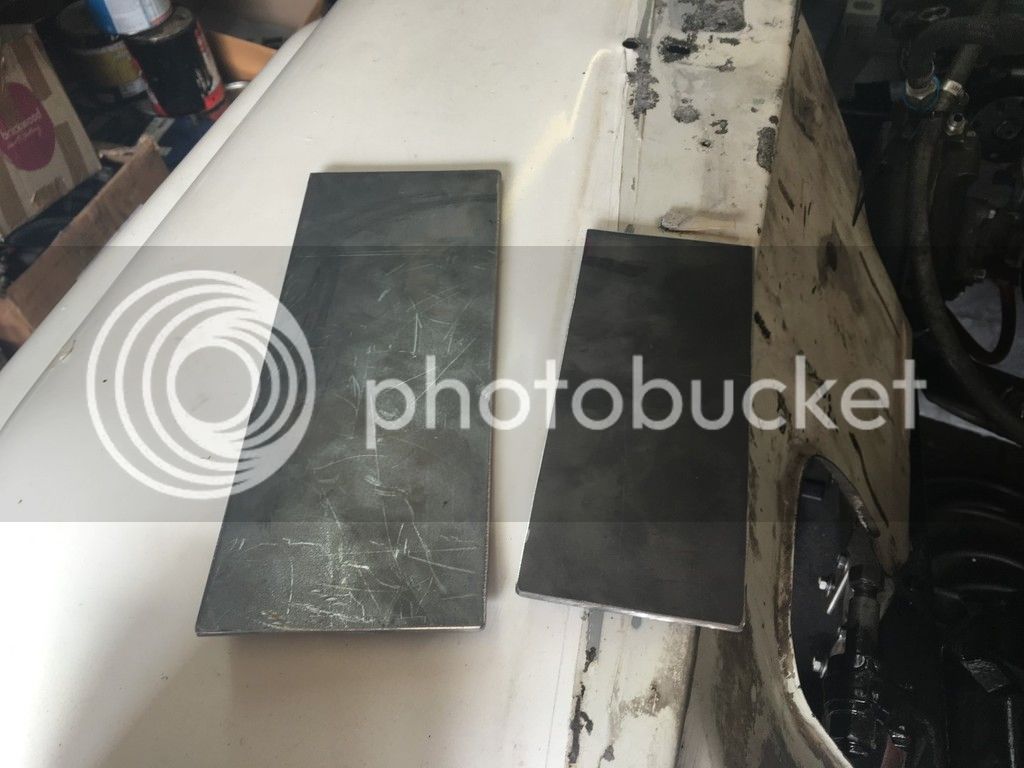
Started with a couple of blank pieces of steel…


PS%20Bracket%2001_zpsuqpryqrk.jpg


Cut and tacked them together and put them roughly in place


PS%20Bracket%2002_zpsokncze4j.jpg


PS%20Bracket%2003_zpsuej2k6so.jpg


PS%20Bracket%2004_zpsnfwokrpv.jpg


PS%20Bracket%2005_zpsz2w00tik.jpg


Then placed the pump on top to check clearances.


PS%20Bracket%2006_zpsymxy4lo9.jpg


PS%20Bracket%2007_zpsk34ej1tw.jpg


Then fully welded the bracket up


PS%20Bracket%2008_zpse8l6pmt8.jpg


PS%20Bracket%2009_zpsdydvm5uk.jpg


Now due to the pump bracket having a “fatter” part in the middle, I had to cut out a space so it would sit flush (making it easier to weld)


PS%20Bracket%2010_zpsmtkc9cuy.jpg


PS%20Bracket%2011_zpst2gft6m3.jpg


PS%20Bracket%2012_zpsoolwjltc.jpg


Once the gap was just I could weld the pump bracket onto the new bracket


PS%20Bracket%2013_zpsv7dkammm.jpg


PS%20Bracket%2014_zpsuz52cupw.jpg


Now put the whole assemble on the chassis so I could mark where to remove the paint in preparation for painting.


PS%20Bracket%2015_zpse22vqcu3.jpg


PS%20Bracket%2016_zpsxngz7h0o.jpg


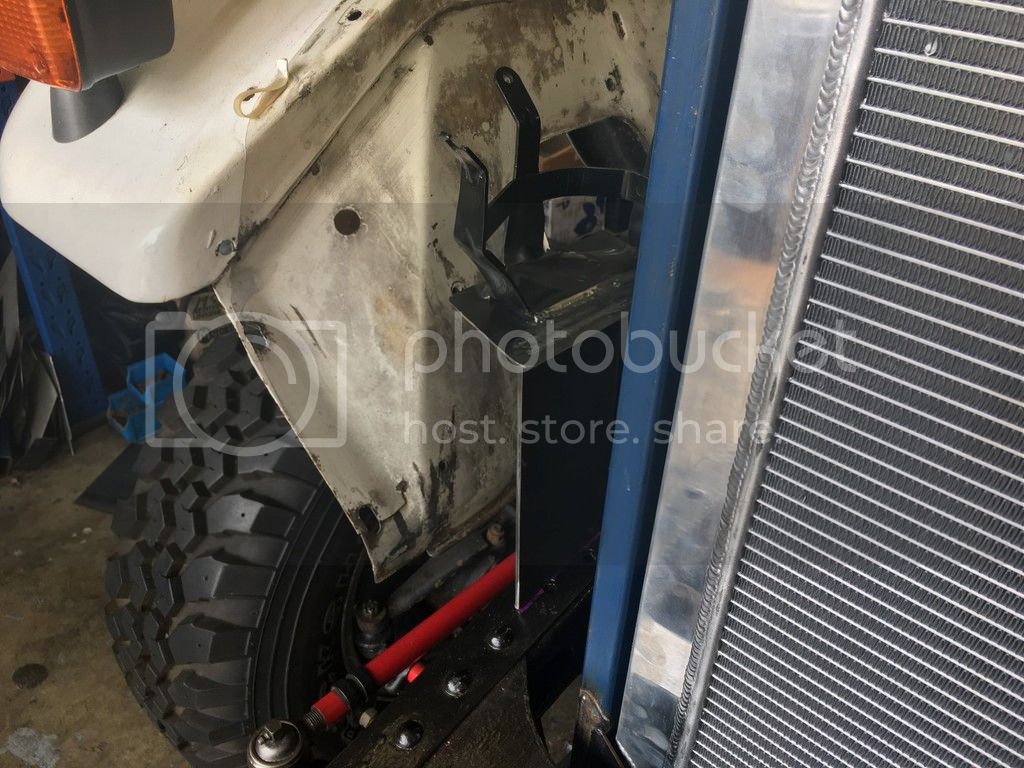
Then welded a bolt to the bracket (which would be used to support the radiator frame)


PS%20Bracket%2017_zps86mvagzr.jpg


PS%20Bracket%2018_zpsdbmc3qo3.jpg
 
Removed the guard and welded the bracket onto the chassis


PS%20Bracket%2019_zpscfo37prm.jpg


PS%20Bracket%2020_zpsv8ntjpqn.jpg


Cut out a small bracket to go from the radiator frame to the bolt


PS%20Bracket%2021_zpsxahisg0o.jpg


Mocked up where/how it would sit


PS%20Bracket%2022_zps84rqayae.jpg


Then tacked the bracket to the radiator support


PS%20Bracket%2023_zpsymplvg8z.jpg


As you can see the polyurethane bushes will keep the radiator frame isolated electrically from the chassis (preventing electrolysis of the radiator).


PS%20Bracket%2024_zpsvpgeqhrz.jpg


While I was at it I made up a bracket for the other side of the radiator. Again using polyurethane bushes to isolate the frame…


PS%20Bracket%2025_zpsw00kmeob.jpg


PS%20Bracket%2026_zpsq0q62a8d.jpg


PS%20Bracket%2027_zpso3azaetj.jpg


PS%20Bracket%2028_zpsollialxv.jpg


As I was going to weld a nut onto the frame to bolt onto, I predrilled the frame so the bolt could go further in (saves me having to cut a bolt to the perfect length).


PS%20Bracket%2029_zpskcjtp4nk.jpg


Tacked the nut onto the radiator frame


PS%20Bracket%2030_zpsvpqkxrya.jpg


Now I was ready to remove the radiator frame and weld up the brackets and nut properly


PS%20Bracket%2031_zpsl2deqver.jpg


PS%20Bracket%2032_zpsbleqou7c.jpg
 
Power Steering Cooler:


Now in the original green FJ I mounted a power steering cooler on the side guard to leave space free for an aircon heat exchanger in front of the radiator. As this FJ wont have A/C, instead I decided to mount a P/S cooler in its place (in front of the radiator).


I had an oil cooler left over from another project….


PS%20Cooler%2001_zpsiqje2rfs.jpg


So just needed to make up a bracket to bolt it into place. Started with the lower piece first…


PS%20Cooler%2002_zpsxpdkfqyd.jpg


Drilled some holes for the bolts


PS%20Cooler%2003_zpsuc3eljth.jpg


Now rather than having to stuff around during assembly with a nut/bolt, I welded the bolts to the bracket. This was they work as studs, so putting the nuts on should be simple (even after the radiator is installed).


PS%20Cooler%2004_zpslwjihruv.jpg


As you can see the studs come through nicely with a flat surface for the cooler to mount against.


PS%20Cooler%2005_zps8diuluz6.jpg


PS%20Cooler%2006_zpsjktxujn8.jpg


Did the same trick with the upper mount, although this time had clearance to some right angle stuff for extra strength. Although during welding got a bit hot so bent slightly, but won’t be visible so I’m not worried.


PS%20Cooler%2007_zpswtdpxj3w.jpg


PS%20Cooler%2008_zpsjdseqdg1.jpg


Could now trial fit the cooler and brackets to the front of the radiator frame.


PS%20Cooler%2009_zpsb3aeeflf.jpg


Was now ready to weld the brackets to the frame


PS%20Cooler%2010_zpsvdy30huy.jpg


Now that the radiator frame was pretty much complete (just waiting for paint), I moved onto the steering column.
 
Steering Column:


Next step was to modify the steering column to suit the 2” body lift. Now most people just cut the firewall, but this causes a few issues (Steering column angle etc).


Instead we decided to modify the factory steering column and remove the rubber insulator pad. One of the issues with the standard FJ40 steering column is it has a bearing at the top (near the steering wheel) but no lower bearing. Instead it uses the steering box/rubber pad as the lower bearing/pivot point. This creates slop in the steering system and reduces “feel” on the road.


Instead I wanted to use a double unijoint setup for direct and precise feel.


Started by welding a suitable spline to a Unijoint.


Steering%20Shaft%2001_zpsbkqct44p.jpg


Steering%20Shaft%2002_zpsi8isozjr.jpg


Steering%20Shaft%2003_zpsuabp5lhd.jpg


Then cut the steering column shaft to length and welded the unijoint on the end.


Steering%20Shaft%2004_zps4gx3my4w.jpg


Then created a special plate and sourced an appropriate sized bearing to bolt to the inside of the steering column mounting bracket.


(Sorry I didn’t grab any pictures during this stage).


Once this was complete, I installed the shaft for a trial fit.


Steering%20Shaft%2005_zpsr0hg50yy.jpg


As you can see the shaft is now held with bearings at both ends and no longer relies on the steering box.


Steering%20Shaft%2006_zpsbrpnazjq.jpg


I then installed the steering column into the car and installed the second unijoint setup (Which was from a 60 series setup).


Now I could have just welded the 2 unijoints together on a solid shaft, but this spline setup allows the tub to move independently of the chassis without stressing the steering setup (This is normally the job of the rubber isolator).


So with double unijoints the steering is very precise with virtually no slack between the steering wheel and steering box.


Steering%20Shaft%2007_zpsejvto6jv.jpg
 
Painting:


Was now ready to give everything a coat of paint…


Painting%2001_zpsbemkz3m2.jpg


Painting%2002_zpsylmmr4u2.jpg


Painting%2003_zps9fw9efcc.jpg


Painting%2004_zpsocycgtq5.jpg


Painting%2005_zps0jkl8gir.jpg


Painting%2006_zpsukte6vak.jpg


Painting%2007_zps5plxixlf.jpg


Painting%2008_zpsjh8sgbqo.jpg


Painting%2009_zpsknddg16n.jpg


Painting%2010_zpsg9otcicd.jpg


Painting%2011_zpsezpgydsg.jpg


Painting%2012_zpsadjtbqh1.jpg


Even gave the radiator and oil cooler a special coat of blank paint….


Painting%2013_zpskqrq3q5e.jpg


Painting%2014_zpsllv88izv.jpg


Painting%2015_zpsfjqbwuxu.jpg


Painting%2016_zpsqe7n3s1n.jpg
 
Radiator:


Once everything was dry it was time to permanently mount the radiator in the frame.


Radiator%20Mounting%2001_zpsetzi81uf.jpg


Started by sliding the radiator in


Radiator%20Mounting%2002_zpsocd0q99l.jpg


Radiator%20Mounting%2003_zps7tblnbfc.jpg


Now I needed to drill down through the frame and top layer of radiator so I could use pop rivets. In prevent myself from drilling too deep and hitting a coolant row I used a cork to limit the drill bit depth.


Radiator%20Mounting%2004_zpsz6mot8fm.jpg


Drilled through and put a couple of pop rivets in on the top side.


Radiator%20Mounting%2005_zpspbyzemzh.jpg


Radiator%20Mounting%2006_zpsmqvok8ce.jpg


Flipped it over and did the same to the bottom


Radiator%20Mounting%2007_zpse4m72mxt.jpg


Radiator%20Mounting%2008_zpsixoxnpfa.jpg


Then added a few more on the top side and gave all the rivets a coat of paint


Radiator%20Mounting%2009_zpsuolbebcc.jpg


Radiator%20Mounting%2010_zps9h6uvknv.jpg


Now was ready to install the power steering cooler…


Radiator%20Mounting%2011_zpszhpzzfbs.jpg


Put some lock nuts on to prevent it coming lose


Radiator%20Mounting%2012_zpslsprxm5l.jpg


Now was ready to install the thermofans.


To get a tight air seal I added some foam around the edges where the thermofan would meet the radiator.


Radiator%20Mounting%2013_zpsyitqas3m.jpg


Mounted the fans on (you can see the wiring has been fixed up and its using the new BA style electric motors.


Radiator%20Mounting%2014_zpsrewlnuzv.jpg


However before I could install the radiator I needed to mount the water pump.
 
Water Pump:


Now one of the other issues was the water pump didn’t have a provision for the return port on standard SBCs.


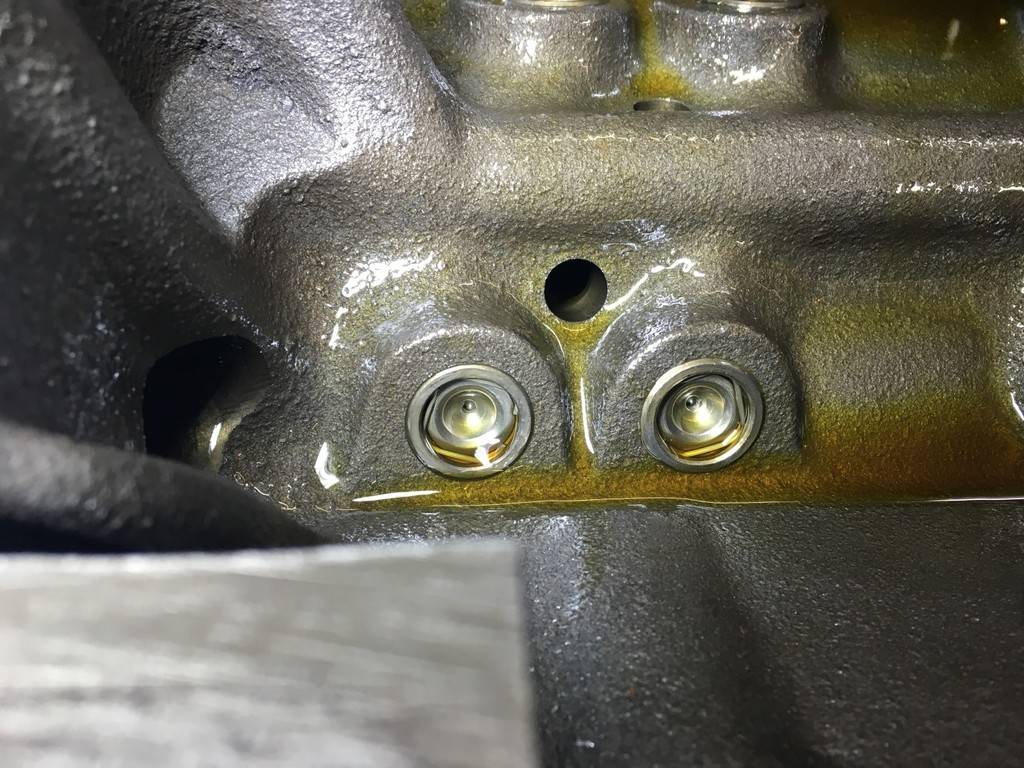
So drilled/tapped the block and put in a grub screw to block the port.


Water%20Pump%2001_zpsp2jgli8y.jpg


Was now ready to mount the pump. Started by putting the offset spacers on the pump (Uses an Oring to seal)


Water%20Pump%2002_zpsfoc2traw.jpg


Then applied the gaskets and paste


Water%20Pump%2003_zpspkspz0vn.jpg


Water%20Pump%2004_zpsbdc9pcwq.jpg


And bolted the pump on


Water%20Pump%2005_zpsylotdiaq.jpg


Water%20Pump%2006_zpsfhsgafoc.jpg


Water%20Pump%2007_zpsvyjcb2i4.jpg


You can see why we had to install the plug earlier…


Water%20Pump%2008_zpsjrvmdebe.jpg
 
Radiator Install:


Now was ready to install the radiator/thermofan setup.


Put the lower bush on first


Installing%20Radiator%2001_zpsezz0wjwc.jpg


Then dropped the radiator in.


Installing%20Radiator%2002_zpsuhsqpli7.jpg


Installing%20Radiator%2003_zpsubmgnssr.jpg


Installing%20Radiator%2004_zpspg5uhtbw.jpg


Installing%20Radiator%2005_zpsescuwqhz.jpg


You can see the wiring for the thermofan…


Installing%20Radiator%2006_zpsqtj9l4st.jpg


Now installed the power steering pump


Installing%20Radiator%2007_zpsvlcghq1q.jpg


And installed the power steering cooling lines


Installing%20Radiator%2008_zpssbo2bus8.jpg


Installing%20Radiator%2009_zpsz8ywlzu4.jpg


Installing%20Radiator%2010_zpsncqnttck.jpg


Installing%20Radiator%2011_zps23pw7gfs.jpg


Once the radiator was in I was ready to install the radiator hoses. Started with the bottom hose (including the painted adapter piece)


Installing%20Radiator%2012_zpsniyhvf21.jpg


And the top hose (I got another new one which was slightly longer).


Installing%20Radiator%2013_zpspbl3malk.jpg


Installing%20Radiator%2013a_zpsdgvadyoc.jpg


Here is the complete setup


Installing%20Radiator%2014_zpstektpnun.jpg


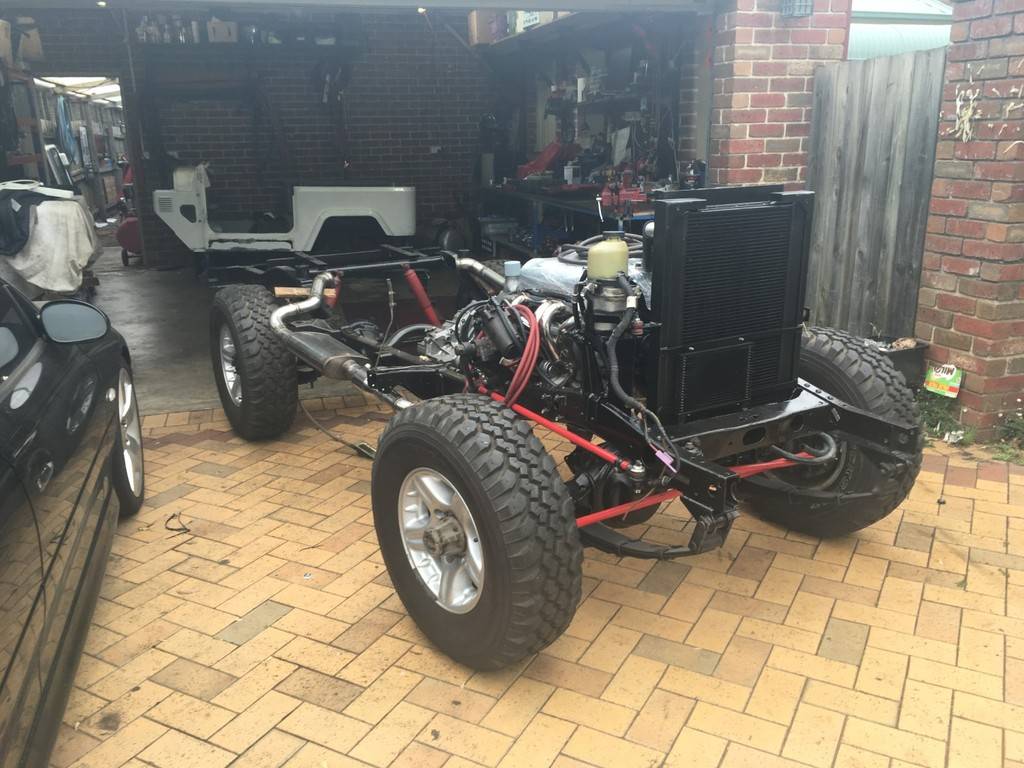
Now the engine bay was mostly finished (for now), I was ready to pull the body off (so I could get access to do the exhaust hangers, brake lines etc).


Started by taking the body off….


Installing%20Radiator%2015_zps3o7nttov.jpg


Installing%20Radiator%2016_zpsxbohu5qn.jpg


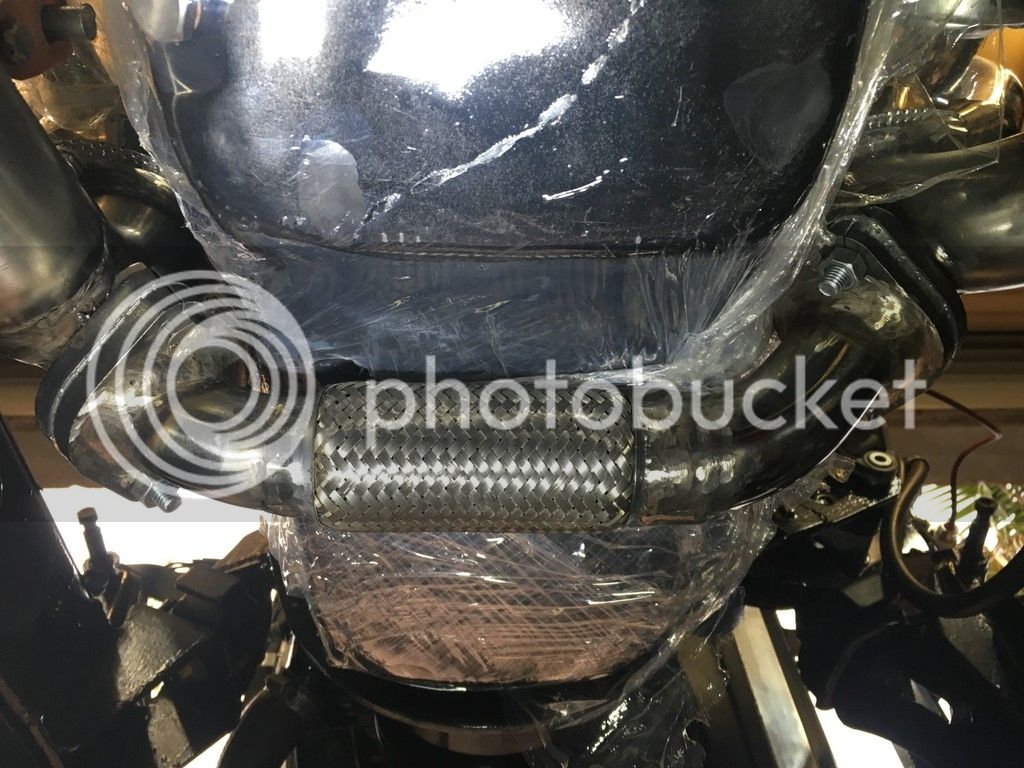
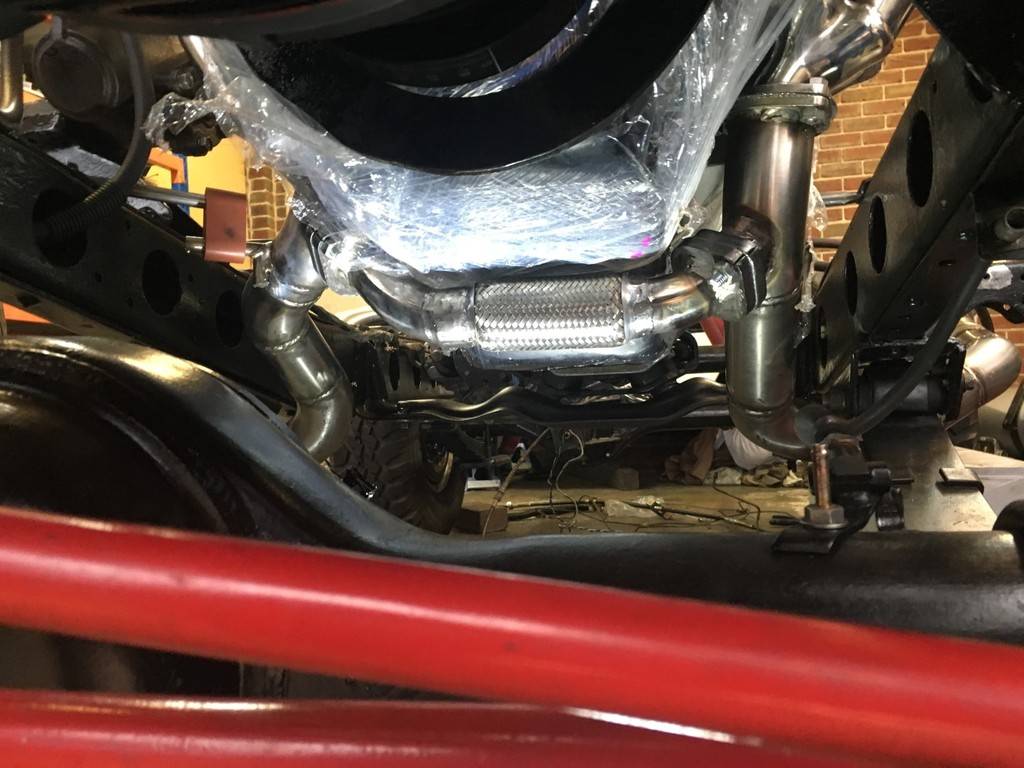
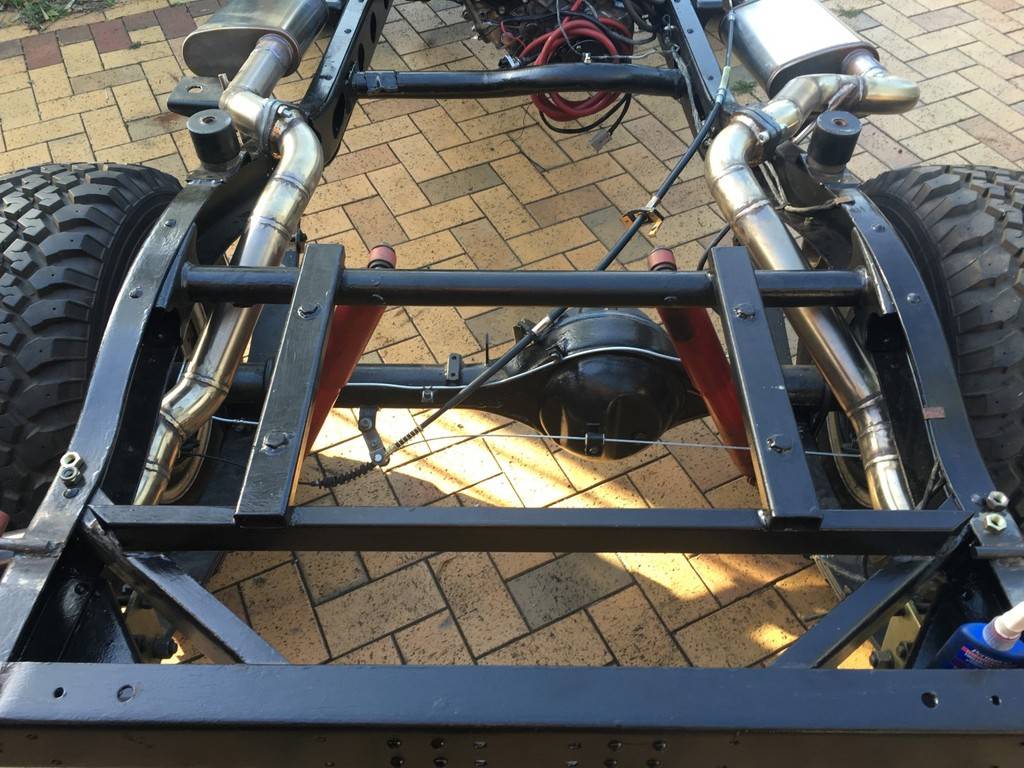
Good shot of the exhaust path from above


Installing%20Radiator%2017_zpspvkuq0km.jpg


Luckily there is just enough room for the body and chassis in the garage.


Installing%20Radiator%2018_zpsxnu9ah9k.jpg
 
Exhaust Hangers


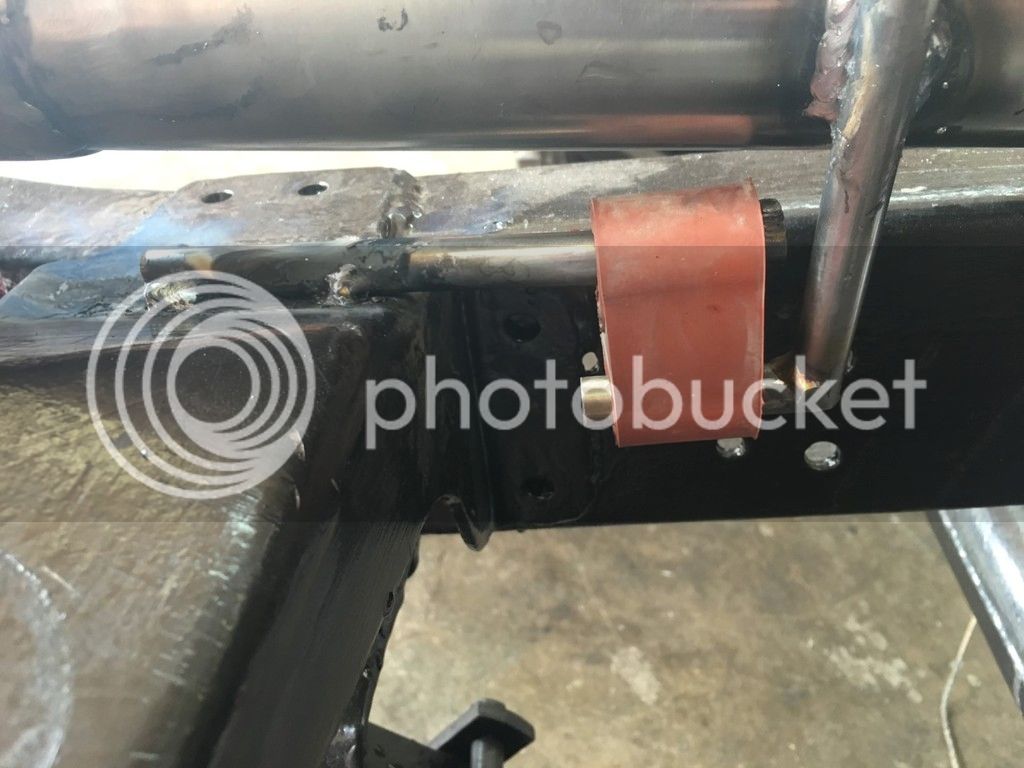
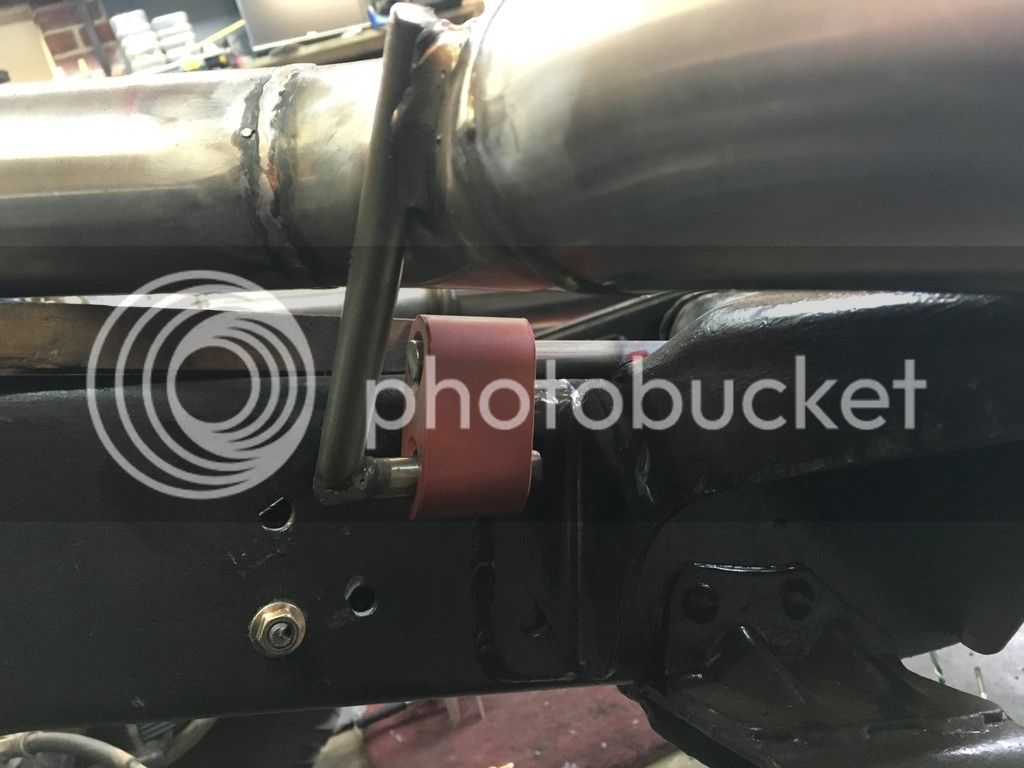
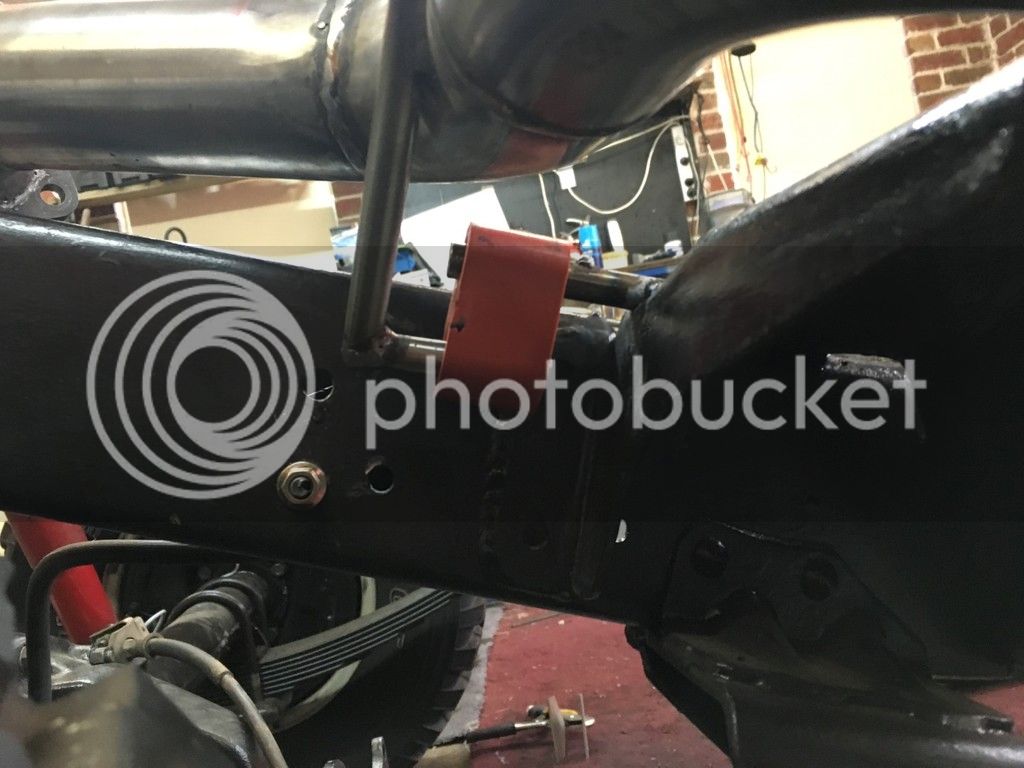
Next up was the exhaust hangers. I had previously purchased a couple of lengths of 12mm solid stainless and mild steel rods.


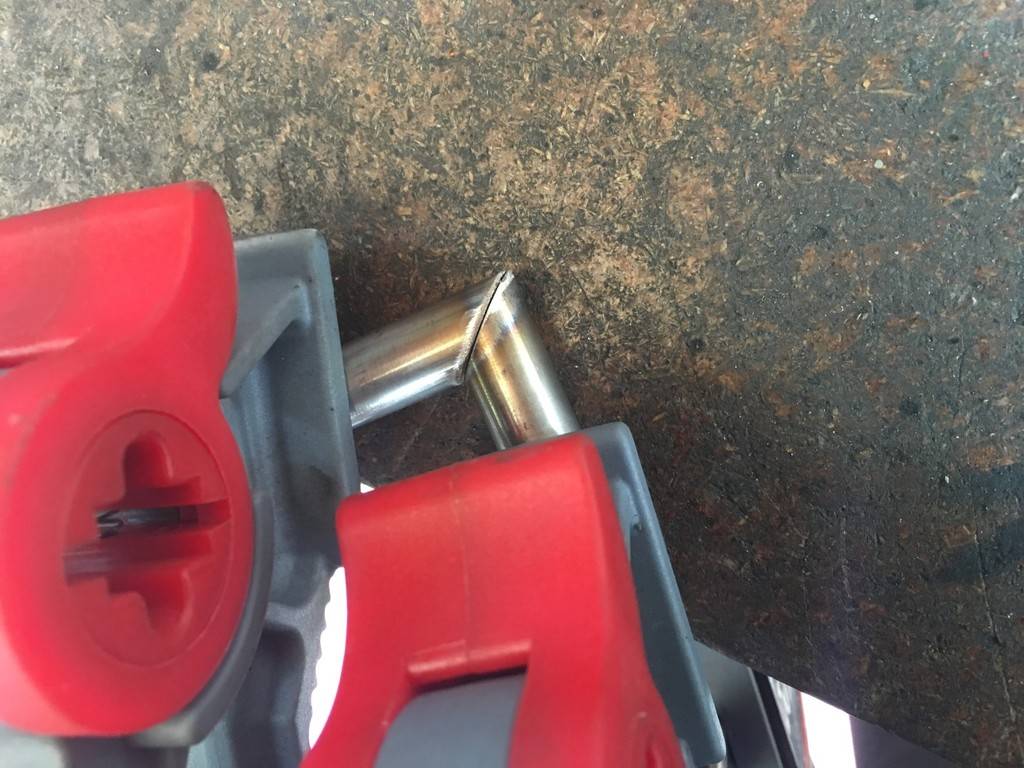
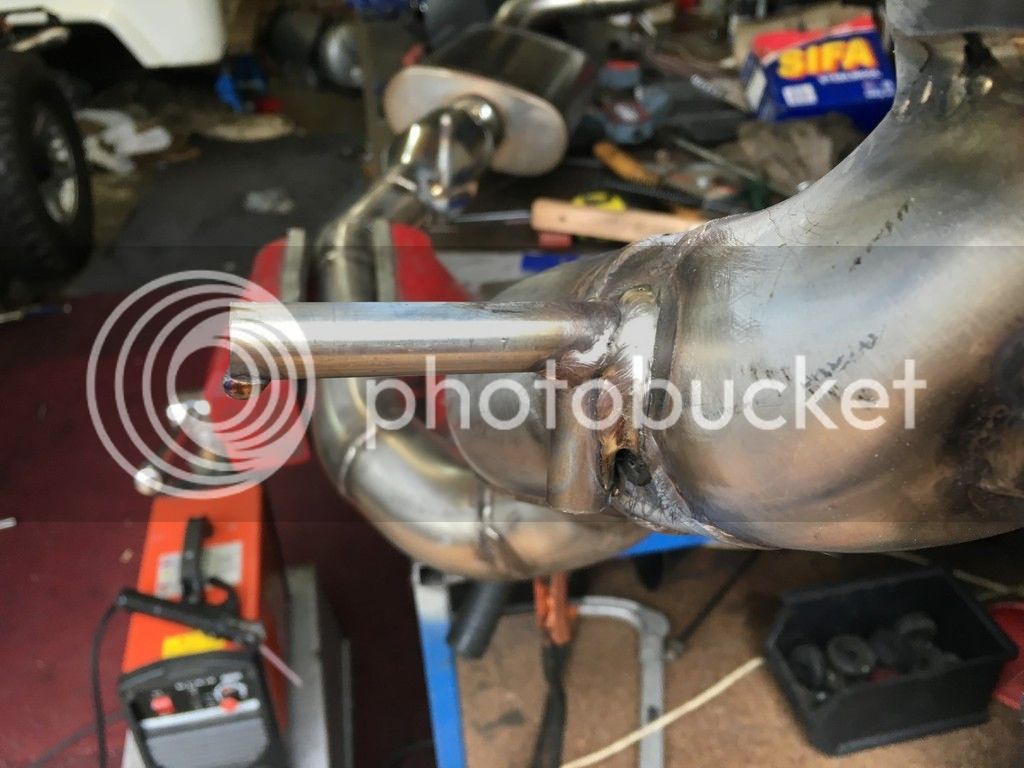
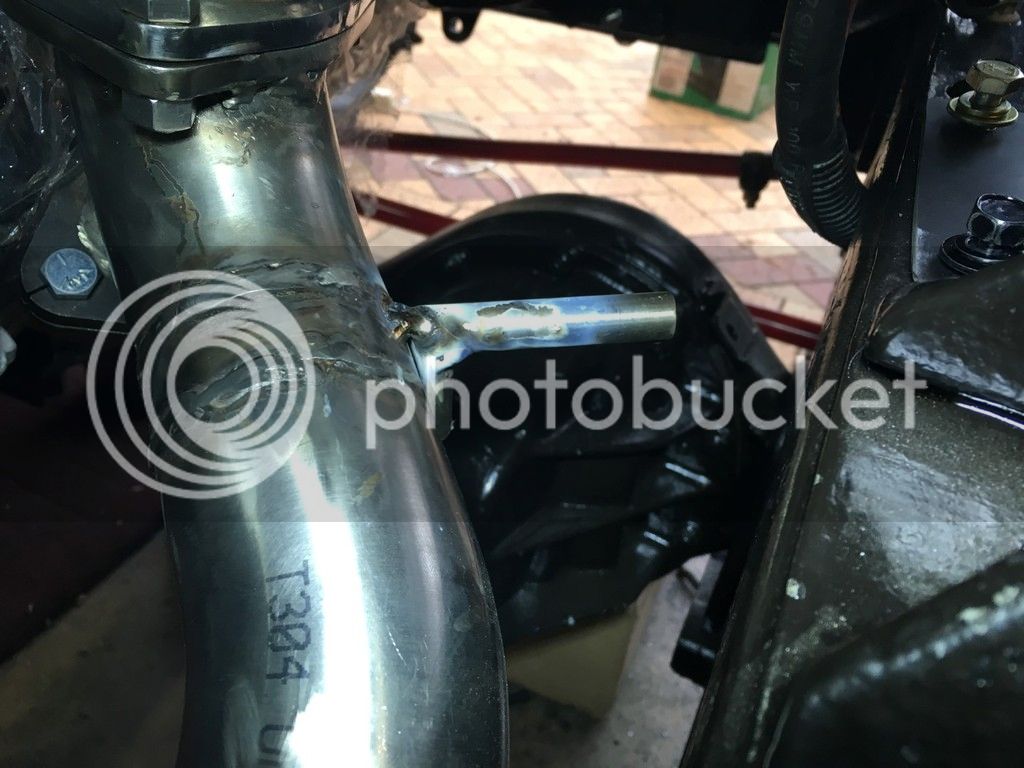
Cut the rod at 45 degrees, then welded the 2 pieces together to create a 90 degree “bend”. Also welded a small “catch/tab” on the end of the shaft to prevent the hanger sliding off.


Exhaust%20Hangers%2001_zpsjacw5zmz.jpg


Exhaust%20Hangers%2002_zpsujkndvm8.jpg


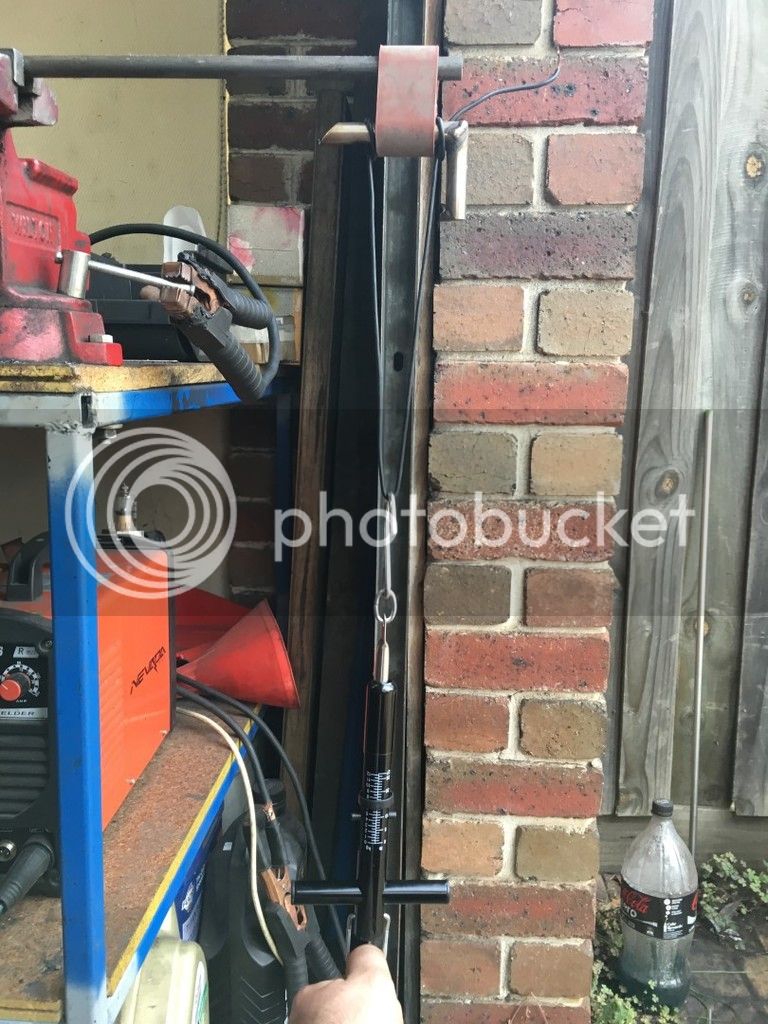
Now the next stage was to measure how much “stretch” the hangers have. Essentially weighed the exhaust section, work out how many hangers each section would have (so I know how much weight each hanger would be holding) then used a spring scale and Vernier callipers to work out how far apart the exhaust hangers should be.


Exhaust%20Hangers%2003_zps2wykp49b.jpg


Now welding a round rod to a round exhaust is a little tricky, so I used the end of the belt sander to “grove” the rod to the profile of the exhaust pipe, which made welding it on much easier.


Starting with the mid/front hanger on the driver’s side (for the hanger next to the catalytic converter) as it’s the easiest…


Exhaust%20Hangers%2004_zps0mdjdvcs.jpg


On the passenger side I tried the same approach, but accidently ended up welding the right angle piece on a little high on the exhaust, so just needed to bend the top rod slightly. Still works perfectly…


Exhaust%20Hangers%2005_zpslhocbzsc.jpg


Exhaust%20Hangers%2006_zpslzkhyrl5.jpg


Now the mid/rear hanger on the passenger side was pretty straight forward, although as the exhaust was sitting above the chassis rail I had to run a long hanger from the exhaust to drop below the chassis…


Exhaust%20Hangers%2007_zpszrebvo3u.jpg


On the drivers side it was a bit harder due to exhaust routing/lack of clearance


Exhaust%20Hangers%2008_zpsydu1jhar.jpg


Exhaust%20Hangers%2009_zpsxhsk8vl7.jpg


Now that the easy “mid section” hangers were done I moved to the front…


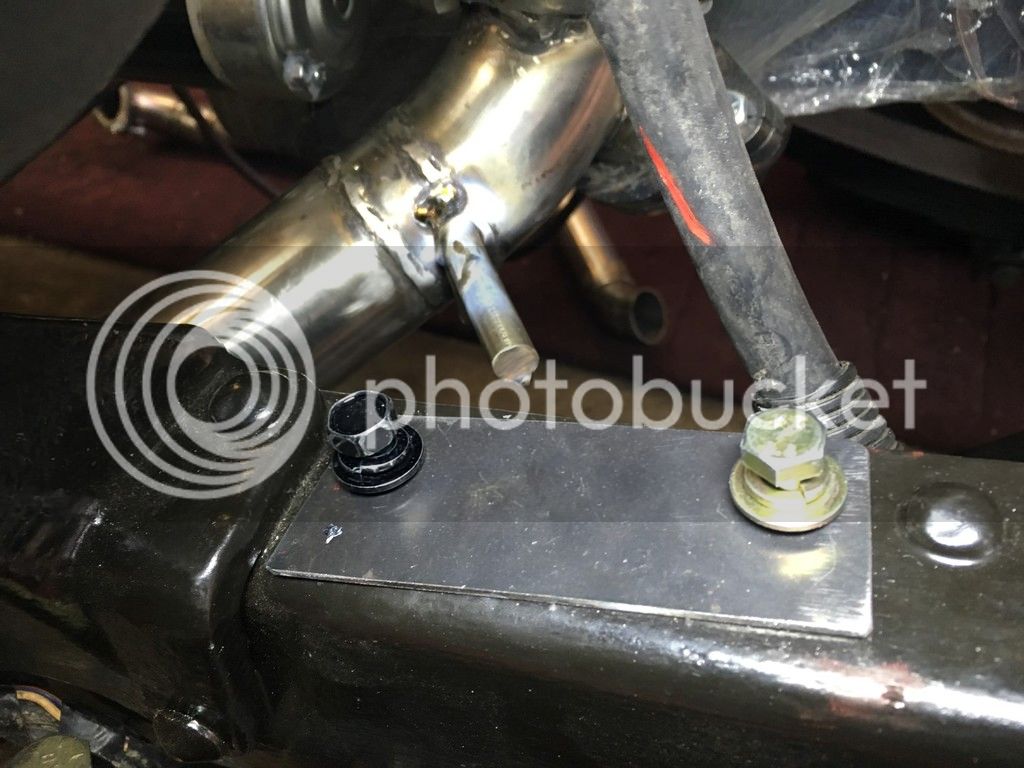
The front hangers were a little more complex as I couldn’t weld a rod directly to the chassis otherwise it would have been in the way if I decided to remove the exhaust.

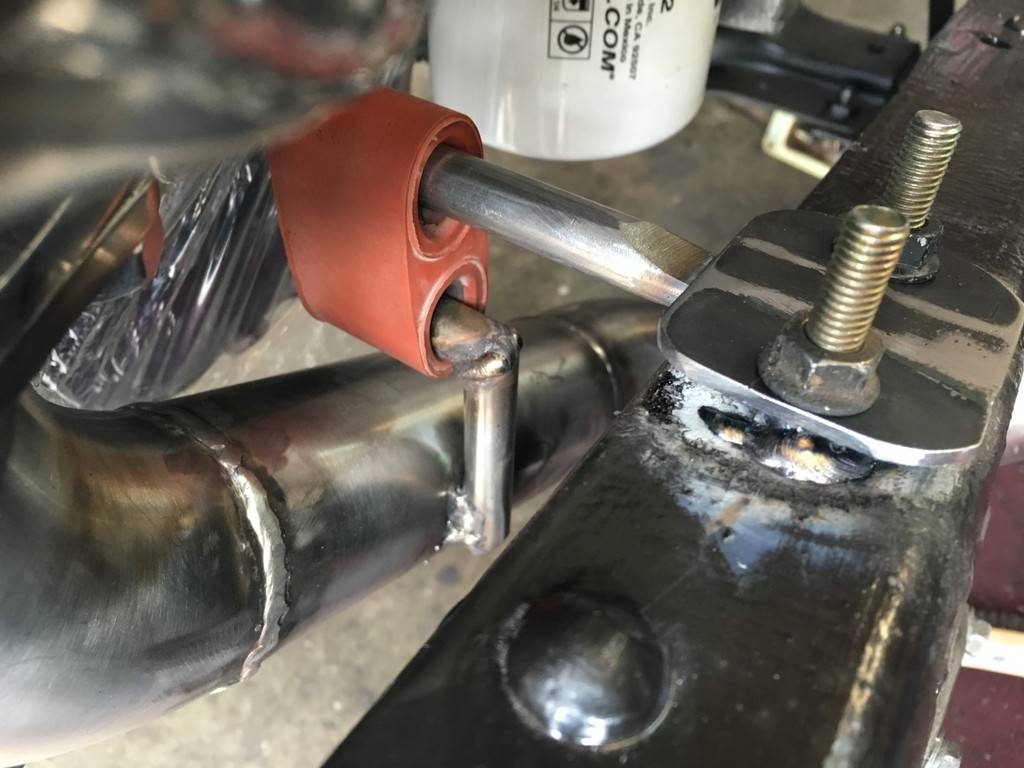
The driver’s side wasn’t so bad as there was 2 spare nuts in the chassis, so I cut out a plate to bolt to the chassis and welded the rod to the plate.


Exhaust%20Hangers%2010_zpsanfabppx.jpg


Exhaust%20Hangers%2011_zpsau8knq7p.jpg


Exhaust%20Hangers%2013_zpsje53b4pg.jpg


Exhaust%20Hangers%2014_zpsclfacsae.jpg


The passenger side was a little harder as there was no spare nuts, so I ended up welding 2 bolts/studs to the chassis instead. I figure it also might be handy down the track if I need to bolt something else on as I can reuse these studs.


Exhaust%20Hangers%2015_zpsxbyaji5m.jpg


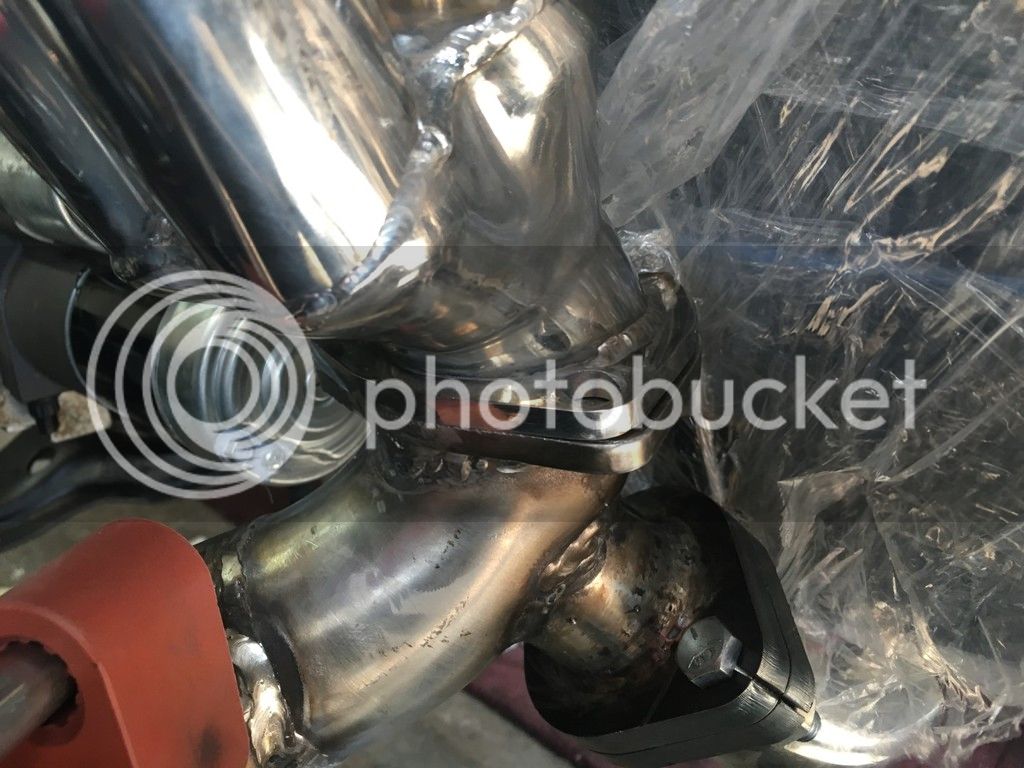
Now the front hangers are pretty important as you don’t want the weight of the exhaust pulling on the header, as it can cause the header to crack (especially if it gets really hot). So for this one I increased the distance between the hanger rods so there was substantial lift.


This was confirmed when I removed the bolts holding the exhaust onto the headers, the exhaust stayed pressed against the header rather than falling down.


Exhaust%20Hangers%2016_zpsfwbhg1tx.jpg


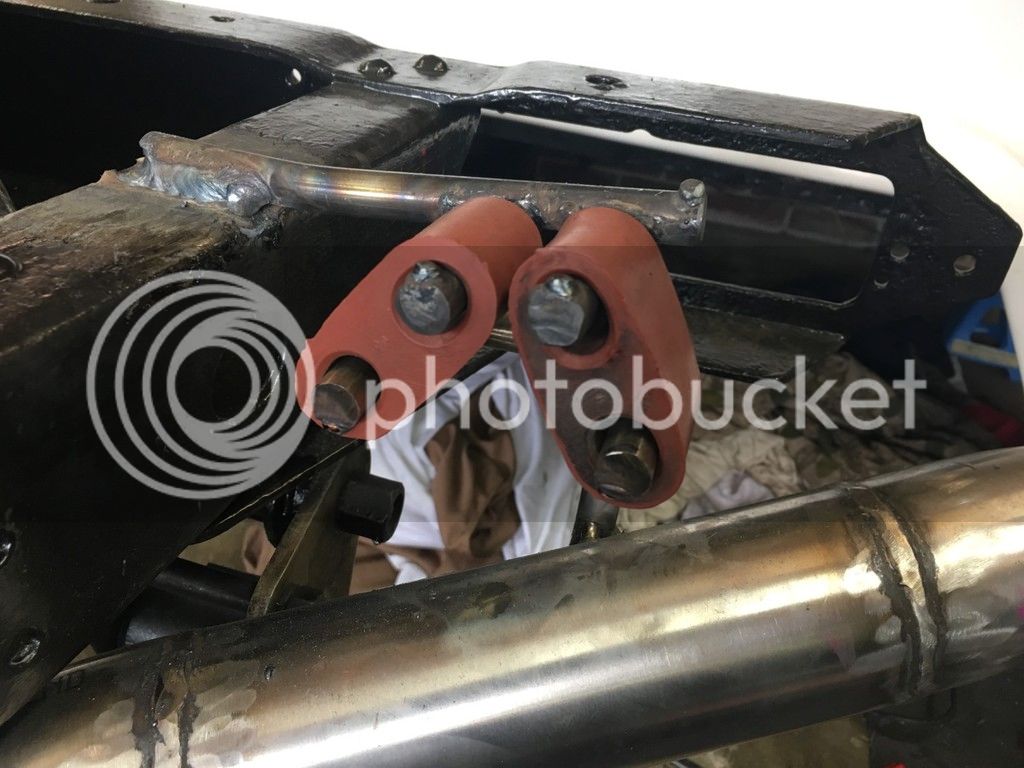
Now that the front/mid sections were complete, I just needed to do the rear section. Now I was a little concerned with the amount of sideways movement in the exhaust (eg moving from left to right) so I decided to do the rear hanger on a 90 degree angle from the chassis. I was hoping this would prevent the sideways movement…


Exhaust%20Hangers%2017_zps7vrtvxfq.jpg


Exhaust%20Hangers%2018_zpslhuoaqny.jpg


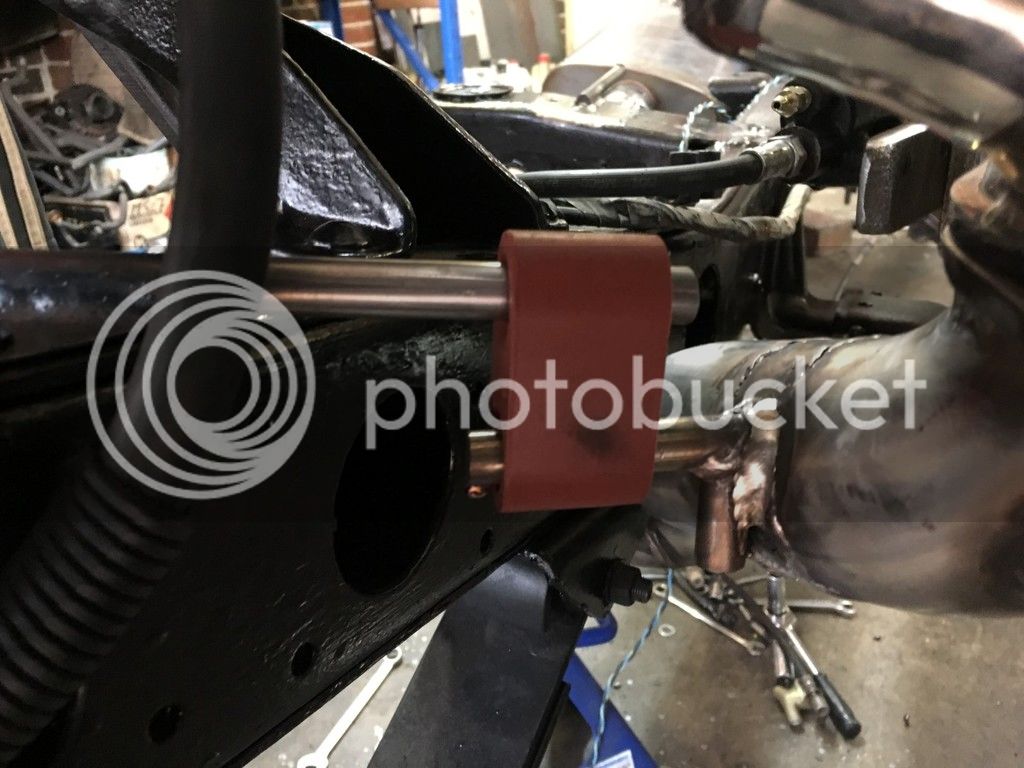
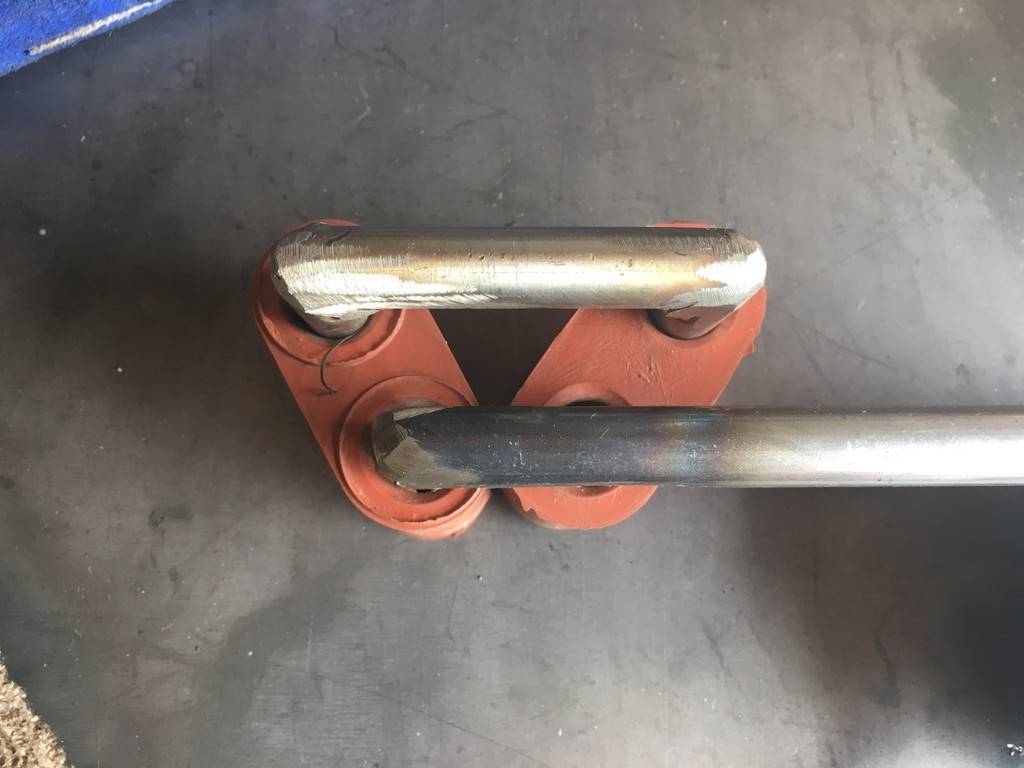
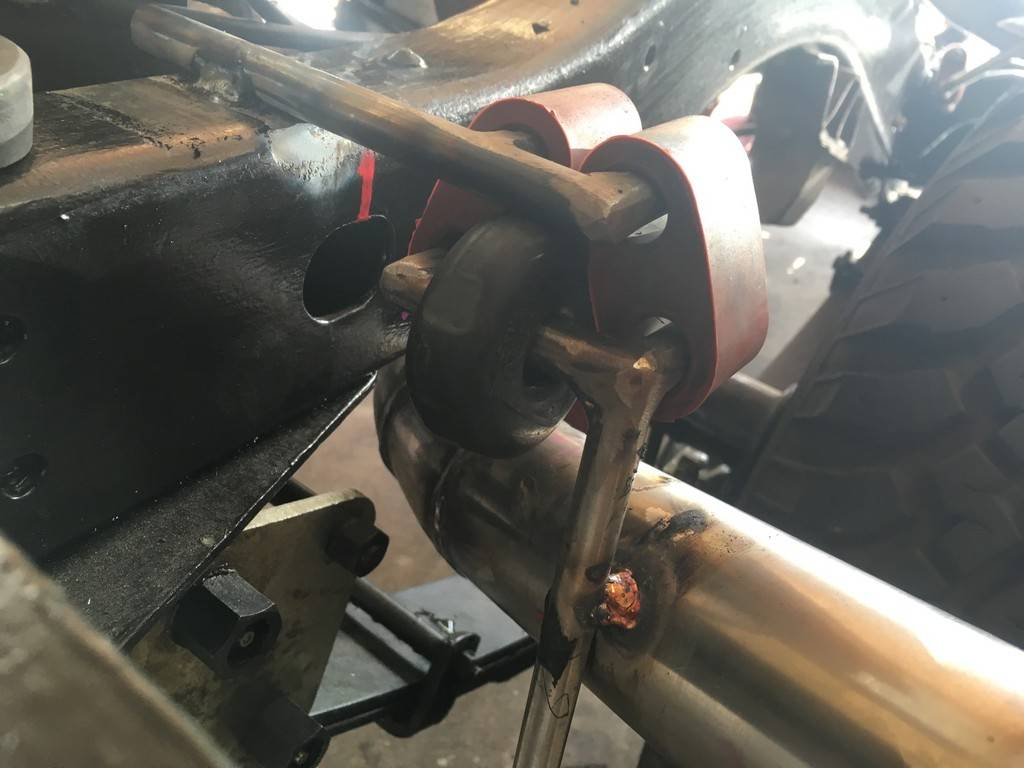
Unfortunately there was still too much “swing” for my liking. So I changed the design to a “twin hanger” setup, where each hanger is pulling against the opposite one.


Exhaust%20Hangers%2019_zpslmy3qv2j.jpg


This was a little more work, but really holds the exhaust nice and steady.


http://vid1224.photobucket.com/albums/ee369/feistl/Exhaust Hanger_zps7bkgg3ia.mp4
 
When I did the driver’s side rear hanger I was able to do it a little more cleanly as I knew what the design was before starting.


Exhaust%20Hangers%2020_zpsv6zwhs4l.jpg


Exhaust%20Hangers%2021_zpsjvtbd3oz.jpg


Exhaust%20Hangers%2022_zpstiw3svz7.jpg


Exhaust%20Hangers%2023_zpscuhj3jeu.jpg


Exhaust%20Hangers%2024_zps1e2oimsc.jpg


Exhaust%20Hangers%2025_zpsnl0op3zl.jpg


Exhaust%20Hangers%2026_zps1eeksvav.jpg


The other modification was adding another rubber bush to prevent the exhaust from lifting (going over bumps etc). Luckily I could just slide it on over the end.


Exhaust%20Hangers%2027_zps7euyln6o.jpg


Exhaust Balancer:


Once the exhaust hangers etc were complete, I was able to install the gaskets and bolt it up tightly.


Exhaust%20Hangers%2028_zpswz0i9dtz.jpg


Exhaust%20Hangers%2029_zpsoj5xeexp.jpg


I was then able to make the final connecting balance pipe. Didn’t get pictures during the fabrication stage, but here is the completed balance pipe.


Exhaust%20Hangers%2030_zps4rkmqjbm.jpg


And installed…


Exhaust%20Hangers%2031_zpsgnbezqvs.jpg


Exhaust%20Hangers%2032_zpsaqjp4wj3.jpg


Now just have to hope it sounds good and isn’t too loud…
 
Misc:


Few other minor things that were completed at various points over the last few weeks…


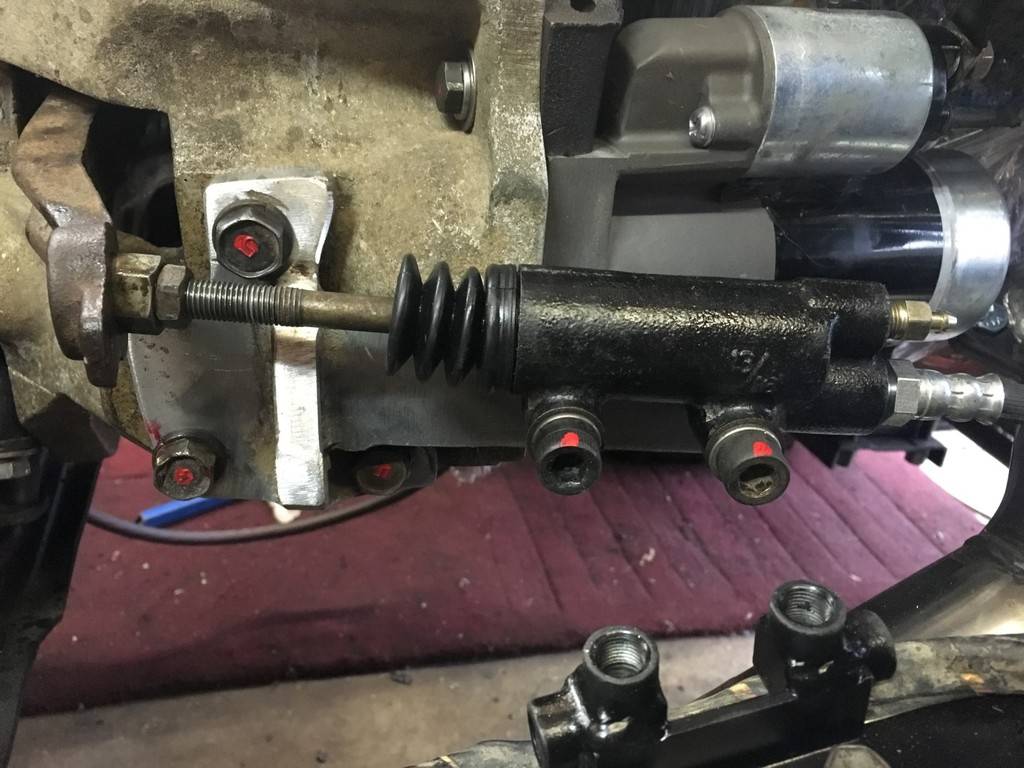
Installed the clutch slave cylinder


Misc%2001_zpspoicgagu.jpg


Temporarily connected a heater hose between the engine and radiator. Added a T-piece with a block off so I can easily drain the coolant after the first run


Misc%2002_zpsupyivgyz.jpg


Misc%2003_zpsuku27ktv.jpg


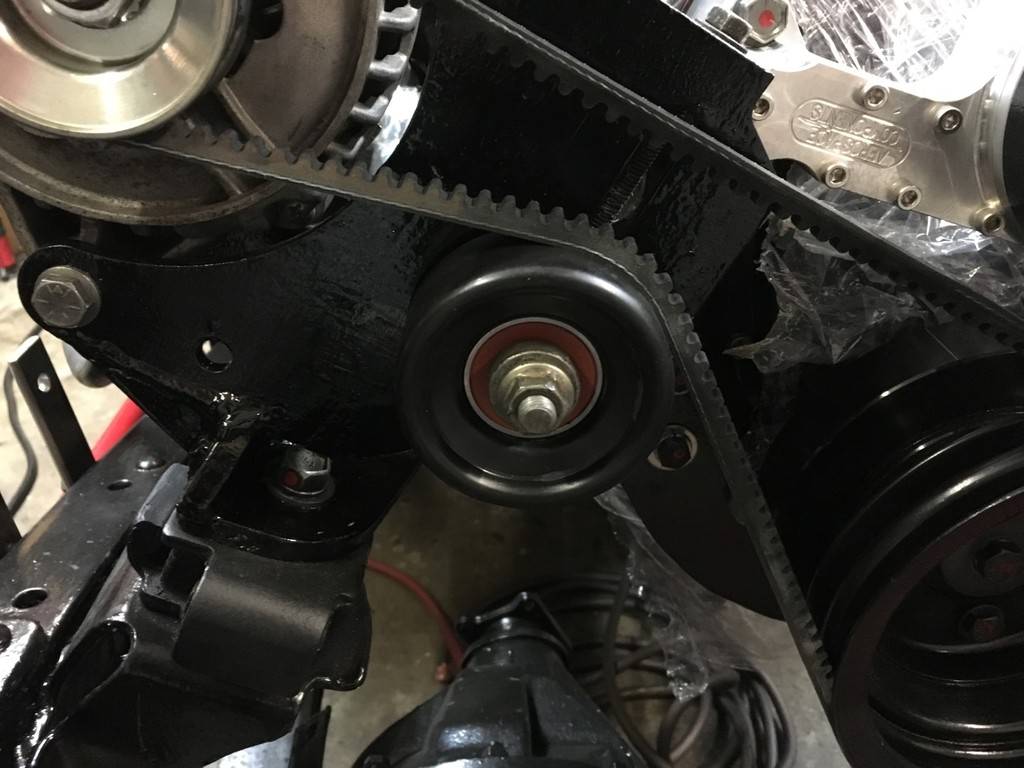
Changed the bearing on the idler pulley


Misc%2004_zpspnk2jqxr.jpg


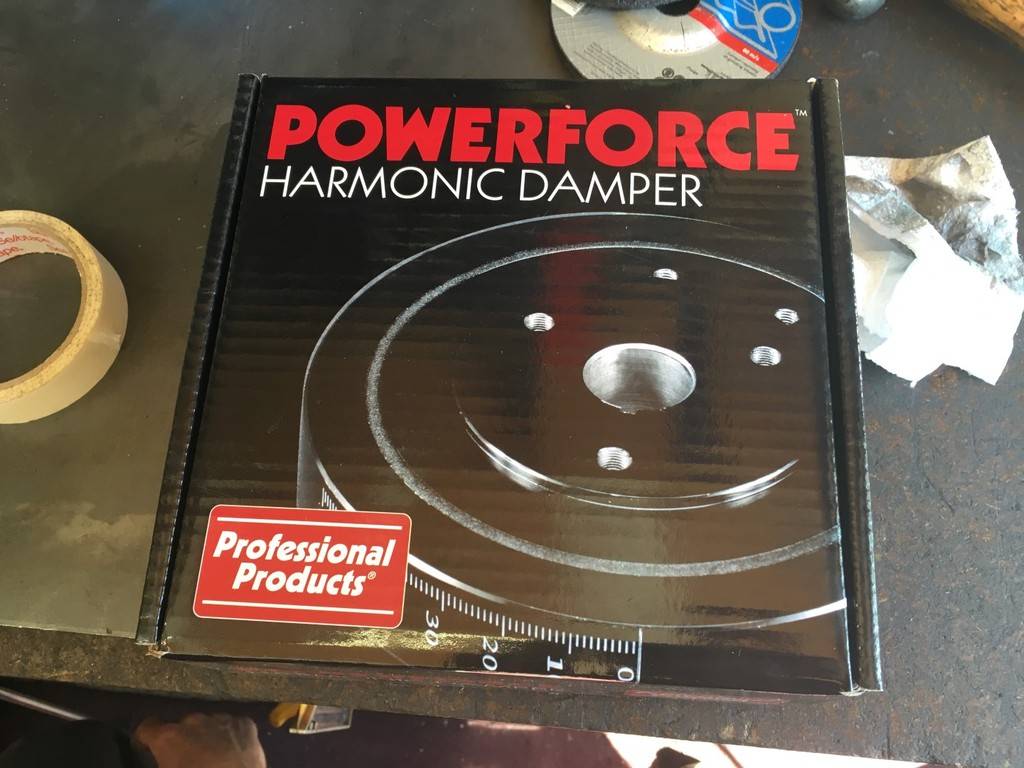
Changed the harmonic balancer over for a new unit. The old one was pretty good, but had a little wear on the input shaft. As I need to remove the radiator to change it, figured it was better to do it now rather than down the track.


Misc%2005_zpsljwrknlf.jpg


Misc%2006_zpsil8358jy.jpg


Misc%2007_zpsyjekptpo.jpg


Also filled the gearbox/transfer case with oil.
 
Engine Preparation:


We were now ready to do the final preparation on the engine and getting ready for first start/camshaft break in.


Started by taking the plastic off the engine and removed the intake manifold


Engine%20Prep%2001_zpswzsi2mis.jpg


Engine%20Prep%2002_zpsn2xnaeld.jpg


Filled the oil filter and screwed it on (We are using Valvoline Premium Mono 30 as it’s a special break in oil).


Engine%20Prep%2003_zpshhcqcaet.jpg


Filled up the engine and installed an old distributor (that we had removed the cam gear from) so we could pre oil the engine and a mechanical oil pressure gauge. Then using a drill spun the oil pump over and oil pressure increased to a steady ~70psi. Turned the motor over by hand to ensure all bearings etc were well lubricated.


Engine%20Prep%2004_zpst47hfnfl.jpg


Next stage was to install the new lifters. We coated the cam lobs with break in oil, and soaked the lifters in the same oil before installing into the block.


Engine%20Prep%2005_zpsweufpt3p.jpg


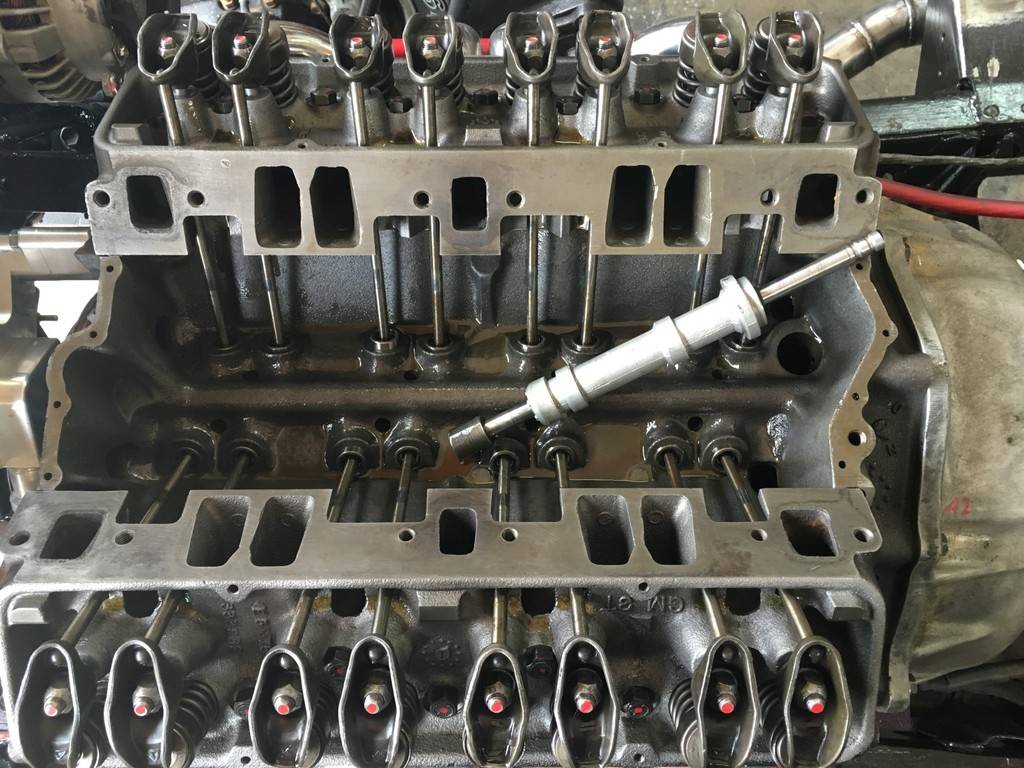
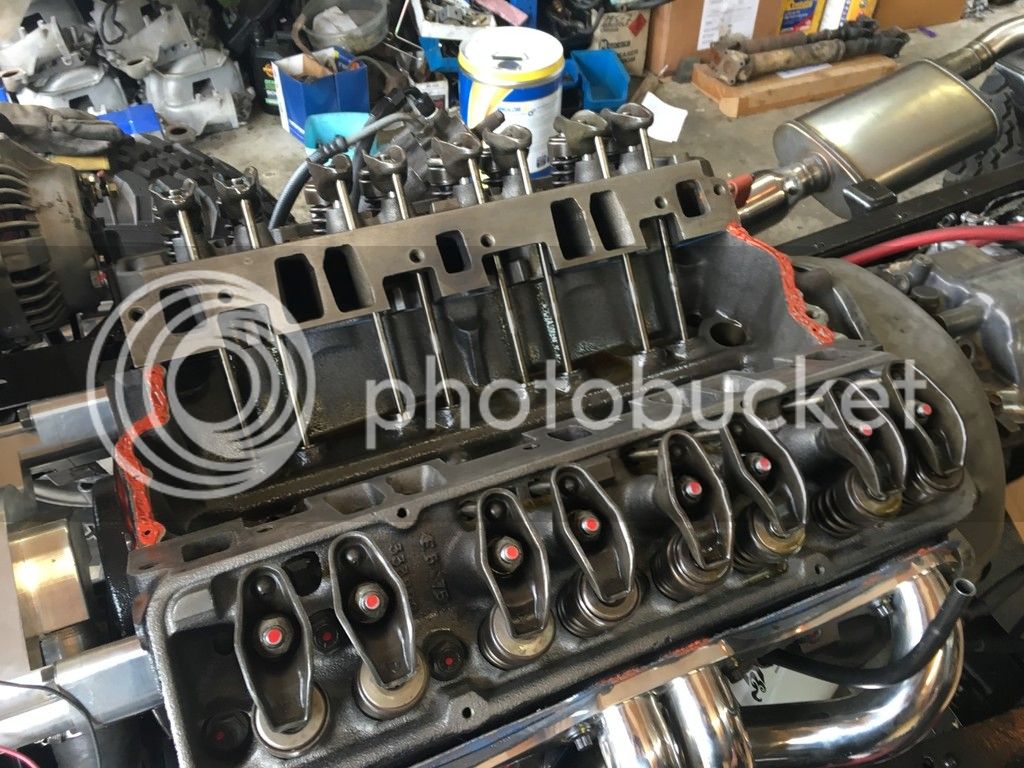
Now we were ready to install the pushrods and rockers. Now there is a special method to setting these up properly…


We put the engine to TDC of cylinder 1s compression/combustion stage (So both lifters are fully down).


Engine%20Prep%2006_zpsjahuq6np.jpg


We then installed both pushrods


Engine%20Prep%2007_zpsrtrauoss.jpg


Engine%20Prep%2008_zpsqbxhxzdj.jpg


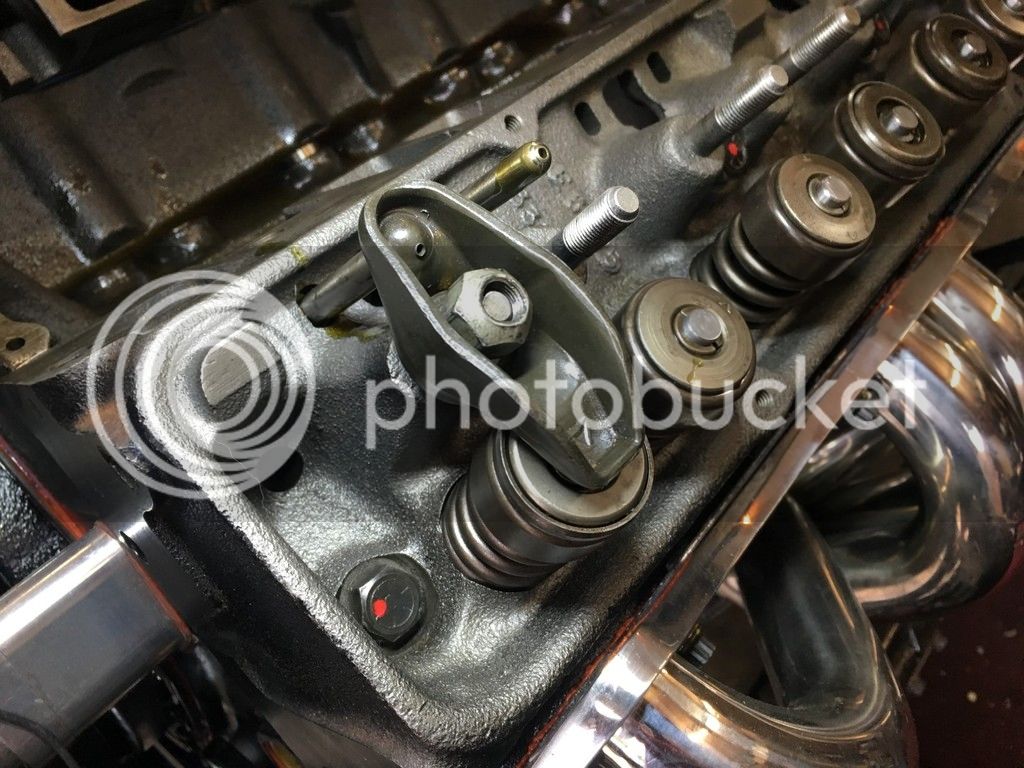
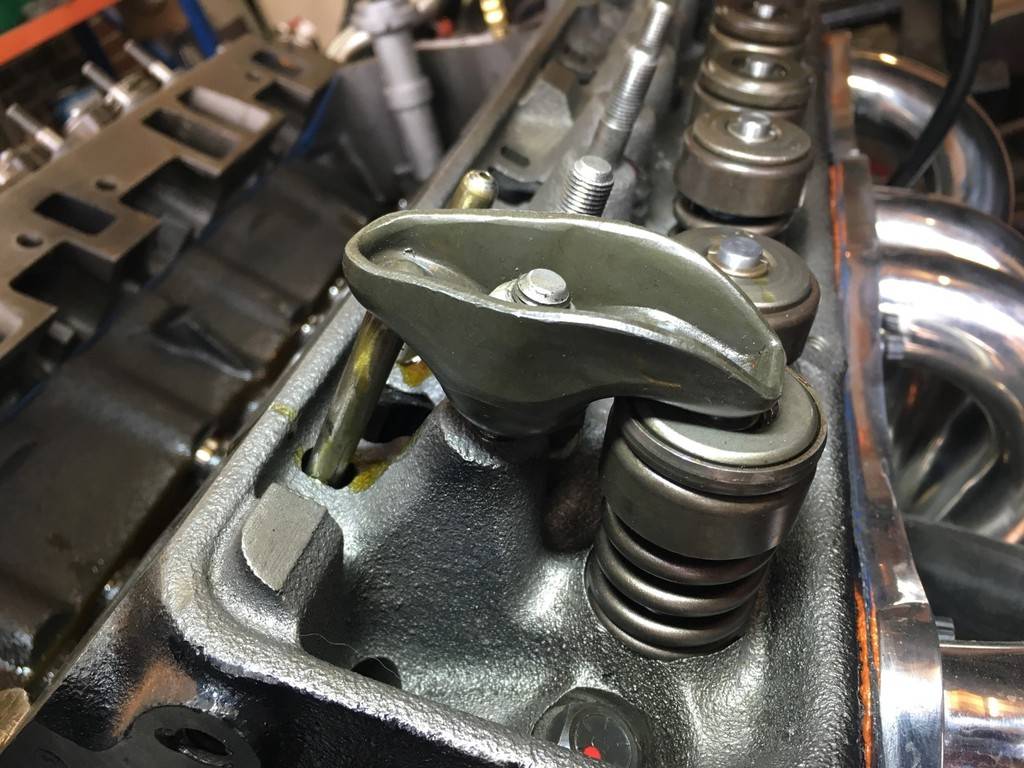
Starting with the exhaust port new installed the rocker and tighten the nut until the slack disappears from the pushrod. As the purshrod is pressing against a hydraulic lifter it will slowly bleed down and some slack will reappear. It’s important to only tighten until the slack initially disappears and not to overtighten.


Engine%20Prep%2009_zpsa81sxk93.jpg


Engine%20Prep%2010_zps0u9mfrsm.jpg


Now the important part: Tighten the nut one full rotation (360 degrees). This will apply the correct preload (by having some compression on the hydraulic lifter, as the oil pressure rises this preload will ensure there is no slack between the lifter/pushrod/rocker/valve).


Engine%20Prep%2011_zpsv4j88iwe.jpg


As you can see, the hydraulic lifter is partially depressed.


Engine%20Prep%2012_zpshhsyymxm.jpg


Now repeat the process for the intake pushrod/rocker. I apply another red dot so I know which ones are complete.


Engine%20Prep%2013_zpstvqlyklu.jpg


Now that the first cylinder is done, we can move onto the next one. The trick is to rotate the engine 90 degrees (or 42 teeth of the flywheel if you have access to it) as this will move the next cylinder to TDC on the compression cycle (In this case the next cylinder is cylinder 8). 720 degrees of crankshaft rotation equals 360 degrees of camshaft rotation. Hence, 8 cylinders divided by 720 degrees = 90 degrees per cylinder. As there are 168 teeth on the flywheel, a quarter turn is 42 teeth (168/4).


Engine%20Prep%2014_zpsslq71jym.jpg


Follow this process in the engines firing order for the remaining cylinders.


Engine%20Prep%2015_zpsszbbjjhm.jpg


Once this was complete, we set the engine timing to 12 degrees BTDC.


Engine%20Prep%2016_zpsqc1pywyz.jpg


We took out the old distributor we used for priming.


Engine%20Prep%2017_zpsfpvizm3p.jpg
 
We are now ready to install the intake manifold.


First step was to install the thermostat and thermostat housing. I drilled a small hole in the thermostat to allow air to be bleed out and allow coolant to circulate. (This helps the thermostat open according to the real block temperature, otherwise you have to wait for convention to heat the coolant near the thermostat to cause it to open. Normally there is a bypass near the thermostat that does this, but we blocked it off earlier as the electric pump doesn’t have a provision for it).


Engine%20Prep%2018_zpsbfqrr7sr.jpg


Installed the thermostat and housing onto the intake manifold


Engine%20Prep%2019_zpskahonkyv.jpg


Started preparing the block by adding the sealant and end rubber gaskets


Engine%20Prep%2020_zpsdtti4wor.jpg


Engine%20Prep%2021_zpsrqwnngsg.jpg


Engine%20Prep%2022_zps4hce1j8y.jpg


We grabbed the intake gaskets and gave them a coat (both sides) of copper gasket sealant.


Engine%20Prep%2023_zpsqp7ghhzj.jpg


Engine%20Prep%2024_zpsafvxmdfc.jpg


Placed the gaskets on the heads


Engine%20Prep%2025_zpsbibzhhgk.jpg


Prepped the intake manifold


Engine%20Prep%2026_zpsiibzdayd.jpg


Engine%20Prep%2027_zpsc2crrh7v.jpg


And dropped it into place, Bolted it down and torqued up the bolts


Engine%20Prep%2028_zpsfpu3grga.jpg


Installed both rocker covers, and prepared the manifold for the carby.


Engine%20Prep%2029_zpsocdsmr5e.jpg


Engine%20Prep%2030_zpsdruvkucw.jpg


Now installed the carby, installed the heater coolant lines and the top radiator hose.


Engine%20Prep%2031_zpsaxjgvydx.jpg


Installed the distributor (which is why we needed the engine set at 12 degrees BTDC)


Engine%20Prep%2032_zpskdeusm92.jpg


Installed the spark plugs


Engine%20Prep%2033_zpspcsxmnzj.jpg


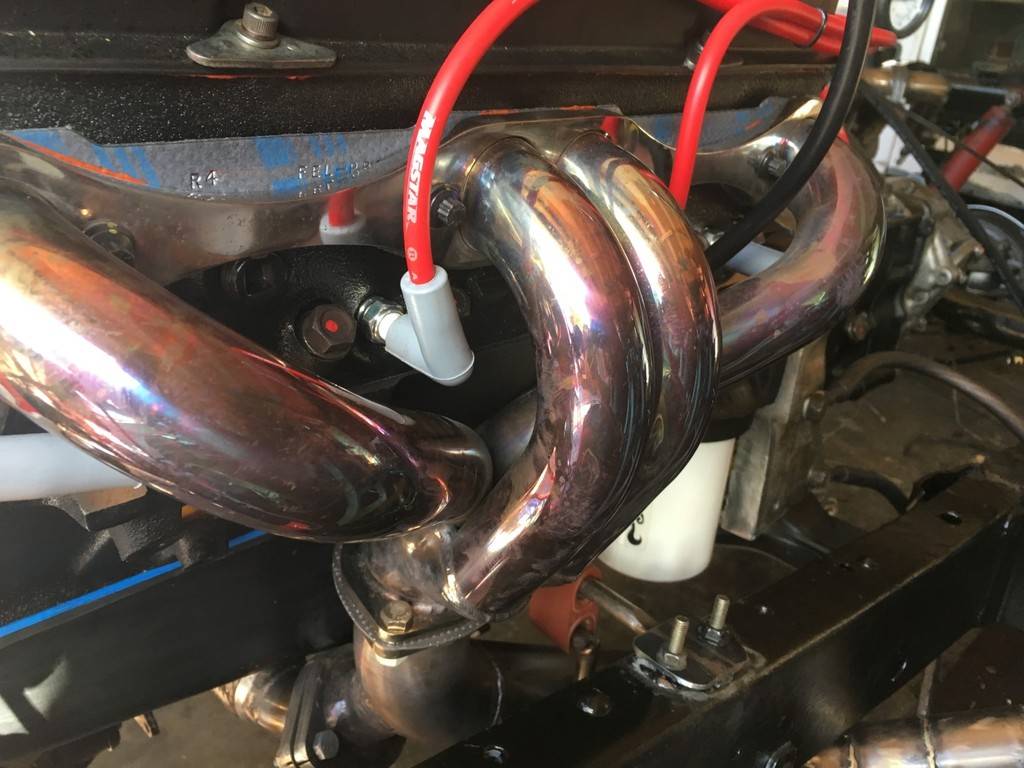
And put on the spark plugs leads (We will fix the routing later, for the moment just wanted them on so we could run the engine).


Engine%20Prep%2034_zpsdc1zrcpl.jpg


Made sure all the vacuum lines were blocked


Engine%20Prep%2035_zpsfkfnruce.jpg


Attached the oil pressure gauge and cable tied it onto the gearbox


Engine%20Prep%2036_zpsq9uidgq4.jpg


Wired in a tacho


Engine%20Prep%2037_zps5zo8cbnb.jpg


We also put the rest of the wiring on the engine, filled the radiator with coolant and fixed up a few other small things.
 
First Start:


We were now ready for a first start…


http://vid1224.photobucket.com/albums/ee369/feistl/Chev First Start_zpss3koyhue.mp4


Now as you can see at the end the exhaust headers are glowing red hot (Screen capture from the first start video)…


First%20Start%2001_zpsphfzgcpu.jpg


First%20Start%2002_zpswfqwnfbg.jpg


We stopped the engine after about 5 minutes run time to investigate. Turns out the timing was significantly retarded which was causing the combustion to be pushed out the exhaust before it was finished burning, hence the massively high temperatures.


At 3000rpm with the vacuum advance disconnected we should be aiming for 34-36 degrees of timing. Once we chucked on a timing light and restarted the engine we found at 3000rpm we were running just 8 degrees timing… Not good.


So we advanced the timing and the change was massive… Basically I was reducing the throttle position yet the RPM was increasing as the timing was increased. Also the improvement in sound was pretty substantial.


We ran the engine in for another 15-20 minutes, varying the engine speed between 2500-3500rpm. Once it was run in we roughly set the idle speed. We still need to adjust a few things (including timing etc) but here is the engine idling after being run in.


http://vid1224.photobucket.com/albums/ee369/feistl/Idle_zpsovx41kgc.mp4


Sounds pretty bloody good in real life. I was worried the exhaust would be too loud, but its pretty reasonable (less than 96db anyway) but has a very deep note to it. Plus as its stainless steel the note should get a little deeper after a few thousand kms and it carbons up.


Now I know in hindsight we should have had a timing light on from the start, but due to a few issues throughout the day it was around 8pm when we finally got it started (after starting the day at 9am). Had things gone smoother during the day we wouldn’t have been so rushed, so probably would have had the light ready to go. Lesson learned.


As predicted the polished stainless steel headers changed to a nice purple colour. I actually don’t mind the effect and will leave it as is.


First%20Start%2003_zpslpsndsjq.jpg


First%20Start%2004_zpssk4fizrl.jpg


Once we were happy with the exhaust (no extra mufflers required) we were ready to fit the LPG tank.
 
LPG Tank:


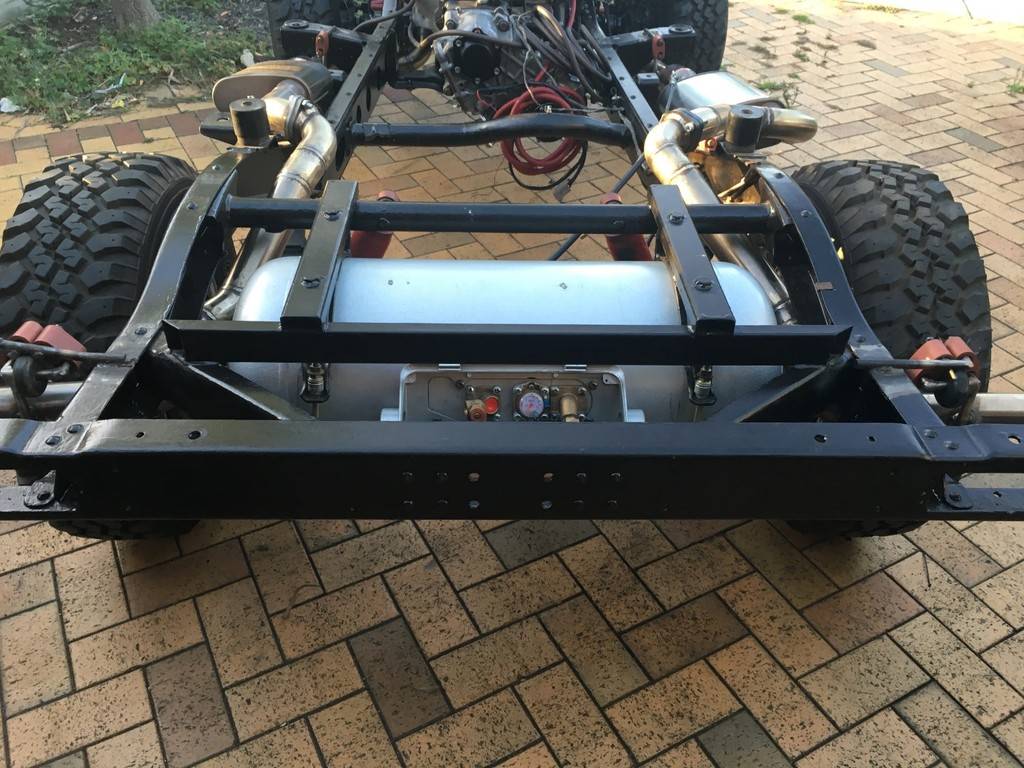
The LPG tank is brand new with 10 years of certification left. As we had already made the bracket it was just a case of bolting it up.


LPG%20Tank%2001_zpsctebbsiw.jpg


LPG%20Tank%2002_zpsggivinza.jpg


Moved the chassis out into the driveway


LPG%20Tank%2003_zpsgcojt9nx.jpg


LPG%20Tank%2004_zpsospq6mbd.jpg


Put the tank in the bracket


LPG%20Tank%2005_zps2ng5djjf.jpg


And installed it into the chassis


LPG%20Tank%2006_zps0osacsju.jpg


LPG%20Tank%2007_zps1wjr7zwa.jpg


LPG%20Tank%2008_zpskoxltaia.jpg


LPG%20Tank%2009_zpslsf2cise.jpg


LPG%20Tank%2010_zpshd5nbutw.jpg


So that’s pretty much where we are up to. Next steps will be brake lines, gas lines and fitting on new shocks. Once the chassis is finished we can then start work on the body…
 
Update Time:


Chassis:


Spent a little bit of time cleaning up and rearranging a few things, starting with the Ignition Leads and some of the parts around the carby.


Chassis%2001%20Large_zpsoitndnpk.jpg


Chassis%2002%20Large_zps2jw1h9mv.jpg


Chassis%2003%20Large_zpsd1tfgfg4.jpg


I changed the shocks over to a set of OME Nitro charger that were originally on the Green FJ40 (pretty much new shocks).


Chassis%2004%20Large_zpscwqtmpun.jpg


Also fitted up a new handbrake cable and plumbed up the brake lines on the front/rear axles.


Chassis%2005%20Large_zpsogzcmw0i.jpg


Then fitted a breather for the rear axle


Chassis%2006%20Large_zpsrm29ciho.jpg


Chassis%2007%20Large_zpsypdz3v0y.jpg


The transfer case…


Chassis%2008%20Large_zpsracmzytw.jpg


Chassis%2009%20Large_zpsqfofbp2l.jpg


Chassis%2010%20Large_zpstxqtp09e.jpg


And the front axle.


Chassis%2011%20Large_zpsjyirff4z.jpg


Chassis%2012%20Large_zpsl6yvgpxe.jpg


Chassis%2013%20Large_zpsb53axo5n.jpg


Next step was to fit up the rear bumper (which was originally only the Green FJ40). I am planning on doing a custom rear tyre carrier for the Green FJ, so decided to reuse the bumper as it looks pretty good.


Chassis%2014%20Large_zpscobsrstt.jpg


Now that the chassis was pretty much complete, we moved it around the back so we could focus on the body.


Luckily it just fits under our rear veranda.


Chassis%2015%20Large_zpsfvvt7uqx.jpg


Chassis%2016%20Large_zps8wx2hqqf.jpg
 
Dash:


Now we were ready to get cracking on the tub. Can’t remember if I mentioned this earlier but we are transferring the entire wiring loom and dash from the Green FJ40 into this one. Primarily as that loom/dash is configured for a Carby V8 it suits this vehicle and allows us to create a new loom to suit the EFI V8 in the Green FJ.


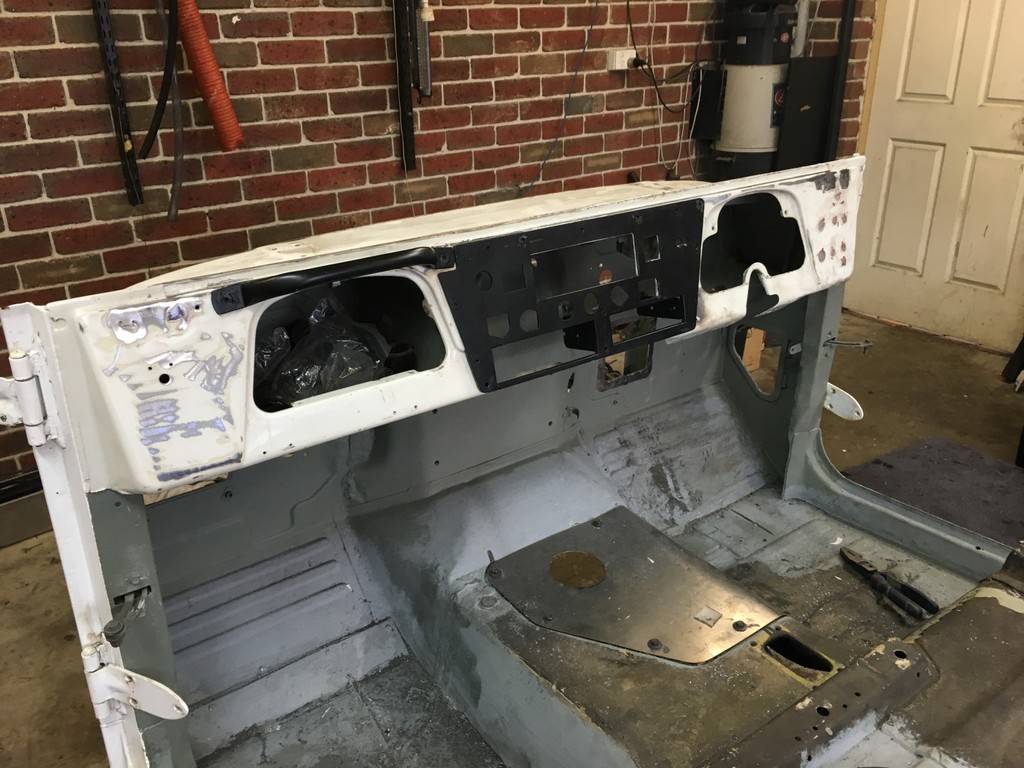
Started by setting up the tub in the middle of the garage.


Dash%2001%20Large_zpskbytxbye.jpg


Dash%2002%20Large_zpssohoc1et.jpg


Then drilled and cut the dash to suit the mounting plate…


Dash%2003%20Large_zpsr4urnunz.jpg


Then trial fitted the center backing plate


Dash%2004%20Large_zpss7p0rkdn.jpg


Dash%2005%20Large_zpsrq8siuev.jpg


Once the center plate was installed, it was time to create the side pieces using the same methodology.


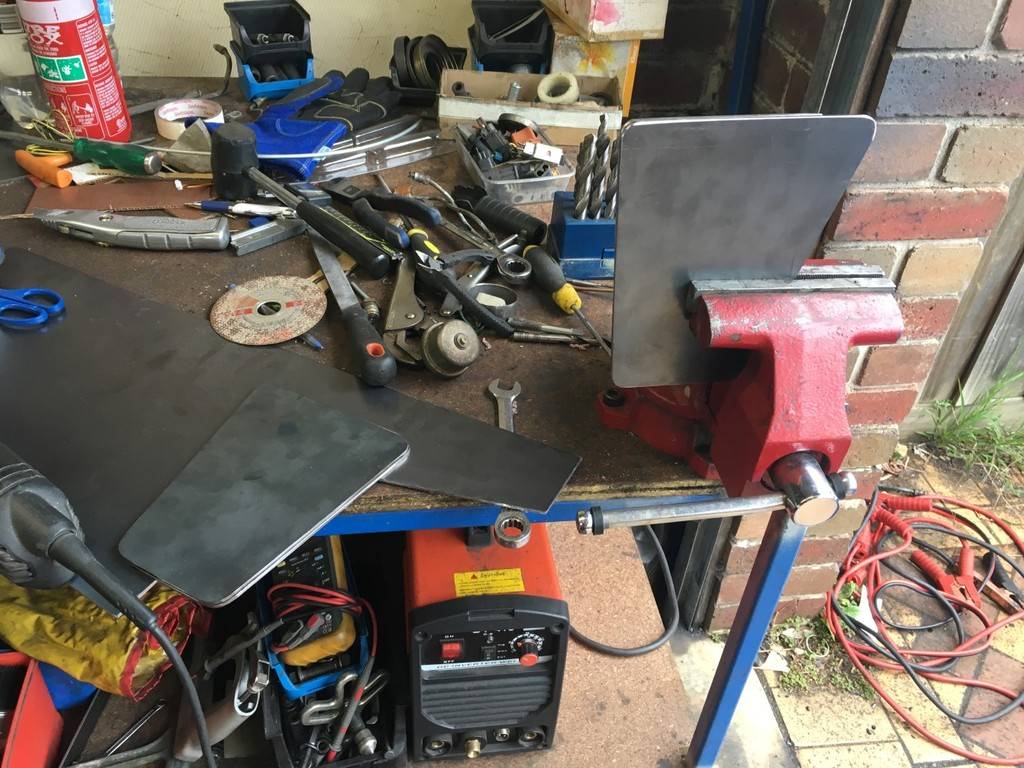
Cut out 4 plates (2 per side) and shaped them accordingly. One plate had a cutout to suit the grab handle above the globe box.


Dash%2006%20Large_zpsyt3orki5.jpg


Dash%2007%20Large_zps27lfawdt.jpg


Dash%2008%20Large_zpst6lvof3t.jpg


Drilled the top plates…


Dash%2009%20Large_zpsjcngmpt0.jpg


And drilled out the dash to accept the mounting plate with recesses for the top cover bolts/nuts.


Dash%2010%20Large_zpsmopxzol1.jpg


So this is the mounting plate for the passenger side. It has the cutout recess for the grab handle, and has 3 central mounting screws to hold it into the dash. It then has nuts welded to the back of it so the top cover can be screwed directly to it. This allows for much easlier installation and ensures the bolts can be arranged in the right positions. If I tried to mount directly to the dash installation would be very difficult and the thickness wouldn’t match the center panel.


Dash%2011%20Large_zps5wprhq9k.jpg


Dash%2012%20Large_zpsvsgexm3m.jpg


Same process on the drivers side…


Dash%2013%20Large_zpsqhoqvkpw.jpg


Dash%2014%20Large_zps8jjrewtu.jpg


Now bolted the passenger backing plate into place


Dash%2015%20Large_zpsrl0h7qzf.jpg


Now for the top cover on the passenger side I had to add a “fake” bolt so it would appear to be bolted on all four corners…


Dash%2016%20Large_zpsjxxcslhh.jpg


Dash%2017%20Large_zps7yavaqu8.jpg


So here is how the passenger side looks….


Dash%2018%20Large_zpspi89402t.jpg


And the drivers side (backing plate and top cover)…


Dash%2019%20Large_zpsk9q48sey.jpg


This is how the entire dash will look….


Dash%2020%20Large_zpseacvzin7.jpg
 
So now that the dash area was sorted, it was time to start prepping for painting…


Started by painting the firewall in a couple of coats of killrust black.


Body%20Filling%2001%20Large_zpsrixlczyj.jpg


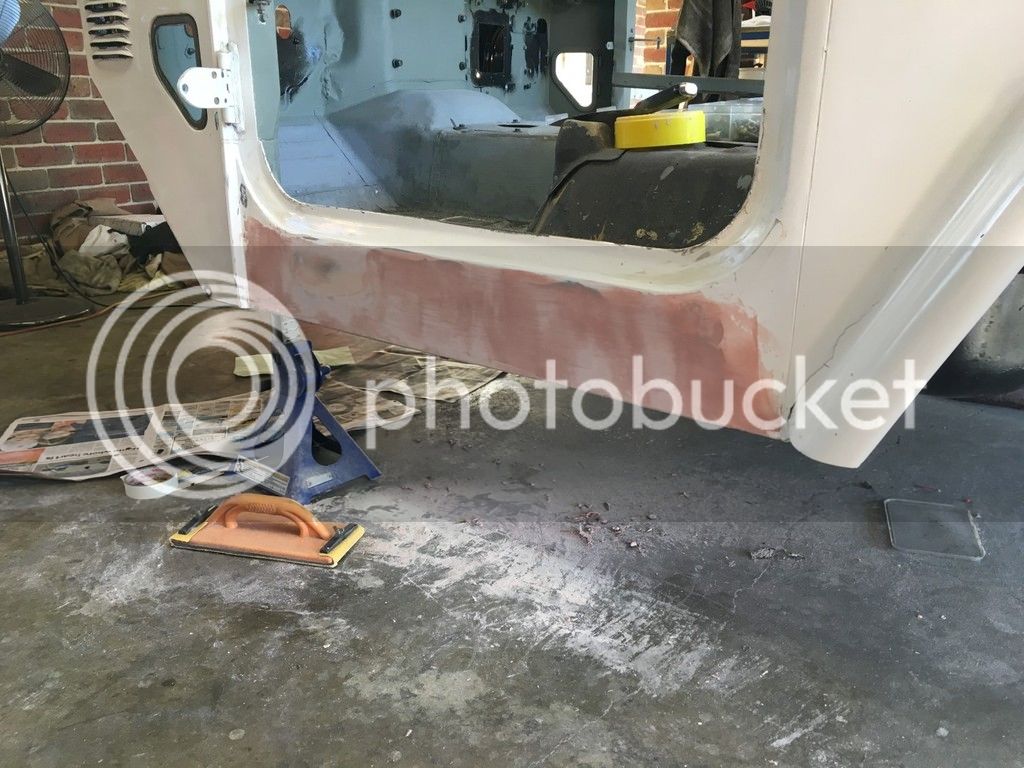
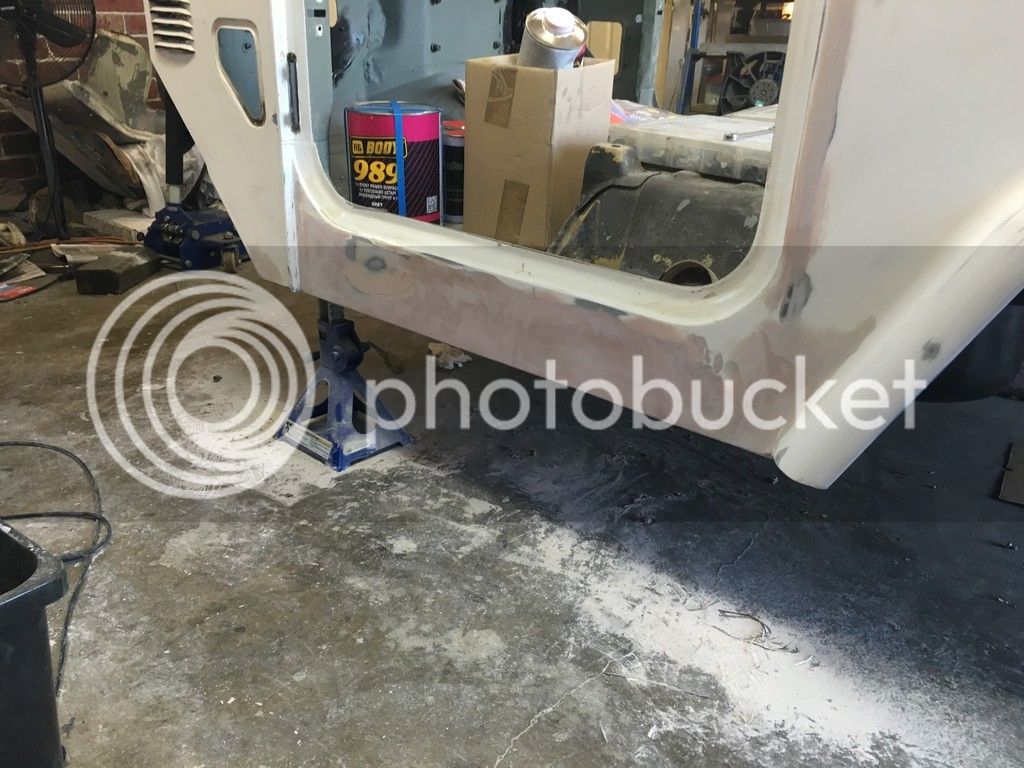
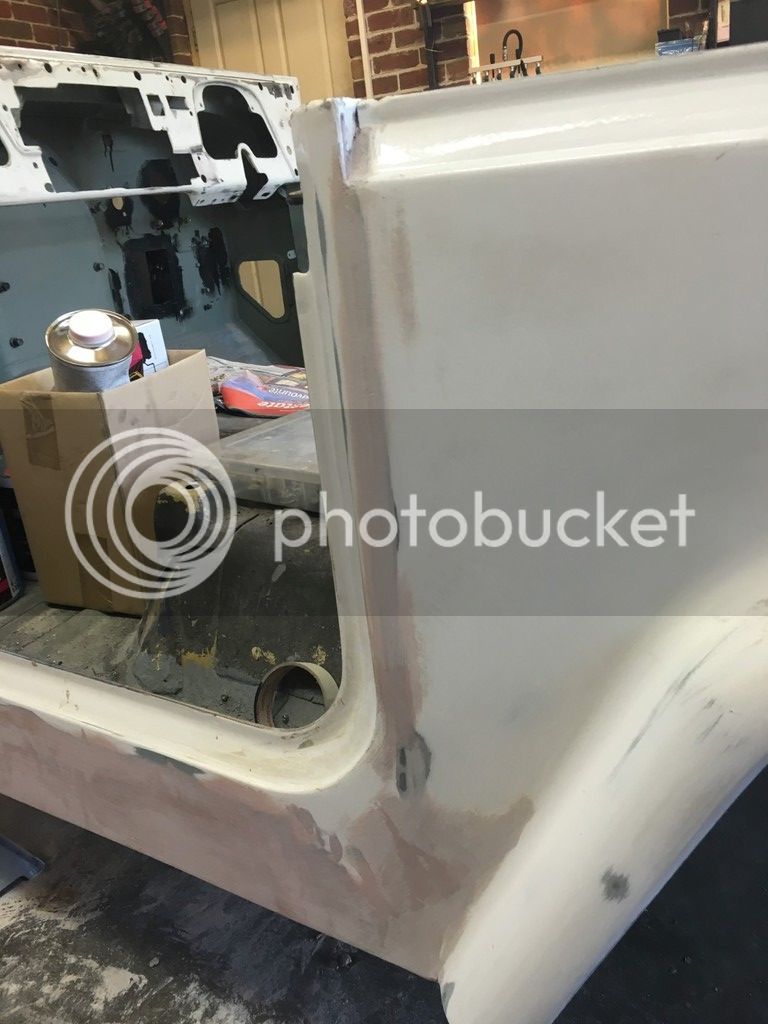
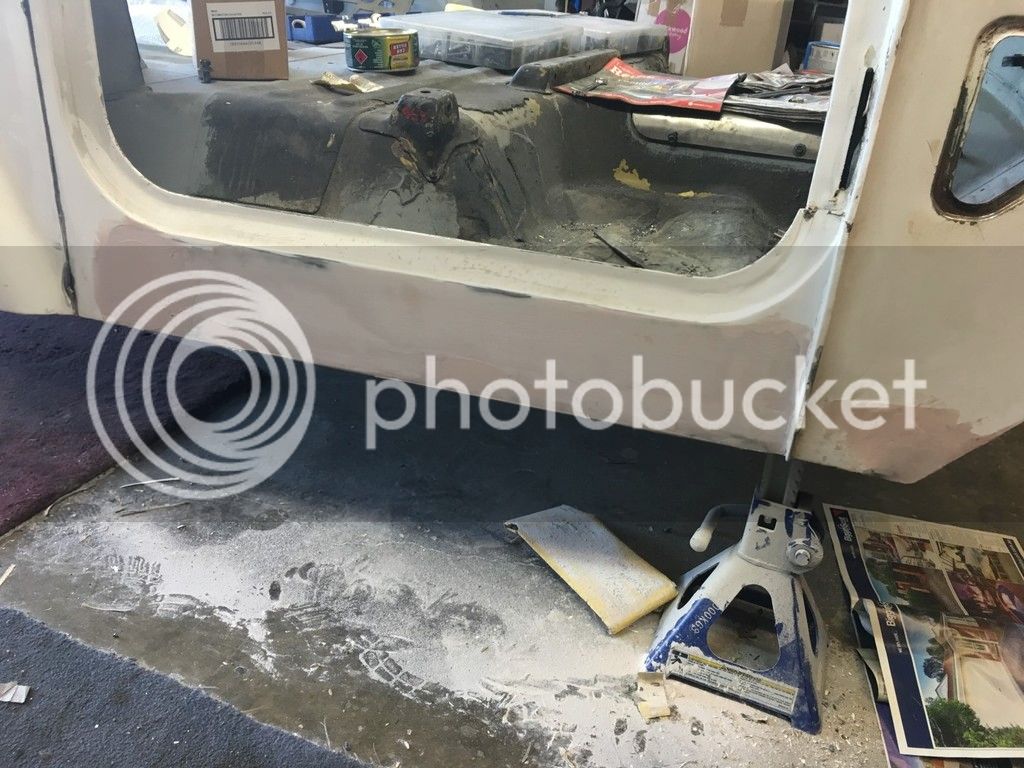
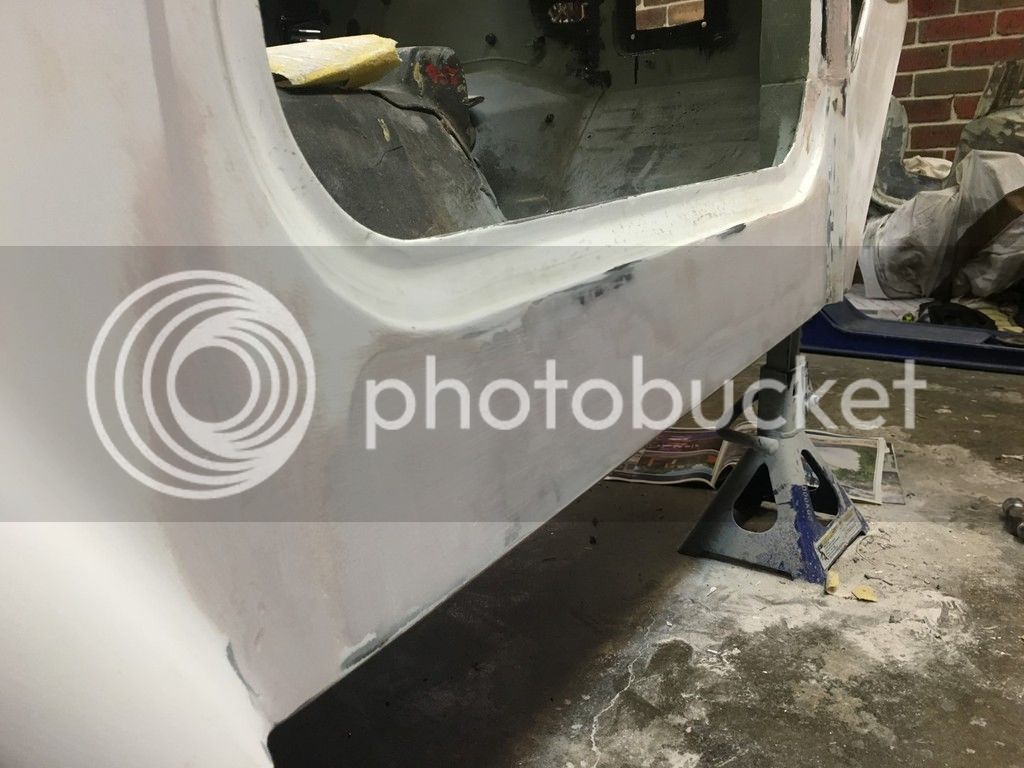
Starting on the passenger side I sanded the side footwell area back to metal, straightened it out as much as possible and then gave it a coat of bog to fill in the low spots.


Body%20Filling%2002%20Large_zps3zcyd4ya.jpg


Body%20Filling%2003%20Large_zpsbszjjncr.jpg


Fixed up the side flare and added more pop rivets for strength (it only had a couple for the entire piece, hence the crack). Filled the crack and the gaps on the side for a smooth look.


Body%20Filling%2004%20Large_zpso3tdpk7n.jpg


Body%20Filling%2005%20Large_zpsnasubfmd.jpg


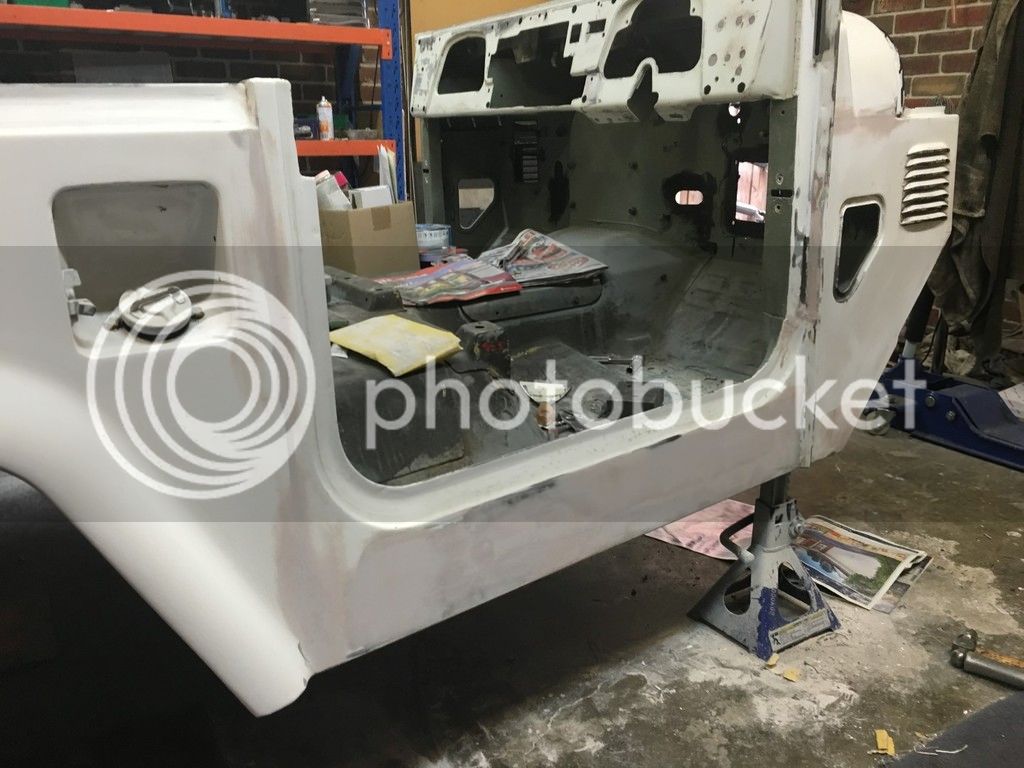
Same treatment on the drivers side…


Body%20Filling%2006%20Large_zpstk2s7mmm.jpg


Body%20Filling%2007%20Large_zpsdhfodwao.jpg


Body%20Filling%2008%20Large_zpsjuavriuz.jpg


Body%20Filling%2009%20Large_zps0l10cmoc.jpg


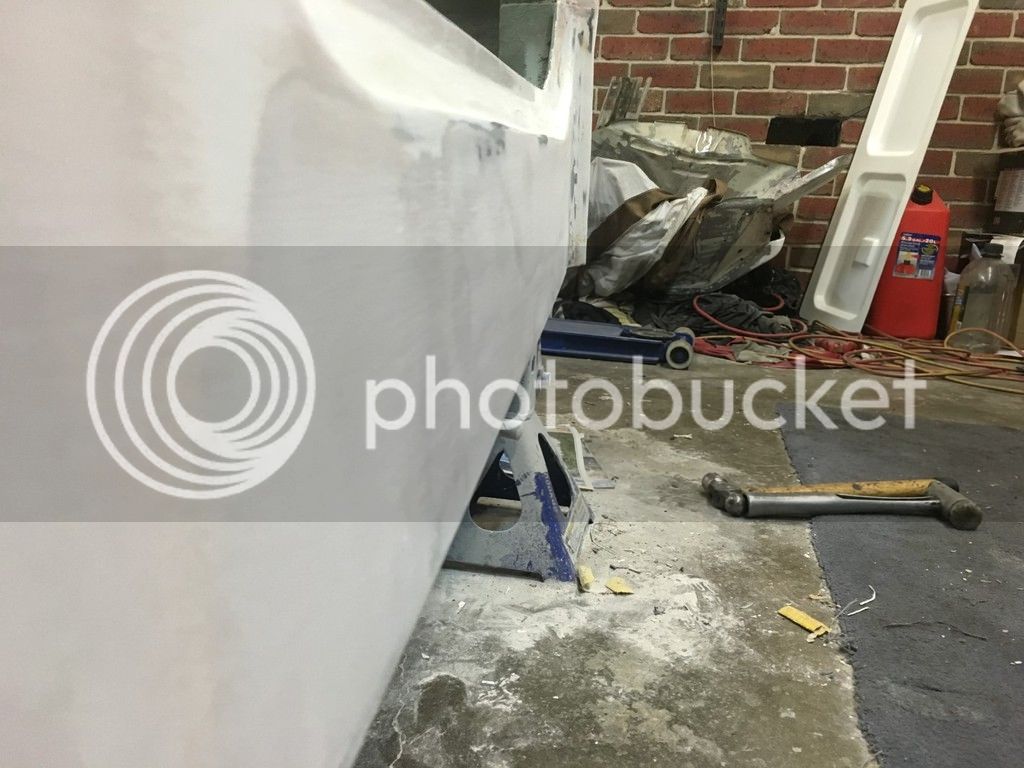
It’s hard to photograph, but it’s a nice smooth finish.


Body%20Filling%2010%20Large_zpslixgonvb.jpg


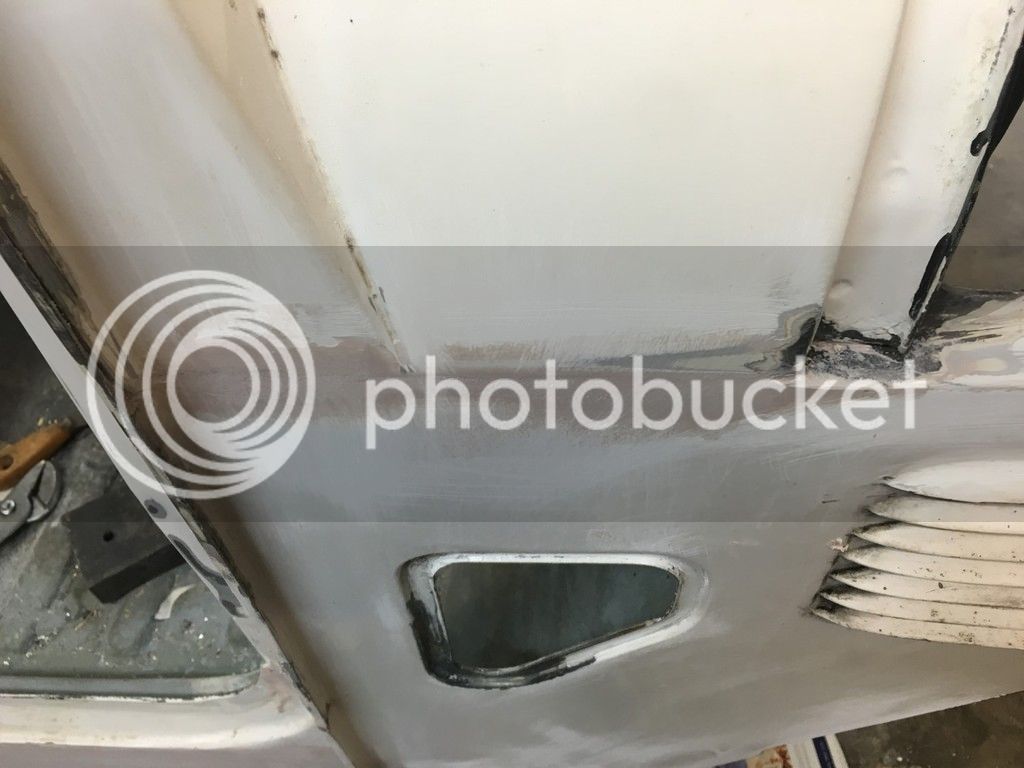
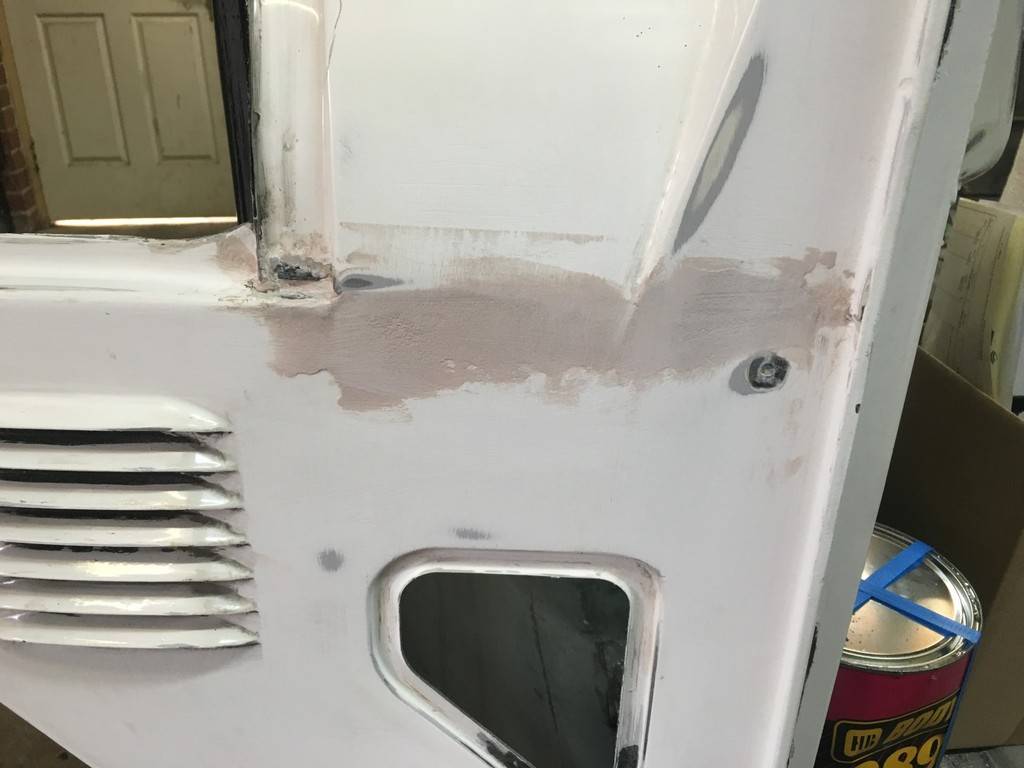
Also filled in the areas on the side near the bonnet


Body%20Filling%2011%20Large_zpsrdefcca8.jpg


Body%20Filling%2012%20Large_zpsftvn3bdb.jpg


(This was sanded back later on to be perfectly smooth)


Body%20Filling%2013%20Large_zpsuwrefiab.jpg


Next step was the 2 front guards. Unfortunately, I seem to have lost the pics of this process (I did an iOS update on my phone and lost some data). However, you will see some pics once they were prepared shortly.
 
Indicators:

BTW, feel free to use this design for your own vehicles if you like. All i ask is you post a pic of the result in this thread :)

One of the things I have never liked about the FJ40 range is the side indicators, the cheap plastic (especially on the replicas available now) makes the whole car look cheap. Considering pretty much everything else on the car is metal, I decided to custom make my own set of indicators using some LED lights.


These were the LEDs I choose… Primarily as they are dual colour (White and Orange/Yellow) which means they can do the parkers and indicators (required for roadworthy certification).


Strictly speaking they are daytime running lights/indicators, but if the white light is too bright I can use resistors to lower the brightness.


Indicators%2001%20Large_zps9nlseilc.jpg


Indicators%2002%20Large_zpsarzemy0f.jpg


Indicators%2003%20Large_zpsmoyumecb.jpg


Starting with a piece of RHS box tube, I cut a “slot” for the LED to slight inside of.


Indicators%2004%20Large_zpsp5u6w9kr.jpg


Indicators%2005%20Large_zpsxtgkepcy.jpg


Indicators%2006%20Large_zpszpzcclsj.jpg


I then created some right angle pieces to bolt to the back of the LED, so they can be screwed/pop riveted from the bottom to hold the LED light in place.


Indicators%2007%20Large_zpsrnzpsf71.jpg


Indicators%2008%20Large_zpsbam9hkqo.jpg


Drilled matching holes in the housing (to hold the right angle pieces), then cut out some end pieces.


Indicators%2009%20Large_zpsfckgbkai.jpg


Clamped the end pieces on and welded them into place.


Indicators%2010%20Large_zpsbu7bfdzz.jpg


Indicators%2011%20Large_zpsnibg20ew.jpg


Then it was just a case of grinding them smooth/round.


Indicators%2012%20Large_zps6vbyeiwc.jpg


Indicators%2013%20Large_zpszncwnawr.jpg


Made a second one….

Indicators%2014%20Large_zps1vh1a8x1.jpg


Indicators%2015%20Large_zpsldcqxyk2.jpg


Now I needed to duplicate the mounting system the standard lights use. So starting with a nice big bolt, I drilled a hole through the middle for the wiring…


Indicators%2016%20Large_zpsof4pqbu0.jpg


Indicators%2017%20Large_zpsd4qja6pr.jpg


Cut the top off


Indicators%2018%20Large_zpsvugbxqn7.jpg
 
Back
Top Bottom