This thread is about all the problems I encountered since I bought this ’78 BJ40 in June 2009.
I’ll write about it, not in a timeline or grouped by problem, but as I recall these problems by head with the assistance of my logbook that I keep.
Let’s begin with a little side step.
The first thing I did after I bought this truck was a visit to Purdy Motor SA. Purdy is the official Toyota importer / dealer. I had a little issue with the brakes. The PO told me that when it was parked for a couple of days the right front wheel braked a bit harder then the other 3 wheels. Turns out that the right front wheel had the only decent working brake. So 8 brake shoes and 8 cylinders later I had a safe truck on the road. BTW, Toyota has no longer the OEM parts and uses the aftermarket stuff which you and I can buy on every street corner. They are very honest about this. The receipt showed a line: external bought parts…….. at a normal sales price.
Back to the subject of electrical problems.
After coming home with my new toy(ota) I did an inspection on the electrical stuff. It was clear that someone in the past did a lot of work on it and that was not to my liking. Everywhere was tape in the harness and the question was…. What is under it? Before I could start working on it I encountered my first problem.
When the engine runs at idle the Amp meter shows a little discharge. When the rpms go up above 1000 the charge is 15 to 20 Amps. So far so good (I thought).
When I turned on the headlights while the engine was at idle the Amp meter shows a draw of +/- 20 Amps. (Hard to get a good reading with a meter that reads 30 – 0 – 30) That’s OK knowing that I have 90/100 Watt headlight bulbs, 4 running light 5W each, 2 license plate lights 3W each, 2 cluster lights 5W each so that makes 216 Watts divided by 12V is 18 Amps. Now revving up to let’s say 1500 - 2000 rpm or more the discharge was less but still below or around 0. In other words the alternator didn’t charge enough. I was draining the battery.
So I went to the electrical guy in town to check the alternator and voltage regulator.
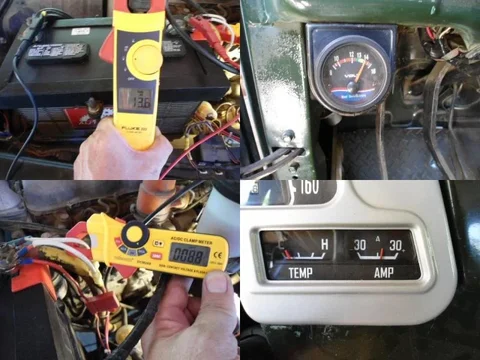
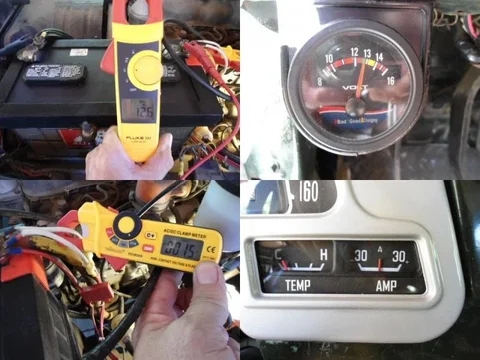
First he tested the battery for capacity. That was not bad but the conclusion was that the battery was not fully charged. The next step was, start engine, switch on the headlights on High Beam, rev up the engine and read the Voltage. 12 point something. He disconnected the VR, made a short between the IGN and F terminal, did the same test and came to the conclusion….. one or more rectifier diodes where gone. Normally you would replace the whole rectifier plate but that’s a big no no here (I’ll come back on this later). No sir, we replace the diodes that are gone (with bad aftermarket stuff I found out later) and that’s it. So after this repair the battery was charged at 25 to 30 Amps and with the lights on there was still a charge of more then 10 Amps. Good. First problem solved. What I noticed after a good drive to charge the battery, was that the charge dropped to 15 to 20 amps but not lower. Also the charge was not steady. The needle kept sweeping between 15 to 20 Amp. Sometimes it dropped to 10 Amps for a short while. I blamed that to our bumpy dirt roads which are loaded with potholes. At that moment I didn’t worry too much about that. I was happy that the battery was charged and the (charge) voltage was around 13.8Volt at that time.
Now it was time to attack the harness with all the tape and “twist” connections. For one or some reason a PO cut the harness in front of the firewall. Why? Until today I haven’t found out.
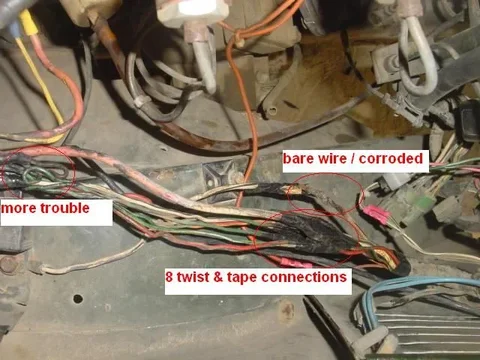
Here you see how the situation was when I bought the truck. This is just an example of the many lousy jobs.
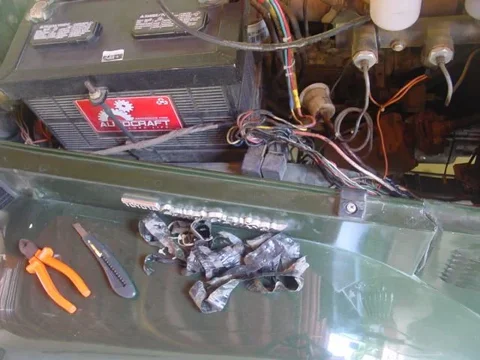
Removing miles of sticky tape. What a mess.
Digging my way through the harness I found more s#*t everywhere. Some people like to do the T&T. Twist the wires & Tape them. IH8THAT !
I found melted connectors, soldered splices in the main ground wire, and much more, have a look.
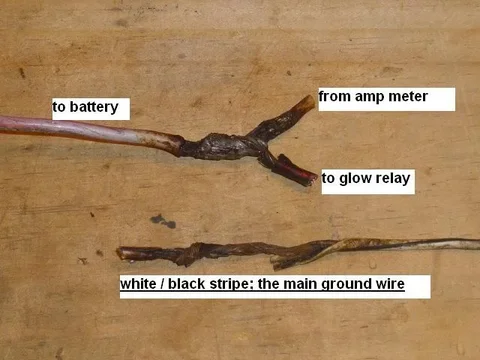
The picture speaks for itself.
To be continued.......
Rudi


I’ll write about it, not in a timeline or grouped by problem, but as I recall these problems by head with the assistance of my logbook that I keep.
Let’s begin with a little side step.
The first thing I did after I bought this truck was a visit to Purdy Motor SA. Purdy is the official Toyota importer / dealer. I had a little issue with the brakes. The PO told me that when it was parked for a couple of days the right front wheel braked a bit harder then the other 3 wheels. Turns out that the right front wheel had the only decent working brake. So 8 brake shoes and 8 cylinders later I had a safe truck on the road. BTW, Toyota has no longer the OEM parts and uses the aftermarket stuff which you and I can buy on every street corner. They are very honest about this. The receipt showed a line: external bought parts…….. at a normal sales price.
Back to the subject of electrical problems.
After coming home with my new toy(ota) I did an inspection on the electrical stuff. It was clear that someone in the past did a lot of work on it and that was not to my liking. Everywhere was tape in the harness and the question was…. What is under it? Before I could start working on it I encountered my first problem.
When the engine runs at idle the Amp meter shows a little discharge. When the rpms go up above 1000 the charge is 15 to 20 Amps. So far so good (I thought).
When I turned on the headlights while the engine was at idle the Amp meter shows a draw of +/- 20 Amps. (Hard to get a good reading with a meter that reads 30 – 0 – 30) That’s OK knowing that I have 90/100 Watt headlight bulbs, 4 running light 5W each, 2 license plate lights 3W each, 2 cluster lights 5W each so that makes 216 Watts divided by 12V is 18 Amps. Now revving up to let’s say 1500 - 2000 rpm or more the discharge was less but still below or around 0. In other words the alternator didn’t charge enough. I was draining the battery.
So I went to the electrical guy in town to check the alternator and voltage regulator.
First he tested the battery for capacity. That was not bad but the conclusion was that the battery was not fully charged. The next step was, start engine, switch on the headlights on High Beam, rev up the engine and read the Voltage. 12 point something. He disconnected the VR, made a short between the IGN and F terminal, did the same test and came to the conclusion….. one or more rectifier diodes where gone. Normally you would replace the whole rectifier plate but that’s a big no no here (I’ll come back on this later). No sir, we replace the diodes that are gone (with bad aftermarket stuff I found out later) and that’s it. So after this repair the battery was charged at 25 to 30 Amps and with the lights on there was still a charge of more then 10 Amps. Good. First problem solved. What I noticed after a good drive to charge the battery, was that the charge dropped to 15 to 20 amps but not lower. Also the charge was not steady. The needle kept sweeping between 15 to 20 Amp. Sometimes it dropped to 10 Amps for a short while. I blamed that to our bumpy dirt roads which are loaded with potholes. At that moment I didn’t worry too much about that. I was happy that the battery was charged and the (charge) voltage was around 13.8Volt at that time.
Now it was time to attack the harness with all the tape and “twist” connections. For one or some reason a PO cut the harness in front of the firewall. Why? Until today I haven’t found out.
Here you see how the situation was when I bought the truck. This is just an example of the many lousy jobs.
Removing miles of sticky tape. What a mess.
Digging my way through the harness I found more s#*t everywhere. Some people like to do the T&T. Twist the wires & Tape them. IH8THAT !
I found melted connectors, soldered splices in the main ground wire, and much more, have a look.
The picture speaks for itself.
To be continued.......
Rudi
Last edited:
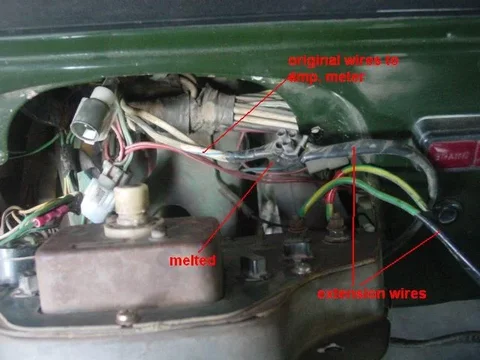
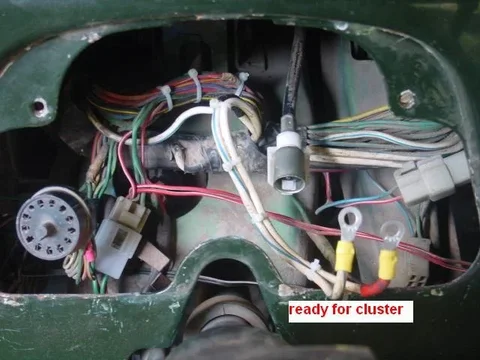
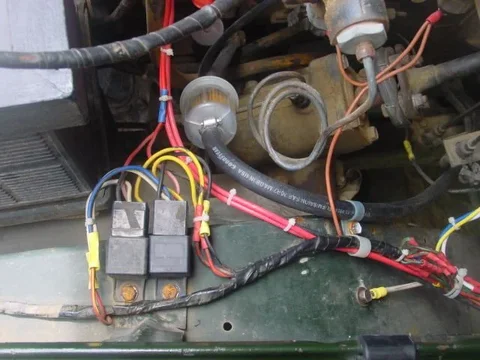
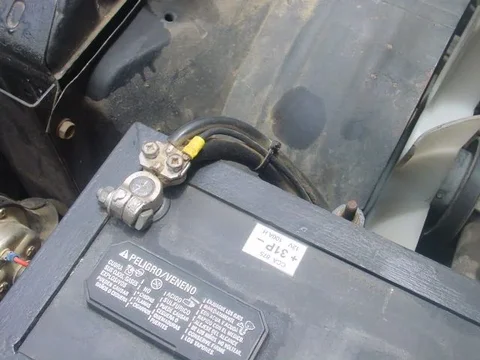
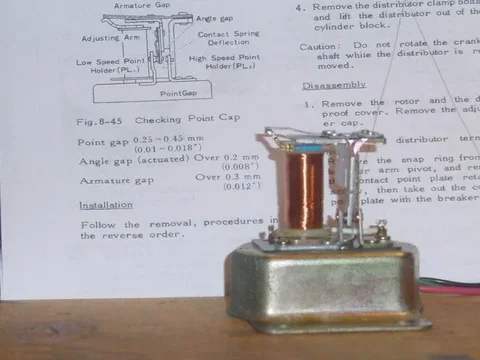


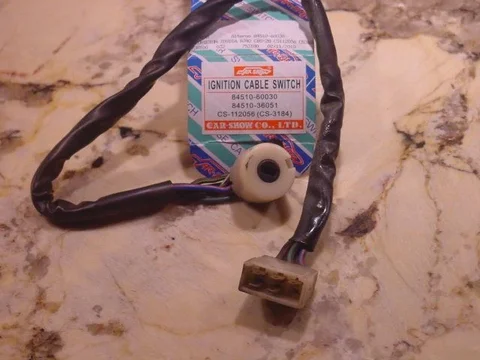
 , thinking and reasoning “what have the 3 gauges in common” besides the fuse and ground?
  The key switch!
  . This switch was for a BJ40 with super glow. Back to the shop (It’s only 65Km and back) to tell the guy that this switch is not good for my Cruiser. Ah, he says and comes back with another one. This time I was armed with a screwdriver and checked for the 5 positions. I read the label on the box and it showed the same text: BJ40.