Digital Trans Temp Gauge Install........

This site may earn a commission from merchant affiliate
links, including eBay, Amazon, Skimlinks, and others.

Joined
May 22, 2004
Threads
204
Messages
11,638
Location
Deep East Texas
With no way to get Transmission Fluid Temps from my ScanGauge, I wanted to install a gauge of some type in order to monitor transmission temps.

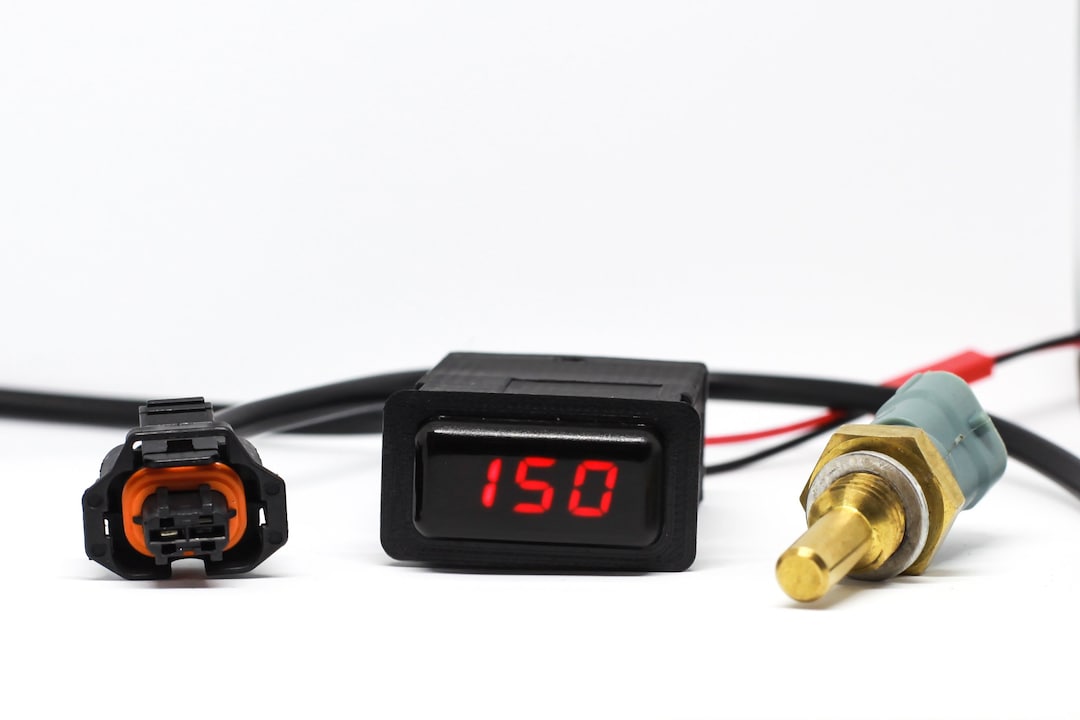
I chose an 'Auber' digital gauge because it is small, accurate and allows for minimum and maximum alarms. It can also be used with a visible and audible warning buzzer (if wanted).

1813R_zpsprwrsyip.jpg


You can set the parameters where the alarm(s) come on and drop back out.

I thought a good place for this gauge (and another to monitor Oil Pressure) would be where my broken cup holder used to reside.
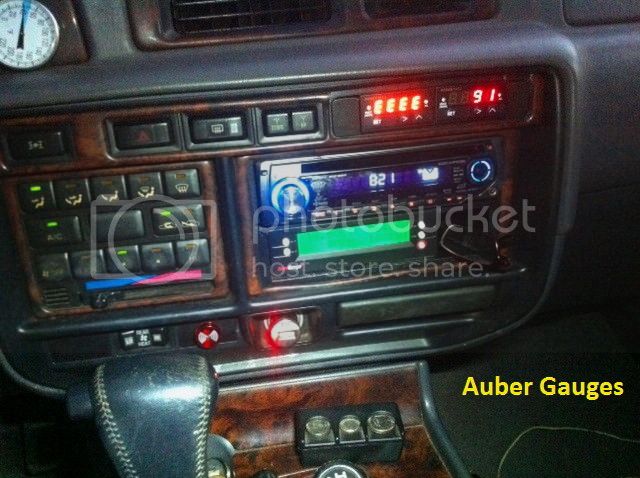
AG3_zpsednsrxmm.jpg


There is a large void behind the dash at that location which accommodates the length of the gauge and the necessary wiring quite nicely.
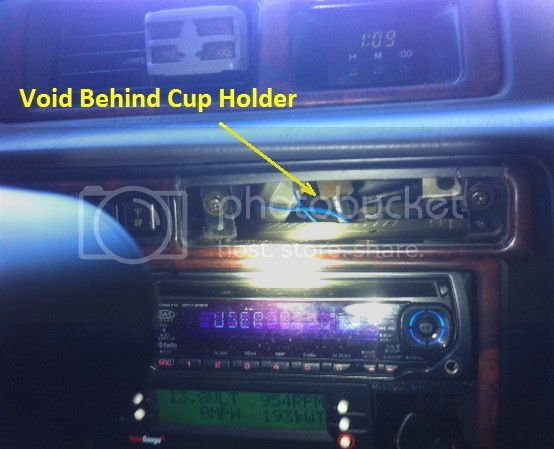
Guages6_zpsh9tmmyew.jpg


It so happens that two of these gauges will just fit into the face-plate of the cup holder (if you cut the sides and top out of it), but I opted to fashion a facsimile out of aluminum angle since the plastic is so brittle.
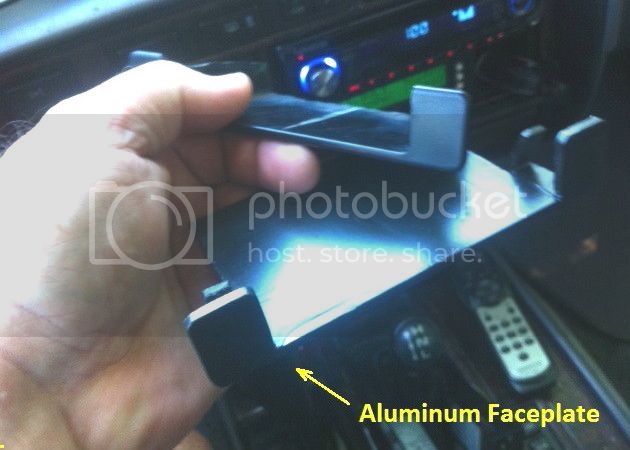
Guages5_zpsrw6h3r7p.jpg


Continued next post:
 
Last edited:
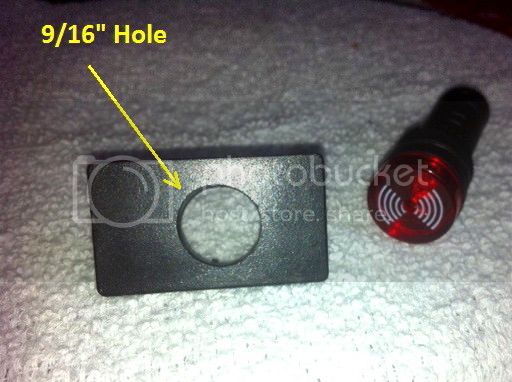
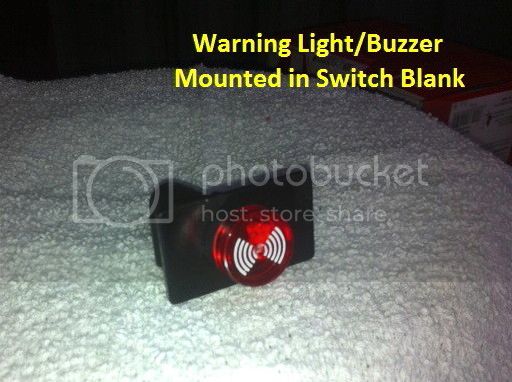
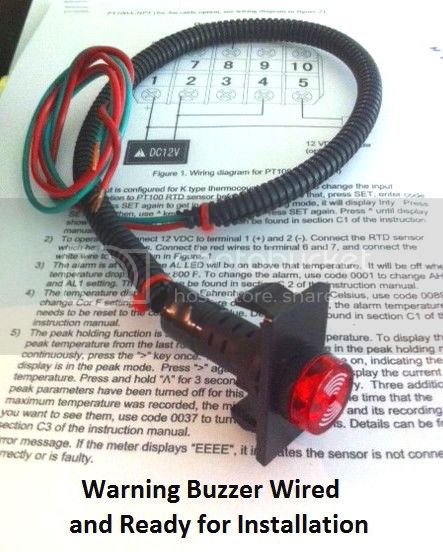
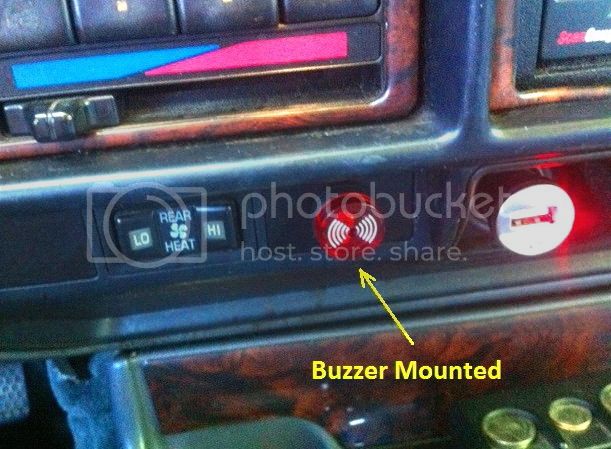
I rigged up a Flasher/Buzzer to use as an alarm. Used a switch 'blank' to mount it in and placed it just to the side of the rear heater switches.

Guages1_zpsz3lf2kfm.jpg


Guages2_zpsxheczqpc.jpg


Guages3_zpsyptznmrn.jpg


Guages4_zpswyqqmife.jpg


Continued next post:
 
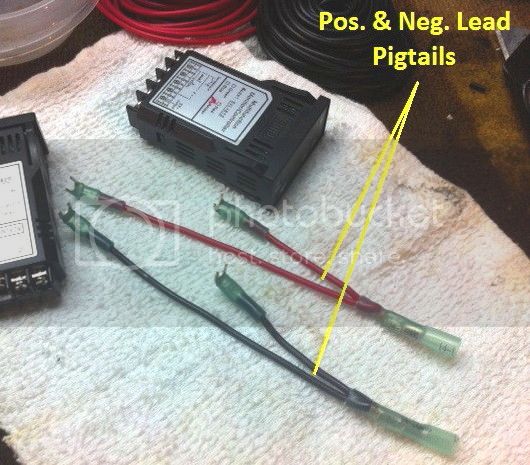
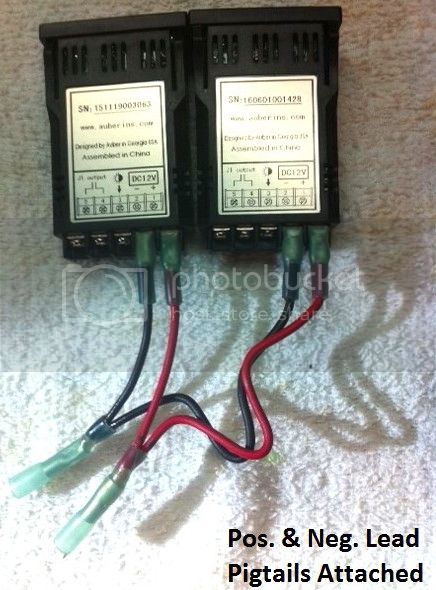
When running two gauges side by side it doesn't make sense to have separate power leads, so just make a pigtail that will service both.

Gauge2a_zpssvu841u4.jpg


Be sure to make one set of leads longer than the other side...so you can remove just one gauge if any work is needed.

Gauge3a_zpsnferylid.jpg


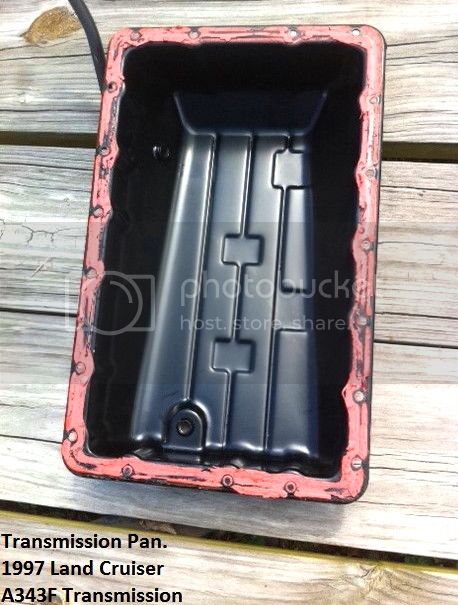
Next you'll need to decide WHERE you want to place the sending unit. There are competing thoughts on this (all with their own merit), but I chose to place mine in the Transmission oil pan.

So off comes the pan.

TransPan1_zpsyr8tmkmb.jpg


Continued next post:
 
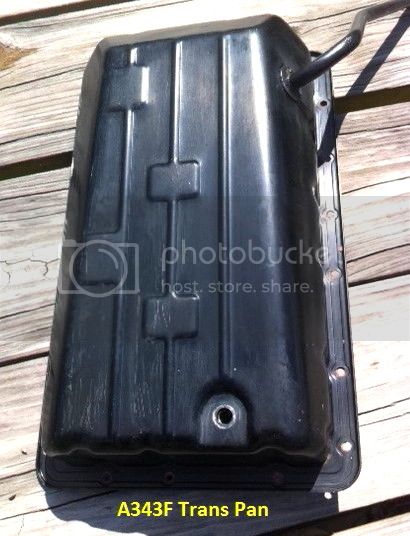
The outside of my pan was in good shape, no significant dents, good solid pan, still had paint.

TransPan2_zpsix0cp6lv.jpg


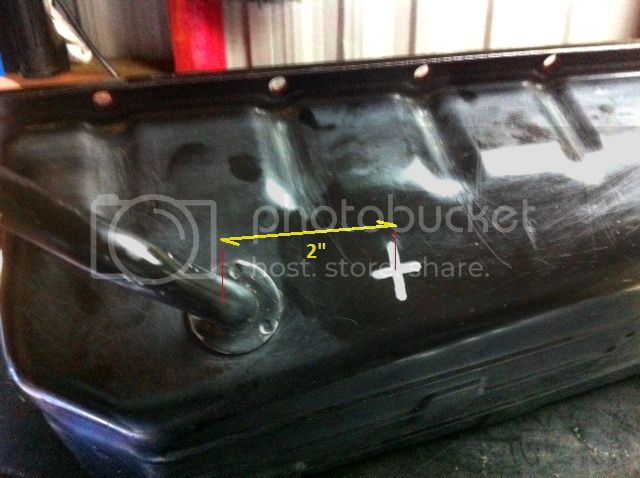
After looking at the Valve Body on the transmission and how far it sticks down, I found what I thought would be the best spot to mount the sending unit. It was roughly in line with the dipstick tube and about 2" back from it. This would give plenty of clearance inside the pan and also offer some protection for the sending unit wire.

TransPan3_zpsypyi9tih.jpg


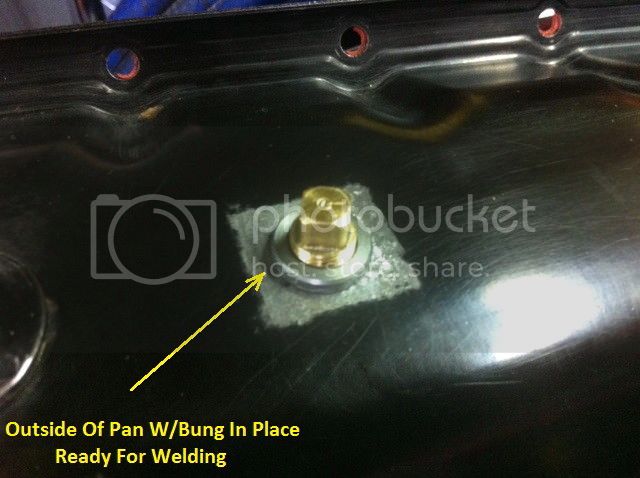
I decided to weld in a 'bung' to accept the sending unit, so I prepped a small area on the outside of the pan for that.

TransPan5_zps94tlxauh.jpg


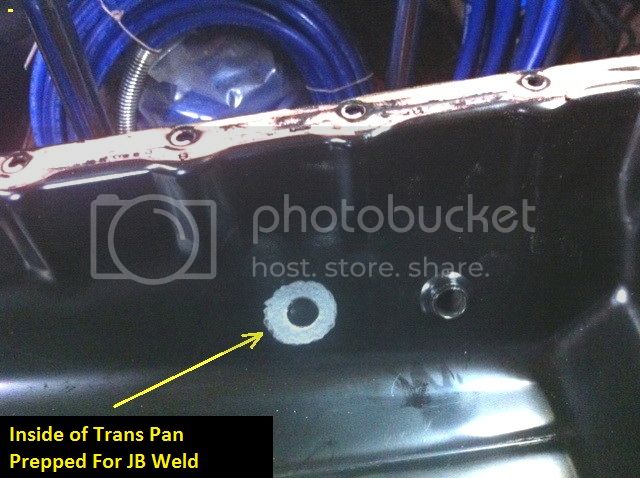
While I was at it....I thought it would be a good idea to seal the inside of the pan as well (added insurance) so I prepped a spot for that too.

TransPan4_zpsb5zuzzbv.jpg


Continued next post:
 
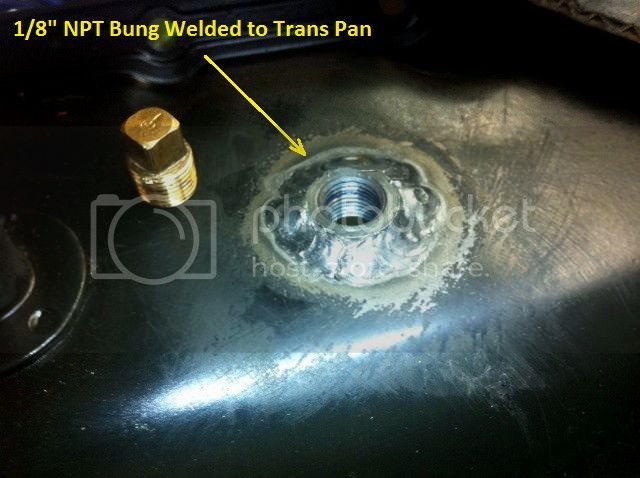
Originally, I was going to TIG the bung in place...but after looking at the pan it seemed thick enough (a bit over 1/16") to just MIG it. I didn't run a continuous bead for fear of burning through...so I just stitch welded it in with a series of 'tacks'. But as is turns out...there wasn't any need for concern. So please excuse the aesthetics.

TransPan6_zpsl3zpbdof.jpg


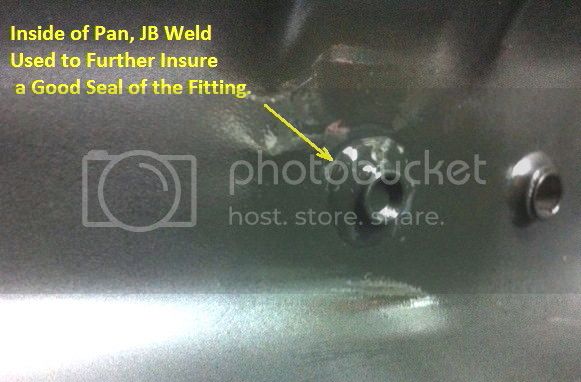
Afterward, I mixed up some JB weld and applied that to the inside of the pan around the protrusion of the bung.

TransPan7_zpsa8j6ngcs.jpg


Satisfied I had a good seal...I painted the areas of bare metal and installed the sensor.

TransPan8_zps0lcvm8mo.jpg


Continued next post:
 
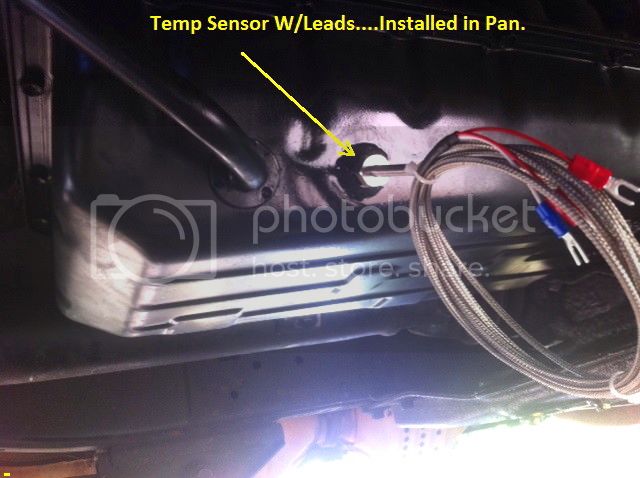
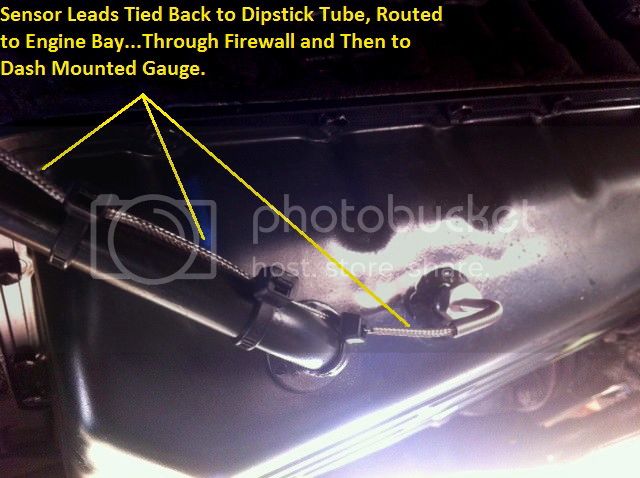
With the pan reinstalled....I routed the sensor wiring, taking advantage of the dipstick tube for protection.

TransPan9_zpswnpue4j9.jpg

TransPan10_zps5mf1tvfh.jpg


If you pan mount your sending unit, be sure to capture/secure the leads well enough that they won't easily snag on anything you are likely to encounter. Be kinda bad to have your gauge jerked out its mount. :)

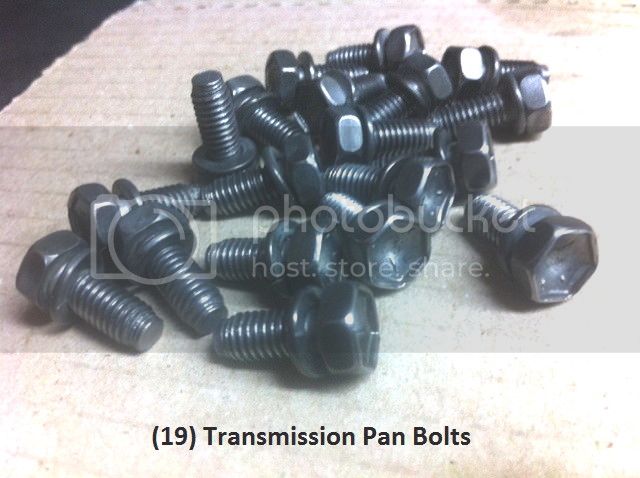
And the last pic is just for you guys in the 'rust belt', these are my 20 year old pan bolts (cleaned up in a parts washer), ready to go back on:

TransPan7_zps4exw9r4c.jpg


And NO @SEABASS....those are NOT new bolts. ;)
 
Nice write up!
 
I don't care for the aesthetics of the in-cab bits, but the craftsmanship (especially those welds!) is amazing.
 
I don't care for the aesthetics of the in-cab bits, but the craftsmanship (especially those welds!) is amazing.

Had to put them somewhere. Just wait until nighttime, then you can't see them. :)

AG1.webp
 
Outstanding mod!
 
Out of curiosity, why did you choose to put the probe in the pan rather than in the union? What kind of readings are you seeing with the probe in the pan, and can you see it change with the torque convertor lockup?
 
Out of curiosity, why did you choose to put the probe in the pan rather than in the union? What kind of readings are you seeing with the probe in the pan, and can you see it change with the torque convertor lockup?

I chose the pan location because I believe it represents the best overall core temperature. I don't see the value in monitoring short term temperature 'spikes' or cycles (Hot when coming out of the Torque Converter, Cooler in the return line). The fluid in the pan provides the most stable temperature reading. We already know that fluid in the T/C before it locks up is HOT, there really is no need to know how hot that 'spike' is. IF it is too great..it will be reflected in the pan temperature reading (albeit more slowly). Likewise...we don't need to know how COOL the fluid is upon return. IF the system is working adequately...the fluid in the pan will be in acceptable range and you won't be worrying yourself with fluctuating temp readings that occur other places.

Of course a temperature gauge is only a tool to watch for obvious overheating so you can STOP the progress before things get worse. There is NO substitute for regularly checking the condition of the Transmission Fluid by visual inspection (it should be a nice red color and NOT smell burned in any way).

I haven't yet been a long trip so I don't know what the peak temperature (after saturation) will be, but a typical 30 minute drive (highway) at current ambient temps (80°-90°F) is showing fluid temps of 130-140° F. I'm waiting until the middle of summer to see what the numbers will be and will then establish what the Maximum temperature is to set my alarm and when to have it cut back off.

Torque Converter Lock Up. Yes, when the TC locks up (for a significant period of time) the temps definitely go down. As far as I can tell...about 10-12° F. When I've had more time to drive the vehicle under different conditions...I will update with any changes.
 
I put my probe in the union sending fluid from the TC to the cooler, and on the highway in the summer it barely registers over the lowest end of the gauge, about 130F (lowest mark on the gauge is 120F), even in the mountains, as long as you could keep speed over ~85km/h so the TC remains locked. Climbing some decent grades on gravel at about 50-60km/h is where I've seen my highest temps, reached only about 210F, just so you've got some data points to compare with. I've added an OEM FZJ80 trans cooler as HDJ81's didn't come with anything.

With a digital gauge you won't have this issue, but if I'd put my probe in the pan I'm not sure I'd ever see the needle move!
 
I chose the pan location because I believe it represents the best overall core temperature. I don't see the value in monitoring short term temperature 'spikes' or cycles (Hot when coming out of the Torque Converter, Cooler in the return line). The fluid in the pan provides the most stable temperature reading. We already know that fluid in the T/C before it locks up is HOT, there really is no need to know how hot that 'spike' is. IF it is too great..it will be reflected in the pan temperature reading (albeit more slowly). Likewise...we don't need to know how COOL the fluid is upon return. IF the system is working adequately...the fluid in the pan will be in acceptable range and you won't be worrying yourself with fluctuating temp readings that occur other places.

Of course a temperature gauge is only a tool to watch for obvious overheating so you can STOP the progress before things get worse. There is NO substitute for regularly checking the condition of the Transmission Fluid by visual inspection (it should be a nice red color and NOT smell burned in any way).

I haven't yet been a long trip so I don't know what the peak temperature (after saturation) will be, but a typical 30 minute drive (highway) at current ambient temps (80°-90°F) is showing fluid temps of 130-140° F. I'm waiting until the middle of summer to see what the numbers will be and will then establish what the Maximum temperature is to set my alarm and when to have it cut back off.

Torque Converter Lock Up. Yes, when the TC locks up (for a significant period of time) the temps definitely go down. As far as I can tell...about 10-12° F. When I've had more time to drive the vehicle under different conditions...I will update with any changes.
Great info and write up! Without a welder, do you think JB weld could be used on both sides of the pan for the sender install?
 
Great info and write up! Without a welder, do you think JB weld could be used on both sides of the pan for the sender install?
I wouldn't recommend it, even if you did both sides. (Consequence of losing your trans oil is severe.)
 
Great info and write up! Without a welder, do you think JB weld could be used on both sides of the pan for the sender install?

JB Weld (the product itself) is strong....BUT my concern would be adequate 'adhesion'. The oil pan is subject to many heat/cool cycles and the dissimilar materials would do so at different rates.

So....a possibility the JB Weld could 'let go' at some point, resulting in a significant leak. I would have to recommend against it.
 
The outside of my pan was in good shape, no significant dents, good solid pan, still had paint.

TransPan2_zpsix0cp6lv.jpg


After looking at the Valve Body on the transmission and how far it sticks down, I found what I thought would be the best spot to mount the sending unit. It was roughly in line with the dipstick tube and about 2" back from it. This would give plenty of clearance inside the pan and also offer some protection for the sending unit wire.

TransPan3_zpsypyi9tih.jpg


I decided to weld in a 'bung' to accept the sending unit, so I prepped a small area on the outside of the pan for that.

TransPan5_zps94tlxauh.jpg


While I was at it....I thought it would be a good idea to seal the inside of the pan as well (added insurance) so I prepped a spot for that too.

TransPan4_zpsb5zuzzbv.jpg


Continued next post:
@flintknapper did this specific sending unit come with the gauge? Is that all one package? Great write up!
 
JB Weld (the product itself) is strong....BUT my concern would be adequate 'adhesion'. The oil pan is subject to many heat/cool cycles and the dissimilar materials would do so at different rates.

So....a possibility the JB Weld could 'let go' at some point, resulting in a significant leak. I would have to recommend against it.
Loud and clear. I'll just have to find a machine shop. Thanks for weighing in though, the insight is helpful. I think I'm going to tackle this outside of the welding portion.
 
This is the gauge I use. You have to message him if you want it in Fahrenheit. Fits in the switches area in the factory dash with 10 minutes of slight grinding with a file.
Excellent - thanks for linking this gauge - looks like this sending unit would fit nicely in the side of the pan as @flintknapper did.
 
Back
Top Bottom