

Adapting an OEM Tach to Diesel

This site may earn a commission from merchant affiliate
links, including eBay, Amazon, Skimlinks, and others.

This is a great thread, I Just installed a FZJ80 ABS sensor on the harmonic balancer of 6BT. Hopefully it works. I will be sure to post up when I test fire the motor next week.

Quick question about hooking it up to the tach, Can the wires that originally went to the coil be reused?
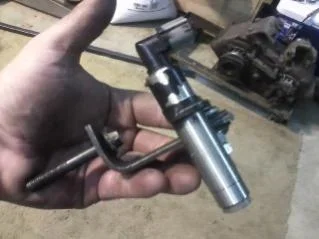
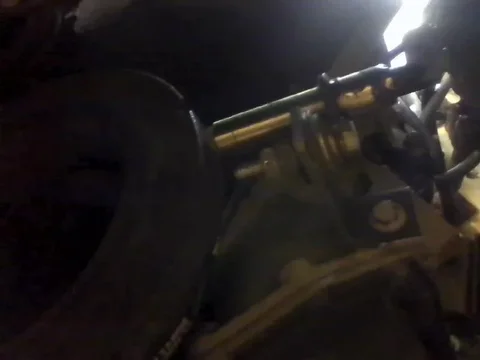
0711122148.webp

0711122152.webp
0711122148.webp
0711122152.webp
 
I used a Dakota Digital DSL-1 signal convertor and the stock ignition coil signal wire that went to the stock tach on my swap. My signal source is different, as I used the Isuzu injection pump sensor that was used to make the auto trans shift properly. My sensor output was 14.5 volts AC, your abs sender signal may be different.

I spliced the wires in the engine compartment to the sender. Mounted the Dakota to the back of my stock gauge cluster on the fuel, oil, water and volt side. The Dakota requires a switched hot which happens to be the center wire on the stock tach. One of the other tach wires is a ground which I also used by running jumpers to the Dakota 2 grounds. One is the power ground and the other is a signal ground.

The ignition coil wire on the stock tach was removed and connected to the Dakota signal in and the signal out was ran to the tach. All easy connections, and with the dakota mounted the cluster, it all comes out by disconnecting the stock gang connectors.

It took a few minutes and a call to Dakota tech to get it adjusted to match my optical tach readings, but it works perfect.

Hope this helps. Sorry no pictures...Dah!

Doug
 
Last edited:
This is a great thread, I Just installed a FZJ80 ABS sensor on the harmonic balancer of 6BT. Hopefully it works. I will be sure to post up when I test fire the motor next week.

Quick question about hooking it up to the tach, Can the wires that originally went to the coil be reused?

I used the same sensor and it worked great. I did go back and modify the tach as it would cut out after a certain rpm but you shouldn't have that problem as the diameter of the harmonic balance is small than that of the flywheel that I used. I had two choices to solve my problem - widen the notch that I cut into the circumference of the flywheel or modify the tach. I chose the later as it was easier.

You certainly can use the wires that originally went to the coil.
 
You certainly can use the wires that originally went to the coil.

Just what I wanted to hear. Thanks a lot.
 
Ok so if i have read alll the Info Correct.
For an after market Tach.

I would obtain ABS Sensor

Cut Notchs in Harmonic Ballancer 4 Notchs Ballancer has 2 id do 2 more to keep it ballanced and Run Tach in 8 cylinder mode.

Using on 6bt Cummins

12 Volts to one side
Other Side would be my Tach Signal ? That Would go to GREEN Wire ?

After Market Tach Wiring
WHITE = 12 Volt Dash Lighting
RED = 12 Volt Switched
BLACK = Ground
GREEN = Tach Signal (Sourced from Other side of ABS Sensor)

Thanks This info is Great
 
Oh yeah I forgot to post up, got the ABS sensor wired in and with the 3 notches on the harmonic balancer it was showing Idle to be just about perfect for the 6BT.

Thanks for the info guys:beer:
 
So is my post above how everyone else has done it and it worked


Thanks

Can't help you with an aftermarket tach. My original purpose was to enable me to use the OE tach. Why don't you try it and let us know how it works.

You are correct to cut four notches if you set the tach to 8-cylinder mode.
 
When I got my engine started yesterday, the tach sensor bounced around a lot. It seemed like sometimes it would sync bit generally was all over the place. Have you noticed anything like this before? The cutouts on the flywheel are at least 2.5" long and are maybe 0.5" deep. Could the wires be swapped or do you think it is filter (capacitors) at the gauge doing too good a job?

Also, on the caps, are they in parallel? If so, you can remove one and half the total capacitance versus removing both and putting on two capacitors that are half the size.
 
When I got my engine started yesterday, the tach sensor bounced around a lot. It seemed like sometimes it would sync bit generally was all over the place. Have you noticed anything like this before? The cutouts on the flywheel are at least 2.5" long and are maybe 0.5" deep. Could the wires be swapped or do you think it is filter (capacitors) at the gauge doing too good a job?

Also, on the caps, are they in parallel? If so, you can remove one and half the total capacitance versus removing both and putting on two capacitors that are half the size.

By saying "the tach sensor bounced around a lot" you mean that the tach needle bounced around a lot. If so, try first swapping the sensor wires. If that doesn't help, check the gap between the sensor and the flywheel. You want to keep the gap at a minimum. I ended up with a gap of 0.056".

I'm wondering if with a 2.5" cutout in the flywheel may be resulting a secondary trigger from the second edge of the cutout. If so, try placing a diode across the sensor. Any small diode like a 1N4001 should work. Also try reversing the diode polarity. You may have to try all four combinations of diode/sensor polarity.

I don't remember how the caps were connected. The symptom of excessive capacitance was that the tach would become erratic and then drop to zero as you increased the engine revs. At lower RPMs, the tach was stable and accurate. This doesn't sound like your problem.
 
Yes I meant the tach needle.

The gap is super close and I don't think that is the issue.

The second edge causing a false read sounds like it could be it. I will try reaching in there to put a diode across it. Getting to it is pretty tough, but I can remove the starter sort of easily. I will try, possibly this weekend, and report back.
 
Yes I meant the tach needle.

The gap is super close and I don't think that is the issue.

The second edge causing a false read sounds like it could be it. I will try reaching in there to put a diode across it. Getting to it is pretty tough, but I can remove the starter sort of easily. I will try, possibly this weekend, and report back.

The diode doesn't physically have to be located at the sensor, just as long as it is connected to the wires.
 
Yep, but thinking the easiest place to get to the wires is there versus pulling apart the dash.
 
So I got the sensor as close as I could without it touching and that solved the issue. When I get it up and driving, I will check the "high" rpm side and make sure there is no bounce....just forgot to earlier.
 
Astr-

Awesome tech...thanks for writing this up. I'm about to put a 4bd1t in my FJ80 and am thinking of going this route. Question though...could I essentially use the hall effect sensor in reverse? For what I am thinking it'd be easier to have tabs three tabs that swing by the sensor rather than three voids. Not sure if that makes sense. I suppose another way of saying it is rather than sensor mainly seeing something close and an occasional void, I'd like to to mainly see nothing and three times per rev see something 'close'. It seems like if the tach is just looking for the change in sensor state 3x per rev either way would work...but maybe not...

Andy
 
.... Question though...could I essentially use the hall effect sensor in reverse? For what I am thinking it'd be easier to have tabs three tabs that swing by the sensor rather than three voids. Not sure if that makes sense. I suppose another way of saying it is rather than sensor mainly seeing something close and an occasional void, I'd like to to mainly see nothing and three times per rev see something 'close'. It seems like if the tach is just looking for the change in sensor state 3x per rev either way would work...but maybe not...

Andy

You could certainly do that. Make sure that the tabs are long enough so that you have some "dwell" at higher rpms. I ran into that problem with 3/4" notches and had to modify my tach to compensate. The standard dwell on a 3FE appears to be about 28*. The 3/4" notches on a 15" flywheel produce a signal that is only about 6*.

By the way, I used a magnetic sensor, NOT a hall effect sensor. You could use a hall effect sensor but you'll have to provide additional circuitry for a power supply for the sensor and an amplifier to get the signal levels up to what the OE tach expects.

Also, I was working with a FJ62 tach. I'm not familiar with the FZJ80 tach and where it gets its signal. It could be a separate line from the ECU rather than the igniter signal like on the FJ62.

Good luck!
 
Back
Top Bottom