

Fuel Rail Pressure vs Intake Manifold pressure - Here is the skinny

This site may earn a commission from merchant affiliate
links, including eBay, Amazon, Skimlinks, and others.

Joined
Mar 27, 2003
Threads
127
Messages
6,455
Website
www.sleeoffroad.com
Ok, there has been a lot of discussion about this, mostly trying to dispute the facts and how the system works. In an effort to show people what really happens, here are the facts with pictures.

We hooked a pressure gauge to the fuel system just past the fuel filter. This is before the fuel pressure regulator (FPR). The FPR is at the end of the fuel rail. So the pressures measured is essentially that of the fuel rail.

Here are the pictures. The first series is with the two speed fuel pump relay stock (ie, running in low voltage mode at idle)

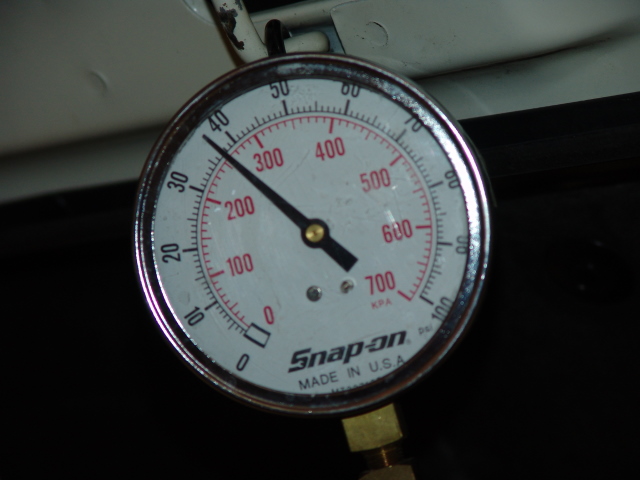
Photo 1. - Fuel pressure at idle. All systems Stock. FPR connected to intake manifold, so it would be receiving a vacuum signal at this point. Pressure ~ 37.5 PSI
FP01.jpg


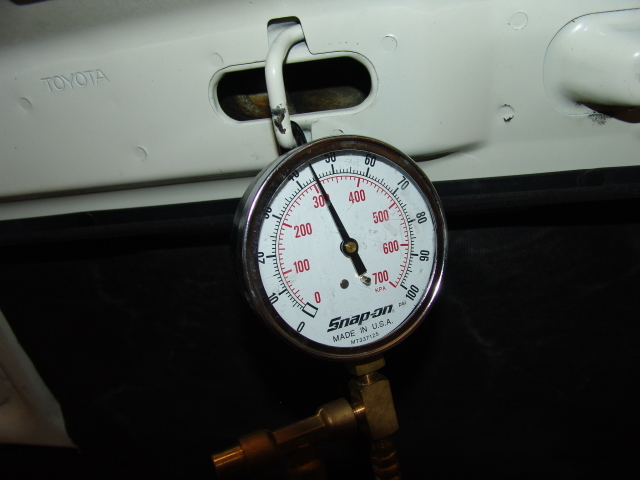
Photo 2. - Fuel pressure at idle with the reference vacuum line on the FPR disconnected. Pressure ~ 45psi
FP02.jpg


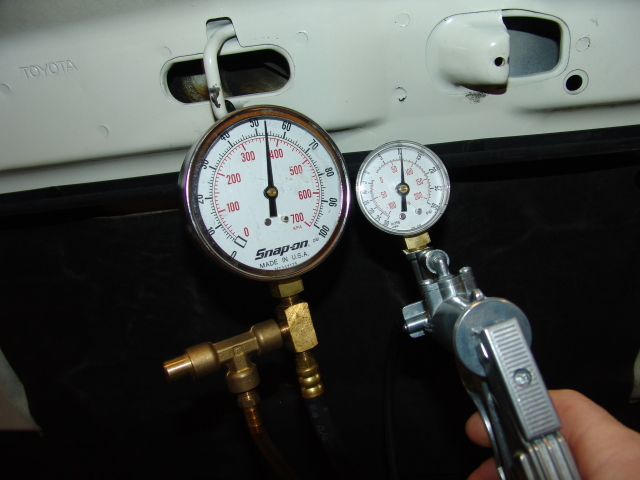
Photo 3 - Here we connected a pump to the reference line on the FPR and pressurized it to approx 10 PSI. Pressure ~ 54psi
FP03.jpg


-------------------------
Next we jumped the low speed fuel pump relay to ensure that the fuel pump gets 100% voltage.

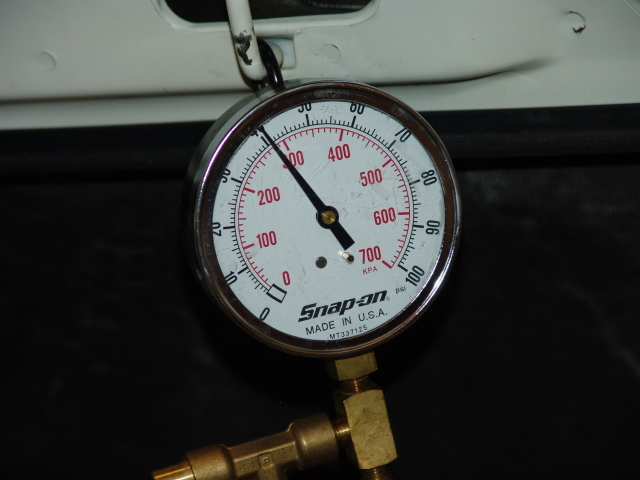
Photo 4. - Again all systems stock. FPR connected to the intake manifold. Pressure ~ 40psi
FP07.jpg


Photo 5. - Here we disconnected the FPR again and the reference line is vented to atmosphere. Pressure ~ 47 PSI
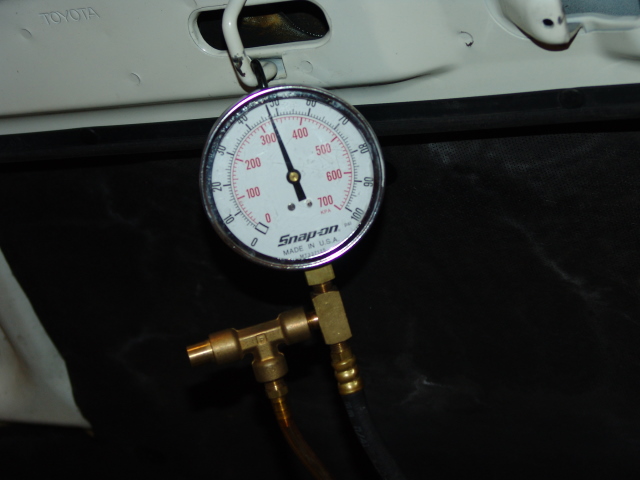
FP08.jpg


Photo 6. - Again pump hooked to reference line and pressurized to approx 10 PSI. - Pressure ~ 55 psi.
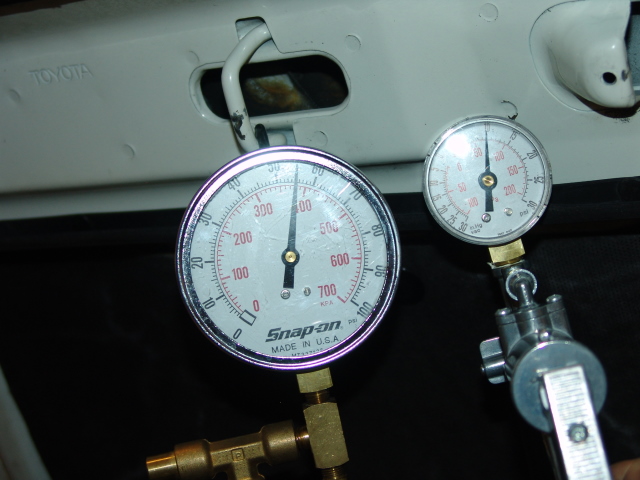
FP11.jpg


So, why did we do this. We have maintained all along that the FPR is a 1:1 regulator and thus, when under boost, the truck will increase the fuel pressure. Landtank said he tested and found a 1.5 psi increase with 8 psi applied to the FPR. It turned out he calculated the value from fuel trim. This is the relevant post about that.

LANDTANK ~ I applied 8psi to the diaphragm at idle and watched little change in the FT%. If the system was setup up for a constant pressure differential that 8Psi should have increased the fuel pressure by 8psi which would mean about an 18% increase in differential.

There was a methodology. I'm trained to use on board components to evaluate system performance. It comes from being a field technician and not being able to carry a complete lab with you on a service call.


Well, plain and simple you can not do that. These are measured values on a 1995 truck. This clearly shows that disconnecting the FPR sensing on the FPR is not a good idea, much less for a boosted truck.

I hope this puts to rest the suggestions that we are wrong about how the system works.

We did all these test at idle due to logistics. Since the low speed relay comes into play, that is why we did the test with the relay jumped.
 
Last edited:
Excellent thanks and totally end of story as far as I can conclude!
:cheers::cheers::cheers:

Now to put the Stock MAF on, connect the reference to regulator again and start boosting the boost. Nothing against anyone but we've wondered what was happening for way way way too long and this simply and scientifically proves your point. Congrats.
 
Christo,

Did you apply the 10psi (lo and hi pump load) to the stock system as well? Or was it only to the modified system?

Would I be right in thinking that adding any given pressure (as if turbo charging) to stock would increase all stock readings by that pressure?

Also, what do you think would be the long term result of the fuel rail seeing these slightly higher pressures by doing the LTMAF mod?

A soon to be corrected lack of cash is the only thing stopping me fitting my turbo (all the bits are in the garage), so this issue is of particular concern to me!

Thanks
 
Christo,

Did you apply the 10psi (lo and hi pump load) to the stock system as well? Or was it only to the modified system?

The pressure was applied to the vacuum port on the FPR. That was to simulate boost that would be present in the intake manifold.

Would I be right in thinking that adding any given pressure (as if turbo charging) to stock would increase all stock readings by that pressure?

Yes, that was the whole point of this test.

Also, what do you think would be the long term result of the fuel rail seeing these slightly higher pressures by doing the LTMAF mod?

The LT Maf disconnects the vacuum port on the FPR. Thus you will never see the increase in fuel pressure. That is why we have been cautioning against disconnecting the line.

A soon to be corrected lack of cash is the only thing stopping me fitting my turbo (all the bits are in the garage), so this issue is of particular concern to me!

Thanks
 
"The LT Maf disconnects the vacuum port on the FPR. Thus you will never see the increase in fuel pressure. That is why we have been cautioning against disconnecting the line."

Is this how a potential "lean" situation can occur on boosted rigs?

If so, how could it be lean on a na rig? Is it just due to the fact that more air is introduced without increasing fuel pressure?

I have read the threads but most of the lingo was over my head.

Buck
 
"The LT Maf disconnects the vacuum port on the FPR. Thus you will never see the increase in fuel pressure. That is why we have been cautioning against disconnecting the line."

Is this how a potential "lean" situation can occur on boosted rigs?

Yes, I don't want to rehash the whole LT Maf thread again. I just wanted to show how the fuel system works. And what the purpose of the FPR is. Also wanted to show that the system is indeed one that maintains a constant fuel pressure differential.

If so, how could it be lean on a na rig? Is it just due to the fact that more air is introduced without increasing fuel pressure?

Less likely to happen. However the truck still runs in conditions of vacuum to atmosphere, so one can see that even under those conditions the fuel pressure will vary quite a lot.

But again I just wanted to show how that system works and that one should understand what the results are when the system is disconnected.

There is no reason that with enough testing and sensor calibration a new sensor can not be designed to work with the truck and keep the FPR system in tact.
 
Last edited:
well this saves me from doing all this work :cheers:

Thanks for the effort and data.

I'm more than happy to be shown that I'm wrong and I thought that the tests that I did were relevant.

I have found another sensor from Toyota that has the identical foot print and would require that the vacuum line be attached to satisfy the idling FT%.

This happened recently by accident and I haven't had any time to do any testing with it.

My guess is that we might be back where we were with high AFRs under boost but it's obvious I could be completely wrong.
 
Yes, I don't want to rehash the whole LT Maf thread again. I just wanted to show how the fuel system works. And what the purpose of the FPR is. Also wanted to show that the system is indeed one that maintains a constant fuel pressure differential.


Less likely to happen. However the truck still runs in conditions of vacuum to atmosphere, so one can see that even under those conditions the fuel pressure will vary quite a lot.

But again I just wanted to show how that system works and that one should understand what the results are when the system is disconnected.

There is no reason that with enough testing and sensor calibration a new sensor can not be designed to work with the truck and keep the FPR system in tact.


Thanks. To be clear, this thread finally brought some light, for me, to some previous discussions. My questions were purely for my understanding of where you were coming from.

Buck
 
So what does this mean for all of us that have been previously enjoying the LT MAF?

• Continue to use as-is?
• Continue to use but reconnect hose?
• Discontinue use?
• Don't do anything until Rick tests the new sensor and lets us know if we should be swapping it out?
• Send Christo a frosty one for being a rapid pit bull and settling the discussion?
• All of the above?
• None of the above?
 
wait for rick to develop a new one that uses the FPR sensor :)

frankly, i do not have the expertise and have no idea what i am talking about, but the gains people were seeing had to be coming from somewhere, so i would imagine you could get the FPR in line and somehow maintain the gains?

go figure, i am probably totally wrong

*waits for christo or rick to explain why I am wrong*
 
frankly, i do not have the expertise and have no idea what i am talking about, but the gains people were seeing had to be coming from somewhere, so i would imagine you could get the FPR in line and somehow maintain the gains?

As we said a long time ago, trucks will run better when they lean out, to a point, until things go bang. With the fpr disconnected, especially on boosted trucks this proves that they can and will lean out due to fuel pressure loss. It could be that all the gains are from that vs any difference the sensor could make.
 
There has not been any evidence that a properly running truck runs lean with this MAF sensor. Everyone who has taken the time to run such tests have had the proper results. There are always more tests and new tests as the technology moves forward.

To say that this setup automatically leans out the engine is a stretch for me. The fact that Slee was able to identify that the MAF sensor was reading a lower air flow than that of a stock sensor with the vacuum attached by seeing a higher FT% is testament that the system is adaptive.

What brought this back up is the fact that another member saw an improvement with a rich condition he was having with this MAF sensor when he had a faulty fuel pump relay. Since his wide band sensor saw an improvement in AFR we assumed it was from the fuel rail pressure further dropping from where it was. I still think that this is the case.

I'll continue to use mine as I have for the last couple of years. If anyone isn't comfortable with using it they should remove it.
 
Just to add fuel to the fire, pun intended, remember that with my wideband and around 8psi boost I never saw a lean condition in open loop operation including in prolonged periods of WOT. I don't think that the danger is "dangerous" leaning but obviously as I've measured and shared all along all our rigs are all "leaning a little" with this LT MAF MOD, and, as I've measured and shared all along "that's what makes it so wonderful".

I love that Christo has positively proven one relationship we were wondering about way way way too long. That is one of our answers positively and that positively helps all here. So, many props to Christo for that. We have many more questions to ask and answers to answer though. And also as I've stated so many times I hope that we will all stick to scientific methodology and let the data deliver answers instead of what we want to be true. Many props as well to Rick for fully embracing the excellent data Christo discovered!

For the time being I'm removing the LT MAF (I've actually swapped so many times that I cannot remember just trying to run more runs, gather more data, ask more questions and answer more answers) not because I don't believe in the LT MAF but because I simply and strongly want the reference to intake to my regulator. I trust that Rick will work on another sensor that allows the reference, accurately measures airflow and puts it into his superb housing for having properly safe performance increases.

I'm not advocating removing or leaving the LT MAF ... that's a thing for each individual to decide and do individually. I'm only saying what I'm willing to do while waiting for Rick's Gen II MAF! But, for arguments sakes anyone running less than 8psi prolly has nothing to worry with; as Christo told me two years ago almost, "the wideband has wisdom" and my wideband was never reading any reading that worried me in the slightest sense. Lastly my sappy side is proud of all of us here having the intellectual stamina and strength to get to this terrific point in the evolution of extreme 80 performance.


:cheers::cheers::cheers:
 
I have found another sensor from Toyota that has the identical foot print and would require that the vacuum line be attached to satisfy the idling FT%.

This happened recently by accident and I haven't had any time to do any testing with it.

My guess is that we might be back where we were with high AFRs under boost but it's obvious I could be completely wrong.

Are you saying another MAF sensor from Toyota that fits in your MAF housing?

BTW--it's cool to see this kind of tech interchange.
 
For those of us who are running the LT MAF...................

What happens if the little rubber hose is just refitted?
The fuel line would see higher pressures - OK.

But then what??? If this means extra fuel was injected because of the higher pressure, surely the O2 sensor would 'smell' this and amend the fuel trim, via the ECU, accordingly (I'm talkng closed loop and not WOT open loop).

Or am I totally misunderstanding what the O2 sensor is doing?

Rick - what is the part number of the alternative sensor? Maybe one of us could get hold of one and try it out.
 
Back
Top Bottom