Relocated Oil Pressure Sending Unit....in Prep for........

This site may earn a commission from merchant affiliate
links, including eBay, Amazon, Skimlinks, and others.

Joined
May 22, 2004
Threads
204
Messages
11,638
Location
Deep East Texas
I've been wanting to add a good, accurate Oil Pressure Gauge to my 80 series because the OEM unit seems to work about as well the infamous Water Temp Gauge (basically leaves you wondering).

I already have a ScanGauge to accurately monitor Water Temp and Voltage, but I had no way to 'accurately' keep track of my Oil Pressure or Transmission Fluid Temps. I wanted to keep my OEM sending unit and gauge functional, but ADD a better gauge.

So I ordered a couple of 'Auber' digital gauges and started looking for a good place to put them.

I wanted small gauges that I could mount someplace without having to go the Pillar Pod route.

So I got an amber gauge for the Oil Pressure and Red Gauge for the Trans Temp.

1813A_zpswaplcxay.jpg


1813R_zpsprwrsyip.jpg


I'll do a write up on the Trans Temp install in a separate thread at a later date.

For my purposes...it would be necessary to use Two Sending units for the Oil Pressure (one OEM the other Aftermarket). In order to do that I needed an adapter. No big deal, found what I needed on Ebay.

Only concern was that in order to install the adapter, I would have ended up with a fitting about 4"-5" long hanging off the side of the engine on a 1/8" pipe nipple. Hmmmmm....that doesn't sound like something that is going to last.

So...this brings us to the subject at hand (RELOCATING the sending units).

Found a kit made for doing just such a thing:
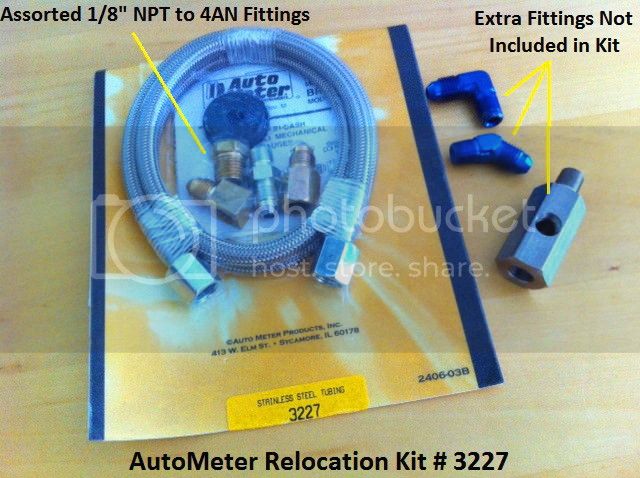
ReLoKit_zpsqwytf2dk.jpg


Continued next post:
 
Last edited:
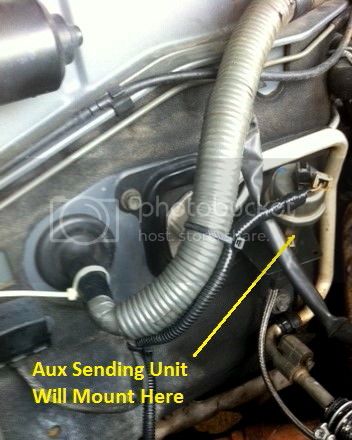
So....next step was decide just WHERE I needed to mount the adapter that will hold both sending units. I found a spot on the fire wall that would allow me to route the wires from the new sending unit through an existing grommet and to my digital gauge, so the 'spot' was now chosen.

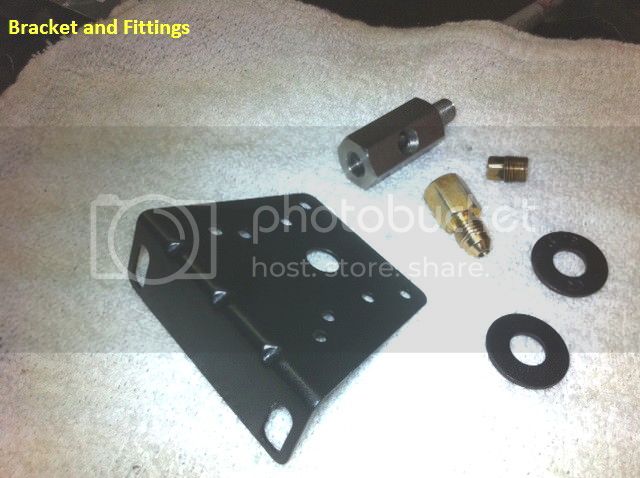
Now to fashion some type of 'mount' to hold the adapter. Got to digging around in my shop and found a 'bracket' that would work for my purpose. Nothing to do to it but drill a hole that will accept the adapter.

Relocate1_zpso2a1g6yl.jpg


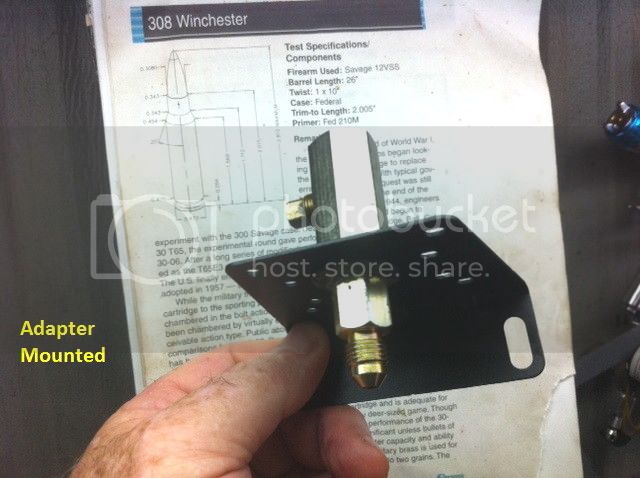
Sandwiched the bracket between the adapter and the 4AN flare fitting, done deal.

Relocate2_zpsazb2yjnr.jpg


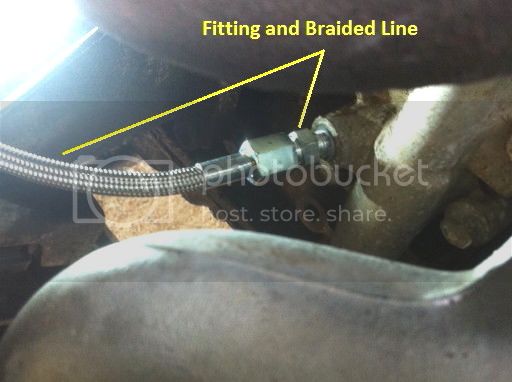
Next thing to do was to install a fitting where the OEM sending unit used to be...then attach the braided line.

Well........poopy! The fitting I have is 1/8" NPT the thread in the 'Boss' is NOT. I'm guessing its maybe 1/8" BSPT but whatever it is....I was not able to get more than a couple of threads started.

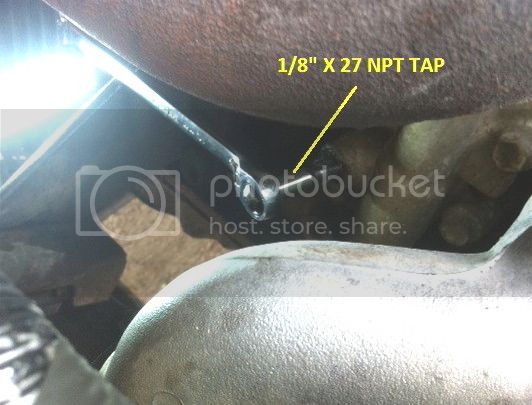
I am about 25 miles from the nearest town...so I'm not driving in to try and find a special fitting. Out comes the 1/8" NPT TAP and we go to work.

Relocate5_zpshbdfzzp7.jpg


I hate tapping aluminum (especially on expensive parts), but I took my time and used plenty of grease on the tap to capture the metal chips. Soon we had success.

Relocate6_zpsvsyf4iu6.jpg


Continued next post:
 
With the braided line routed from the engine to the now mounted adapter, its time to install the Original OEM Oil Pressure Sender.

Relocate7_zps75l5ubmt.jpg


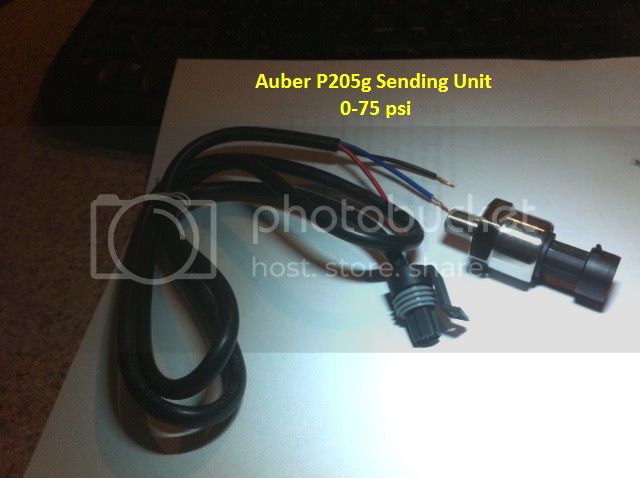
Once my new Sending Unit gets here...I will install it in the side of the adapter (see pic) and then run the wiring through the grommet in the firewall and to my digital gauge.

Relocate8_zpswmn8d60a.jpg


I will be curious to see just what kind of pressure I have and how it corresponds to the OEM gauge.

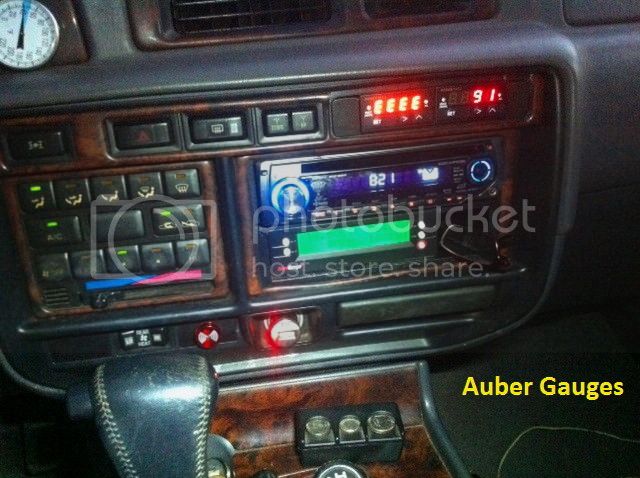
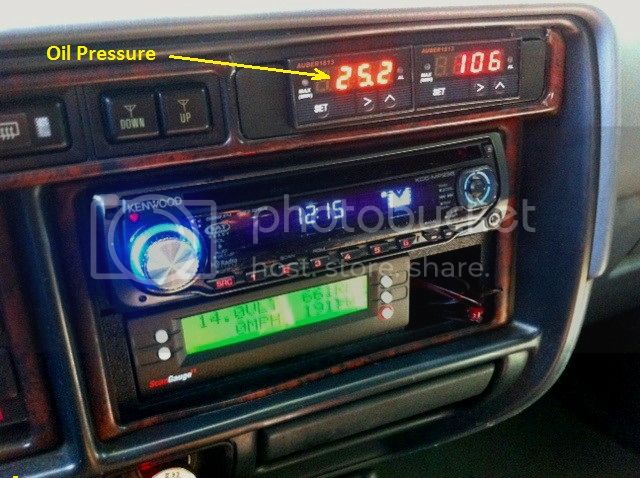
Gauges mounted where cup holder used to be:

AG3_zpsednsrxmm.jpg


Tips...if you decide to relocate the sending unit(s):

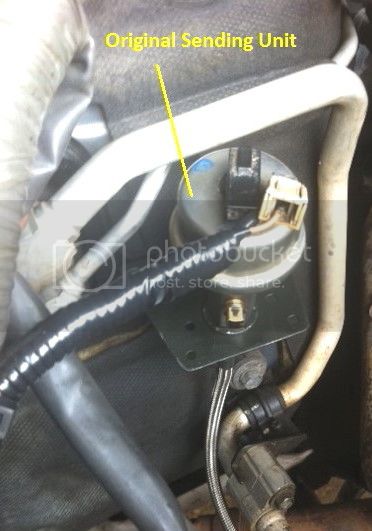
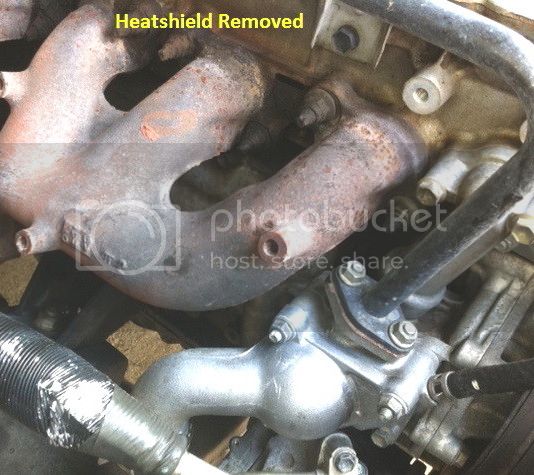
Remove the exhaust manifold shield for easy access to the OEM sending unit.

Relocate3_zpsdtj6phmp.jpg


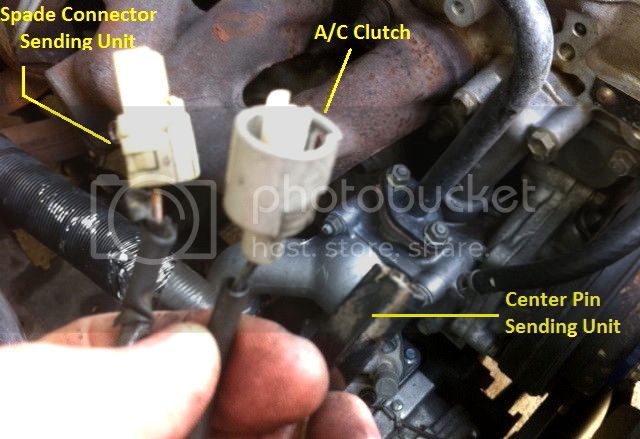
The wires for the sending unit (at least on my 97) are bundled with the one for your A/C compressor clutch. Simply separate them out, run the A/C wire back to your compressor and the other two (ground and center pin wire) to the Sending Unit.

Here are the connectors:
Relocate4_zps6geprfmy.jpg


Will post pics later of the completed Relocation once my sending unit comes in.

Transmission gauge install will be a separate thread later.
 
So....next step was decide just WHERE I needed to mount the adapter that will hold both sending units. I found a spot on the fire wall that would allow me to route the wires from the new sending unit through an existing grommet and to my digital gauge, so the 'spot' was now chosen.

Now to fashion some type of 'mount' to hold the adapter. Got to digging around in my shop and found a 'bracket' that would work for my purpose. Nothing to do to it but drill a hole that will accept the adapter.

Relocate1_zpso2a1g6yl.jpg


Sandwiched the bracket between the adapter and the 4AN flare fitting, done deal.

Relocate2_zpsazb2yjnr.jpg


Next thing to do was to install a fitting where the OEM sending unit used to be...then attach the braided line.

Well........poopy! The fitting I have is 1/8" NPT the thread in the 'Boss' is NOT. I'm guessing its maybe 1/8" BSPT but whatever it is....I was not able to get more than a couple of threads started.

I am about 25 miles from the nearest town...so I'm not driving in to try and find a special fitting. Out comes the 1/8" NPT TAP and we go to work.

Relocate5_zpshbdfzzp7.jpg


I hate tapping aluminum (especially on expensive parts), but I took my time and used plenty of grease on the tap to capture the metal chips. Soon we had success.

Relocate6_zpsvsyf4iu6.jpg


Continued next post:

Awesome!

BTW, BSPT is British Standard Taper Pipe thread (not = NPT) (BSPP is British Standard Parallel Pipe thread)
 
Awesome!

BTW, BSPT is British Standard Taper Pipe thread (not = NPT) (BSPP is British Standard Parallel Pipe thread)

^^^^^^^^ Good info, thanks.

I don't know what the actual thread is on the Land Cruiser, only that it ISN'T 1/8" NPT as I had 'assumed'. My lack of research resulted in me tapping an item I would have preferred not to.

It would be better to run a die (of correct thread) over the fitting and leave the threads on the engine OEM. But I live out on a ranch and sometimes....that's how we roll. ;)
 
I know what you mean. I grew up on a farm in Tennessee and we made do every day.

I'd bet the threads aren't BSPT/BSPP, but JIC/ISO series, just not typical machine size threads. For example, the smog manifold fittings on the FJ40s are M14, which are never used for machine connections; instead, the are almost exclusively used for (straight) hydraulic fittings (which, unlike ours, use a copper sealing washer), and you can't get tap or die for them (I know, I tried, in Germany).
 
I know what you mean. I grew up on a farm in Tennessee and we made do every day.

I'd bet the threads aren't BSPT/BSPP, but JIC/ISO series, just not typical machine size threads. For example, the smog manifold fittings on the FJ40s are M14, which are never used for machine connections; instead, the are almost exclusively used for (straight) hydraulic fittings (which, unlike ours, use a copper sealing washer), and you can't get tap or die for them (I know, I tried, in Germany).

You might well be correct. Usually, you can thread 1/8" NPT or 1/8" BSPT into one another for several turns (the thread count is so close), but I wasn't able to get much more than one good thread started (by hand) so had to stop and tap it to the fitting I had.

I would like to know what the thread actually is. It ISN'T 1/8" NPT and being an Asian built vehicle I should never have entertained the idea it would be. But I did think it might be BSPT, (apparently not that either).

Anyway, it is NPT NOW. :)
 
It's BSPT.

Word of caution on the Auber gauges. I have two sets of their dual gauges in my truck and both failed within a year of installation (issues internal to the gauges - erratic temperature readings rendering them essentially useless).
 
It's BSPT.

Word of caution on the Auber gauges. I have two sets of their dual gauges in my truck and both failed within a year of installation (issues internal to the gauges - erratic temperature readings rendering them essentially useless).

Sorry to hear that.

Time will tell I suppose.

I have the best 'sensors' they offer for each gauge and took the time to make certain I have good circuits (power) to each component. So the rest is up to the Quality Control of Auber products. IF I experience any trouble...I will be certain to report that here.

Thank You for your input.

Flint.
 
Update:

Finally got my sending unit that was 'lost' in the mail.

Relocate9_zpsvrlnpsjl.jpg


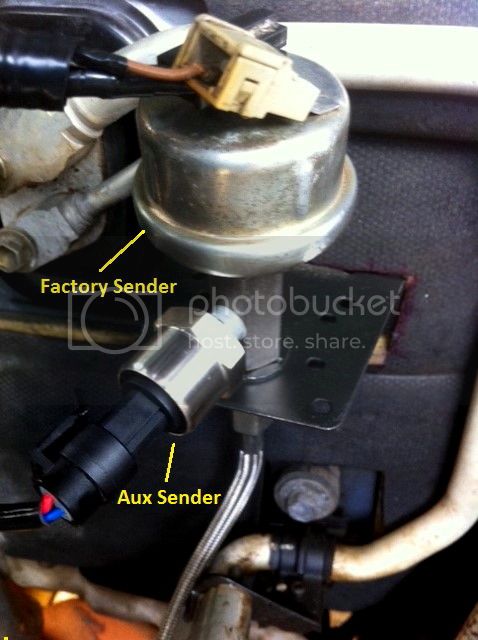
Got it installed on the adapter along with the factory unit (so I would have the factory dash gauge and digital Aux gauge to work with).

You can see why I did not want to hang all of this off the side of the engine.

Relocate10_zpskh5hqyx4.jpg


Got everything all wired up and the gauge's parameters set. Now to start the engine and see what the actual numbers are at cold start and at full operating temperature.

Pressure at cold start (idle), Delo 400 LE 15W40........was 61 psi which slowly receded to about 50 psi over the next few minutes.

PLENTY of pressure there.

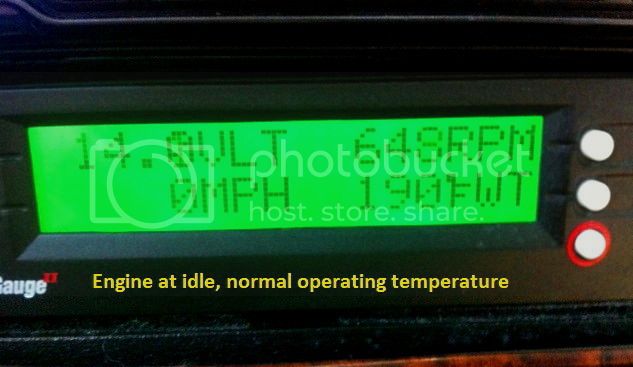
So the next reading I was interested in was the pressure at idle with the engine warmed. I let engine reach full operating temperature:

OP8_zpszyadnavx.jpg


Continued next post:
 
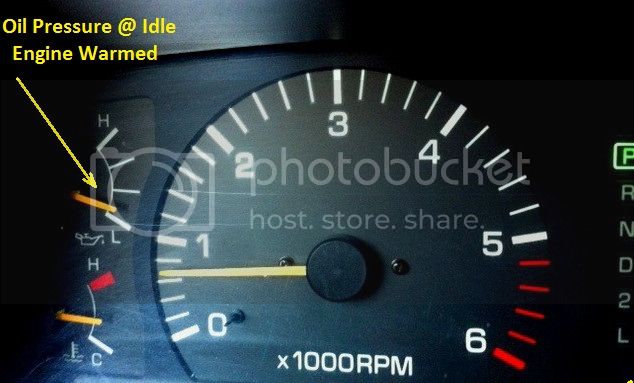
Since so many of us have a factory gauge that has the needle resting just above (or on) the lowest hash line on the gauge, I wanted to know exactly how much pressure I ACTUALLY had. The factory gauge in some instances can be a little concerning.

OP9_zpsfjfznale.jpg


In MY case (yours might vary) I have about 25 psi at idle (engine warm) using the oil I presently use.

OP10_zpsyp1hbzmy.jpg


So...no worries (for me). At 2200 rpm (my normal highway index) oil pressure was right at 60 psi. and the needle on the factory gauge was a bit above the center hash mark. I've never worried for a second about the oil pressures (at speed), but have always wondered what I had at idle since the factory gauge would have you think it was little to nothing.

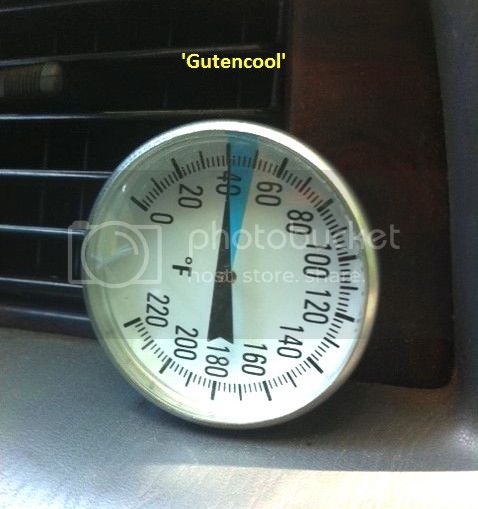
Of course the MOST IMPORTANT reading of all (Texas in the Summertime) is this one:

AC1_zps7v1plh5c.jpg


And that folks...is my report!


Flint.
 
Nice, detailed info flint. I was unaware that adapter kits existed. Your oil pressure readings are identical to the ones I got when
I hooked up my test gauge running the same oil.

I too installed a trans temp gauge a couple years ago and what I found is that the A442f is a cool running trans. 140-150 during all normal driving in summer heat 90-100 deg.
 
Of course the MOST IMPORTANT reading of all (Texas in the Summertime) is this one:

AC1_zps7v1plh5c.jpg


And that folks...is my report!


Flint.

that's cold ..

care to share about the conditions ( outer temp, HW speed ? )

Any mod's to your AC system .?
 
that's cold ..

care to share about the conditions ( outer temp, HW speed ? )

Any mod's to your AC system .?


Ambient about 86° F. (cool here today), engine idling, fan speed on medium, A/C on recirculate.

No real Mods to A/C system, I have a pusher fan mounted in front of the Condenser activated by a midpoint pressure sensor, but it wasn't yet running at the time.

I have a 'modded' blue fan clutch which helps pull air across the condenser. Other than that I just make sure my A/C system is properly sealed, charged and is clean (condenser and evaporator).

I do my own A/C work and do it RIGHT...the first time.
 
Guess the difference might be the temp and humidity .?

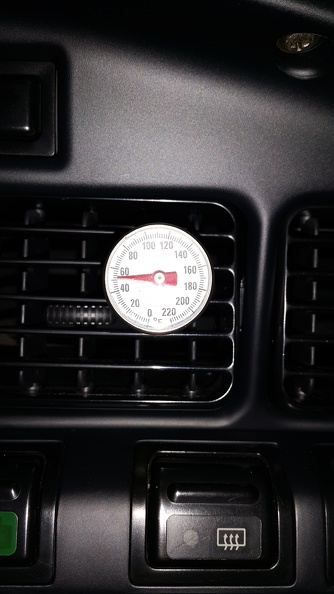
My AC in tip top conditions, 2 pusher fans on front ( Spall 12" and factory ) plus modded fan clutch only put me around 50°F at the vent ( idling non moving cruiser )

20170608153506-905d764f-me.jpg
 
Guess the difference might be the temp and humidity .?

My AC in tip top conditions, 2 pusher fans on front ( Spall 12" and factory ) plus modded fan clutch only put me around 50°F at the vent ( idling non moving cruiser )

20170608153506-905d764f-me.jpg

Temperature is definitely a factor. The humidity probably not so much, it is pretty humid in Deep East Texas.

IMO the 80 series A/C system (if stock factory, in good working condition) IF cooling (vent temps) 30°-35° F. below ambient, is doing pretty good on hot day (90 + degrees). Anything more than that is just 'icing on the cake'.

Most folks would benefit from pulling the evaporator (if very old) completely out of the housing and cleaning it or replacing it. You would be surprised all the junk that collects there. You can NOT adequately clean the evaporator with spray type products.

Of course a thorough cleaning such as that requires evacuating the system and recharging...so it is seldom done and is the source of compromised cooling in many rigs running around today.

I had a compressor failure a couple of years ago so I replaced both the condenser and evaporator at that time. New compressor, flushed the lines, new drier, new TXV, new O-rings nylog'ed connections. So my system is pretty much new.
 
It's BSPT.

Word of caution on the Auber gauges. I have two sets of their dual gauges in my truck and both failed within a year of installation (issues internal to the gauges - erratic temperature readings rendering them essentially useless).

^^^^^

Update: I've had the Auber Gauges installed and running now for a bit over two years, still working perfectly. Vehicle is driven 4-5 times a week. So far...so good.
 
Back
Top Bottom