PS fluid flushed...

This site may earn a commission from merchant affiliate
links, including eBay, Amazon, Skimlinks, and others.

e9999 said:
??
so what do you suggest? never change the fluid? mine was pretty dark. Can't be good to keep it in there forever, I would assume...
or did you mean to not "flush" the fluid as in doing an alternative procedure?

I don't see anything wrong with sucking out the old fluid and adding new, but I also had it (flushed/cleaned with a cleaner) and then new fluid put in. I think this "cleaning/flush" screwed up the seals and caused the problem.
 
Pitbull said:
I don't see anything wrong with sucking out the old fluid and adding new, but I also had it (flushed/cleaned with a cleaner) and then new fluid put in. I think this "cleaning/flush" screwed up the seals and caused the problem.

probably the cleaner that did you in, then.
Problem with sucking the fluid from the reservoir is that you don't get much out this way
 
No offense intended to those who have been on this list longer than me ( I am new), but I have owned 7 of these trucks and never went to such trouble to flush the PS. I have a plastic horse/cattle syringe with a platic tube connected that I use to suck the reservoir down, then I fill it with clean fluid. Repeat that 4 or 5 times in a two week period and your fluid will be nice and clean.
 
Last edited:
RavenTai said:
The easiest way I found:

Supplies:
3/8" barb
6' or longer of 3/8" tubing, clear vinyl makes it easier to see what is going on.
Small hose clamps
Cap for return port, I had a plastic shipping cap from a master cylinder that fit.
2-3 quarts of fluid


1. Set parking brake.
2. Lock cdl. (put in low or set cdl switch with key on)
3. Block rear tires.
4. Lift front axle so the tires clear the ground,
5. Set axle on jack stands being careful they will not interfere with the travel of the tires when turning, removing the front tires may be needed for clearance.
6. Enjoy the cold beverage of your choice.
7. Remove return line from the reservoir, it is the upper and smaller of the two hoses on the reservoir, it is a slip fit with a clamp. It comes in mid height on the side to a L shaped metal tube.
8. Catch the ~1/2 quart of fluid that drains from the return tube in the reservoir, then plug it so the reservoir can hold fluid.
9. Slide the barb into the return line you disconnected, slide the clear tubing on the barb, clamp both joints. Route the tube into a container or drain pan.
10. Fill reservoir with new fluid
11. Turn the key to acc to unlock the steering wheel but do not start engine, also do not leave in the "on" position for any length of time.
12. Slowly turn the steering wheel lock to lock.

As the wheel turns the large piston in the steering box will draw fluid from the reservoir through the pump, in the box, out to the cooler and out the return line to your drain pan, valves in the box keeps the fluid going in the same direction no matter witch way the piston is moving.

Keep the reservoir from emptying if air gets in it breaks the prime take a bit to get going again and will form foam.

13. When clean fluid starts coming out of the line reconnect the return line the reservoir, cycle lock to lock until the level the reservoir does not drop (air spaces replaced with fluid) and all foam settles out and stops circulating, this may take some waiting for the foam the settle between cyclings

14. Start engine cycle lock to lock, check for leaks.

15. Return to normal condition.

I prefer this to doing it with the engine running as with it running things happen very fast and it is almost impossible to keep the pump fed. Although running the pump dry for a short period is not likely to kill it, it is still counter productive IMHO.

HTH

Hey Raven
I followed your instructions and it worked great.
Real easy, started out real dark, and ended up real clear.
Besides it gave me an excuse to do turns in the huge snow covered parking lot at midnight, to work out the air and get it to working temps :D
Thanks for posting this.
Steven
 
snowcruiser said:
About to burp my system after the fluid swap....I assume I will be burping with engine running and the CAP OFF...am I correct?

I don't think it matters whether you burp with a cap on or off, well unless you are bald and self-conscious about it, of course.... :-)
 
you can get all/most of the air out by cycling the wheel lock to lock with the enigie off. if there is foam or bubbles in the resiviour (hate trying to spell that word) let it settle for a few minutes or they will just get reintroduced repeat until it is cleared out
 
OK, just did my flush based on RT's method.
The idea of doing the pumping with the engine off is just brilliant! It's very controllable this way.

I first sucked out all the old fluid with a syringe. Ugly dark affair!
Then disconnected the return. To close the reservoir inlet, I just used a lenght of a couple of inches of 3/8" tubing clamped shut. (One could also just put a length of tube and lift the end above the reservoir).
Then pumped out all the rest, for a total of about 0.6 - 0.7 liters of old fluid, by moving the wheels. Added about a quart of fresh fluid in increments, pumping it out each time. Emptied it out.
Reconnected it all.
Finally, ended up putting 700 ml of fresh ATF (Chevron Dexron III). (Might be a tad too much though, will need to check.)
Then bled the system with engine running. Very easy.
After a short time, level stabilized and no bubble to be seen.
Done.
Very easy job, if you have the right tubing, connectors, and clamps.

No more groaning! (The PS, I mean...)

Glad I did this. Thanks RT and others!


(will suggest this to Junk for FAQ)

How did you bleed the system with the engine running after filling up the reservoir with the dextronIII?
 
How did you bleed the system with the engine running after filling up the reservoir with the dextronIII?

Gently turn the steering wheel from side to side a couple of times. That's what I did. Someone can correct me please if there is better way.
 
Last edited:
You can also "burp" they system by slowly cycling the wheel left to right with the engine off, this is much easier to do while on jack stands.
 
You can also "burp" they system by slowly cycling the wheel left to right with the engine off, this is much easier to do while on jack stands.

Thanks for your instructions. They worked great. We did two 80s this morning. The second one took only 20 minutes, including putting the front axle on jack stands so the front tires were off the ground (easy turning). We flushed the system without ever cranking the engine.

The groan seems to be gone from my 80. :)

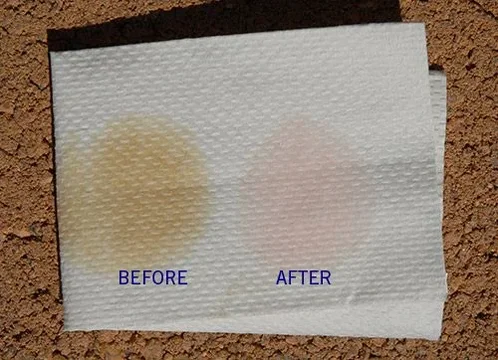
We took a picture of the color of the fluid, before and after.
PS-FLUID-FLUSH.webp

This is an easy job, although it's a bit messy.
PS-FLUID-FLUSH.webp
 
Nice work, with my laptop screen I have to look at your picture at an angle to even see any color in the "after" picture.

really is a smooth way to so it, there is some mess but much better than the shower you can get doing it engine on
 
Last edited:
I took the liberty of combining the steps provided on here by RavenTai, SJCruiser and others into a more concise step-by-step for those who are interested.

Here it is

Power Steering Flush

Supplies:
- 3/8" barb (I got the copper water barb from Home Depot. It has multiple ribs on both sides & fit tightly on the return hose - so no additional clamps required.)
- 6' or longer of 3/8" tubing, clear vinyl makes it easier to see what is going on.
- Small hose clamps
- Cap for return port, I had a plastic shipping cap from a master cylinder that fit. (Cut about 2-3" of the clear tubing, and put PVC in one end to seal it up. I used paper block at the time being)
- 2-3 quarts of ATF fluid

1. Set parking brake.

2. Lock CDL. (put in low or set cdl switch with key on) - Reason for #2 is without locking the CDL on an AWD vehicle when lifting any one tire off the ground the parking pawl is no longer as effective. You are relying on the viscous coupler which may not kick in at low speed such as rolling of the stands. Locking the CDL positively connects the parking pawl to both the front and rear axles instead of the front or rear axle. With the parking brake applied and rear wheels blocked the parking prawl is redundant so I guess it is not that important.

3. Block rear tires.

4. Lift front axle so the tires clear the ground,

5. Set axle on jack stands being careful they will not interfere with the travel of the tires when turning, removing the front tires may be needed for clearance. - #5 I do not trust jacks. Especially on the cruiser where you cannot center the jack, so I use stands after lifting, since you are not under the vehicle for this I guess it is OK to leave it on a jack alone just be careful. If it does fall the tires would still be on so all you have to worry about is the jack catching something (LandToy’s locker actuator)

6. Enjoy the cold beverage of your choice.

7. Remove return line from the reservoir, it is the upper and smaller of the two hoses on the reservoir, it is a slip fit with a clamp. It comes in mid height on the side to a L shaped metal tube. - good idea, It's better to siphon out the old fluid before removing the line

8. Catch the ~1/2 quart of fluid that drains from the return tube in the reservoir, then plug the reservoir can hold fluid.

9. Slide the barb into the return line you disconnected, slide the clear tubing on the barb, clamp both joints. Route the tube into a container or drain pan. - I actually used a short section of 3/8” copper pipe even with clamps it leaked, but more air in that fluid out, a real barb probably would have worked much better. As mentioned, no clamps needed (open port so not much pressure there)

10. Do NOT put new fluid in yet. Turn the steering wheel from lock to lock until no more fluid came out (take about 5 times each side), then refill the reservoir with new fluid.

11. Turn the key to ACC to unlock the steering wheel but do not start engine, also do NOT leave in the "on" position for any length of time.

12. Slowly turn the steering wheel lock to lock. As the wheel turns the large piston in the steering box will draw fluid from the reservoir through the pump, in the box, out to the cooler and out the return line to your drain pan, valves in the box keeps the fluid going in the same direction no matter which way the piston is moving.
(Keep the reservoir from emptying if air gets in it breaks the prime take a bit to get going again and will form foam.)

13. When clean fluid starts coming out of the line reconnect the return line the reservoir, cycle lock to lock until the level the reservoir does not drop (air spaces replaced with fluid) and all foam settles out and stops circulating, this may take some waiting for the foam the settle between cyclings. Tiny bubbles are instroduced as the new fluid being poured in during the process. Turning the steering wheel from lock to lock with the engine running afterward would bleed out these unwanted air.

14. Replace cap/dip stick. Check that level is at COLD. No more.

15. Start engine cycle lock to lock, check for leaks.


"I prefer this to doing it with the engine NOT running as with it running, things happen very fast and it is almost impossible to keep the pump fed. Although running the pump dry for a short period is not likely to kill it, it is still counter productive IMHO."
 
Last edited:
The easiest way I found:

Supplies:
3/8" barb
6' or longer of 3/8" tubing, clear vinyl makes it easier to see what is going on.
Small hose clamps
Cap for return port, I had a plastic shipping cap from a master cylinder that fit.
2-3 quarts of fluid


1. Set parking brake.
2. Lock cdl. (put in low or set cdl switch with key on)
3. Block rear tires.
4. Lift front axle so the tires clear the ground,
5. Set axle on jack stands being careful they will not interfere with the travel of the tires when turning, removing the front tires may be needed for clearance.
6. Enjoy the cold beverage of your choice.
7. Remove return line from the reservoir, it is the upper and smaller of the two hoses on the reservoir, it is a slip fit with a clamp. It comes in mid height on the side to a L shaped metal tube.
8. Catch the ~1/2 quart of fluid that drains from the return tube in the reservoir, then plug it so the reservoir can hold fluid.
9. Slide the barb into the return line you disconnected, slide the clear tubing on the barb, clamp both joints. Route the tube into a container or drain pan.
10. Fill reservoir with new fluid
11. Turn the key to acc to unlock the steering wheel but do not start engine, also do not leave in the "on" position for any length of time.
12. Slowly turn the steering wheel lock to lock.

As the wheel turns the large piston in the steering box will draw fluid from the reservoir through the pump, in the box, out to the cooler and out the return line to your drain pan, valves in the box keeps the fluid going in the same direction no matter witch way the piston is moving.

Keep the reservoir from emptying if air gets in it breaks the prime take a bit to get going again and will form foam.

13. When clean fluid starts coming out of the line reconnect the return line the reservoir, cycle lock to lock until the level the reservoir does not drop (air spaces replaced with fluid) and all foam settles out and stops circulating, this may take some waiting for the foam the settle between cyclings

14. Start engine cycle lock to lock, check for leaks.

15. Return to normal condition.

I prefer this to doing it with the engine running as with it running things happen very fast and it is almost impossible to keep the pump fed. Although running the pump dry for a short period is not likely to kill it, it is still counter productive IMHO.

HTH

da a light weight and after 4 or 5 i start fawking things up.
When inserting the slippers on the rotor shaft does it make a huge difference with lining up the slippers with the correct inscribed marking?
 
Ok ok wait..Downey? The heck? Sorry this has gotten kinda well absolutely.. wrong.

If you change the fluid and it whines or leaks a bit. Add a tablespoon or two of Lucas stop leak. 100% petroleum swells seals and you seen the little gear deal at the parts counter. The one with Lucas is quieter right?? Tried and proven true in many situations with OLD worn out stuff.

If silicone is needed in an additive get a petroleum based additive. Not Downey. lol!
 
Back
Top Bottom