

Navigation
Install the app
How to install the app on iOS
Follow along with the video below to see how to install our site as a web app on your home screen.
Note: This feature may not be available in some browsers.
More options
Style variation
You are using an out of date browser. It may not display this or other websites correctly.
You should upgrade or use an alternative browser.
You should upgrade or use an alternative browser.
Negative battery terminal corrosion
- Thread starter ToyotaTrk
- Start date
This site may earn a commission from merchant affiliate
links, including eBay, Amazon, Skimlinks, and others.


There’s some corrosion on the battery hold-down bracket too. Common after a while. How old is the battery? I usually just wipe off corrosion with a rag damp with WD-40. I don’t usually use a grease on battery terminals, but I know there are products just for that purpose if you feel a need. On most other electrical connectors I use dielectric grease when I put them back together after a modification or repair to prevent corrosion

Battery negative terminal corrosion is a symptom of systemic undercharging. This causes hydrogen gas leakage at that terminal which is what cause the corrosion and is indicative of internal sulfation.
Time to replace the battery.
Do you park the car for extended periods, have short drives, or both?
Time to replace the battery.
Do you park the car for extended periods, have short drives, or both?

There is also a corrosion resistant coating on the terminal and once that starts to give up it’s just a matter of time before it spreads to cover the whole thing.
Fortunately Toyota makes the terminals available separately, and they aren’t super expensive.
Negative: 90982-06059
Positive: 82675-60020
Fortunately Toyota makes the terminals available separately, and they aren’t super expensive.
Negative: 90982-06059
Positive: 82675-60020
- Thread starter
- #5
Got it. Jan 2023…. About 11 k milesThere’s some corrosion on the battery hold-down bracket too. Common after a while. How old is the battery? I usually just wipe off corrosion with a rag damp with WD-40. I don’t usually use a grease on battery terminals, but I know there are products just for that purpose if you feel a need. On most other electrical connectors I use dielectric grease when I put them back together after a modification or repair to prevent corrosion
- Thread starter
- #6
Both…. Time to battery shop. Recommendations from the experts on power & brand to get? Now a 3rd car on ctek trickler a lotBattery negative terminal corrosion is a symptom of systemic undercharging. This causes hydrogen gas leakage at that terminal which is what cause the corrosion and is indicative of internal sulfation.
Time to replace the battery.
Do you park the car for extended periods, have short drives, or both?
Both…. Time to battery shop. Recommendations from the experts on power & brand to get? Now a 3rd car on ctek trickler a lot
They're commodity these days bordering on consumable. Costco, dealership, or your favorite local parts store.
Good call on the Ctek charger.

Both…. Time to battery shop. Recommendations from the experts on power & brand to get? Now a 3rd car on ctek trickler a lot
EDIT: AGM not recommended for this car. So warranty is 3 years for the standard battery.
Both stores are easy to find when traveling.
Costco interstate is 36 month prorated.
Last edited:
Don't get an AGM.
Wrong battery for this vehicles electrical system. It'll sulfate prematurely as it needs a different higher voltage charge profile. For hardcore overland/off-road users, the high under hood heat will also prematurely damage the battery.
Wrong battery for this vehicles electrical system. It'll sulfate prematurely as it needs a different higher voltage charge profile. For hardcore overland/off-road users, the high under hood heat will also prematurely damage the battery.
Oh oh..Don't get an AGM.
Wrong battery for this vehicles electrical system. It'll sulfate prematurely as it needs a different higher voltage charge profile. For hardcore overland/off-road users, the high under hood heat will also prematurely damage the battery.
Previous owner put this in my car about 4 years ago.

ODX-AGM27F
Looking for an ODX-AGM27F ODYSSEY Extreme Series Battery? Buy it online at OdysseyBattery.com - the official manfacturer's website. Whether it's a battery for your car, boat, RV, a powersports battery or a heavy duty / commercial application battery - powerful performance starts here!
www.odysseybattery.com
Also it seems OTT can update the charging to accommodate AGM batteries.

Comprehensive Car Tuning Services Available | Overland Tailor Tuning
Discover a wide range of tuning services for all car models right here. Whether you're looking for performance upgrades or custom modifications, our expert car tuning services cater to all your automotive needs.
 overlandtailor.com
Please inform OTT if your vehicle is equipped with an AGM battery.

If OTT can do this, I’d imagine they’d have a lot of interested people lining up assuming their tune is not problematic.Oh oh..
Previous owner put this in my car about 4 years ago.
ODX-AGM27F
Looking for an ODX-AGM27F ODYSSEY Extreme Series Battery? Buy it online at OdysseyBattery.com - the official manfacturer's website. Whether it's a battery for your car, boat, RV, a powersports battery or a heavy duty / commercial application battery - powerful performance starts here!www.odysseybattery.com
Also it seems OTT can update the charging to accommodate AGM batteries.
AGM batteries require a higher charging voltage than what the stock alternator provides, as it is set for lead-acid batteries and only delivers around 13.8V. We can adjust the charging voltage to accommodate AGM batteries for optimal performance!Comprehensive Car Tuning Services Available | Overland Tailor Tuning
Discover a wide range of tuning services for all car models right here. Whether you're looking for performance upgrades or custom modifications, our expert car tuning services cater to all your automotive needs.
Please inform OTT if your vehicle is equipped with an AGM battery.
it's probably not offered for the LC/LX. it does say select vehicles only.If OTT can do this, I’d imagine they’d have a lot of interested people lining up assuming their tune is not problematic.
anyone have experience with this?

HKB Electronics 7.5A MK3 AGM Fused Mini Blade Battery Voltage Boost Re
Adding a voltage booster is a necessary upgrade for anyone running an AGM battery in their vehicle. Cruiser Patch recommends using this fused diode to increase alternator voltage output at idle and under load from 13.2V-14.2V to 14.4-14.6V. "The PTC device incorporated in the MK3 offers far...
 www.cruiserpatch.com
or this
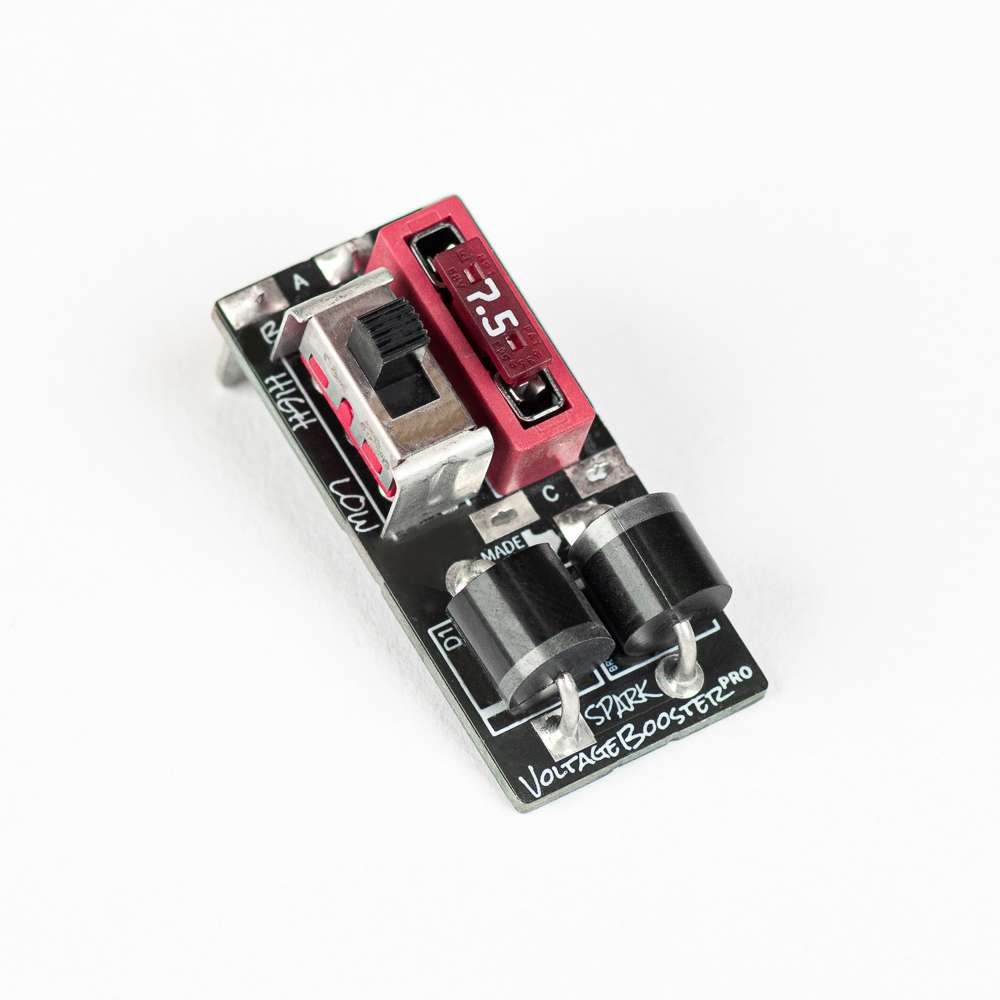
Voltage Booster PRO "Spark" (2nd Gen Tundra, 2nd Gen Tacoma, 2nd Gen Sequoia, Land Cruiser, LX570)
Easily increase your alternator voltage! Upgrade your car's electrical system in seconds! This plug-and-play device easily increases alternator voltage for improved performance. No complicated wiring or tools needed.
 voltageboosterpro.com
Last edited:
is this dude right..?Don't get an AGM.
Wrong battery for this vehicles electrical system. It'll sulfate prematurely as it needs a different higher voltage charge profile. For hardcore overland/off-road users, the high under hood heat will also prematurely damage the battery.
is this dude right..?
I agree with some points and not others. Short answer is that you won't see the value of an AGM fitted to the 200-series in either reliability, robustness, or longevity because of the aforementioned issues. The integration is more complex and intertwined than it may seem.
AGM need a different voltage profile to fully charge and realize capacity and longevity. The systemic undercharging will cause sulfation. Some address this by using float chargers which in my mind is a terrible inconvenience.
A voltage diode while addressing the systemic undercharging, will exacerbate the already challenging issue of high underhood temps beyond what AGMs like, that becomes even more of an issue with adventure use. Temp compensation is matched to standard lead acids and with boosted voltage combined with low speed rock crawling, overlanding, and idling, the temps go beyond the tempurature handling envelope of AGMs. When combined with boosted voltage can create more opportunity to overheat and vent as valve regulated lead acid (VRLA). Standard lead acids handle high temps better, maybe boiling some electrolyte that can be replaced (watered), versus an VRLA that once vented, is well on its way to failure.
Sure, there are high quality metal jacket AGMs like Odysseys but their life will still be compromised (been there done that). They will not fail gracefully on a trip, and may die rather precipitously on a taxing trip.
This has played out many times over on these forums as much as people try.
I do agree with the video that for heavy use, fit a high quality flooded lead acid in a size up (Group 31). More capacity, for any given draw or long duration parking leaves the battery in a higher state of charge where all lead acids are happiest, more heat sinking ability to stay relatively cooler in hot use, etc. Ultimately, batteries are still consumable and I find with the way I use mine (high loads, deep camping draws, lots of hot crawling and idling), no matter how high quality, they'll want to be replaced. Flooded lead acids generally fail slowly with plenty of notice before serious failure. At ~1/2 the cost of AGMs, are what I use.
Peripheral but would be worth noting is that AGMs have lower internal resistance promising faster charging. Maybe if the bulk voltage matched what it wants. The lower resistance can put significantly larger loads on the alternator. When combined with high draw overlanding gear and loads and low speed crawling, can really tax and potentially overheat the alternators as they are susceptible at low RPMs.
For those that really do a lot of low speed crawling and off-roading in hot temperature climates, maybe good to even apply insulation
Last edited:
So my use case is slightly less taxing..I am not doing extreme rock crawling or overlanding often.I agree with some points and not others. Short answer is that you won't see the value of an AGM fitted to the 200-series in either reliability, robustness, or longevity because of the aforementioned issues. The integration is more complex and intertwined than it may seem.
AGM need a different voltage profile to fully charge and realize capacity and longevity. The systemic undercharging will cause sulfation. Some address this by using float chargers which in my mind is a terrible inconvenience.
A voltage diode while addressing the systemic undercharging, will exacerbate the already challenging issue of high underhood temps beyond what AGMs like, that becomes even more of an issue with adventure use. Temp compensation is matched to standard lead acids and with boosted voltage combined with low speed rock crawling, overlanding, and idling, the temps go beyond the tempurature handling envelope of AGMs. When combined with boosted voltage can create more opportunity to overheat and vent as valve regulated lead acid (VRLA). Standard lead acids handle high temps better, maybe boiling some electrolyte that can be replaced (watered), versus an VRLA that once vented, is well on its way to failure.
Sure, there are high quality metal jacket AGMs like Odysseys but their life will still be compromised (been there done that). They will not fail gracefully on a trip, and may die rather precipitously on a taxing trip.
This has played out many times over on these forums as much as people try.
I do agree with the video that for heavy use, fit a high quality flooded lead acid in a size up (Group 31). More capacity, for any given draw or long duration parking leaves the battery in a higher state of charge where all lead acids are happiest, more heat sinking ability to stay relatively cooler in hot use, etc. Ultimately, batteries are still consumable and I find with the way I use mine (high loads, deep camping draws, lots of hot crawling and idling), no matter how high quality, they'll want to be replaced. Flooded lead acids generally fail slowly with plenty of notice before serious failure. At ~1/2 the cost of AGMs, are what I use.
Peripheral but would be worth noting is that AGMs have lower internal resistance promising faster charging. Maybe if the bulk voltage matched what it wants. The lower resistance can put significantly larger loads on the alternator. When combined with high draw overlanding gear and loads and low speed crawling, can really tax and potentially overheat the alternators as they are susceptible at low RPMs.
For those that really do a lot of low speed crawling and off-roading in hot temperature climates, maybe good to even apply insulation
my wife is using the LX now for her errands/short trips. I feel like I am not getting to float stage on the AGM and I don't to shorten the life too much. I think it's 4 years old. I need to look at the actual date and maybe test it to see how it's doing.
I might just put it on a charger once a week to get it to full charge.....i thought maybe the voltage diode might be helpful with the short drives to get the battery replenished quicker.
Of course when it comes to replacement I will just go back to regular flooded batteries but I don't want to prematurely get rid of a good AGM battery right now.

I bought my 09 with an Optima Red in it and added the Voltage Booster Pro in Jan 2025. Works as expected. According to the records I have the battery was last replaced in 2018 so 8 years old. She was in Atlanta before coming to NC around 2023.
The diode will definitely help. If you are able to do a once a week full charge, that is more than most guys who have AGM's do and their battery life has been fine. I might do it once a month although I drive it only on the weekends unless their is a grocery run I need to do mid week. Don't overthink it too much. It will be fine.So my use case is slightly less taxing..I am not doing extreme rock crawling or overlanding often.
my wife is using the LX now for her errands/short trips. I feel like I am not getting to float stage on the AGM and I don't to shorten the life too much. I think it's 4 years old. I need to look at the actual date and maybe test it to see how it's doing.
I might just put it on a charger once a week to get it to full charge.....i thought maybe the voltage diode might be helpful with the short drives to get the battery replenished quicker.
Of course when it comes to replacement I will just go back to regular flooded batteries but I don't want to prematurely get rid of a good AGM battery right now.
On a side note, I need to find out about the OTT tune. I can get mine modified for free.
Ya. undercharging a battery consistently is a sure fire way to shorten the life. it's hard to quantify by exactly how many months or years but the science is there and the counterarguments are mostly anecdotal. "my agm lasted me 10 years and i didn't do this or that..". well we also don't know if you drove an hour each time or took 5 min trips..The diode will definitely help. If you are able to do a once a week full charge, that is more than most guys who have AGM's do and their battery life has been fine. I might do it once a month although I drive it only on the weekends unless their is a grocery run I need to do mid week. Don't overthink it too much. It will be fine.
On a side note, I need to find out about the OTT tune. I can get mine modified for free.
I keep my other cars on a CTEK to keep the battery level at a healthy state.
I asked my tuner about the AGM change and he said it's not available on the LC/LX.
see if OTT can confirm that..

Clean that up with baking soda and water 
As far as a AGM battery I run one in my 80 with the stock charging system had it 7 years runs the winch, on board air, light bar, tablet plus all the regular stuff and will keep my 50 court ARB fridge going in camp for 2.5 days and still start the car.
It was still holding 12.7 volts but replaced it as I don't like surprises when I'm in the middle of nowhere.
The 80 is not a DD so it sits for weeks or months at a time with no tender.
I'm no expert on this stuff just my experience. IMO it works perfect keep things simple ( 1 battery ) and runs everything I need.
As far as a AGM battery I run one in my 80 with the stock charging system had it 7 years runs the winch, on board air, light bar, tablet plus all the regular stuff and will keep my 50 court ARB fridge going in camp for 2.5 days and still start the car.
It was still holding 12.7 volts but replaced it as I don't like surprises when I'm in the middle of nowhere.
The 80 is not a DD so it sits for weeks or months at a time with no tender.
I'm no expert on this stuff just my experience. IMO it works perfect keep things simple ( 1 battery ) and runs everything I need.
ya…I need to charge the battery. These short drives ain’t enough.
battery date is January 2022 (says A-2).
View attachment 4159456
battery date is January 2022 (says A-2).
View attachment 4159456