


This is my first time dealing with any of the electrical and it has me stumped. My current project involves needing to run power to the rear cabin for my arb fridge, a dual usb charging port, and a 12-Volt Overland H2O System. So far I have figured out that I want to use anderson sb50 power ports, a dual Powermax Panel Pole mount housing for two power pole connectors and 10 guage AWG to run the power. Beyond this I don't know what the best thing to do is? Can I do an inline 20 amp fuse, an auto reset circuit breaker, or do i need to route it through a fuse block? Where does all of this stuff get mounted?
Navigation
Install the app
How to install the app on iOS
Follow along with the video below to see how to install our site as a web app on your home screen.
Note: This feature may not be available in some browsers.
More options
Style variation
You are using an out of date browser. It may not display this or other websites correctly.
You should upgrade or use an alternative browser.
You should upgrade or use an alternative browser.
Need extra power sources in rear
- Thread starter Snobud
- Start date
This site may earn a commission from merchant affiliate
links, including eBay, Amazon, Skimlinks, and others.

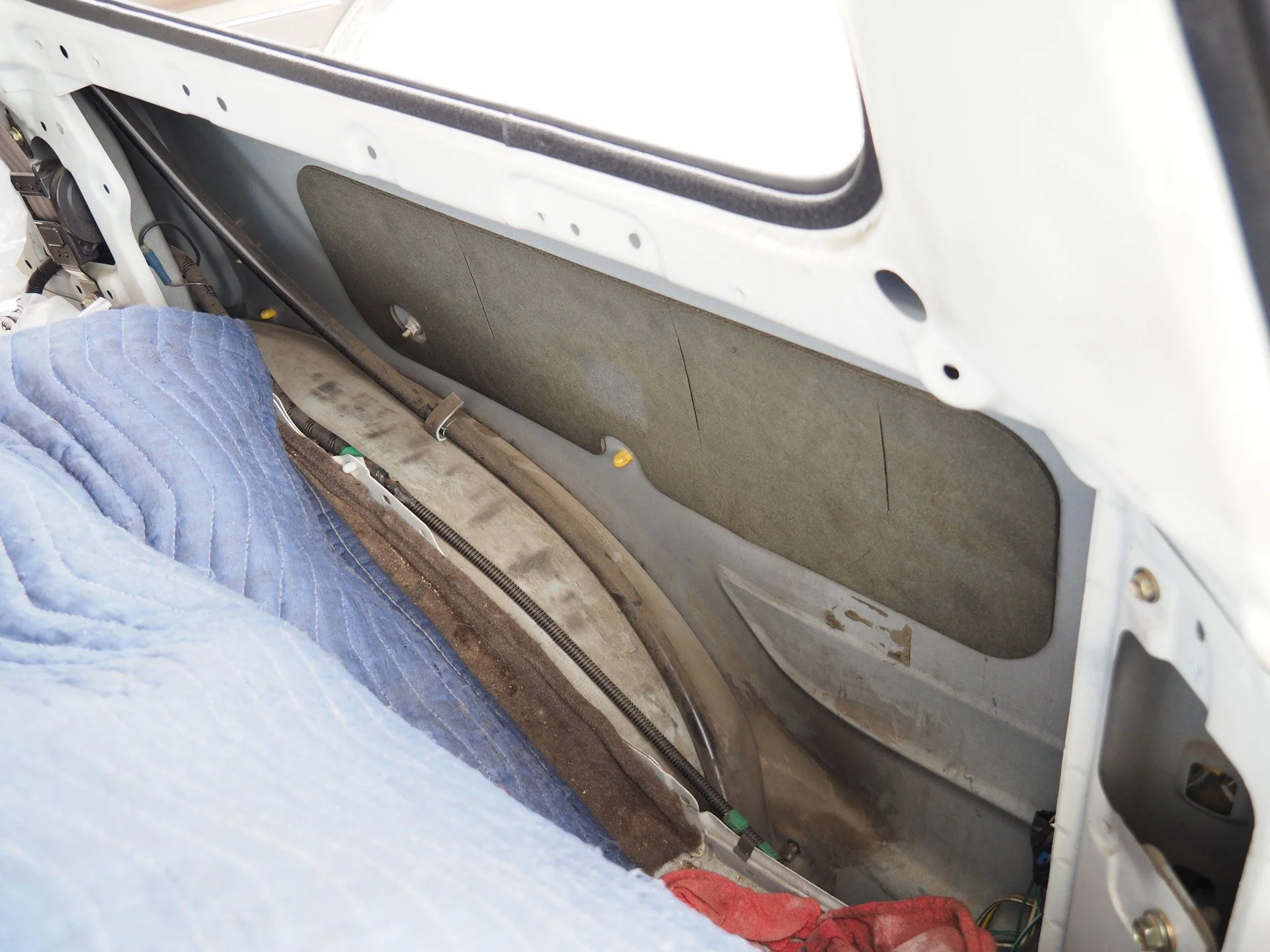
Look at the quartet panel mount thread by @NLXTACY . You will see the way lots of folks are doing it. Ideally, from the front to back you would run a nice thick power wire from the main battery, or second battery if you have one. Then in the back, behind the plastic side interior panels where the 3rd row seats go, you can make a mounting surface for a distribution block or fuse block. To be safe the thick wire needs to have a fuse or circuit breaker in the engine bay by the battery. You dont want a wire that thick to short out and not have protection. Once you have that power wire back there, you can distribute as needed with anderson plugs or usbs and 12v sockets. Just make sure to properly run the main wire to avoid abrasion or cutting on sheetmetal.
- Thread starter
- #3
Look at the quartet panel mount thread by @NLXTACY . You will see the way lots of folks are doing it. Ideally, from the front to back you would run a nice thick power wire from the main battery, or second battery if you have one. Then in the back, behind the plastic side interior panels where the 3rd row seats go, you can make a mounting surface for a distribution block or fuse block. To be safe the thick wire needs to have a fuse or circuit breaker in the engine bay by the battery. You dont want a wire that thick to short out and not have protection. Once you have that power wire back there, you can distribute as needed with anderson plugs or usbs and 12v sockets. Just make sure to properly run the main wire to avoid abrasion or cutting on sheetmetal.
Thanks for the suggestion and I saw the set up but there weren't any wiring diagrams or specifics about how to run the electrical through the fuses. Specifically as i explained before I don't know which fuse source to use? If I understand the process correctly then I would run my 10 guage wire from the main battery to a 20 amp fuse block or circuit breaker in the rear quarter panel and from there I can splice out to my varying power ports? How does the self resetting circuit breaker work? Does it only have one power output line thus only supplying power for one power port? Is this why many people use the fuse blocks so that they can supply numerous power outputs to differing ports?


The wiring isn’t as simple or as plug-n-play as you are hoping. First you need to think about everything you want to install, pie in the sky wants. Then find out what their wattage/amperage draw is. This helps determine both fuse size and wire size. All of those most go through a fuse panel of some sort. The design of fuse vs circuit breaker, for me, comes down to robustness. If it’s something small amperage than it gets a fuse. If it’s a larger draw then it’ll get a circuit breaker (80A+). Does it need a relay? Depends if it’s a large amperage draw that you don’t want to go through a switch. Most will wire a switch to activate a relay which in turn activated a...light? Or whatever.
All of these device draws add up to a magic number. THAT number is what you plan your garden hose size cables around which is of course fused as close to the battery as possible.
There are some caveats but it’s fairly simple once you understand the basics.
All of these device draws add up to a magic number. THAT number is what you plan your garden hose size cables around which is of course fused as close to the battery as possible.
There are some caveats but it’s fairly simple once you understand the basics.

Both Blue Sea and Powerwerx make nice panels that you can mix and match to your needs.
360 Panel - 12V DC Socket and Dual USB Charger - Blue Sea Systems
Four Hole Square Panel Mounting Plate | Powerwerx
I used the Blue Sea panel in the rear quarter of my LX450 in place of the ash tray that was there. It's always hot and works very well for my ARB fridge and allows me to plug in whatever device I want to charge overnight when I'm sleeping in the back. My needs are simpler than yours, but you get the idea.
I ran #12 wire from my under hood fuse panel, down the passenger side interior cable way.

360 Panel - 12V DC Socket and Dual USB Charger - Blue Sea Systems
Four Hole Square Panel Mounting Plate | Powerwerx
I used the Blue Sea panel in the rear quarter of my LX450 in place of the ash tray that was there. It's always hot and works very well for my ARB fridge and allows me to plug in whatever device I want to charge overnight when I'm sleeping in the back. My needs are simpler than yours, but you get the idea.
I ran #12 wire from my under hood fuse panel, down the passenger side interior cable way.
Last edited:

I added some power ports (ie cigarette lighter plugs) in the rear panel for my fridge and other items. After using them, I found that wasn't the ideal mounting. They were nice and neat looking, but when you actually plugged something in, then you had this power plug / cord sticking straight out that not only prevented you from loading stuff up against the side, but now you had to protect it or something shifting would rip it out / damage it. I suggest you think about this when installing your power ports. Think about what it will be like when something is actually plugged in and not when it is empty.

I ran 4awg from the house battery to a 100amp circuit breaker in the engine bay. Then the 4 gauge continues to the passenger rear quater panel and terminates at a fuse block on a mount that I made. Tee'd from the fuse block it goes to another circuit breaker to the Puma compressor. Off the fuse block it goes to the USB, AUX port, voltmeter, 7-pin trailer....


I would consider setting up dual batteries and possibly a higher output alternator.
- Thread starter
- #9
This is such good information
This is very helpful! I looked at the wiring kit on wits End web site to run power to the ARB fridge and it is what prompted me down this rabbit hole. So I called 4x4 parts and they were partly useless and directed me toward a winch wiring kit for $189.00 and $330 installation pricing. So I called cuiser outfitters And they reiterated simply using 10guage wire to the back with an inline 15amp fuse. They want around $60.00 for parts and $150.00 for 1.5 hr install but I have to install the Anderson SB50 power ports myself.
As for the on board air compressor I am still debating mounting it in the engine compartment or the rear quarter panel. I am look No at the ARB, York, and the Puma. I am thinking that for now simply running the 10guage is a great place to start and then as I go I can add onto the system with a circuit breaker and fuse block.
I ran 4awg from the house battery to a 100amp circuit breaker in the engine bay. Then the 4 gauge continues to the passenger rear quater panel and terminates at a fuse block on a mount that I made. Tee'd from the fuse block it goes to another circuit breaker to the Puma compressor. Off the fuse block it goes to the USB, AUX port, voltmeter, 7-pin trailer....
View attachment 1750835
View attachment 1750834
This is very helpful! I looked at the wiring kit on wits End web site to run power to the ARB fridge and it is what prompted me down this rabbit hole. So I called 4x4 parts and they were partly useless and directed me toward a winch wiring kit for $189.00 and $330 installation pricing. So I called cuiser outfitters And they reiterated simply using 10guage wire to the back with an inline 15amp fuse. They want around $60.00 for parts and $150.00 for 1.5 hr install but I have to install the Anderson SB50 power ports myself.
As for the on board air compressor I am still debating mounting it in the engine compartment or the rear quarter panel. I am look No at the ARB, York, and the Puma. I am thinking that for now simply running the 10guage is a great place to start and then as I go I can add onto the system with a circuit breaker and fuse block.
If you plan to add on later, you might want to go thicker than 10 guage, running the wire is the most time consuming part. Terminating the ends and adding fuses or circuit breakers is the easy part. If you did choose to just do the 10 guage wire for now, at least you would have a good idea about what it will involve to get it run nicely. And thus when you upgrade in the future you will have no problem getting it done with thicker cable.
- Thread starter
- #11
If you plan to add on later, you might want to go thicker than 10 guage, running the wire is the most time consuming part. Terminating the ends and adding fuses or circuit breakers is the easy part. If you did choose to just do the 10 guage wire for now, at least you would have a good idea about what it will involve to get it run nicely. And thus when you upgrade in the future you will have no problem getting it done with thicker cable.
Thanks.. my big picture, now that I’m looking at it closer involves an engine compartment mounted air compressor, onboard shower unit, dual battery tray and integrating our zamp solar panel. Currently we have a marine battery that we lug around and hook up to the solar panel but if I can integrate everything into the land cruiser that is my end goal.
I am in the same boat, I have all the parts, but have to install it all. Starting with the second batt and tray is good.
For your rear power run you need to estimate how many total amps you will be powering and the wire run length to determine the appropriate wire size. Below is the link to the BlueSea Circuit Wizard to help in your aid.
Circuit Wizard - Blue Sea Systems
Circuit Wizard - Blue Sea Systems
This is very helpful! I looked at the wiring kit on wits End web site to run power to the ARB fridge and it is what prompted me down this rabbit hole. So I called 4x4 parts and they were partly useless and directed me toward a winch wiring kit for $189.00 and $330 installation pricing. So I called cuiser outfitters And they reiterated simply using 10guage wire to the back with an inline 15amp fuse. They want around $60.00 for parts and $150.00 for 1.5 hr install but I have to install the Anderson SB50 power ports myself.
As for the on board air compressor I am still debating mounting it in the engine compartment or the rear quarter panel. I am look No at the ARB, York, and the Puma. I am thinking that for now simply running the 10guage is a great place to start and then as I go I can add onto the system with a circuit breaker and fuse block.
Give me a call when you have a minute and I can help steer you in a good direction. Or at least give you a lot of information to help form a better game plan. I can't do anything to help you install but there is no fun in letting someone else do this. PLUS if you install yourself you better understand the circuit(s) as a whole and how to troubleshoot.
- Thread starter
- #15
Give me a call when you have a minute and I can help steer you in a good direction. Or at least give you a lot of information to help form a better game plan. I can't do anything to help you install but there is no fun in letting someone else do this. PLUS if you install yourself you better understand the circuit(s) as a whole and how to troubleshoot.
I know I have talked to you before about your fire extinguisher mount, which is also slated for this next batch of upgrades. Do I just fill out the contact info on your website?
PM inboundI know I have talked to you before about your fire extinguisher mount, which is also slated for this next batch of upgrades. Do I just fill out the contact info on your website?

I'm sure you're getting all sorts of answers but I thought I'd toss in my .02. If you run ANY cabling to the back. I'd go with no smaller than 4 AWG to a simple 6-12 circuit fuse block (i.e. Blue Sea). Run a 2nd 4 AWG wire through the deep well in the rear to the frame and attach to a paint free hole on the frame using white lithium grease on that paint free spot and aggressive star washers on either side of the cable end. Make sure the ground is snug.
The larger 4 AWG wire kills many birds. It's just as easy to run as a 10 AWG line but can accommodate more devices such as a compressor, USB/Cig outlets, a small inverter, a fridge, lights, a car audio amplifier, etc.
Make sure to secure the wiring with nylon zip ties or screw down rubber coated Adel clamps. Install plastic sheathing/armor on the cable wherever it may rub on metal too. It's easy to install and you learn a lot more about your truck in the process.
The larger 4 AWG wire kills many birds. It's just as easy to run as a 10 AWG line but can accommodate more devices such as a compressor, USB/Cig outlets, a small inverter, a fridge, lights, a car audio amplifier, etc.
Make sure to secure the wiring with nylon zip ties or screw down rubber coated Adel clamps. Install plastic sheathing/armor on the cable wherever it may rub on metal too. It's easy to install and you learn a lot more about your truck in the process.
- Thread starter
- #18
This has all been very helpful and NLXTACY was amazing and really helped me understand that after calculating your power consumption of all the accessories you plan to power and accounting for the distance of the run (electrical voltage drop increases over greater lengths of wiring) then I can determine my wire gauge size by using a 12 volt wire chart, which is easily found online. He helped me understand the use of a self-resetting circuit breaker and how that is going to mount closest to the battery source and how to take those wires down to your fuse panel. I better understand the need for a fuse panel as it will offer the greatest room for customization and the advantage of using atc fuses that are appropriately allocated to the corresponding accessory.
To recap I currently run a separate mobile marine battery system comparative to the goal zero, except this was put together long before all of this stuff became fashionable. My ARB fridge is powered by the land cruiser when we are driving and then we switch it to the mobile battery when we make camp or park. The problem is that the 12V arb plug has broken and been taped back together numerous times while I waited to address the larger issue of running a power source to the rear quarter panel of the vehicle and switching over to the Anderson SB50 power ports.
Additionally the extra battery is extremely heavy and the long term goal is to free up precious cabin space and mount it in the engine compartment. We currently recharge our second battery with a 120 Watt solar panel, which I eventually want to mount on sliders underneath the k9 roof rack and rooftop tent. As for the onboard air compressor I want to mount this in the front engine compartment if there will be room. So I don’t foresee any real need to run a large amount of power to the rear of the vehicle as I have no desire to install a backup camera, or a winch to the rear of the vehicle.
All of your tips are amazing and essential and here is what I think is happening...
#1. Calculate the power draw
ARB Fridge 15 amps
H20 electrical water system 3 Amps
Dual USB Port charger 4.2 amps
Total: 22.2 amp draw
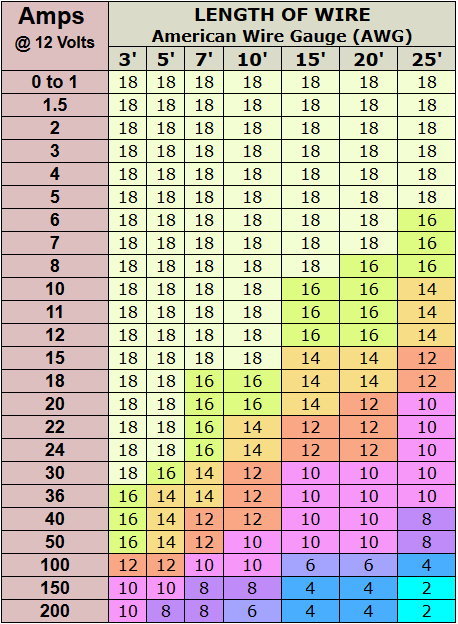
#2. Determine Electrical Wiring Size
It looks like I will be good to install the 10 gauge wire! Or even bump it up a notch and go with the 8 gauge wire.
#3. Gather Supplies
#4.
Find an entry location to run the wires from the engine compartment to the interior cabin and fish through to rear quarter panel PS.
After fitting the wires to the rear quarter panel and setting up the fuse panel can I run these wires to the power ports?
If I'm not mistaken then acording to the above power chart I should be able to run these wires to the anderson power ports and so forth.
Run 18/2 AWG from fuse panel to Anderson power port
Run 18/2 to dual USB port
Run 18/2 second Anderson power port
To recap I currently run a separate mobile marine battery system comparative to the goal zero, except this was put together long before all of this stuff became fashionable. My ARB fridge is powered by the land cruiser when we are driving and then we switch it to the mobile battery when we make camp or park. The problem is that the 12V arb plug has broken and been taped back together numerous times while I waited to address the larger issue of running a power source to the rear quarter panel of the vehicle and switching over to the Anderson SB50 power ports.
Additionally the extra battery is extremely heavy and the long term goal is to free up precious cabin space and mount it in the engine compartment. We currently recharge our second battery with a 120 Watt solar panel, which I eventually want to mount on sliders underneath the k9 roof rack and rooftop tent. As for the onboard air compressor I want to mount this in the front engine compartment if there will be room. So I don’t foresee any real need to run a large amount of power to the rear of the vehicle as I have no desire to install a backup camera, or a winch to the rear of the vehicle.
All of your tips are amazing and essential and here is what I think is happening...
#1. Calculate the power draw
ARB Fridge 15 amps
H20 electrical water system 3 Amps
Dual USB Port charger 4.2 amps
Total: 22.2 amp draw
#2. Determine Electrical Wiring Size
It looks like I will be good to install the 10 gauge wire! Or even bump it up a notch and go with the 8 gauge wire.
#3. Gather Supplies
- Ground Wire
- Gold Ring Crimp Terminals with Color Coded Boots
- Blue Sea Marine Grade Short Stop Circuit Breakers 30amp
- 25ft bonded zip cord 10 gauge electrical wire
- 25ft ½” PET high flame retardant braided sleeve
- Blue Sea 5045 4 Circuit ST Blade Compact Fuse Block with Cover
- ACT Fuses
- Anderson power ports
- Heat shrink wrap
- Crimpers
- Anderson power port mounts
#4.
Find an entry location to run the wires from the engine compartment to the interior cabin and fish through to rear quarter panel PS.
After fitting the wires to the rear quarter panel and setting up the fuse panel can I run these wires to the power ports?
If I'm not mistaken then acording to the above power chart I should be able to run these wires to the anderson power ports and so forth.
Run 18/2 AWG from fuse panel to Anderson power port
Run 18/2 to dual USB port
Run 18/2 second Anderson power port
Last edited:
- Thread starter
- #19
I ran 4awg from the house battery to a 100amp circuit breaker in the engine bay. Then the 4 gauge continues to the passenger rear quater panel and terminates at a fuse block on a mount that I made. Tee'd from the fuse block it goes to another circuit breaker to the Puma compressor. Off the fuse block it goes to the USB, AUX port, voltmeter, 7-pin trailer....
View attachment 1750835
View attachment 1750834
How did you mount your fire extinguisher? Also where did you source your utility door and wood mounting bracket?
How did you mount your fire extinguisher? Also where did you source your utility door and wood mounting bracket?
The fire extinguiser is mounted to the third row seat belt mount in the D pillar. The door is a boat hatch purchased off Amazon; Hatch Door.
I made the mount for the isolation board mounted in the fender wheel, check out my build thread for more info.