In tank fuel pump???

This site may earn a commission from merchant affiliate
links, including eBay, Amazon, Skimlinks, and others.

why are you putting it off? Being it is IN TANK, its so convenient to access and all it should be a snap, right?

Or is it a PITA to drop the tank etc to service in tank anything so thats why you have been putting it off?

Servicing a gas gauge float is no more complicated if the pump is in or out of the tank.
 
And fixing an inline pump is easier than both.

I was just making the comparison that both of those tasks suck and are similar.

Changing a frame mounted inline is gravy.

Changing an intank pump is gravy if it is set up right.

if you set up a frame mounted pump in a bad spot it is just as complicated.


:meh:
 
I don't know what Airtex pump you have Chop Shop, but the requirements for pressure are very different between a 22re and Chicago's Vortec. With the Airtex pumps you would need either an E2000 or E8248 for enough pressure to open the poppit valves.

The problem I have had with the high pressure in-line pumps is their longevity. I probably went through 10 of them in the first five years of using them on my Truggy (the one Chop Shop says is "Butt-Ass Ugly" :lol:) What happens is that at either extremely steep angles or rolls/flops the pump starves for fuel and cavitates. Once it does this the pump's demise is eminent. It might last a few more weeks, but I could always be sure that it would die soon. They can also cavitate on extremely hot days. I used Car Quest E2000 pumps for several years because I could get a lifetime warranty.

The solution I found for the Truggy is to use a huge (>1 quart) fuel filter I got from Sardeson Racing mounted about 12 inches upstream from the pump. This filter is large enough that it acts as a sump and provides fuel to the pump regardless of the angle, and when I flop it keeps fuel flowing to the pump until I shut it down. I have had this filter and an E8248 for over a year now with no problems. My current FJ45 project is getting an in-tank OEM pump.
 
So.... What would be the absolute best way to set up an online pump for long term reliability? I'm not 100% convinced that I'll have the room to run the in tank.
 
I don't know what Airtex pump you have Chop Shop, but the requirements for pressure are very different between a 22re and Chicago's Vortec. With the Airtex pumps you would need either an E2000 or E8248 for enough pressure to open the poppit valves.

The problem I have had with the high pressure in-line pumps is their longevity. I probably went through 10 of them in the first five years of using them on my Truggy (the one Chop Shop says is "Butt-Ass Ugly" :lol:) What happens is that at either extremely steep angles or rolls/flops the pump starves for fuel and cavitates. Once it does this the pump's demise is eminent. It might last a few more weeks, but I could always be sure that it would die soon. They can also cavitate on extremely hot days. I used Car Quest E2000 pumps for several years because I could get a lifetime warranty.

The solution I found for the Truggy is to use a huge (>1 quart) fuel filter I got from Sardeson Racing mounted about 12 inches upstream from the pump. This filter is large enough that it acts as a sump and provides fuel to the pump
regardless of the angle, and when I flop it keeps fuel flowing to the pump until I shut it down. I have had this filter and an E8248 for over a year now with no problems. My current FJ45 project is getting an in-tank OEM pump.

Haha. I posted the last question while you were typing this.
 
I am watching this closely to see what happens. I am going to be doing the same thing real soon. So it seems the E2000 pump comes up alot. Is it best to run a pump like that vs a howell pump that is 150.00 because it seems like you will replace them often no matter what? Is sounds like you better just carry a spare
 
There is no reason to expect to replace a pump a lot.
 
You build as slow as I do... ;)

I'm running an inline pump that's physically lower than the tank with a large bore, low resistance pre-filter above it. I just wanted to make sure that the siphon effect would do the best it could to cancel out the resistance of the short run of hose before the pump. I also have really easy access to the pump, where it sits, but my fuel cell is physically higher up than yours relative to the frame rails.

My cell is just a cube, but I'm running an array of 4 Walbro fuel pickups in the corners, which should do as well as or better than a sump in a low fuel situation.

For reference, I've been wheeling the piss out of the thing since last October and the lowest the tank has gotten has been about 1/4 on the gauge. That was after wheeling two days in a row with a partial gas-can refill at camp. I have no idea what my mileage is, but an average day of crawling 2 to 4 trails seems to take about half a tank. I don't seem to be much at risk of a low fuel situation. All the mental preparation for that seems, so far, to have been for nothing.

As far as fuel level senders, you can get the float ball and lever type or you can get a type that has a slider inside a tube. The slider is less sensitive to tip and slosh and there's less moving parts to screw up.

Between the slider type fuel level sender and the pump outside of the tank, I've got no wires in the fuel.
 
my Truggy (the one Chop Shop says is "Butt-Ass Ugly" :lol:)

I never said your truck was butt asss ugly, I said stock fj45 bedsides are butt asss ugly. Not everything toyota produced was beautiful.

I know the gm efi uses a different pressure pump than my ol 22re. My pump is a E2000.


While one setup may be better than the other the fact of the matter is with the quality of todays auto parts going to the shiitter I dont think any one pump style could be expected to last longer than another.

I might get a good inline pump that lasts 10 years and you might go thru 10 intank pumps before getting a good one.

Personally I think its a roll of the dice. I cant control how good the MGFers make products, but I can control how easily servicable the shiitty parts are to replace when I am mounting things.
 
There is no reason to expect to replace a pump a lot.

I have no reason to think that new parts will last very long at all. Fuel pump quality has gone downhill in recent years.

The old facet pump thats been on my ol M37 for hundreds of years quits once in a while. I good smack on the fenderwell gets her pumping again for another year. They just dont make pumps like those anymore.
 
I firmly believe that the consensus is pretty strong that in-line pumps work well as long as two conditions are met: 1) That the pump does not get starved for fuel (if it does, the life is significantly reduced) and 2) it does not get too hot.

I never said your truck was butt asss ugly, I said stock fj45 bedsides are butt asss ugly

So, stock bedsides are ugly.....I have stock bedsides....ergo.......

I actually like the comment. After all this is an old farm truck that gets wheeled a lot.
 
I firmly believe that the consensus is pretty strong that in-line pumps work well as long as two conditions are met: 1) That the pump does not get starved for fuel (if it does, the life is significantly reduced) and 2) it does not get too hot.


So, stock bedsides are ugly.....I have stock bedsides....ergo.......

I actually like the comment. After all this is an old farm truck that gets wheeled a lot.

The way that I planned for the sump, I honestly feel that fuel starvation wil NOTl be an issue. If I figured it correctly, Ill have about .45 gal of fuel in the sump coming off the back of the tank (max amount)...That is a pretty fair amount of fuel, IMO.
On the other hand...the heat is something I can not control too well. The exhaust will run on the OPPOSITE frame rail, away from the exhaust. However, I have not idea how much heat will be present when crawling slow.
I think, though, Im gonna try the route that manucho went with. Just seems to be all around better to try and mimic the stock fuel system as best I can. The down side in my situation will be I will not have the sump reserve that I would have for the in line as Ill need the pump location to be more forward on the tank. May try to build a "coffee can" (for lack of a better term) for the pump to drop into vs a long, triangular style.

BTW, are the in tank pumps not as fragile when it comes to fuel starvation? Ya just dont hear about that being an issue too often with anything BUT the in line pumps.

Ill give it a go and hope for the best.
 
You build as slow as I do... ;)

I'm running an inline pump that's physically lower than the tank with a large bore, low resistance pre-filter above it. I just wanted to make sure that the siphon effect would do the best it could to cancel out the resistance of the short run of hose before the pump. I also have really easy access to the pump, where it sits, but my fuel cell is physically higher up than yours relative to the frame rails.

My cell is just a cube, but I'm running an array of 4 Walbro fuel pickups in the corners, which should do as well as or better than a sump in a low fuel situation.

For reference, I've been wheeling the piss out of the thing since last October and the lowest the tank has gotten has been about 1/4 on the gauge. That was after wheeling two days in a row with a partial gas-can refill at camp. I have no idea what my mileage is, but an average day of crawling 2 to 4 trails seems to take about half a tank. I don't seem to be much at risk of a low fuel situation. All the mental preparation for that seems, so far, to have been for nothing.

As far as fuel level senders, you can get the float ball and lever type or you can get a type that has a slider inside a tube. The slider is less sensitive to tip and slosh and there's less moving parts to screw up.

Between the slider type fuel level sender and the pump outside of the tank, I've got no wires in the fuel.

This thing is slow as molasses from a build stand point, but Im very tenacious, like YOU!
That is an interesting idea that I didnt think of...Your fuel cell is a top feed? All ive been considering is running the pick up off the bottom in which case, little or NO siphon effect.:hhmm:
 
If you have an external pump and it's at least lower than the surface level of the fuel in the cell, it's going to be getting positive fluid pressure in the feed line as long as the flow rate in the input hose doesn't exceed the flow capacity. It shouldn't, especially if you're plumbing half inch hose into the pump and 3/8" out. The siphon effect just helps me know that whatever sub-atmospheric pressure the hose run is experiencing at the top, it's re-pressurized by the time it gets back down to the pump. It's better with the pump below the tank than if it were sitting right on top.

There's a lot to be said for having all the fittings come out of the top of the tank. Gasoline has a way of wetting it's way around seals and threaded fittings. It's not "leaking" per se, but when you see the dust collect on the surface, it'll be matted into a slightly greasy mud around the fittings and you can tell that the only reason for that is tiny amounts of gasoline on the surface. I've seen that a lot, and not just on my own rig. I'm pretty certain it's not my imagination.

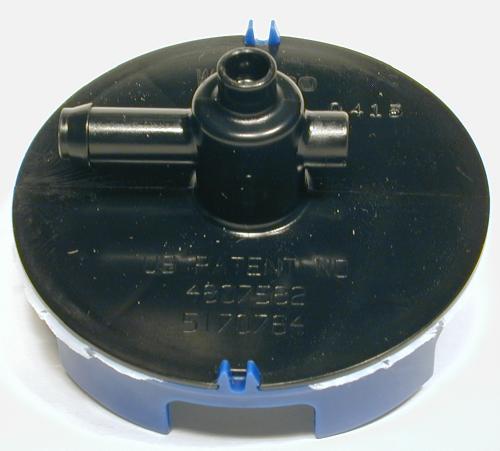
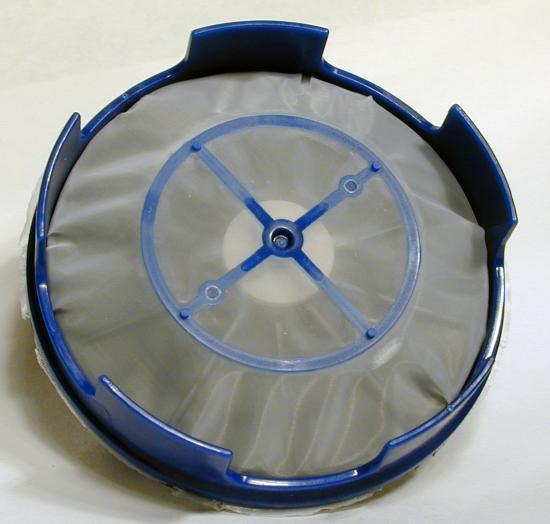
The key thing in my fuel system is the Walbro fuel pickup array. If you've seen these, then I apologize for posting uselessly, but they were new to me when I learned about them and I was pretty impressed by the concept. They're apparently designed for snowmobiles:

MP_single.jpg


MP_bottom.jpg


The idea is that while the thing is below fluid level, fuel flows through the mesh. Once the fuel cell is tilted so that the pickup goes into the air, the wetted mesh acts like an air-proof diaphragm. Behind the mesh there's a spring loaded valve. If the fuel system starts to draw suction, atmospheric pressure closes the valve.

I've got 4 of these plumbed in an H pattern so that one's in each corner. In theory, even at low fuel levels and weird angles, one of these should be below fluid level at all times. If the others are in the air and start to "suck", they'll shut and the fuel will continue to be drawn from the submerged one(s) without bubbles. Thanks to this, I didn't feel it necessary to consider a sump or fuel catching baffle system... but then again, I'm seldom down to a quarter tank.

Also... the mesh on those pickups is 70 micron. It's a bit of a pre-prefilter.

 
If you have an external pump and it's at least lower than the surface level of the fuel in the cell, it's going to be getting positive fluid pressure in the feed line as long as the flow rate in the input hose doesn't exceed the flow capacity. It shouldn't, especially if you're plumbing half inch hose into the pump and 3/8" out. The siphon effect just helps me know that whatever sub-atmospheric pressure the hose run is experiencing at the top, it's re-pressurized by the time it gets back down to the pump. It's better with the pump below the tank than if it were sitting right on top.

There's a lot to be said for having all the fittings come out of the top of the tank. Gasoline has a way of wetting it's way around seals and threaded fittings. It's not "leaking" per se, but when you see the dust collect on the surface, it'll be matted into a slightly greasy mud around the fittings and you can tell that the only reason for that is tiny amounts of gasoline on the surface. I've seen that a lot, and not just on my own rig. I'm pretty certain it's not my imagination.

The key thing in my fuel system is the Walbro fuel pickup array. If you've seen these, then I apologize for posting uselessly, but they were new to me when I learned about them and I was pretty impressed by the concept. They're apparently designed for snowmobiles:

MP_single.jpg


MP_bottom.jpg


The idea is that while the thing is below fluid level, fuel flows through the mesh. Once the fuel cell is tilted so that the pickup goes into the air, the wetted mesh acts like an air-proof diaphragm. Behind the mesh there's a spring loaded valve. If the fuel system starts to draw suction, atmospheric pressure closes the valve.

I've got 4 of these plumbed in an H pattern so that one's in each corner. In theory, even at low fuel levels and weird angles, one of these should be below fluid level at all times. If the others are in the air and start to "suck", they'll shut and the fuel will continue to be drawn from the submerged one(s) without bubbles. Thanks to this, I didn't feel it necessary to consider a sump or fuel catching baffle system... but then again, I'm seldom down to a quarter tank.

Also... the mesh on those pickups is 70 micron. It's a bit of a pre-prefilter.

This tank thing has been a thorn in my side for over a year now since I had to cut the stock pan for the dual cases...Ive been chasing my tail trying to FIND a tank and also picking an appropriate location for it. I started with a fuel cell behind the seat, but absolutely HATED that idea. Didnt want a tank of fuel sloshing around behind me and my wife, I didnt want to have to fill it from INSIDE the rig and mostly, I didnt wanna lose the extremely precious cargo space. In my research over the past year, I have come across those pickups, but that is a much clearer description of them. Those too will cavitate, and be rendered useless from what Ive read? Seems that it is still extremely important to watch the fuel level carefully even with those.
Either way...this is all great information for those doing something similar.
 
If by "cavitate" you mean that they'll suck vacuum bubbles that re-pressurize with fuel vapor, then I don't think it's likely to happen. One of the 4 has a hole in the back so that they can't vacuum lock, anyhow. Either way, I don't imagine that there's a substantial pressure gradient across the membrane. If there was, they'd slam shut.

Whether or not these things truly do what they're supposed to do or not, though, is an open question. They're supposed to prevent air being sucked in. For all I know, I suck bubbles now and then and don't even notice. I suspect the flow-through fuel rail technique is more bubble-forgiving because the bubble can blow right through to the return. If I had an in-tank regulator with an internal bypass, and a bubble got past it, the only way out would be through the injectors.

As far as flow rates, I don't seem to be lacking for horsepower, and judging by my new found skill at snapping alloy axle shafts, I'm also not lacking for torque! My guess is that there is no significant flow resistor anywhere in my circuit. Frankly, if there's more horsepower to tap into ... I'm not ready for it!!
 
Walbro's are designed so no fuel = no pickup...running multiples eliminates fuel issues, assuming you aren't completely out. My cell runs 3 in series, and should draw with as little as 1/2 gallon remaining. I've never had an issue with them, and I'm on my side a lot...haha

I had a fuel delivery issue at BHCC in 2003 with an external fuel pump that was 'supposed' to be for TBI systems (Master E8573, I think...)...swapped to a Master E2000 external with more pressure (IIRC, that's the number) and haven't had an issue since. It's mounted inside the frame rail, close to the tank. Pumps are pushers, not pullers.

I'm notoriously cheap, and it works.

And yes, that same Master E2000 has been installed since late 2003...in the frame rail...
 
If by "cavitate" you mean that they'll suck vacuum bubbles that re-pressurize with fuel vapor, then I don't think it's likely to happen. One of the 4 has a hole in the back so that they can't vacuum lock, anyhow. Either way, I don't imagine that there's a substantial pressure gradient across the membrane. If there was, they'd slam shut.

Whether or not these things truly do what they're supposed to do or not, though, is an open question. They're supposed to prevent air being sucked in. For all I know, I suck bubbles now and then and don't even notice. I suspect the flow-through fuel rail technique is more bubble-forgiving because the bubble can blow right through to the return. If I had an in-tank regulator with an internal bypass, and a bubble got past it, the only way out would be through the injectors.

As far as flow rates, I don't seem to be lacking for horsepower, and judging by my new found skill at snapping alloy axle shafts, I'm also not lacking for torque! My guess is that there is no significant flow resistor anywhere in my circuit. Frankly, if there's more horsepower to tap into ... I'm not ready for it!!

Walbro's are designed so no fuel = no pickup...running multiples eliminates fuel issues, assuming you aren't completely out. My cell runs 3 in series, and should draw with as little as 1/2 gallon remaining. I've never had an issue with them, and I'm on my side a lot...haha

I had a fuel delivery issue at BHCC in 2003 with an external fuel pump that was 'supposed' to be for TBI systems (Master E8573, I think...)...swapped to a Master E2000 external with more pressure (IIRC, that's the number) and haven't had an issue since. It's mounted inside the frame rail, close to the tank. Pumps are pushers, not pullers.

I'm notoriously cheap, and it works.

And yes, that same Master E2000 has been installed since late 2003...in the frame rail...

I guess that what I was referring to was the pick ups CLOSING and once they are closed, they do not re open? That was what I got from it any way.

Im cheap just like you, but willing to dole out some cash if needed.
Seeing as this is sort of a great topic to discuss with LOTS of very valuable information for all, can you guys lend an opinon if I WERE to run the in line, where would the OPTIMAL place be to mount it.
Assume that a SUMP is IN PLACE off the back of the tank between the wrap bar and the drive shaft. I really like the simplicity of the in line. Im just leery about them.

Refer to the pic.
013.webp
 
Back
Top Bottom