Circulating heater install on 1HDT

This site may earn a commission from merchant affiliate
links, including eBay, Amazon, Skimlinks, and others.

I have installed two of these the first one I did the way you are doing and it did not work very well. I ran the discharge along the firewall and connected it to the heater lines coming out of the firewall. This way it takes the coolant from the bottom of the block and circulates it to the top of the block. Works way better and heats up the whole engine.

Cheers

How long do you run the heater for it to heat up the whole engine? and what heater do you have, the 1000Watt? i may do this little mod since mine still didnt warm the engine after 4 hours of running.. and its only like -9 outside!
 
New "y" is in place. Just warming up my fingers now. As soon as I started the engine, the air in the "Y" fitting cleared out. I ran the engine for about 20 minutes to warm it up. No air pockets that I can see.

How does one ensure there is no air in the system? Park it nose way up? The water control valve is higher than the rad cap, even on my slightly sloped driveway. I don't see how the air can escape. Help!
 
I have installed two of these the first one I did the way you are doing and it did not work very well. I ran the discharge along the firewall and connected it to the heater lines coming out of the firewall. This way it takes the coolant from the bottom of the block and circulates it to the top of the block. Works way better and heats up the whole engine.
Got any photos?

How long do you run the heater for it to heat up the whole engine? and what heater do you have, the 1000Watt? i may do this little mod since mine still didnt warm the engine after 4 hours of running.. and its only like -9 outside!
Mine is the 1500W model. Right now the hose coming from the heater to the block is hot, all the lines going to the heater cores are hot, and the hose coming from the engine to the water control valve is hot. There is heat circulating for sure. I'll keep you all posted.
 
It was -32 in Calgary this morning. Took me 20 minutes and a propane heater to get the beast fired up so it looks like I'm installing the circulating heater sooner than I thought.

Do you have pictures of your set-up? What's the size of the ACSD line and what's the size of the Y adapter to fit into the heater hose?

Frozen in CowTown

Kelvin
 
Heater hose is standard 5/8". ACSD house is 10mm.
 
FINDSCUBA, How is the heat in your hoses? For some reason with my setup the hose going into the heater valve is hot but the exposed metal part coming out isnt (right before it goes into the fire wall, kinda like that big U shaped piece. Maybe heat disipation from the exposed metal? Is yours the same way?.... Im wondering if this could be because of some trapped air in the system.
 
FINDSCUBA, How is the heat in your hoses? For some reason with my setup the hose going into the heater valve is hot but the exposed metal part coming out isnt (right before it goes into the fire wall, kinda like that big U shaped piece. Maybe heat disipation from the exposed metal? Is yours the same way?.... Im wondering if this could be because of some trapped air in the system.

Mine is not working correctly. After running the heater for a couple of hours, there is air in the white plastic "Y". The hot coolant from the circulating heater cannot circulate to the heater cores, and doesn't seem to be circulating down into the engine either. The heater is essentially shutting off due to it's internal thermostat.

As soon as I run the engine, the air pocket disappears. Then the circulating heater performs more as expected. But after a while, all the air in the system seems to make it's way to the water control valve area since it's the highest point.

I can't figure out how to burp the air out. The FSM doesn't detail any procedure for removing air from the system. It just says to fill it, warm it up, check for leaks and refill as necessary. I keep opening the rad cap and adding if I can, but the air keeps coming back.

I also see tiny air bubbles percolating up when the circ heater is running. All connections are tight but do you think that it could be sucking air because the ACSD supply hose is too small?

Oh, driving to work this morning at -28°C I had very little heat and my engine was not warming up to normal. I think this is due to the air in the system. Thermostat is 3 years old. I think I need a coolant flush and refill.
 
When I swapped a 7M-GE into my old '85 pickup I had a near-impossible time getting all the air out of the system by the normal method. What ended up working was lifting the front end of the truck way up with a forklift so the rad cap was the highest point in the system. When done with the engine cold (t-stat open) and the rad cap removed, the air did find its way to the top. I let it run till the coolant had warmed up, topped it up with coolant, replaced the rad cap, and lowered the truck. It's probably a good idea to make sure your oil level is nice and full before you do this, depending on where the pickup is in the pan. If nothing else, make sure you have good oil pressure if you lift the front way off the ground like I did.

Silly question, but are you sure your reservoir has enough fluid and that the hose going from the top of the rad into the reservoir isn't split anywhere (particularly the part inside the reservoir but above the fluid level) allowing it to suck air in as the system cools?
 
Silly question, but are you sure your reservoir has enough fluid and that the hose going from the top of the rad into the reservoir isn't split anywhere (particularly the part inside the reservoir but above the fluid level) allowing it to suck air in as the system cools?

Tonight I'll put the front end up onto ramps. That should get the rad cap higher than the water control valve. Then I'll let it cool down (should only take a few minutes at -28°C). I'll also check the reservoir hose for splits (good advice). If I still end up with air, I'll be checking for air leaks. I see no coolant dripping or seeping from anywhere.

I suspect the reservoir hose is fine as I had no problems before I opened up the system to install this heater.
 
I'll be checking for air leaks. I see no coolant dripping or seeping from anywhere.

I suspect the reservoir hose is fine as I had no problems before I opened up the system to install this heater.

Yeah, I was just sort of hoping it would be the reservoir hose because that's the only place I can think of that won't show a visible leak.

Maybe do a pressure test?

But you're probably right that it's just air trapped in the system preventing proper circulation.

I had considered adding one of those garden hose flusher things right beside my water control valve so I'd have a cap at the highest point for bleeding. Haven't had the need yet but if I ever do.....
 
You're not supposed to NEED a bleeder on this system. But with that valve sitting up there so high, I can't imagine why there isn't one.

Took a drive at lunch and it took longer than usual for the engine temp to reach normal. It took forever for it to blow any heat.

I'll report back tomorrow.
 
What did you use for an adapter from the 10mm intake from the ACSD port to the 5/8 input on the heater? I couldn't find any plumbing parts at the Auto store to make this fit.

Kel

I used a 3/8" to 5/8" male to male adapter and added it to the lower ACSD hose. If I knew the threads on the port, I'd replace it with a 5/8" port. I feel the stock ACSD hose is too small to supply my coolant heater.
 
I talked to the local landcruiser guys who have installed these in the past, it seems as though they use the drain from the block like i have and then they mount the heater below the level of the drain. They mount it off the shock tower. They then run the output over the engine to the hose that comes out of the heater core and back into the block. Probably the route i will go if i get some time to remount the system... seems to make sense that the water flows down into the heating system rather then the heating system having to suck up the water which could be the source of the air coming into the system.
 
Do the instructions specifically say to mount it lower than the coolant outlet on the block? i dont have my instructions anymore and cant seem to find them on the net. I think mounting directly to the outlet of the heater core is the best way. currently my system is getting hot but loses all the heat going throuhg the core. Maybe ACcruiser could chime in and let us know where he mounted his heater since it is working so well. Interesting to see what your results are finderscuba
 
I have no experience of fitting these heaters but logic would suggest fitting lower the better unless you can fit a small pump to force the liquid around the system like the webasto thermo top units use?

as far as bleeding system get the bose high up (park it nose up on a bank of earth??) and the air will find its way out.

best of luck!
 
I talked to the local landcruiser guys who have installed these in the past, it seems as though they use the drain from the block like i have and then they mount the heater below the level of the drain. They mount it off the shock tower. They then run the output over the engine to the hose that comes out of the heater core and back into the block. Probably the route i will go if i get some time to remount the system... seems to make sense that the water flows down into the heating system rather then the heating system having to suck up the water which could be the source of the air coming into the system.

The instructions indicate NOT to run the outlet hose over the engine. You'd end up with a high spot. And the instructions say to install the heater as low down as possible. All diagrams show the heater above the inlet, not below. Must have at least 12" of rise. Mine is mounted so that the inlet of the heater is about 2" above the ACSD supply port.

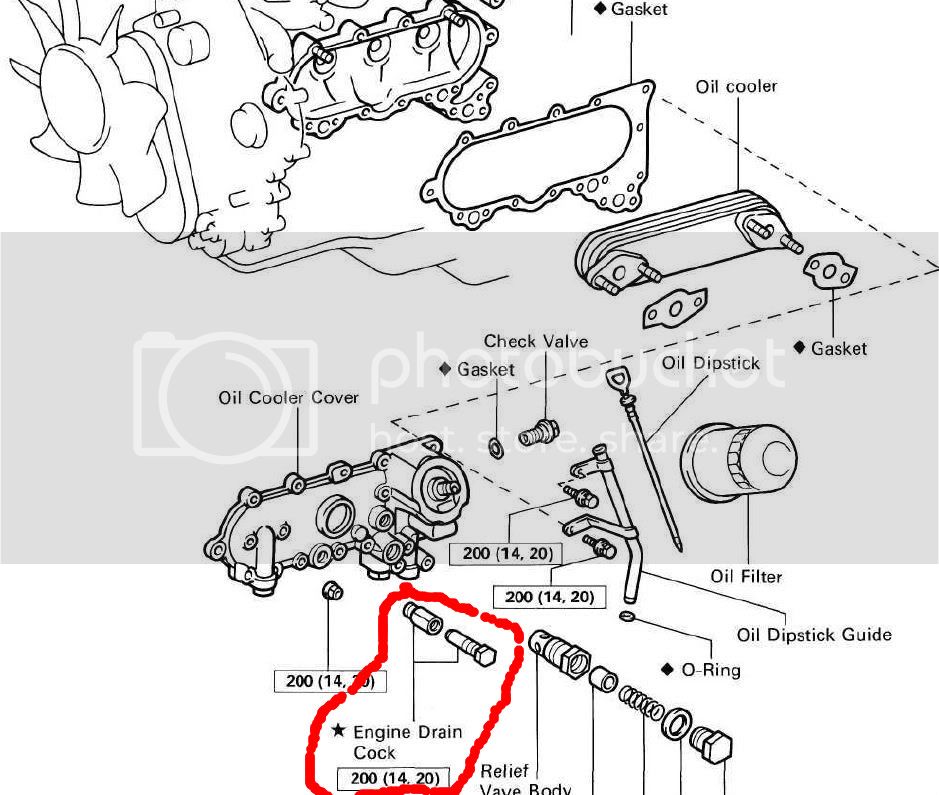
How did you use the drain from the block? Are you talking about the draincock on the oil cooler?

Do the instructions specifically say to mount it lower than the coolant outlet on the block? i dont have my instructions anymore and cant seem to find them on the net. I think mounting directly to the outlet of the heater core is the best way. currently my system is getting hot but loses all the heat going throuhg the core. Maybe ACcruiser could chime in and let us know where he mounted his heater since it is working so well. Interesting to see what your results are finderscuba

With the way I have it plumbed, I would think that closing the water control valve would essentially bypass the heater cores and force the heated coolant to flow down into the block.

I too would like to see photos of how acruiser has his set up.

I have no experience of fitting these heaters but logic would suggest fitting lower the better unless you can fit a small pump to force the liquid around the system like the webasto thermo top units use?

as far as bleeding system get the bose high up (park it nose up on a bank of earth??) and the air will find its way out.

best of luck!

I thought about adding an inline pump. I haven't found one yet.
 
the drain hole i used is in the side of the block right uner all the throttle linkage and tranny trigger and all that fun stuff. Its a small fitting inside a larger one. the smaller one is like a 10mm plug when you take it out coolant will come out and then you can take out the larger fitting. After it is all out you can actually use the supplied nipple that came with the kit. it will just thread right in. Attaching the hose is a pain, i had to heat my hose up with hot water so it was easier to slip on... there isnt much room in there. You might have more since you are running a RHD and a Manual. I have a LHD diesel so the steering rod is in the way. I suppose if you were to run the heater hose across the engine but kept it lower than the one going into the heater core it wouldnt be a hot spot.

I may try this idea with my current mounting location (about 2 inches higher than the drain on the engine) and see if that works any better. If it doesnt then i will mount it lower so the coolant can freely run into the heater. Room of course will be more of an issue for mine than yours since i have all that steering crap in the way on the LHD.
 
the drain hole i used is in the side of the block right uner all the throttle linkage and tranny trigger and all that fun stuff. Its a small fitting inside a larger one. the smaller one is like a 10mm plug when you take it out coolant will come out and then you can take out the larger fitting. After it is all out you can actually use the supplied nipple that came with the kit. it will just thread right in. Attaching the hose is a pain, i had to heat my hose up with hot water so it was easier to slip on... there isnt much room in there. You might have more since you are running a RHD and a Manual. I have a LHD diesel so the steering rod is in the way. I suppose if you were to run the heater hose across the engine but kept it lower than the one going into the heater core it wouldnt be a hot spot.

I may try this idea with my current mounting location (about 2 inches higher than the drain on the engine) and see if that works any better. If it doesnt then i will mount it lower so the coolant can freely run into the heater. Room of course will be more of an issue for mine than yours since i have all that steering crap in the way on the LHD.

I have been trying to find out the thread size for the ACSD ports and the engine drain cock. If the Zerostart fitting will thread right in where the drain cock was, then I'd be a happy camper. That would solve part of my problem - supply hose size. I think the ACSD hoses are too small. Did you have to access the drain from under the truck?

I could then route the outlet along the firewall to the other side of the engine to the heater return line.

I'd love to see photos of your setup where you plumbed into the return line from the heater cores.
 
From the FSM, here's the engine drain cock:
1HDTdrain-1.jpg


I'm going to take your word that the Zerostart drain adapter will thread right in when I remove the drain cock.
 
Back
Top Bottom