While waiting for my new throw out bearing to come in I've been trying to get the brakes bled.Im working on a 72 FJ40....It has a new.master cylinder and so far the front rubber brake hose running from the master hard line has been replaced along with some hard line in the rear.The truck hadsdual wheel cylinders.Ive noticed that the wheel cylinders on the rear wont move unless the brake pedal is pumped 2 to 3 times...Then if you let it sit for a second you have to pump it again.Ive bled the master cylinder as well as replaced all the wheel cylinders.Whenever I opened the bleeder in the rear I get a steady strong stream of fluid.I not losing fluid at the resivor either.Pedal feels has pressure to it at also.Any ideas?Thanks in advance
Navigation
Install the app
How to install the app on iOS
Follow along with the video below to see how to install our site as a web app on your home screen.
Note: This feature may not be available in some browsers.
More options
Style variation
You are using an out of date browser. It may not display this or other websites correctly.
You should upgrade or use an alternative browser.
You should upgrade or use an alternative browser.
Brake issues
- Thread starter 1972FJ1F
- Start date
This site may earn a commission from merchant affiliate
links, including eBay, Amazon, Skimlinks, and others.


Are the rear shoes well adjusted?
- Thread starter
- #3
Yes I've turned the adjusters until the drums locks up then I back off of it 5 turns


5 is a lot. Where’d you get that number?Yes I've turned the adjusters until the drums locks up then I back off of it 5 turns
- Thread starter
- #6
Off a few threads that I've seen online.Im guessing two is better?
Try 2, and see if that helps with soft peddle - system bled thoroughly of course. There may be a bit of drag on a wheel (I like to do this brake stuff with rig on stands or lifted so wheels spin) but the pads will adjust after a few hard brakes to smooth running.
- Thread starter
- #8
Is it normal for it take mutiple pumps until cylinders spread.Ive noticed if Its pumped one the wheel cylinders wont actuate until the second pump
It’s a volume thing, and with 8 cylinders along with the volume of all the brake lines it takes a fair amount of master cylinder plunger volume to expand fluid into everything. And if there’s air in a line or lines or MC, in other words not brake fluid, it takes even more plunger volume, aka more strokes. Bled properly the cylinders (front) should start moving fairly soon in one pedal stroke, and all should be extended by end of one stroke. And the looser the cylinders are set in the neutral position the more volume there is to fill as well. “Normal” is to have full lockup at the end of one full pedal pump. And struggling to get this is why a lot of folks move away from drum brakes, the perception of “normal” being altered by frustration, lol.
- Thread starter
- #10
Okay awesome....so bleeding the fronts is recommended first?
No, start with the furthest from the MC, which is driver’s rear. End with closest, which is driver’s front. MC first before cylinders.
- Thread starter
- #12
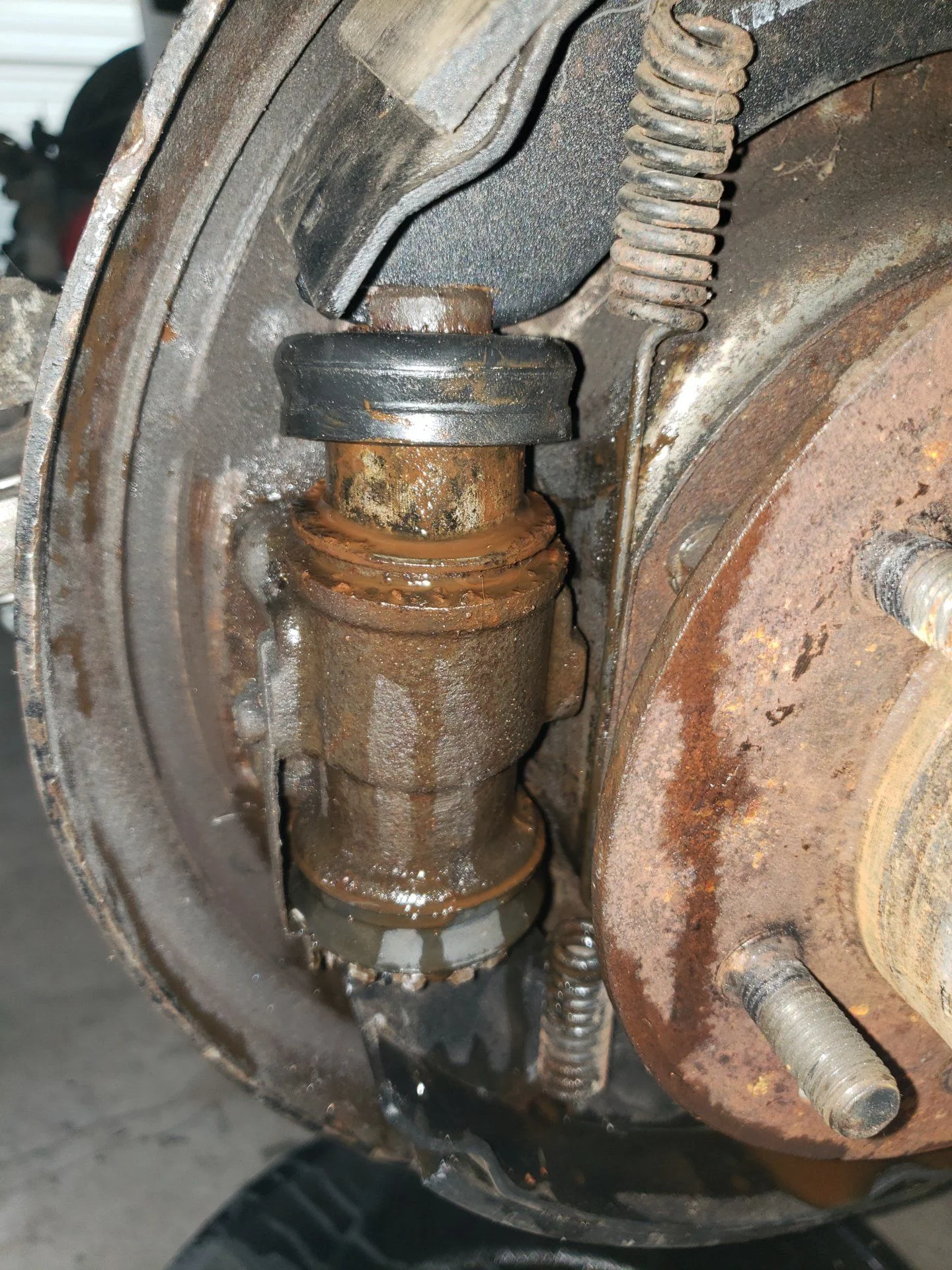
So I'm guessing I'm going to need new front cylinders?I took the front drum off to see if it was actuating correctly and it popped off

 IMHO
Did you pump the brakes without the drum on? This will happen if so cuz the drum is what stops the cylinders from continuing on their outward bound journey, lol. I’ve had a few cylinder seals pop off like that, and most have gone back together and stayed sealed after cleaning up. At a minimum it looks like that one needs honing. But absolutely nothing wrong with replacing them with new ones as well as replacing them with disks. Your pads look pretty thick, so I’m guessing there’s been a brake job done in the not too distant past.

Agree with 5 clicks being too many, 1-2 back from all the way up and adjust from there after driving is what I have read.
Definitely think you need new (or rebuilt) cylinders on those front brakes. As you probably already know, do all 4 of them.
Hard to tell from the picture but if that is the drivers side front that spring should be on the inside of the shoes. It also looks like that shoe is leaning out a little so make sure the shoe retaining pin is in, but it could just be the angle the picture is shot from.
Last edited:

Use this as a reference to know the correct spring orientation, like MadMace had mentioned, as well as correct wheel cylinder placement and direction of adjustment.

to me it sounds like you might have some air in the brake lines and or master cylinder. I suggest getting a clear hose that you could attach to the bleeders and have someone press on the pedal for you. Look at the clear hose line and check to see if you notice any air bubbles in the brake fluid that is being pushed out.
As for the correct order in bleeding the brakes: if your brake mast cylinder is on the front left (drivers side) start by bleeding the rear passenger' side. Do the cylinder on the back of the wheel first then proceed to the one in the front.
Continue to the rear driver. Bleed the back one first then do the front.
Proceed to doing the front passenger side. Rear cylinder first. Front cylinder second.
Lastly do the front driver side. Rear cylinder. Front cylinder.
Everytime you bleed one of the wheels, you could lift that corner of the vehicle, up onto a jack stand, to help move the air bubbles to that side. The air bubbles will travel up to the highest point and allow the system to be beld easier.
Lastly, Since you already have one of the wheel cylinders popes off, I would open it up and look inside. If it is all pitted or rusted, hone it out until it's smooths out. The color of that brake fluid looks very dirty. I suggest buying the rebuild kits. About $5 a kit from rockauto. Way cheaper than buying entire new cylinder. Once you Lear how to do one, rebuilding the rest will take about 10 minutes a piece. Real easy stuff.
@DesertFJ40 why do you start bleeding the lines in the middle rather than then end of the line?
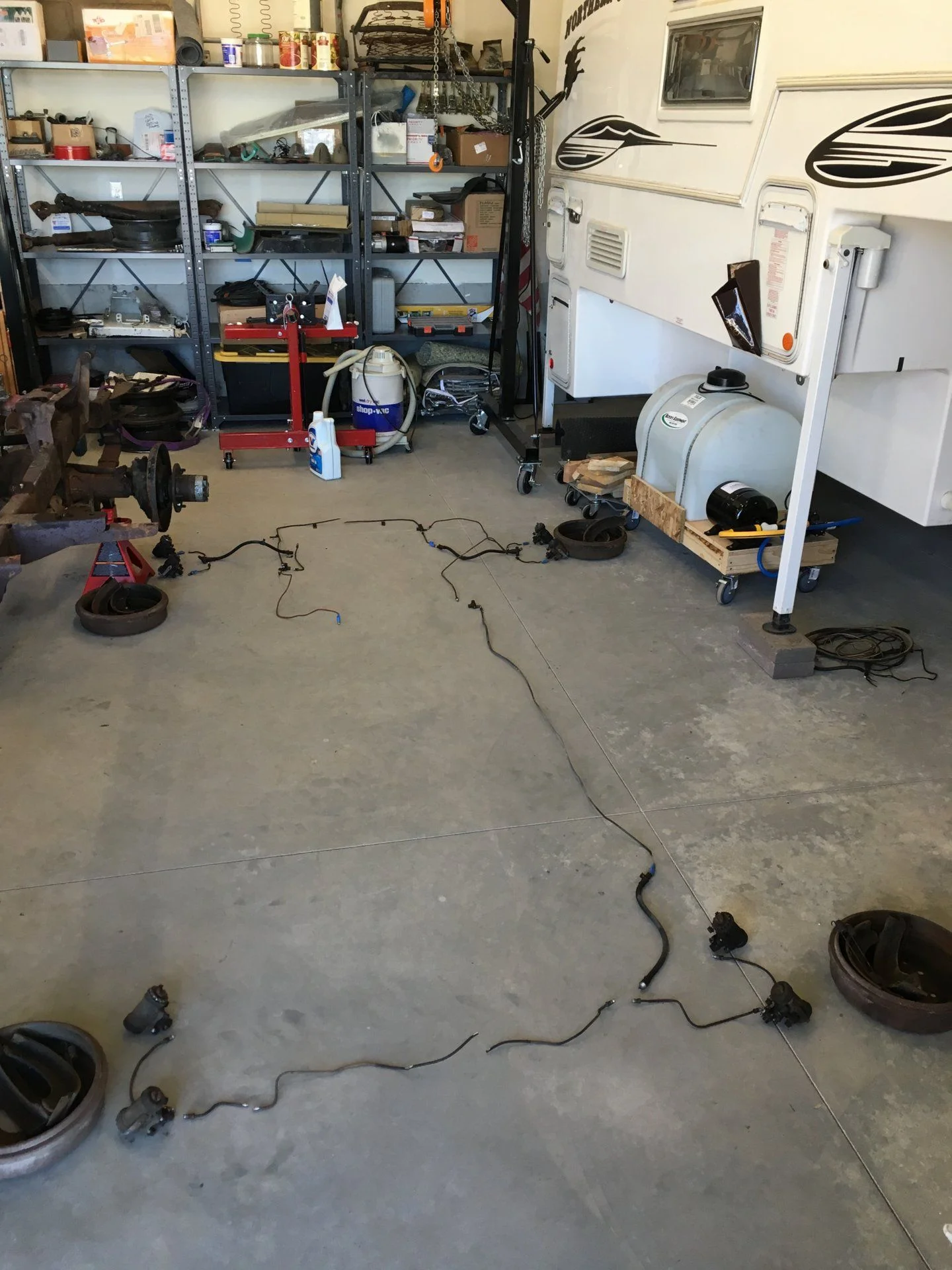
@middlecalf I assumed that the passenger's rear was the furthest from the MC since it's on the opposite corner. I never visually followed the brake lines when I've crawled underneath . So, the driver rear is the furthest, then it jumps over to the rear passenger, continues off to front passenger, then front driver?
@middlecalf I assumed that the passenger's rear was the furthest from the MC since it's on the opposite corner. I never visually followed the brake lines when I've crawled underneath . So, the driver rear is the furthest, then it jumps over to the rear passenger, continues off to front passenger, then front driver?
Yes, that is my understanding from what I’ve read. Start drivers side rear and work your way counter-clockwise (in LHD).
@DesertFJ40 heres a pic of the old lines I removed from my early 45 (same similar orientation as all 40 drum systems) laid out on the shop floor, looking from rear. So driver’s side is to the left. There’s also a couple of schematic diagrams in the Body and Frame manual if you have that.