


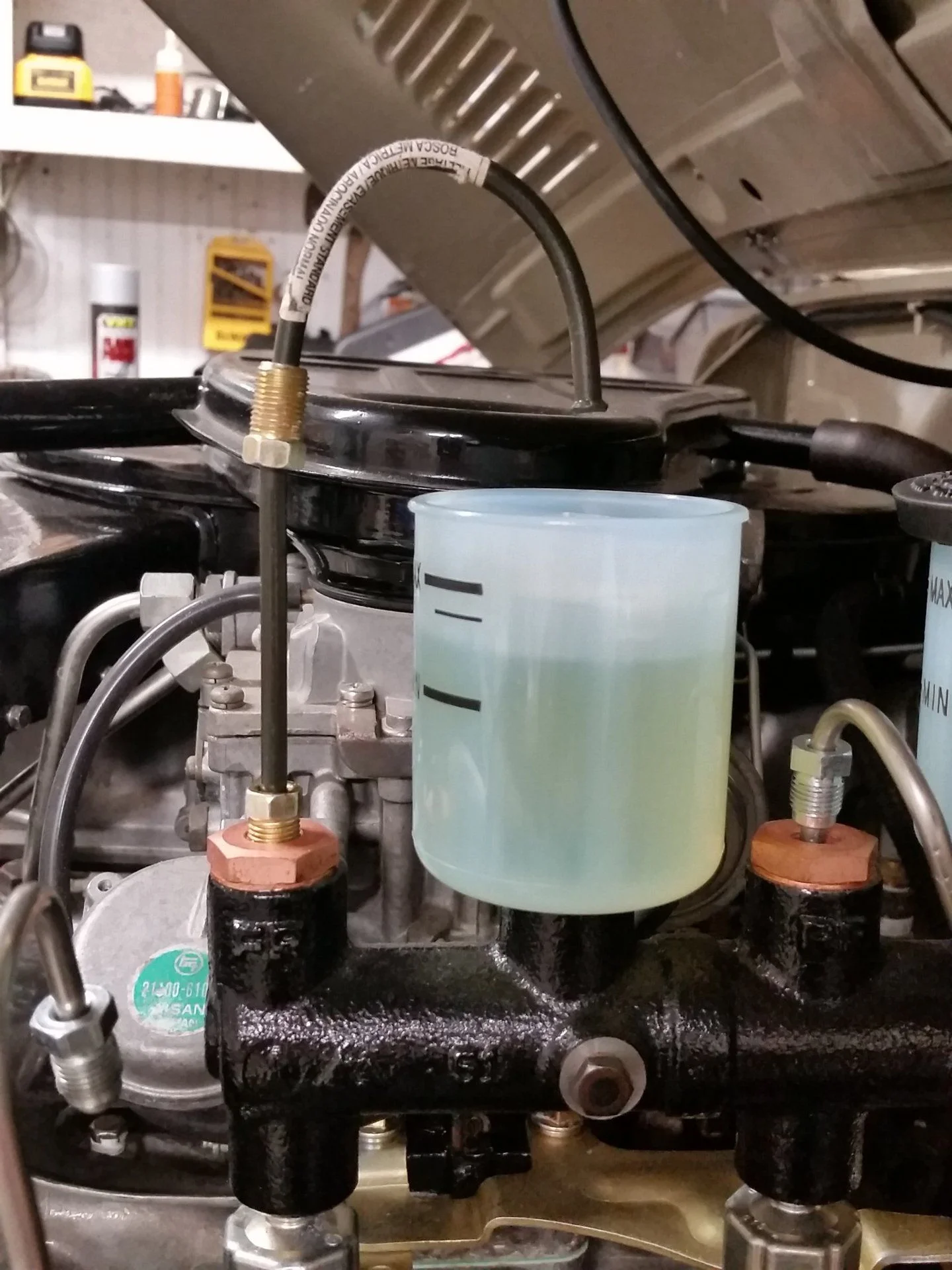
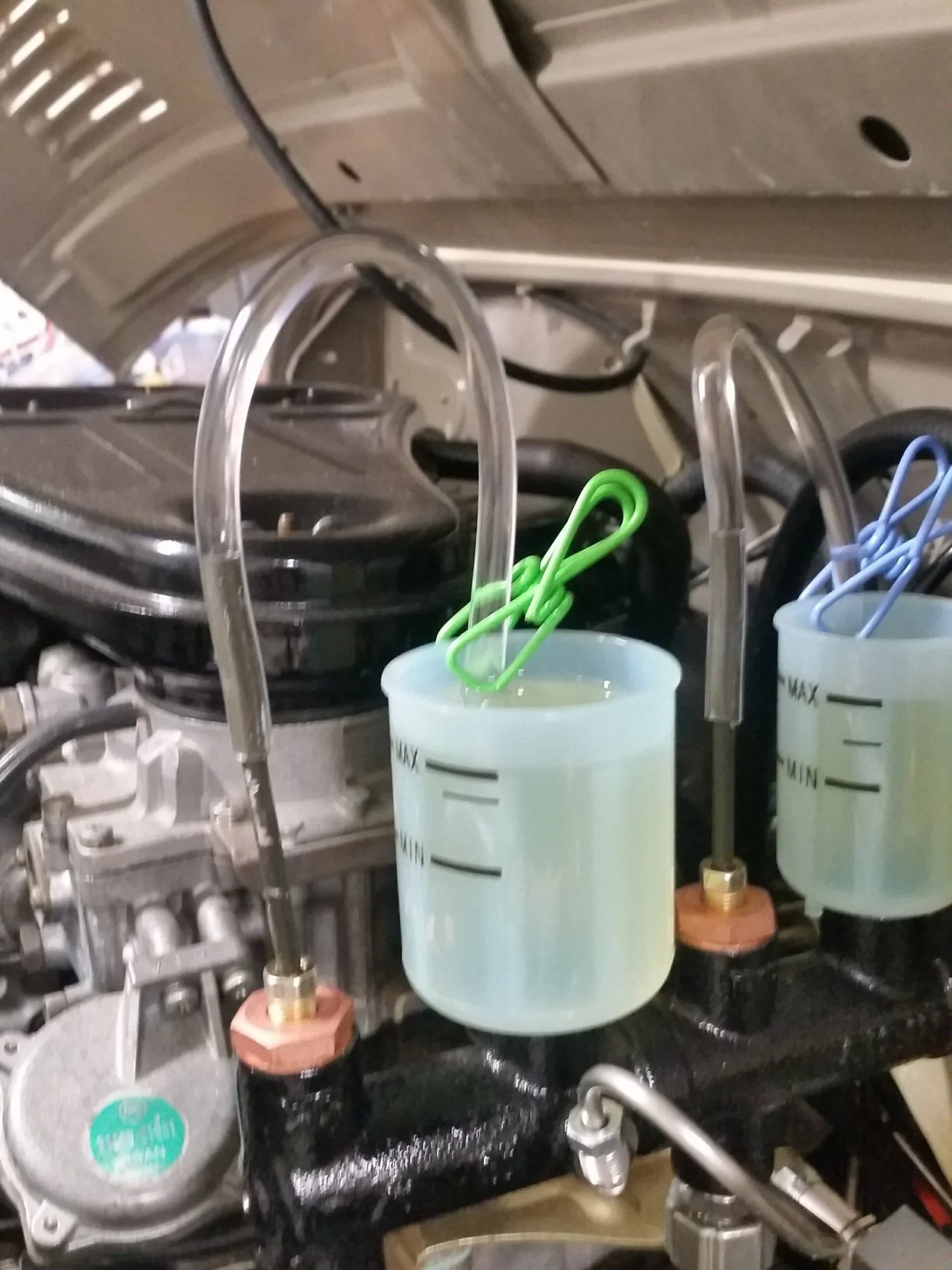
I am trying to "bench bleed" my master cylinder in my 1976 fj40. I disconnected the brake line and filled the reservoir. When I pumped the peddle nothing happened. Then after it set for a few minutes it started leaving the reservoir and coming out of the master cylinder where the brake line connects,but when I pump it nothing happens. Everything is brand new .I am doing this without the motor running? I have adjusted the gap between the shaft coming out of the booster and where it hits the master cylinder . anything thing else I should check. I add a piece of tubing so it would go back to the reservoir if it started working.Thanks for any help,Tommy
Navigation
Install the app
How to install the app on iOS
Follow along with the video below to see how to install our site as a web app on your home screen.
Note: This feature may not be available in some browsers.
More options
Style variation
You are using an out of date browser. It may not display this or other websites correctly.
You should upgrade or use an alternative browser.
You should upgrade or use an alternative browser.
brake bleeding
- Thread starter TOMMY76
- Start date
This site may earn a commission from merchant affiliate
links, including eBay, Amazon, Skimlinks, and others.

- Joined
- Nov 5, 2013
- Threads
- 60
- Messages
- 3,595
Do you have a tube reciculating fluid in the rearmost resovoir?
Here’s a recent thread with similar issue:
Bench bleeding confusion
Here was his fix:
Here’s a recent thread with similar issue:
Bench bleeding confusion
Here was his fix:
Hang on....maybe that’s the issue? I thought that was a bleed valve but now I think I remember reading about rebuild assembly and having to push in the plunger and then insert that side screw?
Edit: Yep. I re-read the rebuild instructions in the FSM, unscrewed that side bolt, pushed the pistons all the way in and tightened it back up. I now have bubble-free fluid flowing through both after just a few strokes.
Thank you @thebigredrocker . That solves one problem. Now I have to figure out why i have a 7/8" bore MC on a 1/76 FJ40 with all drum brakes...it would appear this should've had the 74-75 side inlet style with a 1" bore. Sometimes I wonder if this thing came from overseas where they didn't go to disc. Or maybe someone downgraded. Who the hell knows. Or maybe I'll be making that front disc conversion sooner than later


Both cyldrs should be bled at the same time. Your tubes going into the reservoirs should be below the fluid level, so they don't suck air when the pedal is released. Clear tubing is best so you can see bubbles.
- Thread starter
- #4
thank y'all ,everything looks like its working ok and no bubbles. Now on to the wheels.Everything I read says do the furthest away wheel(driver rear) first but i have a vacuum pump I was going to use that says do the closest wheel first.Any thoughts on this? Thanks,again,Tommy

BeerM3
SILVER Star
Following. It looks like we’re having a parallel problem so here’s hoping you fix my issues long distance . Or vice versa of course.

Everything I read says do the furthest away wheel(driver rear) first but i have a vacuum pump I was going to use that says do the closest wheel first.Any thoughts on this?
The reason you do the farthest away wheel first is to get the air out of the lines most efficiently. If you do the closest wheel first, then you'll be pulling new air in when you get back to the rear(s), and potentially have to re-bleed the fronts. Start with the farthest and end with the closest and you'll only have to do it once.

You don't absolutely have to have a vacuum bleeder, a partner/helper is actually better in my opinion. As others have said, top off your master cylinder and start with the furthest away slaves on the rear drivers side. I'd open them at least 1/2 a turn and then start pumping. Make sure the fluid level in the master cylinder doesn't fall too low. If it does, you'll suck air in and be starting all over. Once you get a steady stream of fluid at the rear drivers tire, close the bleeders and move to the rear passenger side and so forth. At the end, you may really need to jam on the pedal a bunch. I do it very quickly and forcibly and it seems to help push any remaining air right out to the bleeders. Good luck, 8 slaves is a real pain.

I cant recommend a power bleeder enough.
I have the Motive Products 101 Brake System Power Bleeder and I have used it on a variety of toyotas and it has never failed me.
I have the Motive Products 101 Brake System Power Bleeder and I have used it on a variety of toyotas and it has never failed me.
- Thread starter
- #9
finally able to get back to it. I hooked up the vacuum pump to the rear driver wheel,pumped it up to about 20 lbs ,loosened the bleed valve and NOTHING. It takes the vacuum about two minutes to go down, but the reservoir level does not move,repeated several times. Then with vacuum on the open bleeder valve I pumped the brakes, the reservoir level went down but a few minutes later came back up. any thoughts on this. Thanks,Tommy

- Thread starter
- #11
My problem seems to be the fluid is not going to the rear wheels. Could it be the proportioning valve is stopping it?

You can pull the stock proportioning valve and see if it's plugged. If so, clean and reinstall. While you're at it,
check the residual valve under the rear fluid cup, under the large copper nut.
You said all was new, but not if it was OEM (always buy OEM brake parts). If it's OEM, then you'd probably not need to check, but if aftermarket, it couldn't hurt.
I use a Phoenix bleeding system, mostly the collection bottle with tubing that has an inline one-way valve so I can bleed by myself. On the stock front discs, the Toyota bleed screw has such a nice tight fine thread, that I only need to crack it just a wee bit to bleed, with no leak. On the rear discs, GM calipers, I had to install Speed Bleeders to not have the bleed nipples not leak because of their coarse thread.
If you have the DS rear bleeder cracked, and the pumping/vacuum gets no fluid flow - if it is clogged, you would have a really hard pedal pump, maybe no movement at all. If the pedal will pump, you may have a leak somewhere/ or a lot of air.
If you haven't, check all fittings for leaks/tightness. Good luck.

Pull the bleeders totally off and make sure they're not plugged up.
I had the same symptoms, the Motive power bleed thang showed me why I couldn't get fluid from the rear bleeders with the vacuum pump, ....my bleeders/lines were just all plugged up. Pulled off a bleeder and learned the truth. If you can't get a helper, or you want to stay married (spousal brake bleeding not recommended), the Motive Power bleeder is the way to go.
I had the same symptoms, the Motive power bleed thang showed me why I couldn't get fluid from the rear bleeders with the vacuum pump, ....my bleeders/lines were just all plugged up. Pulled off a bleeder and learned the truth. If you can't get a helper, or you want to stay married (spousal brake bleeding not recommended), the Motive Power bleeder is the way to go.
Last edited:


You don't absolutely have to have a vacuum bleeder, a partner/helper is actually better in my opinion. As others have said, top off your master cylinder and start with the furthest away slaves on the rear drivers side. I'd open them at least 1/2 a turn and then start pumping. Make sure the fluid level in the master cylinder doesn't fall too low. If it does, you'll suck air in and be starting all over. Once you get a steady stream of fluid at the rear drivers tire, close the bleeders and move to the rear passenger side and so forth. At the end, you may really need to jam on the pedal a bunch. I do it very quickly and forcibly and it seems to help push any remaining air right out to the bleeders. Good luck, 8 slaves is a real pain.
You answered my question. I logged on to see if anyone else noted what I did today as I was finishing up the rear axle (knuckle rebuild, wheel bearings, steering, brakes in the front done) with new bearings, seals, cylinders and shoes. I was, for no particular reason, working the left rear and wanted to just flush the line in case there was any debris in the line before connecting to the cylinder. Of course nothing came out. Doh, the right side isn't connected. So when I went to that side I, of course, see fluid had dripped onto the cardboard below, it is flushed. Connect it and now I can do the same to the left rear. That is when it dawned on me that the "conventional" RR, LR, RF and LF didn't seem to apply here. If the left rear requires fluid to come from the right rear, the left rear is the farthest from the MC.