


Quick question, is it ok to reduce the flow of the automatic transmission fluid flow in and out of the atm cooler by a small amount? I’m installing a aftermarket radiator and the atm line connections, hose fittings, are a smaller size. The last thing I want to do is overheat the transmission. Thanks for your advice.
Navigation
Install the app
How to install the app on iOS
Follow along with the video below to see how to install our site as a web app on your home screen.
Note: This feature may not be available in some browsers.
More options
Style variation
You are using an out of date browser. It may not display this or other websites correctly.
You should upgrade or use an alternative browser.
You should upgrade or use an alternative browser.
ATM Flow Restriction
- Thread starter ihntak
- Start date
This site may earn a commission from merchant affiliate
links, including eBay, Amazon, Skimlinks, and others.


- Thread starter
- #3
No picks but the Rad is made by a company called WORK. If I go with this setup I will be downsizing from 5/16 to 3/16’s.@ihntak : what are the ID measurements of the hoses/fittings compared to the original?
Can you post up the brand/parts with photos?
Can you tell us more about your project, what model/year/engine, why are you going with a ?non-stock size/type radiator and fittings?
Is this what you're looking to install??
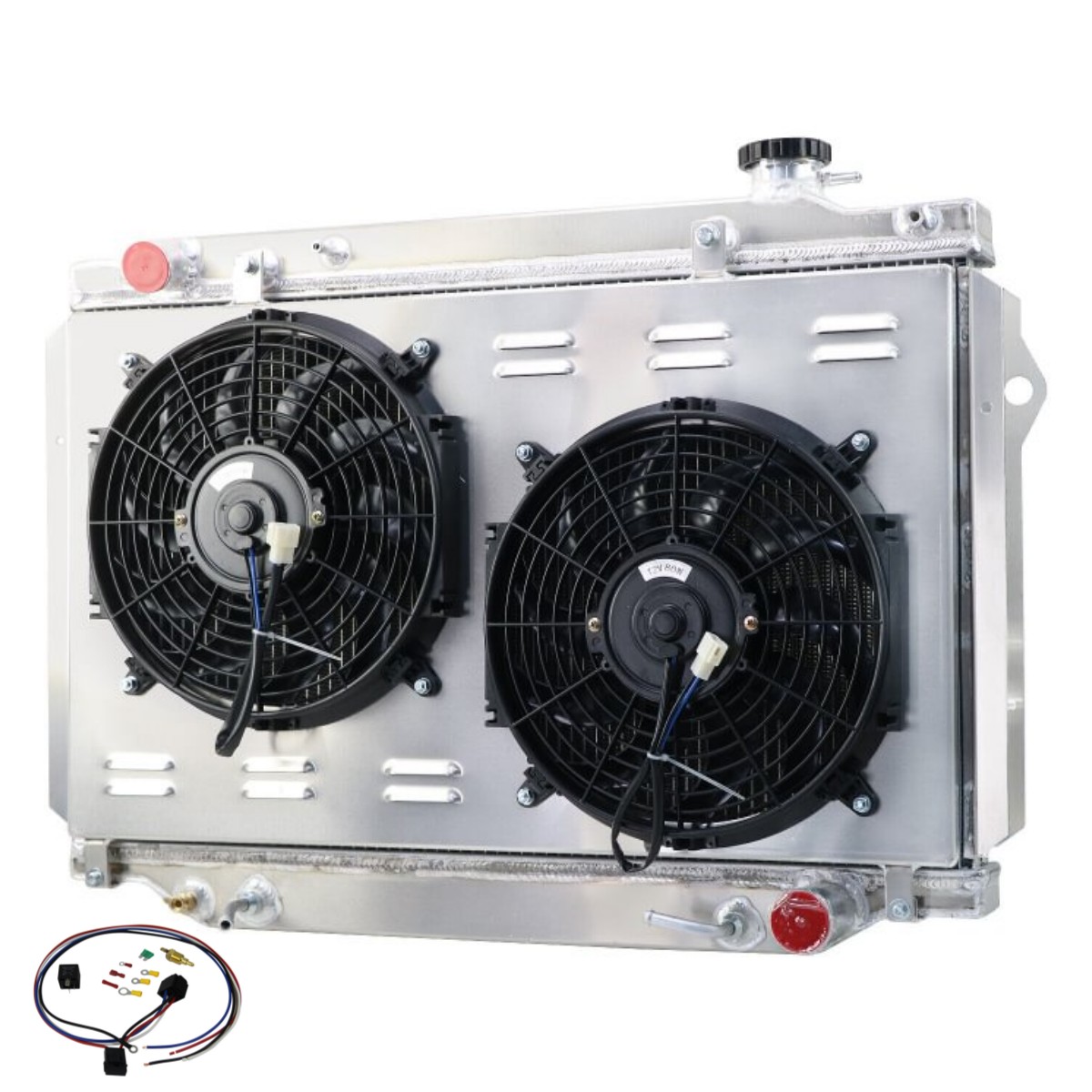
 www.alloyworksplus.com
Is this what you're looking to install??
Alloyworks 3 Row Radiator Shroud Fan For 1993-97 Toyota Landcruiser 80 Series/Lexus LX450
Alloyworks is a leading brand of car radiators/heat exchangers and cooling system components. Multiple Payment Options. Sign Up Updates.Free Shipping in US, One-Year Warranty and 30-Days Free Return.Alloyworks provide high-quality products with the best rate of customer satisfaction. Alloyworks...
www.alloyworksplus.com
Last edited:
I can't say whether it's too much, but that's a significant change!No picks but the Rad is made by a company called WORK. If I go with this setup I will be downsizing from 5/16 to 3/16’s.
Not a hydraulics/flow expert but playing with a couple of flow calculators using some guess-timates on length, type of hose/pipe material, etc
the change in flow appears to be significant.
The original ATM coolant lines have an ID (bore) of 10mm (25/64), 3/16 is close to 5mm or half the original bore diameter.

 www.copely.com
the change in flow appears to be significant.
The original ATM coolant lines have an ID (bore) of 10mm (25/64), 3/16 is close to 5mm or half the original bore diameter.
Flow Rate Calculator - Pressure and Diameter | Copely
Our Flow Rate Calculator will calculate the average flow rate of fluids based on the bore diameter, pressure and length of the hose.
www.copely.com
Last edited:


The original ATM coolant lines have an ID (bore) of 10mm (25/64), 3/16 is close to 5mm or half the original bore diameter.
If the proposed new fittings are half the original diameter that would mean 1/4 of the cross sectional area. The flow rate would be massively reduced and as mentioned the pressure would increase.
I don’t think this is a good idea.

Is the pump in an ATM fixed displacement? If the transmission uses a gear pump then the only issue I would see is a greater power loss in the ATM to achieve the same flow-rate(flow rate will stay the same, if it's a fixed displacement pump). So you are decreasing the efficiency of the pump, consuming more hp. I doubt you could tell a difference.

I would believe that a transmission that came out in 1995 would be a fixed displacement. In addition to the flow restriction and pressure increase, I’d be worried about additional heat in the cooling lines that isn’t being cooled due to the restriction. May be minimal under normal load, but while driving on the highway under load and high RPM’s may be a big deal to the fluid temp. Also the lines to the cooler are fairly low pressure, not to mention most are running a small spring clamp. I’d hate to see someone blow a line off due to a line not making a good seal on a smaller diameter tube with elevated pressures. That can ruin a trans pretty quickly.Is the pump in an ATM fixed displacement? If the transmission uses a gear pump then the only issue I would see is a greater power loss in the ATM to achieve the same flow-rate(flow rate will stay the same, if it's a fixed displacement pump). So you are decreasing the efficiency of the pump, consuming more hp. I doubt you could tell a difference.
- Thread starter
- #11
Really appreciate the input from all of you. Obviously I’m new to the forum and still learning how to navigate it. With that, I believe my next course of action is to see if I can find someone to replace the hose connections on the radiator. Shouldn’t be to hard to find but may be spendy. Wish they would have sent the correct one in the first place.

Wouldn't it make more sense to install the correct radiator for the application as opposed to "making it fit"?Really appreciate the input from all of you. Obviously I’m new to the forum and still learning how to navigate it. With that, I believe my next course of action is to see if I can find someone to replace the hose connections on the radiator. Shouldn’t be to hard to find but may be spendy. Wish they would have sent the correct one in the first place.
You didn't give any vehicle details, but most OEM radiators are still available. Why play games with a crucial item?