

Absorbed Glass Mat Welding

This site may earn a commission from merchant affiliate
links, including eBay, Amazon, Skimlinks, and others.

Joined
Feb 5, 2018
Threads
74
Messages
2,424
Location
Santa Fe, New Mexico
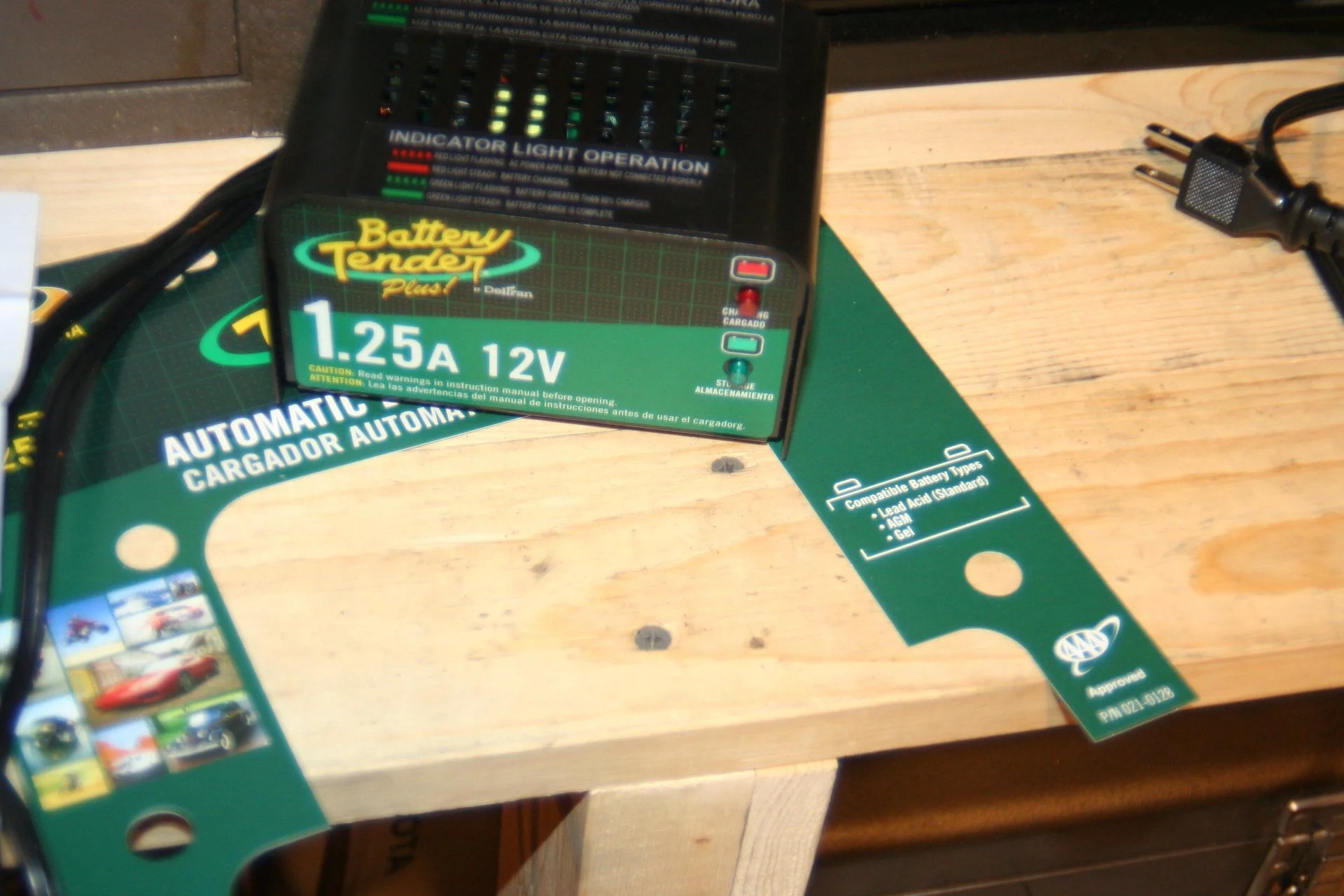
I'm looking into getting a Ready Welder II for the 40, and other projects. Read about it first on Pirate 4x4. It, supposedly, welds with batteries in a series, at 24V DC, up to 1/2-inch steel. It is basically a stand-alone flux core wire feed, Metal Inert Gas, or shielded metal arc welder that can be part of a trail tool kit - a 100% duty-cycle portable welder. I'd also like to do some other projects with it or something akin to the Ready Welder. Basically, if you YouTube welding with car batteries, you will find someone with a pair of jumper cables risking their personal safety by showering sparks in the vicinity of lead-acid batteries (hydrogen gas). So the folks at Ready Welder suggest using AGM or Gel batteries. I thought I would get a slow charger for welding, and topping off the batter after running the 40 with the key in the ACC position.
IMG_7826.JPG


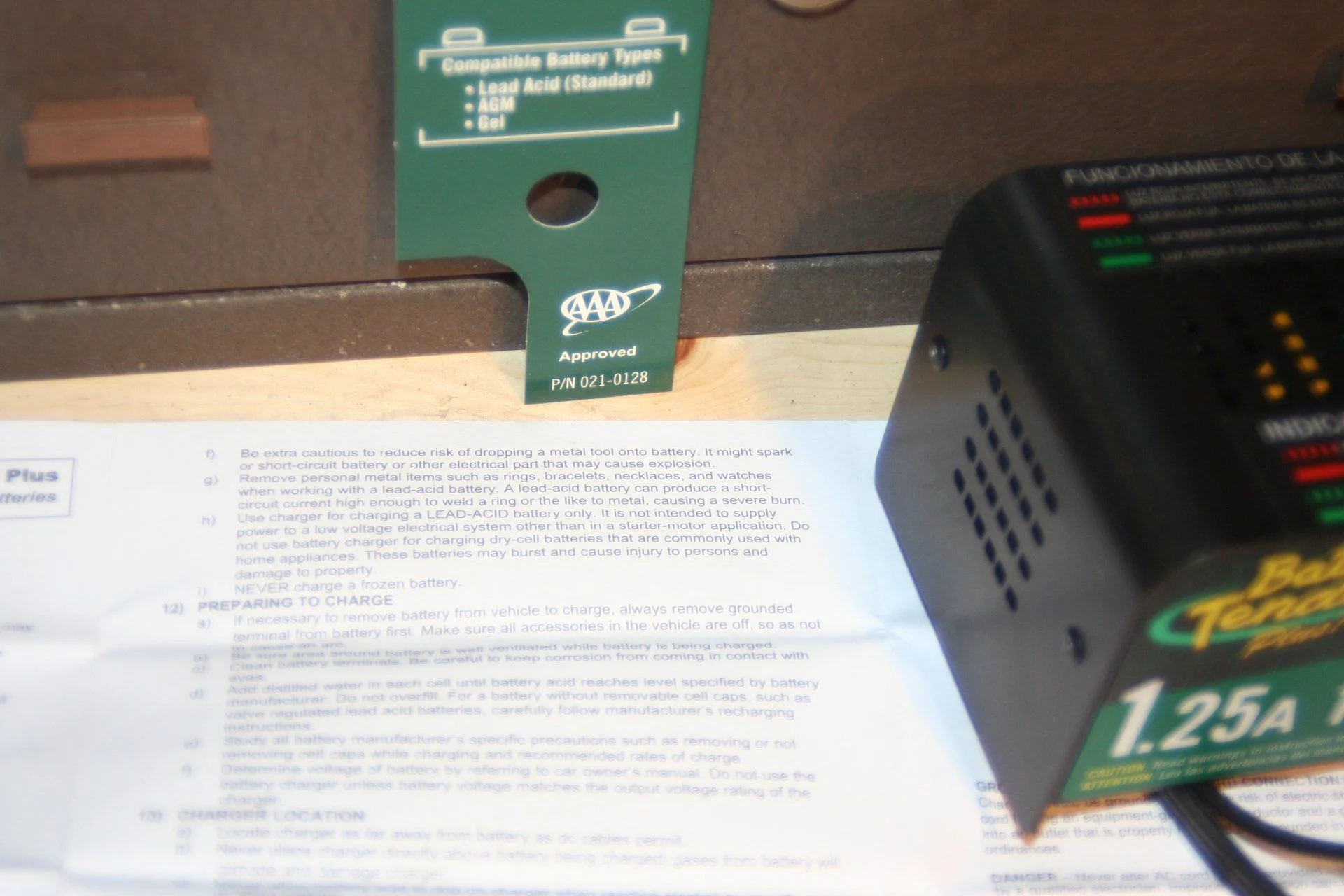
Does anyone know something about charging with USA 110V household current? The package clearly states AGM, and gel batteries, but, the directions clearly state lead-acid batteries only. I'm thinking about buying a couple of 12V motorcycle AGM batteries for attempting to weld thin steel. Thanks.
IMG_7829.JPG
 
I had (past tense) a flux core wire welder that plugged into house current, and I've got to say; even an experienced welder will have trouble trying to get one of these to work- - -don't expect yourself to make very good welds, even after your lengthy learning curve with one of these.
 
I charge all my batteries with the same battery tender plus. Agm ,
Lead acid ,sla. My agm and my other lead acid deep cycle sit in my shop for 9 months of the year plugged into those chargers the agm is almost 10 years old doesn’t see much use it is now an old back up battery. I own 3 of those little chargers. I’ve welded with batteries but I just used the sticks. No flux core wire feed. Three batteries 36v worked better than 24volts
 
@pbgbottle I was going to start with sticks. Way cheaper than the Ready Welder II, but Ready Welder II has the option for running CO2 and wire at battery voltage, IIAC. I kinda get the notion that 36V, with lower amperage (motorcycle or wheelchair) would be better for sheet metal (transmission hump ect). Am I wrong?
 
I'm a bit further now. I'm using jumper cables and the two 12V wheelchair AGM batteries. Using a car charger might be a bit much, so I'll keep it on the lower than 12.5V and call it quits. I found that my leads were too long, and I need better than 10 gauge, so I cut them in half and doubled up the leads on both sides. That was good enough for a few trials - I'm satisfied. I'll look for good welding cables and actually invest two digits on them.

I first bought some HF 7018 (3/16") stingers, and Forney 6013 (5/64"). The 6013-made-in-USA worked great for running straight beads on practice exhaust pipe and 3/16" box. I tossed the import electrodes with the trash on Monday. Then I bought some 1/16" 6011 Lincolns. These were easier to strike arcs with, but they heat up to the point that you have to stop so they don't glow. They are super easy to run on thin and thick. They made a good bead on some scrap rear bumperette, and I did some exhaust butt-joints with them. This was the first attempt.

IMG_9011.webp


IMG_9009.webp


The pipe wasn't cleanly lined-up, and I burnt thru a few times, but it corrected quite easy. Just stop and start, don't plow thru it. I'm satisfied. I think that I could do some acceptable sheet metal repairs.

I fixed a wiggly peened-over throttle shaft on a Rochester 2-Jet, and the air dam under the 40's battery, not pretty, but functional.

I'm thinking about the possible investment in the battery-MIG with argon, not the flux-core. They sell a simple TIG torch that has a simple gas valve, and no pedal or cooling, that might be the way to go also? Either way, I am really satisfied knowing that I could probably do frame and body repairs if needed.
 
Dizzy, I have a battery welder set-up for actual remote-from-AC-power welding. I would never use it if I could use my Hobart 120 volt one.
MIG welding works well at around 18 VDC so I found that 24 VDC from 2 batteries was a bit hot. That was on 3/16" to 1/4" steel!
Welds improved as the batteries weakened. Maybe 3 6VDC batteries would be about right.
 
@flee Are you talking about regular car batteries? Ready Welder claims that you can weld up to 1/2" thick steel with two car batteries, and I believe it - tons of amperage.
 
What were you thinking about for three 6V batteries? . The guy at Batteries Plus described the technical about amp-hours, and insisted on being inconclusive about how many amps the Duracell wheelchair batteries could offer for running them in a series.

I'm thinking that my 24V set-up isn't enough in regard to voltage. The arc has to be tight, and something like those 6013 burn back behind the shield on the rod, and it makes for tough starting, and you have to chip back or use wire cutters on some of the shield on the tip. And, with the 6011, the whole rod begins to glow like a portable space heater, probably because the circuit gets temporarily closed by a blob of molten metal because the arc is too close.
 
Back
Top Bottom