

Sizing a turbo

This site may earn a commission from merchant affiliate
links, including eBay, Amazon, Skimlinks, and others.

CARB compliance is really just a concern for the CA market and as Christo points out it really is a huge gamble to go through the headache and still take a financial hit when no one buys the kit. This was the exact issue with the Safari kit Man-a-Fre imported. They took on the expense and effort of getting that kit CARB compliant, imported the 25 kits from APS and then watched as no one was prepared to spend north of $5K and bring their truck to Simi Valley. I've talked with them and with the MagnaFlow guys (again, local in SoCal) about the CARB process and it is a very tedious, bureaucratric, slow process. Companies have to go with the biggest market share to recoup their losses so a tiny market like the 80-series is essentially a dead end from the start.

Sumotoy, you bring up the intercooler point again as you have in other threads and in an example like this the intercooler - as well as all the other peripherals - are identical in either s/c or turbo. Rick or anyone else is going to have to source an intercooler, fuel delivery mods, ecu management, etc for either system. Yes, a true comparo would have just the bolt on s/c and the turbo consisting of just the manifold and turbo. But as you indicate, both would benefit tremendously from adding an intercooler into the system, supplying more fuel and controlling things with a piggyback ecu. So expenses will come pretty close to eachother in each system I bet. Just ask Christo how much he would charge for the s/c installed with the same peripherals he has in his turbo kit. And for someone like Rick that has sourced that cast manifold for under $300 and will likely find a good single turbo for under $1K he is well on the way to having a lot more under the hood for what it would cost to get the Kazuma/TRD eaton unit.

And yes, the harder you push that M90 to compress intake air the more it takes from your crankshaft. Is there similar "power" losses from spooling a turbo - yes, but with the ball-bearing models out there now it really is trivial compared to a blower. The bigger eaton might look like the hot ticket too but I'm betting it has even larger centrifugal/centripetal forces such that spinning it up to 7 psi or so requires even more energy from your crank.
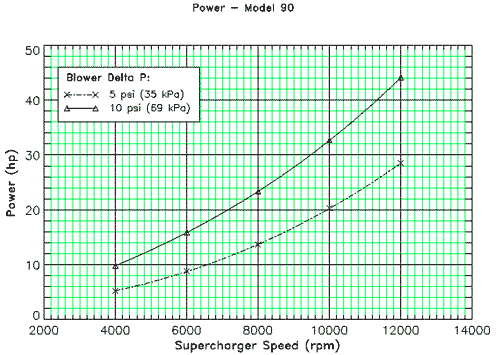
M90power.gif
M112power.gif
 
Last edited:
CARB compliance is really just a concern for the CA market...
It is more than a California thing. Federal law prohibits use of aftermarket parts on street operated vehicles if they adversely affect emissions. To be street legal, manufacturer needs to certify that, with their aftermarket parts installed, the vehicle continues to meet emission standards. The EPA recognizes CARB compliance as meeting the Federal requirements. Thus, CARB compliance and certification is the common path to be compliant with federal requirements applicable to all states. I don't doubt for a minute that there is significant expense to obtain CARB certification.
 
Last edited:
I'm still digging around and all the T04E units are on the T3 flange. I also found a company that sells a startup kit which is a manifold, turbo and waste gate for our engines as well. That unit calls out a T3 flange also.

Did you find this link? If so, notice that the

Suzuki
Esteem, Sidekick, Swift GTI 1.3L DOHC/1.6L 16V T3/Deltagate

A T3 is called for in this application too. 1.3L using T3 is pretty funny. Notice that all of their applications exept 2 use a T3. You get what you pay for in that starter kit...
 
I looked at the link.

It looks like a T04E 57 trim compressor, IMO not a good map for the 1fz in terms of efficiency. It might work it might not just don't know, but I would not do it. In terms of turbo calculators here is one of the better avalible free. here.

First calc your volumetric eff, you know your HP and torque at 4400 rpm then read the SAE paper on the deveopment on the 1FZ-fe and apply the the fuel information in the paper to other RPM data input. Then feed you worst case enviroments and look at the maps. It might take you an hour or two. I will be using a T04B 60-1 or T04B 62-1 nothing else. :beer:
 
I love this turbo calculator. you plug in a few numbers and the site draws your air flow numbers onto the different compresor maps-well worth the small fee for 3 months of service. 57 trim is a bad choice running 6 lbs booste on our motor

http://www.smokemup.com/tech/turbo101.php?sid=4026e8ffcac1d2e72845ce55ed62523b

Scott if you know so much tell us which single turbo you would do. And go ahead and list all the twin turbo inline motors you can thick of--that will be a small list friend. Lets be practicle here

And if you have 2 motors with one turbod and one supercharged running the same booste and both with maximized a/f ratios the turbo will ultimately make more power every time (assuming charge temp managed with good intercooling and assuming your motor doesn't have valve overlap adversive to the turbo). turbos cost power also but the power lost is mainly related to factors surrounding the heat retained in the motor due to the turbo restricying exhaust flow. The power leached by the supercharger is greater. This can be bla bla blad to death but boost lb for boost lb the turbo gives you more. Thats why all your sexy saabs use em. :D
 
Scott if you know so much tell us which single turbo you would do. And go ahead and list all the twin turbo inline motors you can thick of--that will be a small list friend. Lets be practicle here

The list may be small, but the exhaust pulse theory and turbo theory supports it. The exact problem in Corky Bell's book is that he's a believer in 'big' as he references the Porsche app. Problem, just about the time the book was published, porsche blew away the previous turbo 911 with the 993, followed by the 996.

More recently, BMW entered them mix with the inline 6 turbo that will be the basis for the new M cars. Er, twin turbos.

The practicality of adding 1 vs two turbos as an 'add on' really isn't that complicated.

I'll pass on doing anyone elses homework on a single turbo application. Call up any of the aftermarket turbo suppliers after you do your homework. They can be most helpful.

And if you have 2 motors with one turbod and one supercharged running the same booste and both with maximized a/f ratios the turbo will ultimately make more power every time (assuming charge temp managed with good intercooling and assuming your motor doesn't have valve overlap adversive to the turbo). turbos cost power also but the power lost is mainly related to factors surrounding the heat retained in the motor due to the turbo restricying exhaust flow. The power leached by the supercharger is greater. This can be bla bla blad to death but boost lb for boost lb the turbo gives you more. Thats why all your sexy saabs use em. :D

GM owns saab. GM also has the most production superchargers in the world. I'm a turbo guy Dusty, through and through. I'm very familiar with what they can do and what they can't. In both theory and application. The biggest issue to a turbo on an add on 1FEFZ has is it's displacement and static compression ratio. The compression ratio dictates a small pressure ratio as max. The displacement dictates a large turbo. Getting the best of both worlds is going to be tough. The main reason I advocate 2 turbos. A couple of k24's running 7psi on 2.250 displacement (Let's not forget Audi spec'd that turbo to KKK for 2.226 displacement for turque and HP) will yield torque and HP, with instant throttle response, and fantastic compressor efficiency, and near ideal exhaust pulse theory.

Pick a single turbo that does it all will just be tough. A single turbo that does it all better than a well matched M90 at 6.5psi? Tough II. IMO/E.

SJ
 
CARB compliance is really just a concern for the CA market and as Christo points out it really is a huge gamble to go through the headache and still take a financial hit when no one buys the kit. This was the exact issue with the Safari kit Man-a-Fre imported. They took on the expense and effort of getting that kit CARB compliant, imported the 25 kits from APS and then watched as no one was prepared to spend north of $5K and bring their truck to Simi Valley. I've talked with them and with the MagnaFlow guys (again, local in SoCal) about the CARB process and it is a very tedious, bureaucratric, slow process. Companies have to go with the biggest market share to recoup their losses so a tiny market like the 80-series is essentially a dead end from the start.

Carb compliance is tough but not impossible. If a kit is not Carb compliant, it can't be 50 state legal. Many states actually dictate that aftermarket parts be Carb compliant, so it's hardly a California thing.

What really kills compliance IME, is that you change one component, you are no longer exempt. And software has to be spec'd. That means, no adjustable boost levels, no optional pulleys, no 'optioinal' chipsets. And those Carb boys are no dummies. When I submitted, they sent back about 50 questions, which pretty much indicated to me that they understood exactly what I was doing and why it wouldn't fly.

Sumotoy, you bring up the intercooler point again as you have in other threads and in an example like this the intercooler - as well as all the other peripherals - are identical in either s/c or turbo. Rick or anyone else is going to have to source an intercooler, fuel delivery mods, ecu management, etc for either system. Yes, a true comparo would have just the bolt on s/c and the turbo consisting of just the manifold and turbo. But as you indicate, both would benefit tremendously from adding an intercooler into the system, supplying more fuel and controlling things with a piggyback ecu. So expenses will come pretty close to eachother in each system I bet. Just ask Christo how much he would charge for the s/c installed with the same peripherals he has in his turbo kit. And for someone like Rick that has sourced that cast manifold for under $300 and will likely find a good single turbo for under $1K he is well on the way to having a lot more under the hood for what it would cost to get the Kazuma/TRD eaton unit. [/quote}

I won't share what I paid for my Kazuma then! Suffice it to say, I paid less than half of retail for my SC with 20k on it. Well on his way? I've done more one offs in my shop than I can count anymore. Maybe Dusty can share his total development expenses and experiences to help here. There's a reason Christo gets 5k, IMO. Can it be done for less? Sure. Well on the way sourcing a manifold and turbo? Even Christo has to spit his coffee this morning reading that!

And yes, the harder you push that M90 to compress intake air the more it takes from your crankshaft. Is there similar "power" losses from spooling a turbo - yes, but with the ball-bearing models out there now it really is trivial compared to a blower. The bigger eaton might look like the hot ticket too but I'm betting it has even larger centrifugal/centripetal forces such that spinning it up to 7 psi or so requires even more energy from your crank.

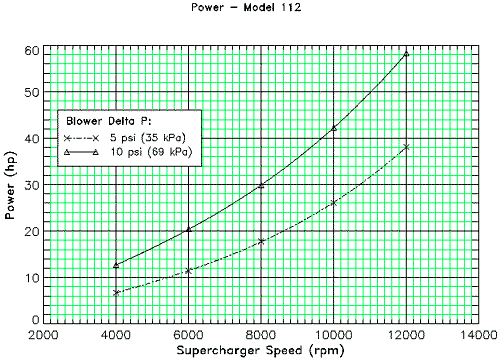
Ball bearings are over rated hype IMO. You gain slight compressor efficiency, but a lot less than most understand. The harder you push the M90 the more Pressure Ratio it creates, not more airflow. That's the definition of working harder. It's not working all that hard at 6.5 psi, and it's compressor efficiency is really high at that level.

I am quite comfortable in the turbo arena, in theory, practice and application. It's a lot of science, combined with a lot of art. As many point out, the market is limited. Therefore bringing forth the plethora of choices to some consensus is going to be really tough, the n just will never be high enough. I know, cuz I helped create the 'n' in the audi arena. It cost me a bunch of money and time. It also made me quite easily choose the M90 for my 80. Why? After looking at all the turbo kits, and even designing a dual turbo system, I just have very little interest in taking on another project.

So, the compromise is, single turbo application to the 80, none of them optimal to the 1fefz. Which is one reason I say, do 2 hours worth of math, and pick a turbo. All of the single apps have compromises, so get one close to your goal (hp/torque) and put it on. Then move on, the game has just begun.

IME

YEMV

ST
 
Scott, part of this forum from what I understand is the sharing of knowledge. If you aren't in a position that you want to do this then by all means stay out of it.

A lot of people come here for advice so why is it that this post from me should be any different.

I share a bunch of knowledge here Rick, I believe it's pretty well documented, including on this thread. I understand completely what you *want* to do. As one that's done dozens of 1 offs over the years, I'm sharing my knowledge of how to do what you want better.

Do 2 hours worth of math, and pick a single turbo. Don't spend a lot of time on it, because the opinions in the application range will vary widely, btdt. What you find is that you will spend a lot of money getting that to work, then conclude, I shoulda done this. The question is, do you give *that* away?

I believe there is a reason 80 turbo kits are expensive from Safari, Christo, etc. This thread is one of the reasons. It's not a plug and play.

Even if you find out which turbo was used in some of the kits, I'm not sure that will get you where you want to go. You can move application sizes and performance to a given engine around by changing the pitch angle of the exhaust turbine blade. BTDT.

Rick, I'm all up for reading about your project. And there is no doubt in my mind that you have the ability to get it done. I'm not discouraging you, only trying to advocate some of the useful tips I've found work much more effectively. If that's not heloful to you, fine. I'm sure you'll excuse my resistance to doing your homework. I can and offered to help you. I don't need to do that in a public forum. I also don't do that without the person involved doing the majority of the work.

That's my modus, sorry you didn't find me more helpful, hopefully just clear.

Cheers

ST
 
I share a bunch of knowledge here Rick,

That's my modus, sorry you didn't find me more helpful, hopefully just clear.

Cheers

ST

IMHO, you share a bunch of bull**** here and you really do not help much here either; you cannot take the "big body of knowledge" you got from goofing around alot on Audis, make big blanket statements one after another about how that always applies to all Toyota's and to all makes and models and manufacturers, and keep referencing your books to show why a single turbo setup cannot be done by people as smart as Rick, or people as experienced as Air Power Systems. You also have the strange mix of ability and disability which allows you argue the minutia of anything at all way past the point its proven you are absolutely wrong ( suspension systems as just one example ) BUT THEN you dont have the ability to admit you might have made a minor mistake. What that means is you take tons of bandwidth bullshitting just to let threads drop down page after page without finishing things off with an apology and admission that you might have actually had a moment of learning on mud. I mean get off of it man, for fawk's sakes put the big books and the pretty postulations down and get going through the real world. Here's the deal, you find a single supercharged 1FZFE out there that can run with an APS or AVO turbocharged rig and I'll buy all beer you can drink in one sitting. Then YOU, yes YOU, make a twin turbo 1FZFE, share that big body of knowledge with the rest of us here and I'll again buy all beer you can drink in one sitting. Now, there's two generous gifts I'll offer. Until then, as politely as I can say it, please shut up. Thanks.
 
Safari Carb Exemption

Safari system with Unichip was Carb compiant. Just FYI. :D

Turn head and cough? Christo, I have my hands on Safari 4x4 Intercooled Turbocharger System Carb Exemption Order D-490.

CARB D-490 (Oct -99) Gives the Safari System a green light. Where I chuckle a bit is in the claims on the website vs the authorization in the EOD.

Safari claims 405lb/ft of torque and 328hp on their website for the 4.5L turbo applicaiton, they don't give a boost level anywhere on that site top accompiany those numbers. However, in EOD 490, Carb authorizes the EO exemption only exactly as presented: "Maximum Boost: 4.5psi"

Based on your dyno charts, I'm intrigued. You?

And yes Rick, EO 490 lists the turbo application in the Safarit kit.

ST
 
..."you find a single supercharged 1FZFE out there that can run with an APS or AVO turbocharged rig and I'll buy all beer you can drink in one sitting. Then YOU, yes YOU, make a twin turbo 1FZFE, share that big body of knowledge with the rest of us here and I'll again buy all beer you can drink in one sitting. Now, there's two generous gifts I'll offer. Until then, as politely as I can say it, please shut up. Thanks.

How bout we limit this test to only the one's that are Carb legal? Show me the APS system running 4.5psi boost.

I've been known to drink a lot of beer.

:cheers:

ST
 
How bout we limit this test to only the one's that are Carb legal? Show me the APS system running 4.5psi boost.

I've been known to drink a lot of beer.

:cheers:

ST

No can do, why would we run 4.5 when we regularly run 7.5 to 8.0 psi? Instead of de-tuning the turbo to make it match your incredible imaginings, whydoncha enjoy the extra 3 psi, the less time you spend stating stupidity here, the more time you got for the real world referred to earlier! :D :flipoff2: :D
 
No can do, why would we run 4.5 when we regularly run 7.5 to 8.0 psi? Instead of de-tuning the turbo to make it match your incredible imaginings, whydoncha enjoy the extra 3 psi, the less time you spend stating stupidity here, the more time you got for the real world referred to earlier!

Your turbo system should have 4.5psi maximum boost pressure, as purchased, marketed and distributed under the Carb D-490. I think Christo should be selling more kits... Grappling with a 'lets race' challenges misses the bigger picture here. I also believe an integral wastegate turbo is at a significant disadvantage at low boost, since it's a huge obstruction to flow. I suppose less so if it's always open :)

Back to the subject at hand, Rick can now confirm his turbo choice using the Safari reference, or Dusty's excellent wrtiteup on this forum, and move on to the next step. Boost level, fuel management enhancement and exhaust.

Dusty give his turbo choice and the boost (8psi at 2600) profile on real world application in his turbo thread. Dusty, did you/are you use/ing a boost controller, and if so, which one?

ST
 
97_lc_stock_vs_turbo.jpg


Here is a dyno graph from a 97 FZJ80, stock vs turbo running 7 psi. 5.29 gears and BFT 37" AT's.

ST, we hashed this out in another thread. No need to do it again. That is why I posted

Again, as stated in the other threads. We are comparing what is available and running on trucks, not in spreadsheets. I know a 100% that it is a apples to oranges comparison, but no-one has polished that TRD orange to look like a apple yet.
 
Back
Top Bottom