



I think a lot of people would agree with me that the output of the factory heater fan is a bit anemic. It wasn't bad when I had the hard top on, but with the soft top and driving at highway speeds it's a bit cold inside. Then try defrosting the windshield. Good luck.
I decided to see what I could do.
First modification was to install a Ford Escort fan in the factory housing. It took some cutting and mods to make it fit, but the output is slightly better. This is documented in other peoples posts if you want to look it up.
Still unhappy I decided to play around a little. I picked up a 4" marine bilge blower fan and a humongous squirrel cage fan from a swap meet. Next up was to get an anemometer so I could get real numbers and not trust my hand to feel the difference.
Large fan (it's 17" wide):
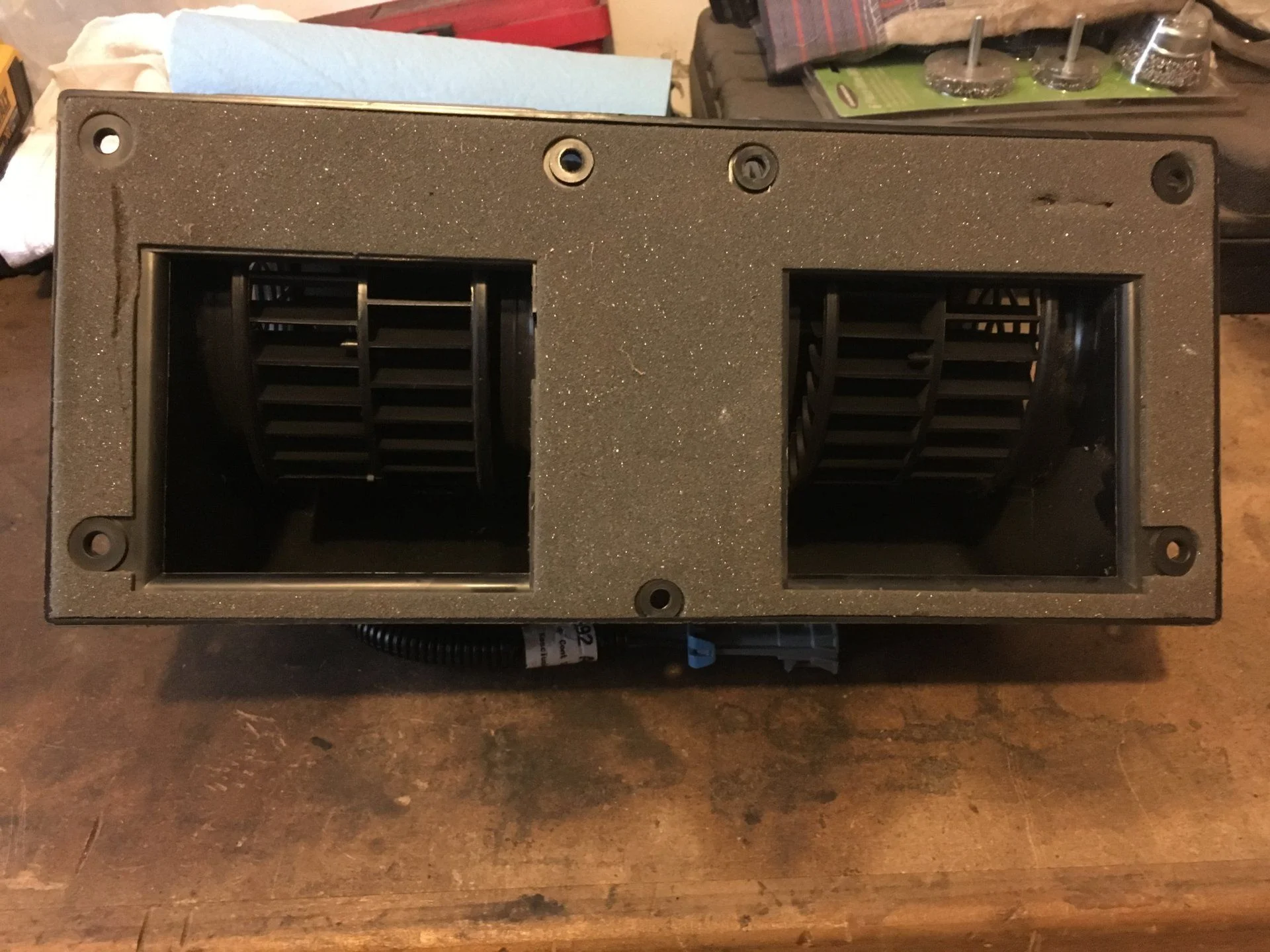
First up was to measure the individual fan outputs using the anemometer. The bilge blower and in-car fan were easy as they had ducts I could measure the airflow and area of. For the big fan I created a cardboard duct to measure velocity and area. Getting the cfm is a matter of measuring the airflow in feet per minute and then measuring the duct area in square feet. CFM is fpm times area in square feet. I grabbed my teenager for a little real world math problems. Now he can't say he will never use the math taught in school .
Current Escort fan: 71 cfm
Bilge fan: 178 cfm
Large fan Low: 438 cfm
medium: 595 cfm
high: 673 cfm
I have serious doubts that I could use the large fan even at low speed. At low speed that is over 6 times more air flow than the escort fan. At 178 cfm the bilge fan, on the other hand, might work.
I temporarily mounted the bilge fan for testing. It's loud, but only temporary. I plugged into the factory harness so I can have two speeds and use the factory switch. The airflow is noticeably better.
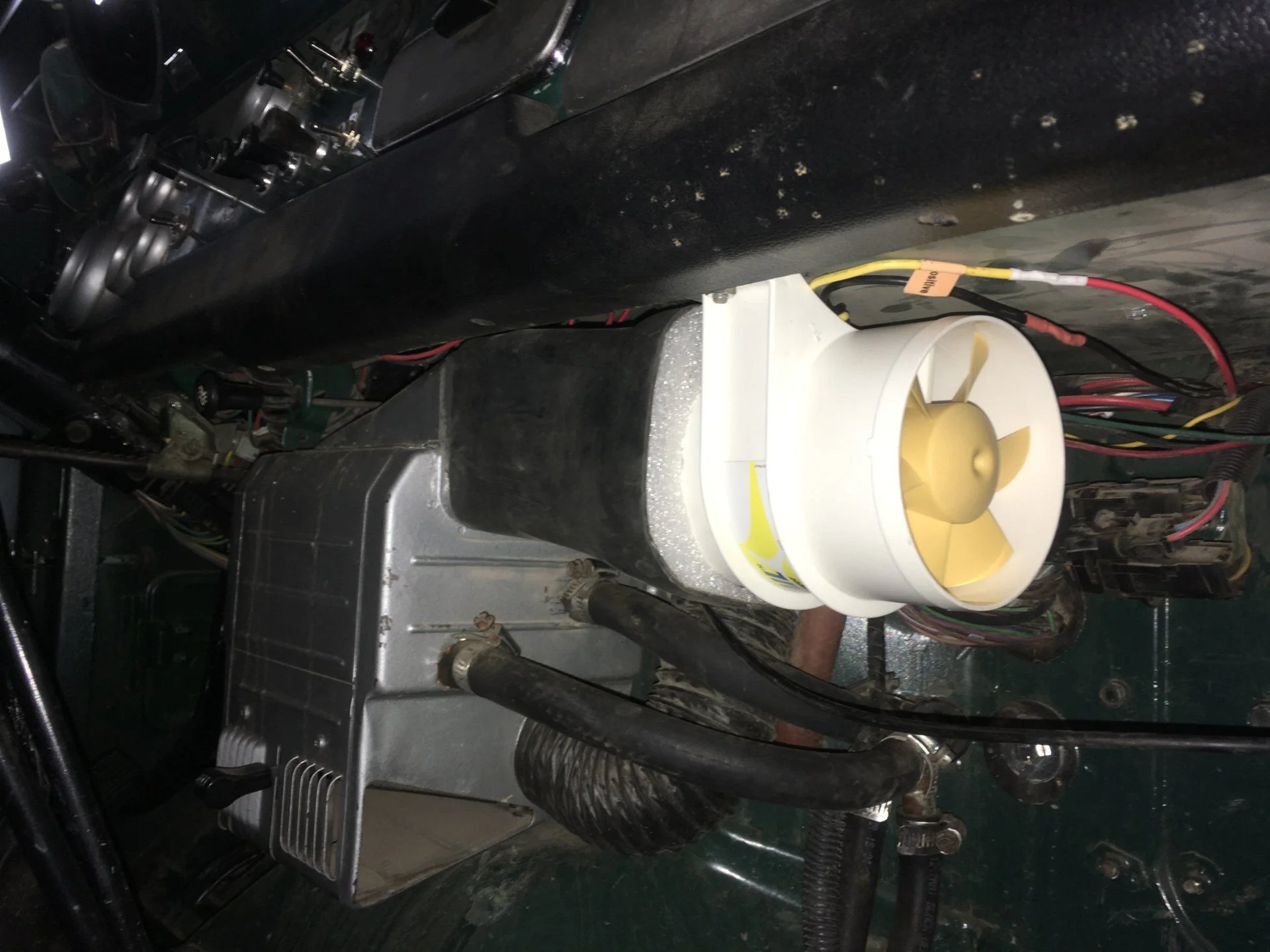
I will run it this way for a few wheeling trips to see how this much airflow works out. My initial gut feeling is that 300cfm in high speed would be about perfect. I'll keep my eyes out for a smaller dual fan that doesn't cost too much then fab up a new duct out of aluminum.
I decided to see what I could do.
First modification was to install a Ford Escort fan in the factory housing. It took some cutting and mods to make it fit, but the output is slightly better. This is documented in other peoples posts if you want to look it up.
Still unhappy I decided to play around a little. I picked up a 4" marine bilge blower fan and a humongous squirrel cage fan from a swap meet. Next up was to get an anemometer so I could get real numbers and not trust my hand to feel the difference.
Large fan (it's 17" wide):
First up was to measure the individual fan outputs using the anemometer. The bilge blower and in-car fan were easy as they had ducts I could measure the airflow and area of. For the big fan I created a cardboard duct to measure velocity and area. Getting the cfm is a matter of measuring the airflow in feet per minute and then measuring the duct area in square feet. CFM is fpm times area in square feet. I grabbed my teenager for a little real world math problems. Now he can't say he will never use the math taught in school
.Current Escort fan: 71 cfm
Bilge fan: 178 cfm
Large fan Low: 438 cfm
medium: 595 cfm
high: 673 cfm
I have serious doubts that I could use the large fan even at low speed. At low speed that is over 6 times more air flow than the escort fan. At 178 cfm the bilge fan, on the other hand, might work.
I temporarily mounted the bilge fan for testing. It's loud, but only temporary. I plugged into the factory harness so I can have two speeds and use the factory switch. The airflow is noticeably better.
I will run it this way for a few wheeling trips to see how this much airflow works out. My initial gut feeling is that 300cfm in high speed would be about perfect. I'll keep my eyes out for a smaller dual fan that doesn't cost too much then fab up a new duct out of aluminum.


