Deck shade structure that turned into a grid tie solar PV project!!

This site may earn a commission from merchant affiliate
links, including eBay, Amazon, Skimlinks, and others.

Joined
Aug 21, 2003
Threads
854
Messages
16,781
Location
Tijeras, NM
We've been chipping away at our 6kw solar PV grid tie project for about a year so I figure it's time I document this process for others who may be interested in this type of thing.

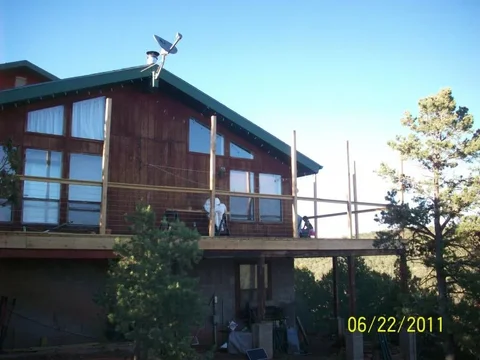
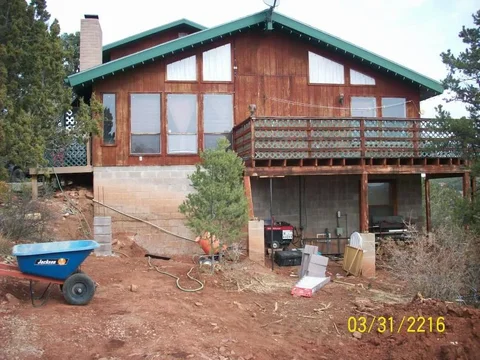
The original plan was to simply replace the outside deck (faces due South) as all wood pieces were crispy critters! All 2x6s were splitting and splinters were common to the point where our daughter wasn't thrilled about walking around or playing. The hand railing felt less than solid to me. We took the opportunity to extend the deck until it met up with the front porch, built a stem wall underneath for a future storage/shop room and tidied up few other things.
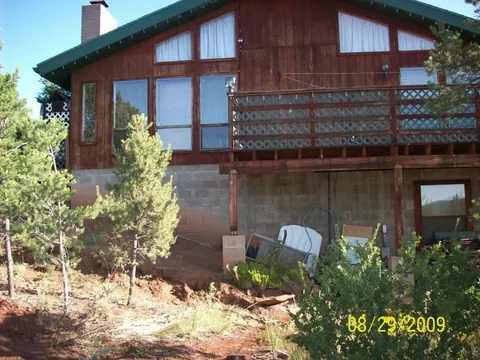
100_2752.webp

Building the deck extension and the room required the removal of a fair amount of dirt and exposing the foundation a little bit. Thanks to the help from the local Mud members (Lynn, John, Paul, Cy, Rudy) this project slowly became a reality while I learned quite a bit about general construction processes. My wife was a big help and our six year always wanted to "help" out. My friend Ken helped out with tools and advice. My neighbors just watched, usually bewildered.

Dirt removed:
100_3513.webp

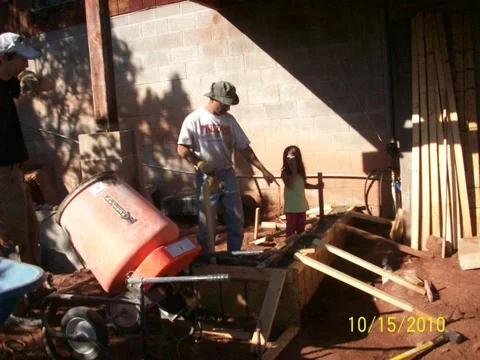
Our daughter removed the entrenched air out of the cement. She helped as much as she could and I loved it.
100_6560.webp

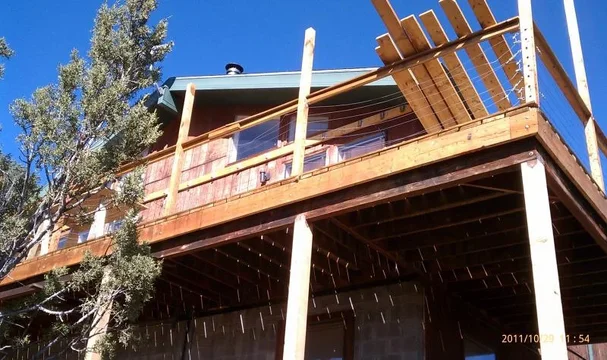
After replacing the deck and admiring our handy work while mourning the loss of cruiser $$$ in the process :crybaby: I came up with the idea of a simple deck shade structure that attaches itself to the house. The thought of our expensive wood getting fried in another ten years wasn't all that appealing and we wanted to protect the south facing windows (which are trashed due to the UV) and the wood siding.
100_2752.webp
100_3513.webp
100_6560.webp
 
Last edited:
continued....

As you can tell, a project "scope creep" was about to ensue ;) We were thinking of a simple shade structure using shade sail to primarily block out the sun. From the beginning, we 10' high 4x4 posts for our hand railing.
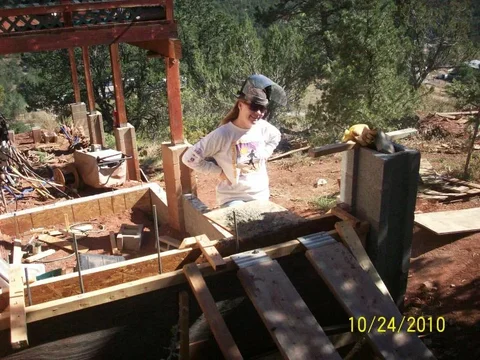
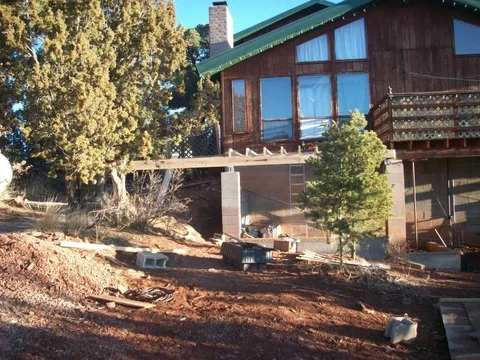
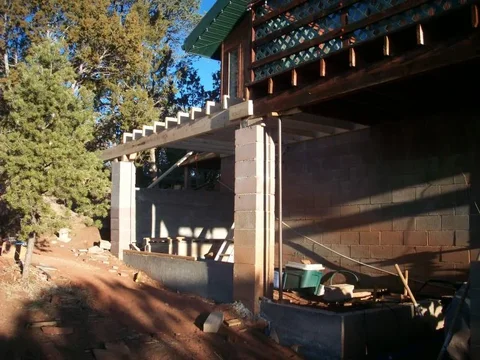
Wife is telling me that pouring cement wasn't in the marriage vows
100_6636.webp

Deck extension and the room beginning to take shape
100_7331.webp

100_7333.webp
100_6636.webp
100_7331.webp
100_7333.webp
 
A deck was beginning to take shape. We changed the pattern of the floor boards just to be a little different and to add to the rigidity of the whole structure.

As you can see, the south side of the house is getting hammered by the sun and in need of replacement. Windows and siding will be coming next :crybaby:
102_0025.webp
102_0055.webp
102_0057.webp
 
Last edited:
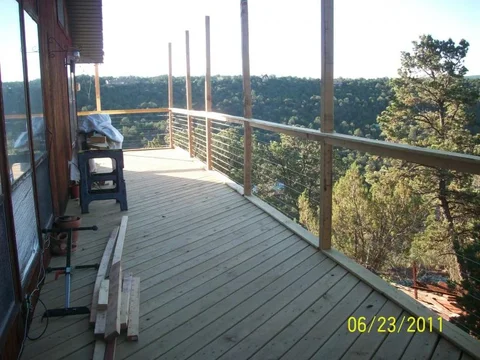
deck railing went up

Finally the hand railing went up and we used 10' posts since we didn't know what kind of a deck shade structure will be going up. I should've used 8' posts in retrospect but oh well.

I used 5mm wire rope as my railing and it looked killer. 102_0176.webp

Deck_1.webp

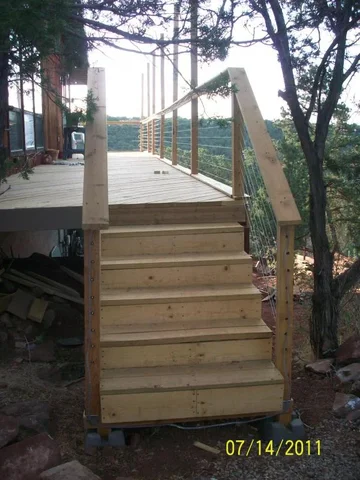
Added a new set of stairs at one end. I don't know if any of you made stairs from scratch using a 2x12 but it ain't as easy as it looks. It was a humbling experience for a newbie :lol:

Deck stairs.webp
102_0176.webp
Deck stairs.webp
Deck_1.webp
 
Last edited:
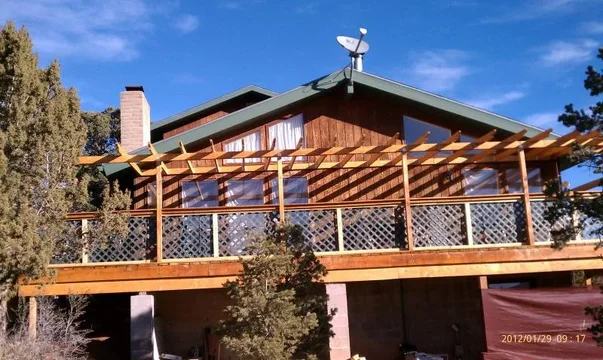
We ended up building a heavy duty shade structure that'll support the PV panels using 2x6 rafters placed 24" O.C.

It was time for a final inspection from the county on the shade structure and cables wasn't allowed. If you can slip a 4" ball through (simulating a baby) the cables, it will fail inspection. So, the old lattice went back in as a temp measure until I come with a better way to reinforce the cable system. I passed the final so it was off to the county permit office for submitting the PV project plans.

IMAG0065.webp

Using couple of hired hands, we put up roofing under the deck that'll keep the area below nice and dry during rain/snow.

IMAG0069.webp

At this time, we replaced the 6x6 deck support columns with the help of Mud members.

IMAG0583.webp
IMAG0065.webp
IMAG0069.webp
IMAG0583.webp
 
Last edited:
Time for the grid tie project

Fast forward through winter and it was time for the PV project to commence. Here is the info on the grid tie project:

(1) 6kw Sunnyboy 6000US inverter with AC & DC disconnect
(28) Sharp ND208-U1F solar panels. 208w output, 36 voc, 8 Isc
(1) utility disconnect
(1) utility meter socket
(1) 125 amp Square D homeline subpanel. (not needed for PV but only for future electrical needs)

I picked up the Inverter and the PV panels for a good price since they were used for about one year and then sat in storage for two years. I bought four Sharp 230w panels from Ebay for $0.90/watt. Once they arrive, I'll put them up.

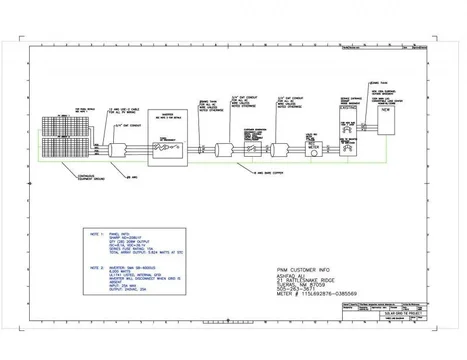
Three line diagram:
ALI GRID TIE PROJECT for Mud.webp

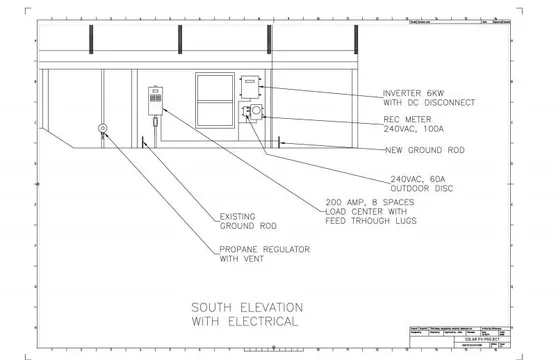
This should give you an idea where the future PV electrical items will be installed. The 200amp outside subpanel has been changed to a 100 amp subpanel.

ALI DECKCOVER PROJECT -  FINAL 6_21_12 South Elev with electrical.webp


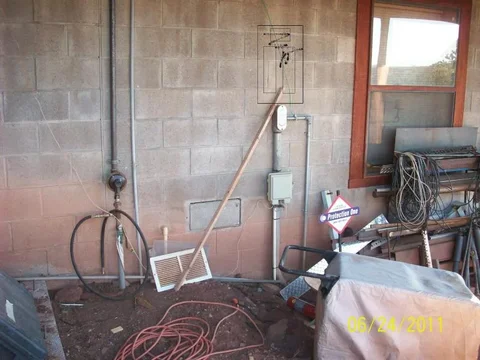
This is where our 200amp service enters the basement. The service panel is inside the basement wall. I drew up a box where the future 100a subpanel will be going. Notice the tap that comes into the right side of the LB. This is a big no no and will be moved to the future subpanel. The previous owner had a very nice swamp cooler installed and the contractors took this shortcut.

service entrance with new panel.webp

Let me know if you have any questions. If anyone would like me to email my pdf drawings of the system, send me an email: alia176 at yahoo Jon Haris has a nice pictorial representation of a typical grid tie project here: https://forum.ih8mud.com/workshop-h...-photovoltaic-system-install.html#post7682047
ALI DECKCOVER PROJECT -  FINAL 6_21_12 South Elev with electrical.webp
service entrance with new panel.webp
ALI GRID TIE PROJECT for Mud.webp
 
Last edited:
Now, keep in mind that once the solar panels went up, we will be losing all access to the side of the house. So, the siding and the windows had to be addressed right NOW!! We put up Hardi fiber cement siding on top of the existing siding and trimmed it out; what a PITA that was. The fixed windows were removed and the glass were replaced with newer, more efficient argon filled units with solar guard. This made a HUGE difference inside the living room with regards to the glare.

I have no idea when the rest of the siding or windows will be addressed :lol: I brought in four window companies for estimates and we crapped our pants at their numbers. :eek: What a racket. We'll be doing the windows ourselves over time is what I'm thinking.
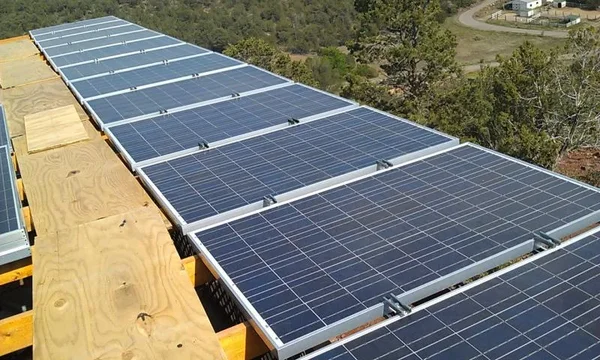
You can see from the pics that the PV panels have been staged on top of the awning structure. Each panel weighs in at 50 lbs and thanks to my hired hands, that was only a four advil day :eek:
102_2203.webp
102_2200.webp
 
Last edited:
Well, I found myself with a lot of time on my hands so the PV project went into over time. Bunch of engineers at my work were laid off three weeks ago :crybaby:

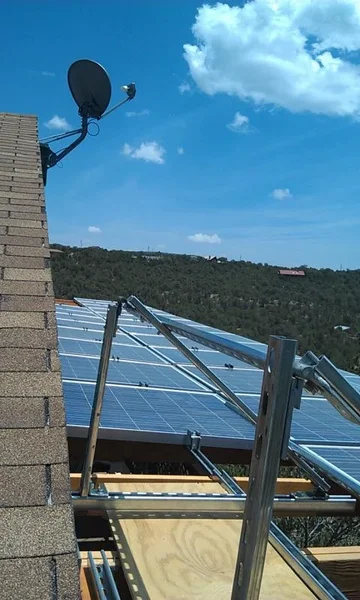
Before the PV panels were installed, tracks/rails need to be installed to the top of the rafters. Here is where you can go with light weight Alum rails with nice end/mid clamps. The primary reason why PV installers go with rails like Unirac and similar is to make the installation process quick and easy. These systems are very nice to work with and make the installation process very painless. However, these rails and clamps are costly. I chose to keep it simple by going with the typical struts that you see everywhere. I used a product similar to Unistrut called Cooper B line. You can find Superstrut at Home Depot and Lowe's. As far as the clamps, I made my own ghetto clamps :hillbilly:

IMAG0558.webp

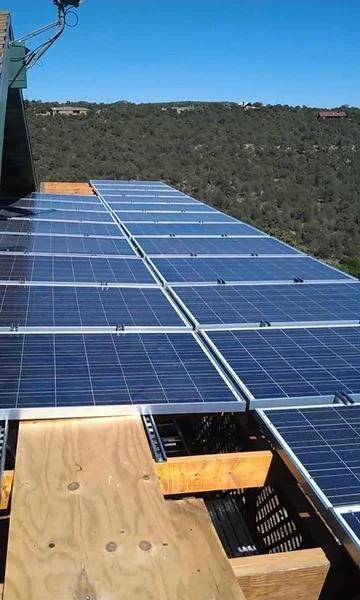
Notice the space around each panel. The purpose of this space was to keep the air circulating around the panels and keep them cool. Typically, your PV efficiency decreases during the summer and increases during the winter due to the heating of the solar cells. They like to be kept cool for the highest conversion efficiency.

IMAG0579.webp

At the extreme East and West end of the structure, the panels were going to make contact with the eve of the house. Consequently, they had to be tilted to clear the eves and I chose 35deg elevation. This happens to be the ideal angle for the sun to hit our panels at our long/lat. Unfortunately this wasn't achievable w/o shadowing the four windows so the remainder of the panels sit almost flat. These windows are necessary for passive solar heating during the winter when the sun is low on the horizon but during the summer, the sun doesn't hit these windows at all.


IMAG0586.webp
IMAG0558.webp
IMAG0579.webp
IMAG0586.webp
 
Last edited:
I am not sure if I'll be playing with the elevation angle of the three panels at this end of the structure so hinges were incorporated. In case shadowing becomes an issue between the seasonal changes, I figure it can't hurt to have adjustability.
IMAG0587.webp
IMAG0588.webp
 
Last edited:
Before I started to do the wiring part of the project, I had to take a test at the permit office. After the passing the electrical test, I am now allowed to do the wiring on my PV project as a home owner.

I'll be mounting all PV electrical hardware on the side of the house using unstrut rails, thus allowing for future moving of panels around and to attach conduits for a more professional look.

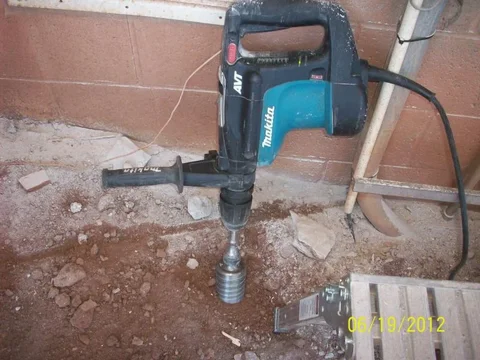
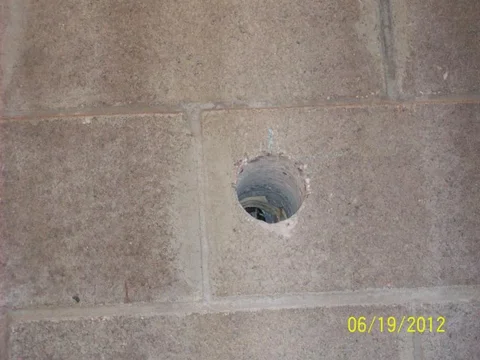
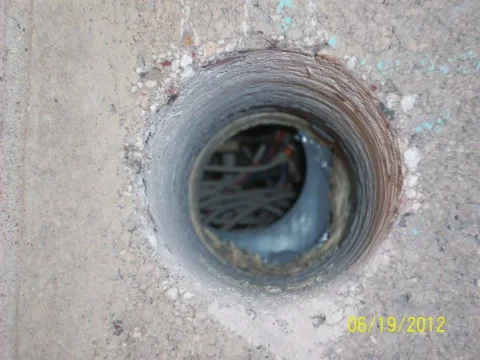
Since bunch of wires will be going between the outside 100a subpanel and to the inside 200a (existing) service panel inside the house, a 2.5" hole had to be drilled through the concrete filled cinder block wall.

Home depot tool rental to the rescue:

102_2252.webp

This hole had to be precisely drilled so that it comes out the other end and lines up with a 2" knock out (on the side of the 200a service panel).

102_2251.webp

I was THAT close :D

102_2253.webp
102_2252.webp
102_2251.webp
102_2253.webp
 
Last edited:
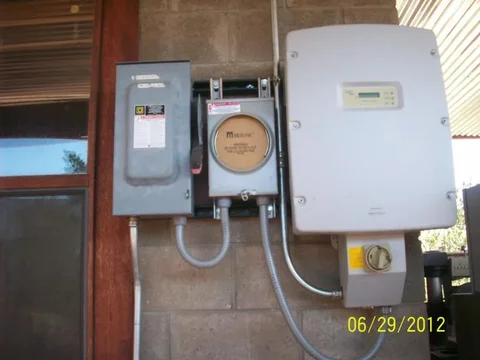
The inverter, a/c disconnect and the REC (renewable energy credit) meter socket mounted on unistrut rails. I may redo this arrangments and lose the alum panel and go with unistruts.

The inverter is a heavy SOB at 140 lbs. We had to use a come along anchored on the rafters to hang this thing.

The outside 100a subpanel was installed yesterday as well. The purpose of this panel is NOT to install the backfed breaker, just for future expansion. The county inspector wouldn't let me use this panel as a means of introducing backfed power into the grid.
102_2254.webp
subpanel.webp
subpanel closeup.webp
 
Last edited:
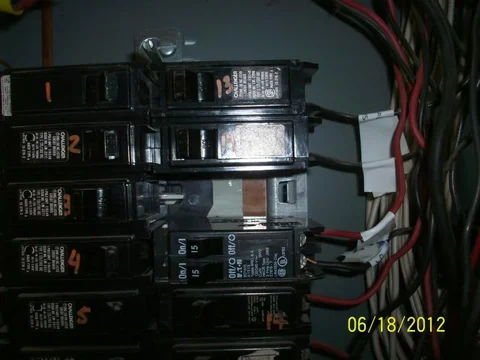
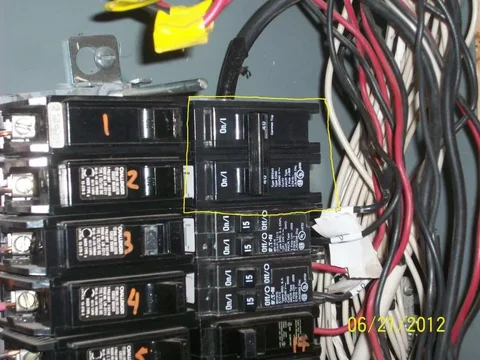
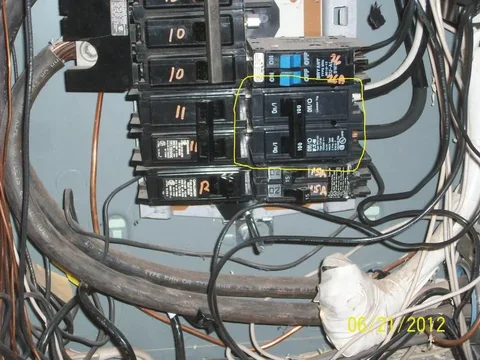
Inside, couple of tandem 15a breakers were installed to free up space for a new 40amp 240v breaker that will be used as the "backfeed breaker" for the PV power. NEC requires that you place your back feed breaker as far away from the main breaker as possible. My mains are coming in at lower left so this breaker had to go on the top right.


102_2226.webp

40a breaker circled.webp

Another new 100a breaker was installed in place of the 50a clothes dryer (we use gas) breaker. This breaker will supply power to the sub panel outside. 2awg wires were used for this breaker.

You can make out the main 200a breakers on the lower left.

100a breaker circled.webp
40a breaker circled.webp
102_2226.webp
 
Last edited:
It's hard to see the entire PV structure at once but hopefully you get the idea. East is to the right and West is to the left.

Still have to run two long 12awg PV wires and one 8awg ground wire need to be run under the panels and then to the inverter. After all wires have been run, and the remaining four panels installed (if they ever get here), I'll zip tie the crap out of everything.
102_2292.webp
102_2293.webp
102_2295.webp
 
Last edited:
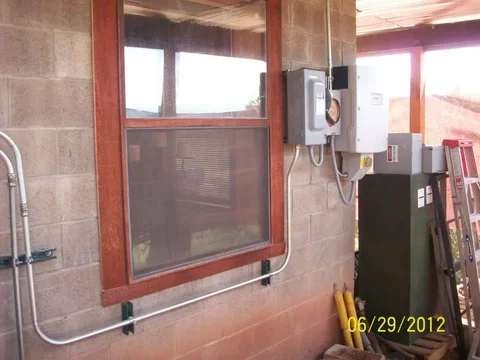
Made some more progress this week. Please ignore my conduit bending skills, that process is a mix between art and science :mad: I guess watching how to youtube videos is not enough to make good bends instantly.
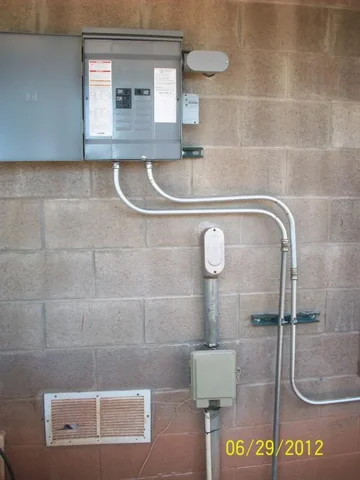
You may recall that the PO (actually the swamp cooler installer) ran a 3/4" conduit directly into the side of the 2" LB. This is a big no no so this pipe now runs into the subpanel. You can see the old vertical pipe meets up with a new pipe. As of now, this panel is hot and providing power to the swamp cooler outside.

A surge protector now hangs on the side of this panel. Hopefully, will install a 30a 200vac and a 15a 120vac receptacles will go somewhere in this area today.

102_2297.webp

Conduit ran from the subpanel to the transformation area

102_2298.webp

Finally, cleaned up the transformation area
102_2299.webp

Bought some more 8AWG wires yesterday so it's time to run wires today. This should be MUCH easier than bending pipe, LOL!!
102_2297.webp
102_2298.webp
102_2299.webp
 
Last edited:
Neat project. So with these type systems you don't have to deal with storing the power in batteries?

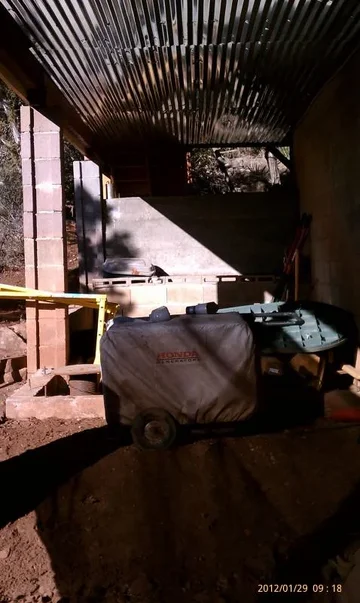
That is correct. My battery is known as the utility grid ;), very reliable, no maintenance needed and a very high "up" time. If I were to live in the boonies or had lots of brown/black outs, I may have considered going that route. We experienced a system wide outage last night for about four hours and I fired up the generator.
 
Yeh, batteries seem like they add another level of "stuff" to the system to buy and deal with.

So you basically you dump your power into the grid and then use it back free of charge as you need it?

Did think of making the whole row of panels nearest the house operable or hinged on one end so that you could adjust the angle up and down during the summer and winter? Do you loose much by having them flat?
 
Back
Top Bottom