Cylinder Block Parts ID Help

This site may earn a commission from merchant affiliate
links, including eBay, Amazon, Skimlinks, and others.

Joined
Jan 2, 2024
Threads
30
Messages
200
Location
Houston, TX
There are three cylinder block parts that I cannot find in the FSM or various parts diagrams. The three parts are circled in the attached photo.

Part-1 is a bearing pressed into the cylinder block for the oil pump drive shaft gear. Is this a lifetime bearing that is never replaced and therefore, there is no reference or discussion about it?

Part-1 & 3. For sure one of these is a round steel ball and the other one could be a round steel ball, but I am not sure. In both cases, I can find no reference for these anywhere.

Can someone please help with these

IMG_6773.webp
 
Search Oil Pump bushing in this forum and you'll get dozens of hits, add Landtank (member) to get the history behind
the development of the original bushing replacement.

Here's one thread:


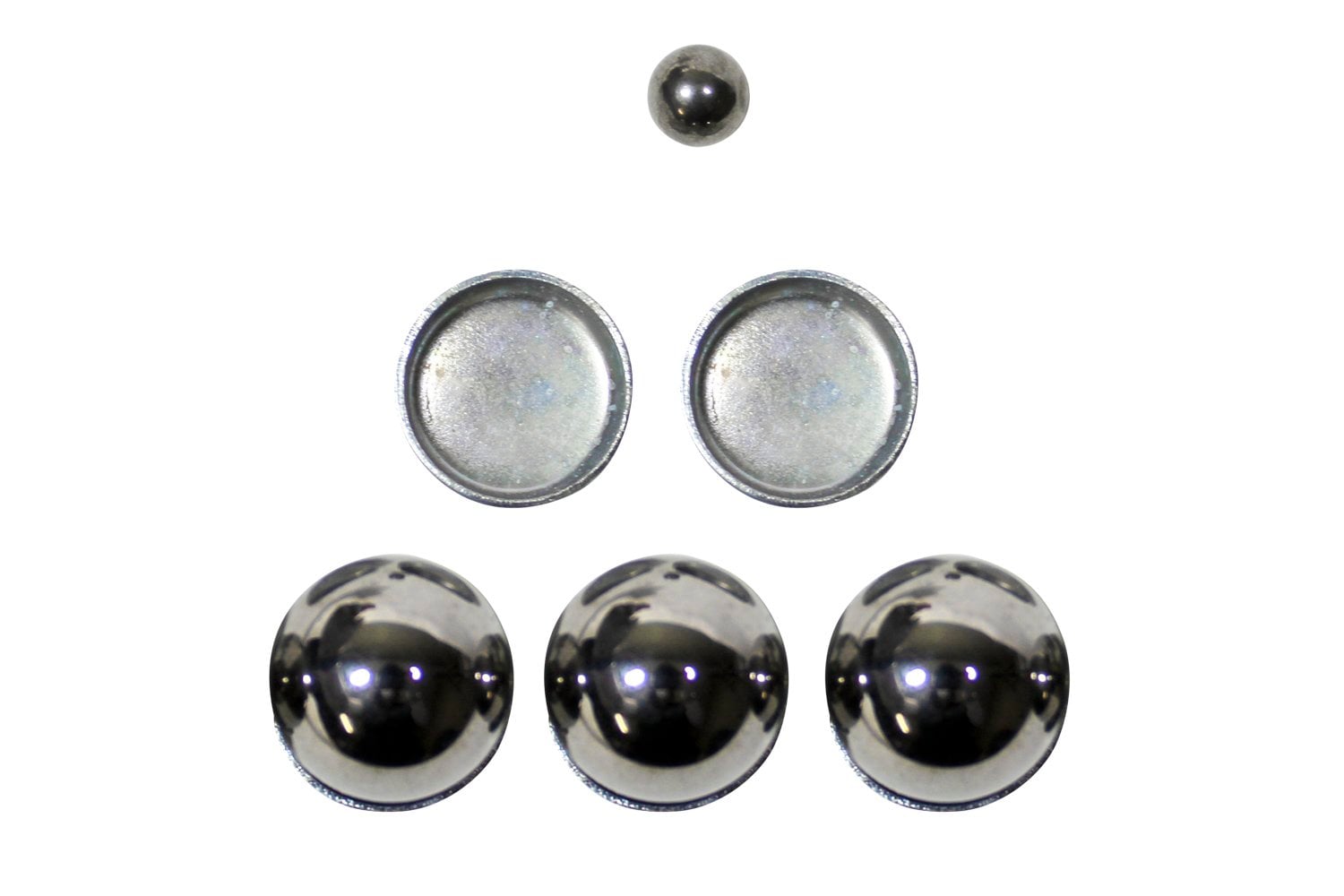
Here's a kit for the galley plugs (the ball bearing type plugs AFAIK are not available from Toyota)


And Landtank's bushing/installation tool kit:

 
Last edited:
Search Oil Pump bushing in this forum and you'll get dozens of hits, add Landtank (member) to get the history behind
the development of the original bushing replacement.

Here's one thread:


Here's a kit for the galley plugs (the ball bearing type plugs AFAIK are not available from Toyota)

Whoa! This is a little weird. Thanks for the great information. It seems strange to me that Toyota seems to have dropped the ball in this area.
 
Been discussed in multiple old threads (do a search).

The joke used to be, to get the bushing you had to buy a short block.

From above:

 
There are three cylinder block parts that I cannot find in the FSM or various parts diagrams. The three parts are circled in the attached photo.

Part-1 is a bearing pressed into the cylinder block for the oil pump drive shaft gear. Is this a lifetime bearing that is never replaced and therefore, there is no reference or discussion about it?

Part-1 & 3. For sure one of these is a round steel ball and the other one could be a round steel ball, but I am not sure. In both cases, I can find no reference for these anywhere.

Can someone please help with these

View attachment 4094596
Full disclosure. When I rebuilt mine at 372k miles I purchased a replacement oil pump bushing. But, decided to go with the old one. My reasoning was that the engine was running well before the rebuild - no catastrophic issues, so...
I left it alone. 85k miles later, still good.
YMMV
happy rebuilding!
 
Full disclosure. When I rebuilt mine at 372k miles I purchased a replacement oil pump bushing. But, decided to go with the old one. My reasoning was that the engine was running well before the rebuild - no catastrophic issues, so...
I left it alone. 85k miles later, still good.
YMMV
happy rebuilding!
I suspect mine is fine as well. There is zero play with the gear installed. The concern I have is that potentially, this block will be hot-tanked. In that case, I am not sure how that bearing will hold up and even if it was untouched, there would be leftover hot-tank liquids trapped underneath it. I have not yet made that decision, so this is still a work in progress.
 
It'll be fine. It's pressed in, so there's no space between it and the block. The chemicals and heat won't affect the material at all.
 
Been discussed in multiple old threads (do a search).

The joke used to be, to get the bushing you had to buy a short block.

From above:

love the "navel" brass.
 
While were' on the topic, does anyone check the clearance of the oil pump shaft to the new bushing ie: Line-hone or ream a newly installed brass bushing??
Babbitted bushings are softer ie: will embed any hard particles, where Naval brass is harder, less forgiving, correct?? Discussion a long time ago IIRC mentioned the brass bushing in the spindles as an example but those aren't the same application. IDK (I'm not a machinist).
 
Last edited:
While I haven't done it, I can say that if the press of a replacement bushing, regardless of material, is too great, the ID will shrink beyond usable limits. Press fit bushings should always be measured before and after installation, and compared with the intended fit/clearance.
 
Back
Top Bottom