Could use some advice : Installed a pusher fan, keep blowing fuses

This site may earn a commission from merchant affiliate
links, including eBay, Amazon, Skimlinks, and others.

Joined
Jan 11, 2011
Threads
149
Messages
3,733
Location
Charleston, sc
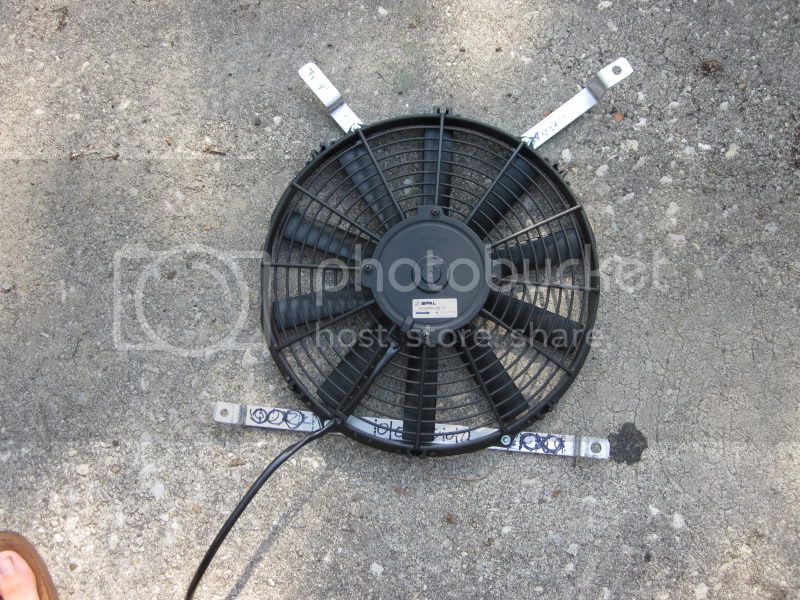
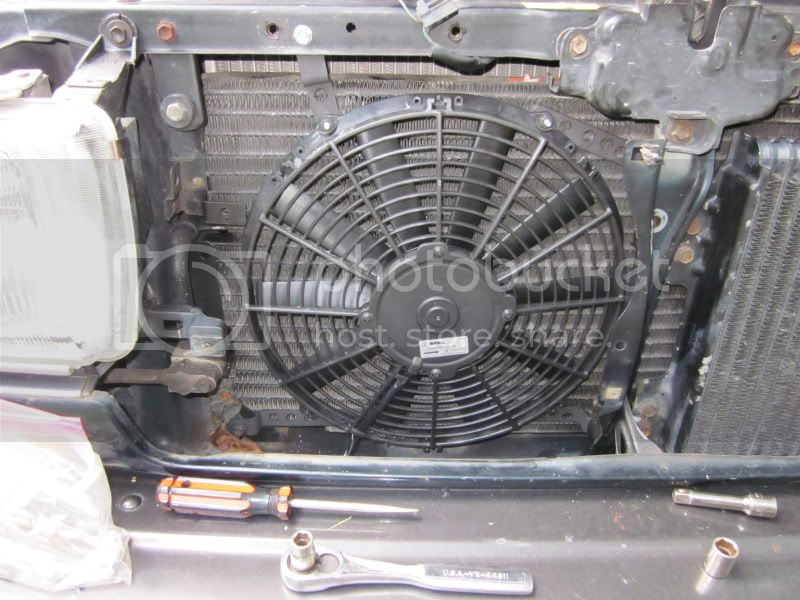
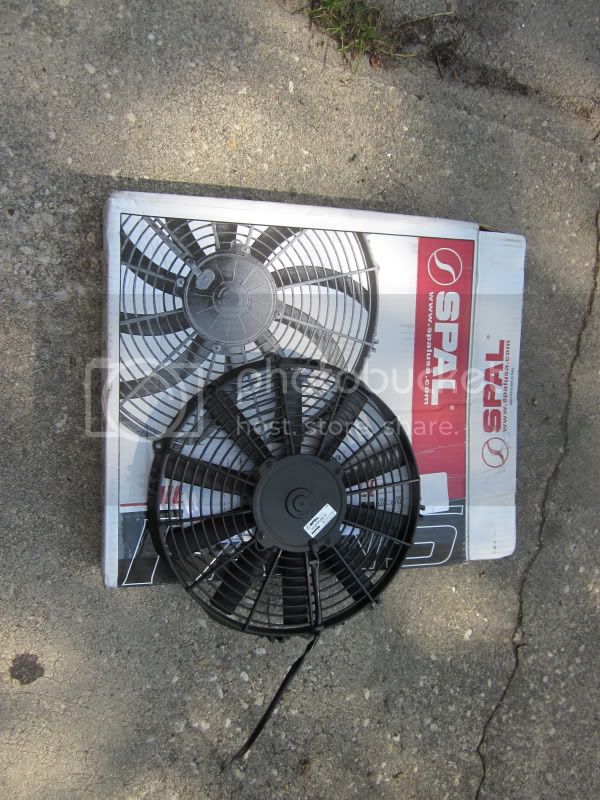
so i've been wanting to install a 12V pusher fan to help keep the temps down in my LX450, and I decided on the SPAL 12". It seems like a really nice product, and seems really well made. I also bought a "universal" 12v 30A relay and was planning on using my rear heater switch to operate the fan switch since i removed the rear heat a few months ago.

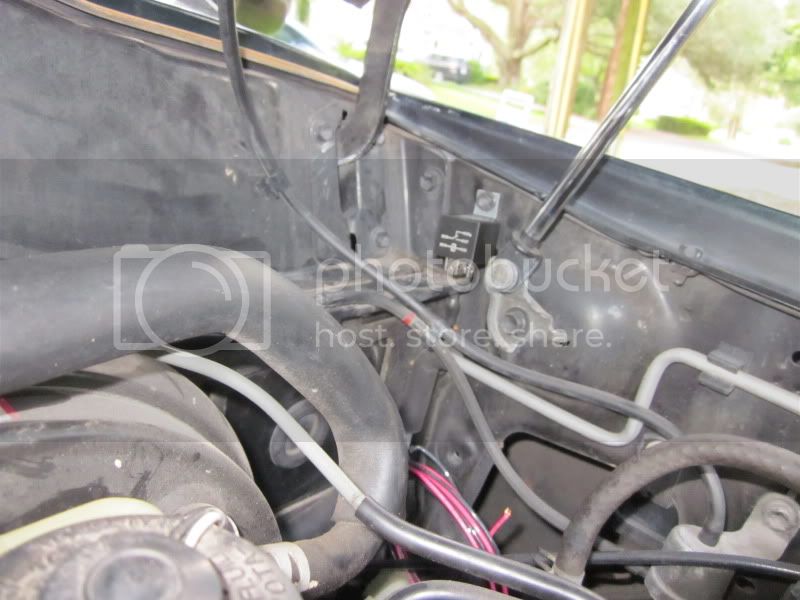
Anyway, got it all hooked up ( see diagram below) the fan turns on as it should and runs just fine with the engine off. When the engine is running, if the fan is turned on the fuse blows immediately. I am thinking i have something hooked up wrong, but this is the first wiring project I have done and I have to say it wasn't as easy as I thought. Can anyone offer some ideas? I don't understand why it works fine with the engine off. I guess I am glad I decided to put a fuse in the power wire.

map.jpg

IMG_2353.jpg

IMG_2351.jpg

IMG_2354.jpg

IMG_2355.jpg
 
looks right , the onlt thing Id do is also add a fuse in the trigger ckt + (like a 2 amp fuse would be fine )
Are you piggie backing off the wires in the dash that used to feed the rear heater ?
 
I don't think your fuse is larger enough... You are using a 30 Amp relay and a 10amp fuse? Check for the spike in the amp draw for that fan...I'm betting its greater than 10amps.

If the fuse pops right at initial turn on...then either you have a direct short to ground or in my view you need a larger amp rated fuse for what you are doing (in this case).

maybe the above is wrong..its a been a while since I've through about wiring but.... not trackign why the the two hot wires to the battery? I thought the idea was with the relay to have one trigger wire.. one hot wire, and a ground. trigger wire is energized with low amps....which in turn energizes the relay which makes the connection to the large hot wire feeding the device/fan. Seems like with the circuit drawn above you are bringing or could be brining fairly high voltage into your cab to the switch.

What would happen with the above diagram if you removed the hot wire that is unfused, made the green wire hot with ign on, and usd a switch on the ground wire?

What happens if you place a 20 amp fuse inline rather than 10amp leaving other stuff unchanged? Not sure I would run the hot wire that is feeding your switch directly to the battery.... why not just jump off a known hot wire under the dash....for a trigger wire you do not need high amperage.

I'm rambling on...but I would take the unfused wire off the battery, and use the same wire and tap off a good circut under the dash that has power either all teh time or ign on and I suspect you would be in business...potentially changing the 10amp fuse out for something larger.
 
Last edited:
What's the amp rating for the fan?

BTW, the 30A rating on the relay is for the contacts, not the current draw on the coil. I agree that you need a fuse on the coil side of the relay, but you need to see what the current rating is on the fan and then size the fuse for that load.
 
thanks for the input guys.

*But* The way I have it wired, i can turn the fan on w/ the ignition off, and it works fine. I did look at the specs of the fan, and it says 20A. I guess i will try a larger fuse, but it seems weird to me that it will work fine with the ignition off.
 
you will have to allow for the hhighest spike in load on the fan which is normally at statup...so if 20amp then you need at least a 20amp fuse for your power feed wire.

I've attached a doc off the SPAL web site...hope this will load, should be helpful.
 

Attachments

Last edited:
puled this off their specs
Connect fuse holder inline per diagram within 12" of the battery using ring terminal or equivalent.
* Note: On medium profile fans use a 20 amp fuse, on low profile fans use a 15 amp fuse
 
i cant tell, but if it is a standard bosch style relay, put a 20amp fuse on a wire going from battery to the 87 terminal, then the fan lead to 30. the switch output goes to,we'll say 85, and ground to 86. then ground the other fan lead, and power the switch with an ign or bat wire, fused at 2amps, and should be good to go.
 
With the engine not running and therefore the alternator not running, the battery voltage will be lower. With lower battery voltage the fan motor will draw lower current and is more than likely why your 10A fuse is just enough for that situation.

Fuses are fairly brute force devices (especially automotive ones). Since all you are trying to really do with the fuse is to protect the wiring from melting down if a short occurs, sizing the fuse to 20A would be still quite safe (assuming you used appropriate wire gauge).

I'd also use spiral wrap or slit convoluted plastic over your wiring to prevent it chaffing on sharp bits over time and then testing your wiring/fuse....

cheers,
george.
 
Another thing to remember: the sizing of the fuse is to protect the wire, so make sure that your wire is rated for the same amperage you select for you power and ground to drive the fan.
 
one more thing. is the fan wired to push air thru the rad? a reverse wired fan will have a huge current draw when the mechanical fan is drawing air thru the rad...
 
Another thing to remember: the sizing of the fuse is to protect the wire, so make sure that your wire is rated for the same amperage you select for you power and ground to drive the fan.

X2, check the draw, a lot of those fans draw 30-40amps. Need to be wired with appropriately sized wire or will have low performance and short life.
 
i cant tell, but if it is a standard bosch style relay, put a 20amp fuse on a wire going from battery to the 87 terminal, then the fan lead to 30. the switch output goes to,we'll say 85, and ground to 86. then ground the other fan lead, and power the switch with an ign or bat wire, fused at 2amps, and should be good to go.

i believe bosch relay is power in on 30, n/c on 87a, n/o on 87, trigger and ground can go either 85 or 86 unless the relay is equipped with clamping diode.:cheers:
 
power in to the 30, will mean the 87a will be hot when the relay is "off" It does not matter which one power goes in on IMHO, but there is no chance of a short this way. ( not much chance anyway)
 
UPDATE: I replaced the 10A fuse with a 15A, and it does not blow. So those who suggested that the fan draws more current with the voltage increase, were correct!

i measured voltage w/ the ignition off and it was 12.4V, with the ignition on, 14.4V. The fan must pull close to 10A @ 12v and more than 10A @14V. I learned something!
 
UPDATE: I replaced the 10A fuse with a 15A, and it does not blow. So those who suggested that the fan draws more current with the voltage increase, were correct!

i measured voltage w/ the ignition off and it was 12.4V, with the ignition on, 14.4V. The fan must pull close to 10A @ 12v and more than 10A @14V. I learned something!

My guess is the fan should draw more than that, what is the amp spec? What gauge wire do you have for power and ground, how long is the run?
 
battery voltage is dancing around 12volts..... with engine running you'll see something around 13 to 14 volts.

What happens if you put a 20 amp fuse? Did you review the pdf I attached...
 
battery voltage is dancing around 12volts..... with engine running you'll see something around 13 to 14 volts.

What happens if you put a 20 amp fuse? Did you review the pdf I attached...

The spec sheet on the fan does not list how many amps it draws. I just assumed that everything was fine since it ran w/ the engine off and the 10A. So when i put in the 15A, now it runs w/ the engine on and doesn't blow the fuse. I guess its best to use the lowest rating fuse that does not blow, for safety.

Also to answer the other question, I used 12GA wire and the run from fan to battery is probably 6 feet at most.
 
Back
Top Bottom