Camp kitchen basics

This site may earn a commission from merchant affiliate
links, including eBay, Amazon, Skimlinks, and others.

They might not fit in your box but I take at least two cast iron skillets along. One is about 3 inches deep and the other about 1 inch and it doubles as a lid. If you cook on a stove cast iron will save you a bit of fuel because they store heat. Also, I can bake a loaf of bread in about 35 minutes with this setup -- on top of a stove. Both skillets stow away in a canvas bag. The third is a deep dutch oven that awaits duty in its own canvas carry bag.

Simple bread recipe : 4 cups flour (I use 3 to 1 white to wheat) mix together with a spoon or fork adding 1 table spoon sugar, 2 teaspoons salt, 1 table spoon olive oil, optional. One packet of dry yeast dissolved in 1 cup of water. Mix it all up and add another 1 to 1.5 cups water but not all at once. You want the mixture to be sticky wet but not gooey wet. Let it rise for a while -- maybe one hour, maybe three depending on temperature and schedule -- in a pan that fits inside of your cast iron oven. Any pan will work. An old sauce pan with the handle cut off works, or whatever. While the dough rises, covered up with a towel of course, go catch a fish or ...... See you all at supper time. Prep time is about 5 minutes. Bake time should run 30 - 35 minutes. Stick a stick into it (see posts above RE: sticks) and if it comes out completely dry, its done.

The dry ingredients can be measured up in a zip lock bag before leaving home. An alternative cooking method that I often use on the trail, and at home, is to make the dough, store it in the fridge and pinch off what I might need for the meal and let it warm up a bit on the cutting board. It will rise some. Then, I pat it out like a tortilla or roll it out using a coffee cup, peanut butter jar, or whatever. Drop a little oil on the skillet and slap the dough on the hot pan and FRY bread in just a couple minutes.:cheers:

:popcorn:
 
They might not fit in your box but I take at least two cast iron skillets along. One is about 3 inches deep and the other about 1 inch and it doubles as a lid. If you cook on a stove cast iron will save you a bit of fuel because they store heat. Also, I can bake a loaf of bread in about 35 minutes with this setup -- on top of a stove. Both skillets stow away in a canvas bag. The third is a deep dutch oven that awaits duty in its own canvas carry bag.

Simple bread recipe : 4 cups flour (I use 3 to 1 white to wheat) mix together with a spoon or fork adding 1 table spoon sugar, 2 teaspoons salt, 1 table spoon olive oil, optional. One packet of dry yeast dissolved in 1 cup of water. Mix it all up and add another 1 to 1.5 cups water but not all at once. You want the mixture to be sticky wet but not gooey wet. Let it rise for a while -- maybe one hour, maybe three depending on temperature and schedule -- in a pan that fits inside of your cast iron oven. Any pan will work. An old sauce pan with the handle cut off works, or whatever. While the dough rises, covered up with a towel of course, go catch a fish or ...... See you all at supper time. Prep time is about 5 minutes. Bake time should run 30 - 35 minutes. Stick a stick into it (see posts above RE: sticks) and if it comes out completely dry, its done.

The dry ingredients can be measured up in a zip lock bag before leaving home. An alternative cooking method that I often use on the trail, and at home, is to make the dough, store it in the fridge and pinch off what I might need for the meal and let it warm up a bit on the cutting board. It will rise some. Then, I pat it out like a tortilla or roll it out using a coffee cup, peanut butter jar, or whatever. Drop a little oil on the skillet and slap the dough on the hot pan and FRY bread in just a couple minutes.:cheers:

How do you cook it in the cast iron? On top of direct heat or with coals (top & Bottom) or...?

I've always wondered if I could take a cast iron pot and put it on top of the stove, crumple up some tin foil to create a thermal break, and put a pan on top of that to bake biscuits in when camping. I would think a nice mediaum will heat cast iron to about 350* after about 15 minutes of warming. Seems like it should work... maybe?
 
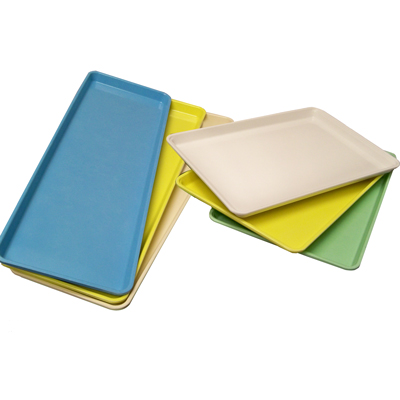
Don't know if you guys can use these but in reading about cutting boards and such - I bought one of these nearly indestructible molded fiberglass prep trays to place on the tailgate of my 80 as a bait tray. The long one covers about half of the gate and it's full width to protect the carpet from stinky bait and juices. And it has sides to keep anything from sliding or dripping off. The fiberglass construction is basically like the hull of a boat so as I said it's heavy duty and isn't going to break - ever. It's a lot like an old cafeteria tray only thicker.


They're a little pricey from this place but they are available cheaper elsewhere.


http://www.usplastic.com/catalog/item.aspx?itemid=74534&catid=852&clickid=searchresults


"Molded Fiberglass prep trays are manufactured of durable fiber glass composite, providing rugged construction designed for years of use. Prep trays are used in many industries and environments including restaurants, hotel room service, mall food courts, hospitals, cafeterias, and school/work settings".


51106p.jpg
 
How do you cook it in the cast iron? On top of direct heat or with coals (top & Bottom) or...?

I've always wondered if I could take a cast iron pot and put it on top of the stove, crumple up some tin foil to create a thermal break, and put a pan on top of that to bake biscuits in when camping. I would think a nice mediaum will heat cast iron to about 350* after about 15 minutes of warming. Seems like it should work... maybe?
You can do this, it works better with a dutch oven (the kind with no legs if you are cooking on a stove). Use a round cake cooling rack instead of foil, even a few stones will work.
 
Great list, I will be setting up a chuck box for my expo trailer I am building. Subscribed.
 
Cast iron : Thermal Break. Cook directly on top of the burner. I roll up aluminum foil strips sometimes. The bread pan I am using is a USA PAN with double walls 9" X 5" x 3". I found it at Bed Bath and Beyond but also on-line. I had to grind down the corners so that it would fit inside the skillets. Also, I put a large rock on top to keep them closed and hold the heat..
 
I keep a couple cans of Chunky Soup in there, change 'em out every couple months.
Think emergency or inconvenience rations.

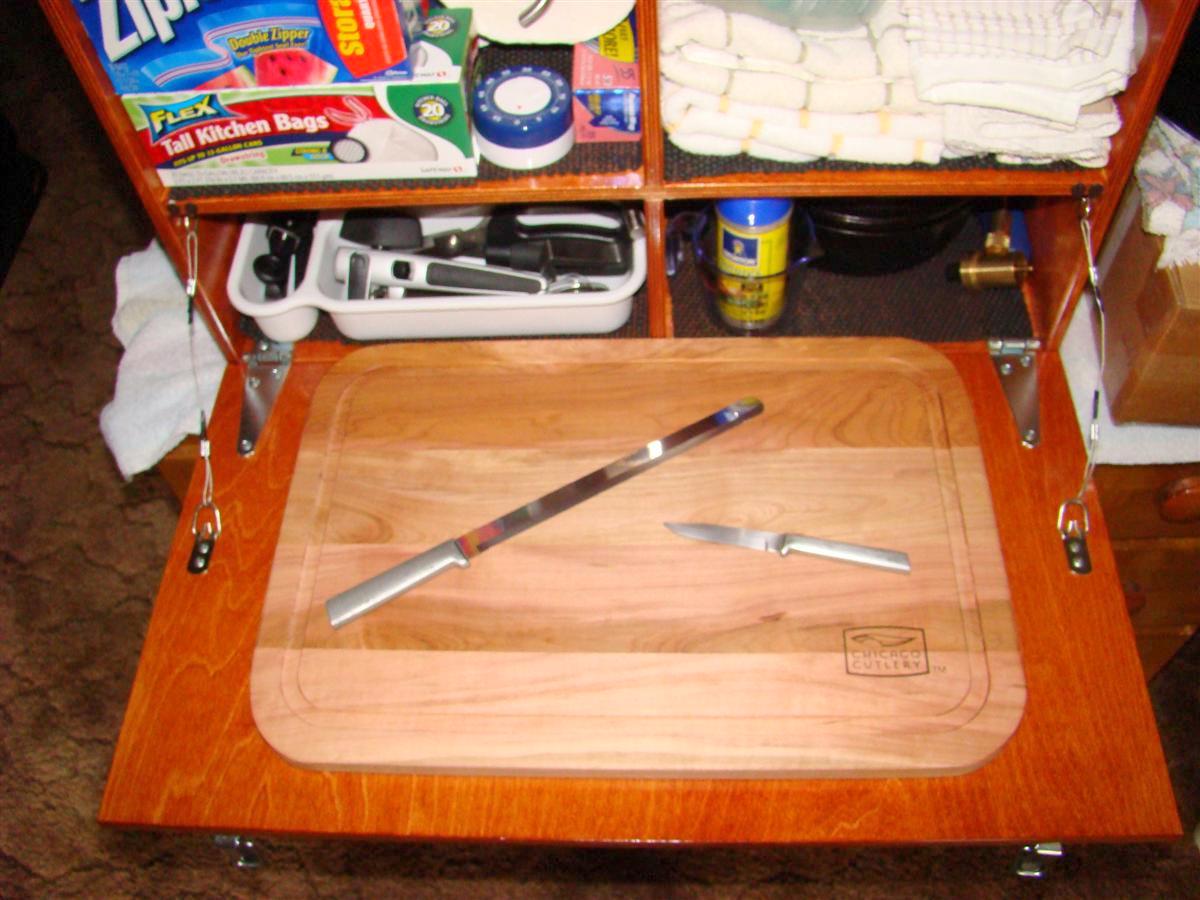
Also think about building the cutting board into the door of the chuck box. Folds down from the front, held by chain or cable. Use oak and season with canola oil.

I carry two spare gas canisters but run off a small 1.5 gallon tank for the stove with a pipe on top for the lantern. I have a 2.5 gallon tan that my propane fire pit (we get a lot of fire restrictions here, also saves collecting firewood) runs off.
 
Shouldn't cutting boards be seasoned with mineral oil? And made from a dense grain wood such as maple rather than an open grain wood like oak?

I'd never use a wood cutting board anyway, the NSF grade plastic type are much more sanitary. You want something you can remove to wash. I have a couple of the inexpensive roll up kind in the trailer.


:idea: A spray bottle of bleach water would be a good addition for sanitizing cutting boards and other surfaces, like picnic tables.
 
Wood is exceptionally sanitary and water proof if it is sealed correctly. I grew up making wood countertops, many differnt wood types. We sealed them with tung oil....waterlox if I remember correctly.

Note: I don't have any references saying that wood is more or less sanitary than plastic, but, personally, I do my best to keep plastic away from any food I'm making.

EDIT: from UC Davis food research saying wood is quite a bit more sanitary than plastic:
http://faculty.vetmed.ucdavis.edu/faculty/docliver/Research/cuttingboard.htm
 
Last edited:
Shouldn't cutting boards be seasoned with mineral oil? And made from a dense grain wood such as maple rather than an open grain wood like oak?

I'd never use a wood cutting board anyway, the NSF grade plastic type are much more sanitary. You want something you can remove to wash. I have a couple of the inexpensive roll up kind in the trailer.


:idea: A spray bottle of bleach water would be a good addition for sanitizing cutting boards and other surfaces, like picnic tables.

I would suspect that open grain would take the oil and seal up better

I learned to cook in a little cafe' in the Sierras around 1960.
We used oak cutting boards for 25 years and never once had anyone either staff or clientele get sick. Come to think of it, I'm still using oak cutting boards with no ill effect. A clean record for 53 years works for me.
 
Open grain wood has more places for liquid to hide, which is why cutting boards are traditionally made from close grained woods like maple.

I've read the stuff about wood being anti microbial, still not convinced. I like a surface I can hose down with bleach water, and has no place for food particles or juices to hide.

As far as food not coming in contact with plastic, good luck with that. ;) Unless you raise and butcher your own meat, and grow your own veggies everything you eat has come in contact with plastic at some point in the distribution chain.

A NSF certified BPA free cutting board is still my surface of choice for food prep.
 
this is a good recipe!- got this one written down!
 
Open grain wood has more places for liquid to hide, which is why cutting boards are traditionally made from close grained woods like maple.

I've read the stuff about wood being anti microbial, still not convinced. I like a surface I can hose down with bleach water, and has no place for food particles or juices to hide.

<snip>

A NSF certified BPA free cutting board is still my surface of choice for food prep.

Open grain wood has more places for liquid to hide, correct, like canola oil (use a cooking oil, not something related to what you pour into that 2F) to seal it up so very well. You should wash in hot water after every use, hit it with the oil when it's dry after every couple of uses.

Several thousand years of wood cutting boards and dishes seem to back up anti-microbial properties.
If you're paranoid, you can always hit it with your bleach spray, just in case.

My choice is a nice oak, maple or bamboo (very nice, that last) cutting board because there's something to be said for keeping to the old Gods.

These guys thought so too.
From a UC Davis study:

". . . those using wooden cutting boards in their home kitchens were less than half as likely as average to contract salmonellosis. . . [while] those using synthetic (plastic or glass) cutting boards were about twice as likely as average to contract salmonellosis . . .; and the effect of cleaning the board regularly after preparing meat on it was not statistically significant . . ."
--http://faculty.vetmed.ucdavis.edu/faculty/docliver/Research/cuttingboard.htm

:hhmm:

Yep, wood.
 
I use a bamboo board I bought a year or so back, very nice board, got it off of Amazon.
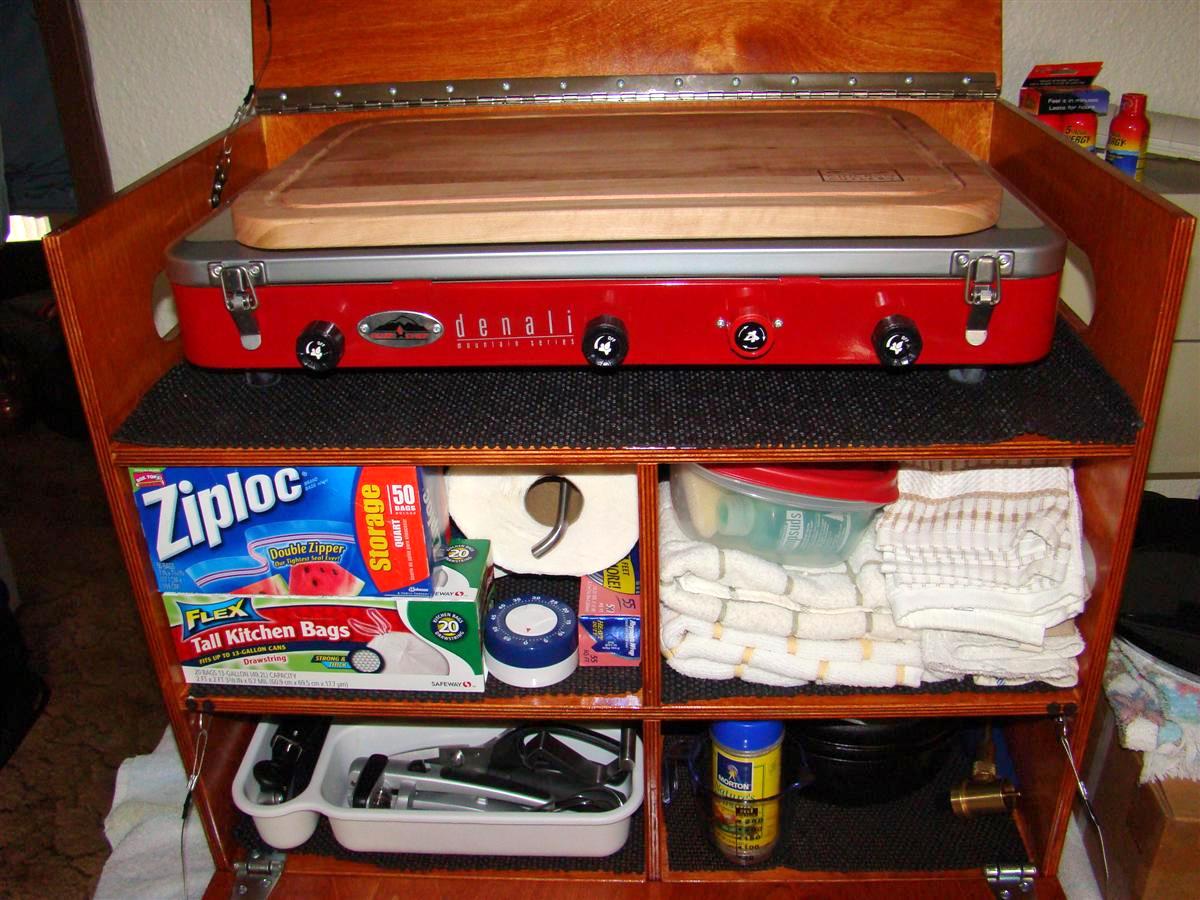
Fits on top of the Camp Chef Denali stove when traveling.

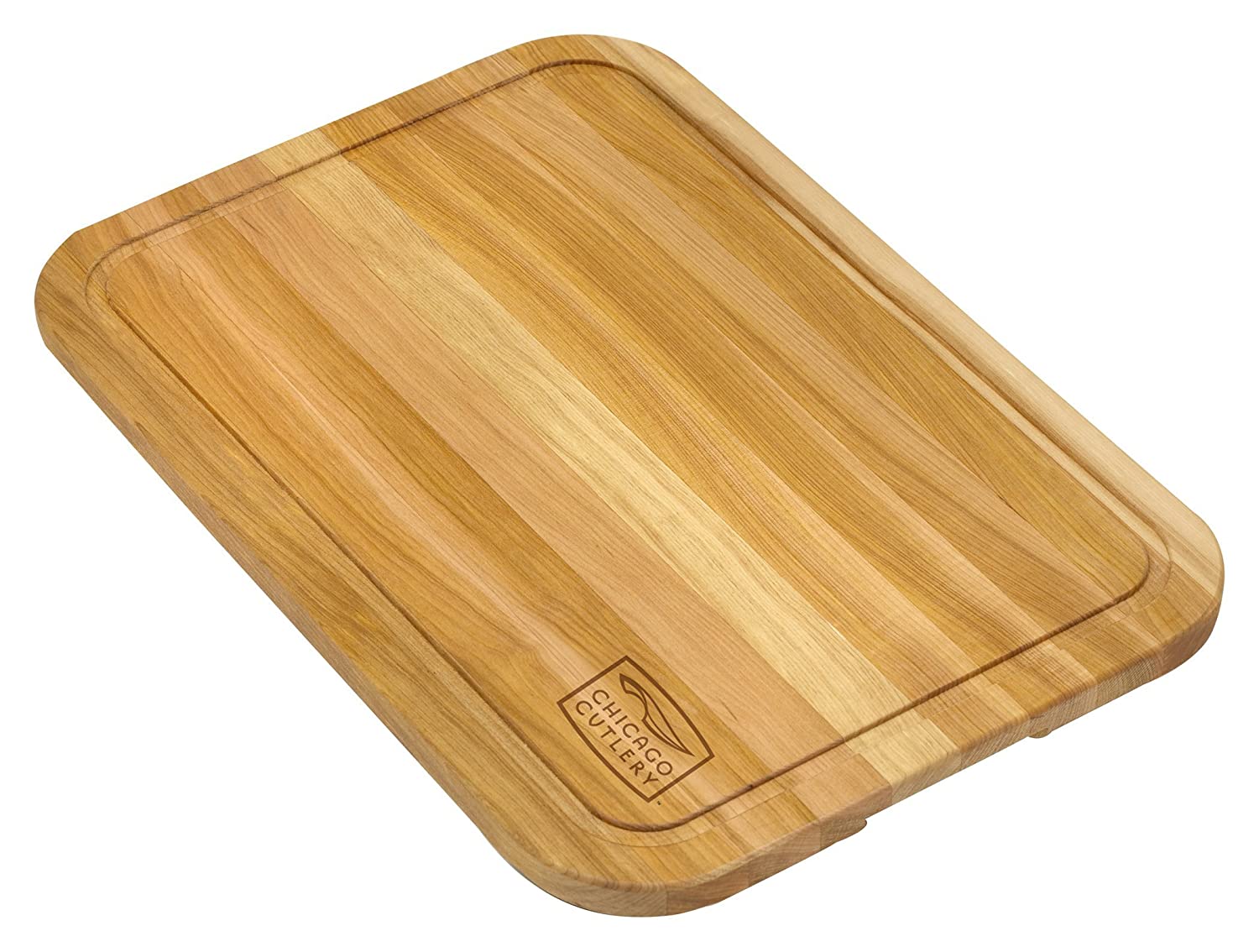
Chicago Cutlery Woodworks 19-1/2" x 13-1/2" Cutting Board

It lists for $28.42 now, but back when I bought it, I got it for $7.95.
I believe back then it was also $28.42, so either it went on sale when I bought it, or there was a glitch at my checkout.
I just checked my order and I ordered it April 25th of 2011.

cuttingboard1.jpg


cuttingboard2.jpg


81fpjjrqBQS._SL1500_.jpg
 
Great thread for ideas, bumping and subscribing.
 
I use a bamboo board I bought a year or so back, very nice board, got it off of Amazon.
Fits on top of the Camp Chef Denali stove when traveling.

Chicago Cutlery Woodworks 19-1/2" x 13-1/2" Cutting Board

It lists for $28.42 now, but back when I bought it, I got it for $7.95.
Price might just be bamboo getting hipper. :) I much prefer wood or bamboo cutting boards (it's what use at home) but don't have a great way to organize my camping gear yet, so I'm going with UHMW plastic type for now. They take abuse better than wood, and sterilize in the dishwasher. There's a variety pack of three at HFT (of course) for about $8 right now.
 
Laugh if you like, but make room for an espresso machine:

http://www.handpresso.com

Geof

I love my Aeropress - tried it in the field for the first time this past weekend and it worked great - just like at home. I make 2 "shots" in my coffee cup, fill to about 2/3 with hot water, then add cream and sugar. Basically an Americano, if it's OK to admit knowing that.

Anyway, for me, it's just a light weight, durable, easy-cleanup way to prevent caffeine withdrawal headaches.

This is what I got, though I think I picked one up a little cheaper by getting one of the ones with damaged packaging.
 
I have 2 totes (one food, one supplies) and they have been perfected over time.
Put a piece of tape on questionable items. If tape remains after 3 trips remove the item.
Here are some things not often thought of:

Welding gloves are great for fire work.
Small broom and nesting dustpan for cleaning up tent.
Used Paper towel tube stuffed with grocery bags.
Thermacell, Sunscreen, Hand Sanitizer, Roll of Charmin
Replace your flashlights with LED headlamps, xtra batteries
Anything that might leak gets stored in ziploc
Assorted Ziplocs and a roll of foil
Old Bath towels, once dirty we pitch or wash, nice for cleanup
Ducktape and parachute cord
Hammock and tree straps
In Food Tote:
Squeeze Bottle of Veggy Oil
Mr Grass Chix Soup and Can of Chix Breast
Peanut Butter, Honey and Tabasco Chipotle
Sardines or Smoked Oysters and sleeve of crackers
Tea and Coffee, Instant Oatmeal and dried fruit
Shakeable Pancake Mix
I store cutting board, extra fuel bottle and stick lighter in my Coleman Stove. Open and ready
Buy a stainless stockpot that fits your sleeping bag. then use Bungee to hold it on.
 
Back
Top Bottom