


Hi All, I don't usually post in the forum as everything is pretty much covered, but I did a search on this and haven't found much information. Coming from the FJ40 world, I'm paranoid about rear sill rust, so the other day I decided to take a look at my 2000 UZJ 100. I was already back there trying to figure out my rear hatch leak and figured it was time to check the rear sill for any rust. A quick visual inspection showed everything was clean, but then I took a closer look. The following 3 images gives you an idea of what to look for.
Keep in mind, my rig has 200,000 miles and was a California truck with all miles in SoCal. Your mileage will vary, but it's 5 minutes to check and well worth it. To check the rear sill, it's best to pull the plastic trim piece, push the carpet back and then pull the rubber weather strip. Toyota uses a light bead of black weatherstrip adhesive, but on my truck there was barely any left. On to the pictures:
Rear shot with trim removed:
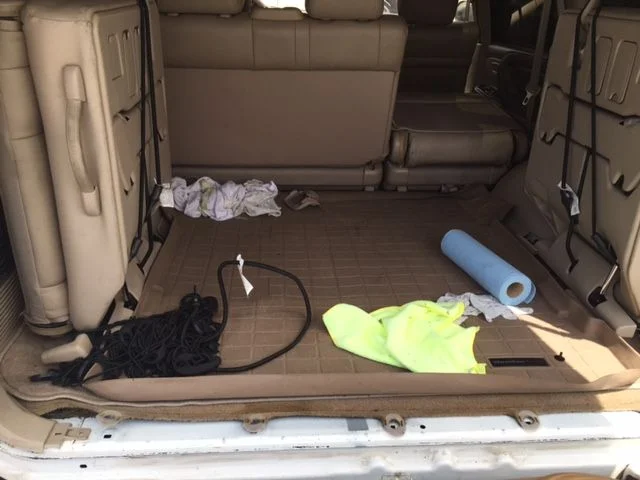
Me pointing to my problem area that I found on my rig:

Looks fine from above, but then I took a look underneath:
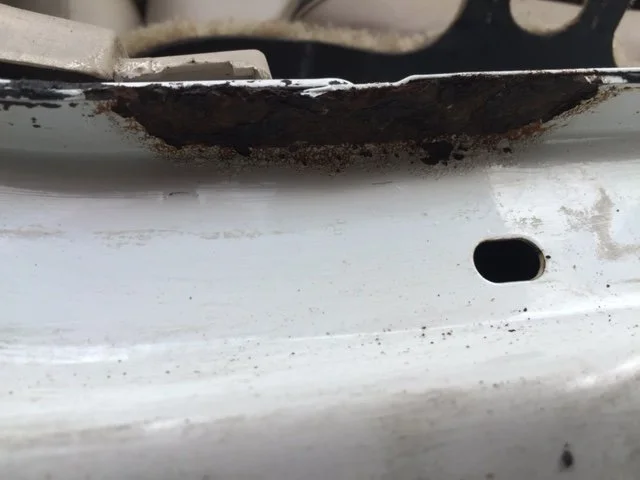
Unfortunately, I didn't get any after shots, but my solution was simple. Take a dremel, ground the rust off until I saw bare metal all the way around, then sprayed with a rust neutralizer treatment. The rear sill is really 2-3 layers of metal sandwiched together with a factory spot weld. Further inspection at the factory spot welds showed some beginning rust bubbling as well in other areas of the sill. I suspect the spot welds may get compromised when the weather strip gets water on the inside edge and over time, rust happens.
On my UZJ100 this was the only major rust spot, the rest of the sill was very very clean. I cleaned up a few spot welds that had rust bubbles starting to form. Unfortunately I think the weather strip is going to trap moisture, and I'm betting that folks in wetter climates will see way more rust then I did. Its a simple 5 minute job to pull the rubber and check, so I would encourage folks to do it before that rust spreads further and becomes a more expensive issue.
Also, any rust treatment/paint you apply to this area isn't going to show, once the rubber strip and trim pieces are added back onto the truck, so no worries about unsightly mismatching colors, etc. Going forward, I will pull this rubber trim after any heavy rains and make sure it dries out completely so that a minimum of moisture is trapped.
Mark
Keep in mind, my rig has 200,000 miles and was a California truck with all miles in SoCal. Your mileage will vary, but it's 5 minutes to check and well worth it. To check the rear sill, it's best to pull the plastic trim piece, push the carpet back and then pull the rubber weather strip. Toyota uses a light bead of black weatherstrip adhesive, but on my truck there was barely any left. On to the pictures:
Rear shot with trim removed:
Me pointing to my problem area that I found on my rig:
Looks fine from above, but then I took a look underneath:
Unfortunately, I didn't get any after shots, but my solution was simple. Take a dremel, ground the rust off until I saw bare metal all the way around, then sprayed with a rust neutralizer treatment. The rear sill is really 2-3 layers of metal sandwiched together with a factory spot weld. Further inspection at the factory spot welds showed some beginning rust bubbling as well in other areas of the sill. I suspect the spot welds may get compromised when the weather strip gets water on the inside edge and over time, rust happens.
On my UZJ100 this was the only major rust spot, the rest of the sill was very very clean. I cleaned up a few spot welds that had rust bubbles starting to form. Unfortunately I think the weather strip is going to trap moisture, and I'm betting that folks in wetter climates will see way more rust then I did. Its a simple 5 minute job to pull the rubber and check, so I would encourage folks to do it before that rust spreads further and becomes a more expensive issue.
Also, any rust treatment/paint you apply to this area isn't going to show, once the rubber strip and trim pieces are added back onto the truck, so no worries about unsightly mismatching colors, etc. Going forward, I will pull this rubber trim after any heavy rains and make sure it dries out completely so that a minimum of moisture is trapped.
Mark


