Old School, Lost Arts

This site may earn a commission from merchant affiliate
links, including eBay, Amazon, Skimlinks, and others.

Joined
Jul 18, 2011
Threads
55
Messages
929
Location
Bayfield, in the San Juan Mtns. of Colorado
There are a lot of gadgets and ding-a-fringuses out there these days and a lot of them attempt to replace time-honored techniques of our forebears.

What old school techniques do you use that work better or at least as well as new-fangled gizmos.

I'll start with an ancient knot that people have tried to replace with all manner of do-dahs that mostly don't work as well as the knot. Use it instead of that metal thing that came with your tent or fly guylines.

** DMCA - image removed
 
Last edited by a moderator:
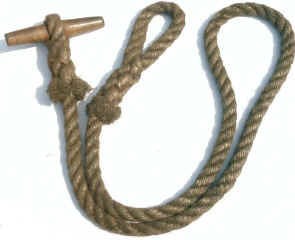
You would like toggle ropes
Toggle-rope.jpg


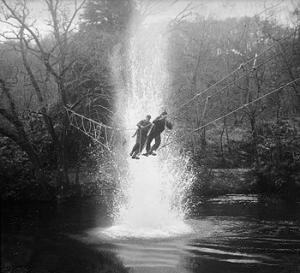
These were standard issue for British soldiers, they used them for a multitude of task, you can bundle large piles of fire wood or anything else, you can string them together to make a climbing rope. The Brits would even make rope b ridges with them.
Commando_on_a_toggle_rope_bridge.jpg


Learning to splice an eye in the end of a rope is essential to construction and a generally useful skill.
I learned from "Chapman Piloting: Seamanship & Small Boat Handling" , a book well worth having in your library if only for the section on ropes and knots.
 
Last edited:
.....

I'll start with an ancient knot that people have tried to replace with all manner of do-dahs that mostly don't work as well as the knot. Use it instead of that metal thing that came with your tent or fly guylines.

Ironically the metal thing that came with your tent is modeled on a wooden thing that has been around for many years. Rope tensioners were invented a long time ago, that they are still in use is a testament to their effectiveness.

That said its a good idea to know how to tie a taunt line hitch or a prusik knot. Generally knowing how to tie knots is a good idea.
 
You would like toggle ropes
Toggle-rope.jpg


These were standard issue for British soldiers, they used them for a multitude of task, you can bundle large piles of fire wood or anything else, you can string them together to make a climbing rope. The Brits would even make rope b ridges with them.
Commando_on_a_toggle_rope_bridge.jpg


Learning to splice an eye in the end of a rope is essential to construction and a generally useful skill.
I learned from "Chapman Piloting: Seamanship & Small Boat Handling" , a book well worth having in your library if only for the section on ropes and knots.


When I was a scoutmaster we had an assistant come on board that had all the boys make 'em, long enough to go 'round their waist twice. They were useful, though the 'making a rope' thing is dependent upon having a lot of guys each with one, 20 kids each with 2 feet of rope gives you a 40' rope, useful, but not much of a bridge. ;)

Between the BSA, a bit of sailing and rock climbing I learned a few knots. Never did master splicing though. Since most of the stuff I've done with rope was temporary in nature the time investment didn't seem worth it when a knot would work nearly as well. I've always admired those that could splice, though.

I've made a couple cargo nets, well, two. No, actually four but two didn't work for various reasons. All out of paracord. I call it "manly macrame." I think the hot ticket for these would be a sheet of plywood with finish nails where each knot goes for the net. Gonna do that for the next net.
 
Last edited:
Ironically the metal thing that came with your tent is modeled on a wooden thing that has been around for many years. Rope tensioners were invented a long time ago, that they are still in use is a testament to their effectiveness.

That said its a good idea to know how to tie a taunt line hitch or a prusik knot. Generally knowing how to tie knots is a good idea.

Prusic knot is a good one to know. Also the basic bowlines, a couple joining knots: square knot, sheet bend, water knot, fisherman's/barrel knot, and one of my favorites, butterfly knot.
 
What else old school do you use?

I don't like percolators and use an old fashioned 32 cup coffee boiler.
Fill with water to the bottom of the spout, add 2 or 3 handfuls of coffee, bring to a boil on the campfire. Ok, it will work on a propane stove to but loses some of the romance.

Here's the trick, 'cause there's always a trick, after it boils, take a cup of cold water pour a bit down the spout the rest in the top, slowly. The cold water will settle the grounds and they'll stay settled unless you shake the pot or something.
 
Dad taught me and my brothers how to get the campfire going again the next morning from just the embers. I did this at the big firepit at the Round Up this year much to the amazement of onlookers. I didn't realize it wasn't common knowledge - all you got to do is clear a little ash, maybe some wadded up newspaper and give it some fresh air.
 
when I used to be an electrician, I would carry a hacksaw. no one understood why, they'd just shake their heads in confusion as I strolled by them with my bags on and benders in hand. meanwhile, they were always walking back to their carts for the sawzall or waiting for the battery to charge:mad:. sandbaggers. Prusic knot is a good one...and the clove hitch.
 
My son and I were having the same discussion, sometimes it's faster to use a hand plane to knock down a corner than Set up a router. He is a finish carpenter and uses hand tools in favor of power tools frequently.
 
I shave with a safety razor, use a cup and brush to make the soap lather, the trick is not slashing you throat.;)

I use cup soap and brush but the double blade razors. When traveling I don't bring the cup, just the brush and use bar soap--if I shave at all.
 
Dad taught me and my brothers how to get the campfire going again the next morning from just the embers. I did this at the big firepit at the Round Up this year much to the amazement of onlookers. I didn't realize it wasn't common knowledge - all you got to do is clear a little ash, maybe some wadded up newspaper and give it some fresh air.

Me too, but in Colorado, especially during dry summers (had a lot of those lately) the USFS goes nuts if there's any heat at all coming off the fire and it doesn't look like charcoal soup in the pit. Just as well--I don't want to be the guy that accidentally sets of the next 100,000 acre wildfire. People shun you when you do that.
 
This is a nifty knot if you need a loop in the middle of a line, much prettier than a bowline on a bight. AKA middleman's knot from the middle man in a climbing rope.

** DMCA - image removed
 
Last edited by a moderator:
I use cup soap and brush but the double blade razors. When traveling I don't bring the cup, just the brush and use bar soap--if I shave at all.
Take the next step, safety razor blades cost a fraction of those multiblade cartridge dohickies.
 
More old school stuff I do, I ferment vegetables. Sauerkraut, pickles, Kim Chee, that sort of thing. Lacto fermentation is one of the oldest ways of preserving food. It is butt simple and 100% safe as long as you follow a few simple rules.
 
Take the next step, safety razor blades cost a fraction of those multiblade cartridge dohickies.

I have a full beard and only shave the bits I don't like off maybe once every two weeks. i get about 8 or 10 shaves per blade. Before razor blades went nuts on price I bought the bazillion pack at Sam's Club and still have maybe 50 blades left.
 
Yep. I remember my dad made his own wine, alcohol, sausages, sauerkraut, etc. He even had a smoke house in the backyard! We had a big garden, he grew grapes, cherries, plums. My grandmother did the same. Some of my best memories were with my grandmother helping her out in the garden, and making all types of wine. We used to stop on the sides of the road to pick dandelions so she could make wine from them. They also used to have a big fish fry as well with sardines they would catch from Lake Erie. Simpler times.
 
Back
Top Bottom