


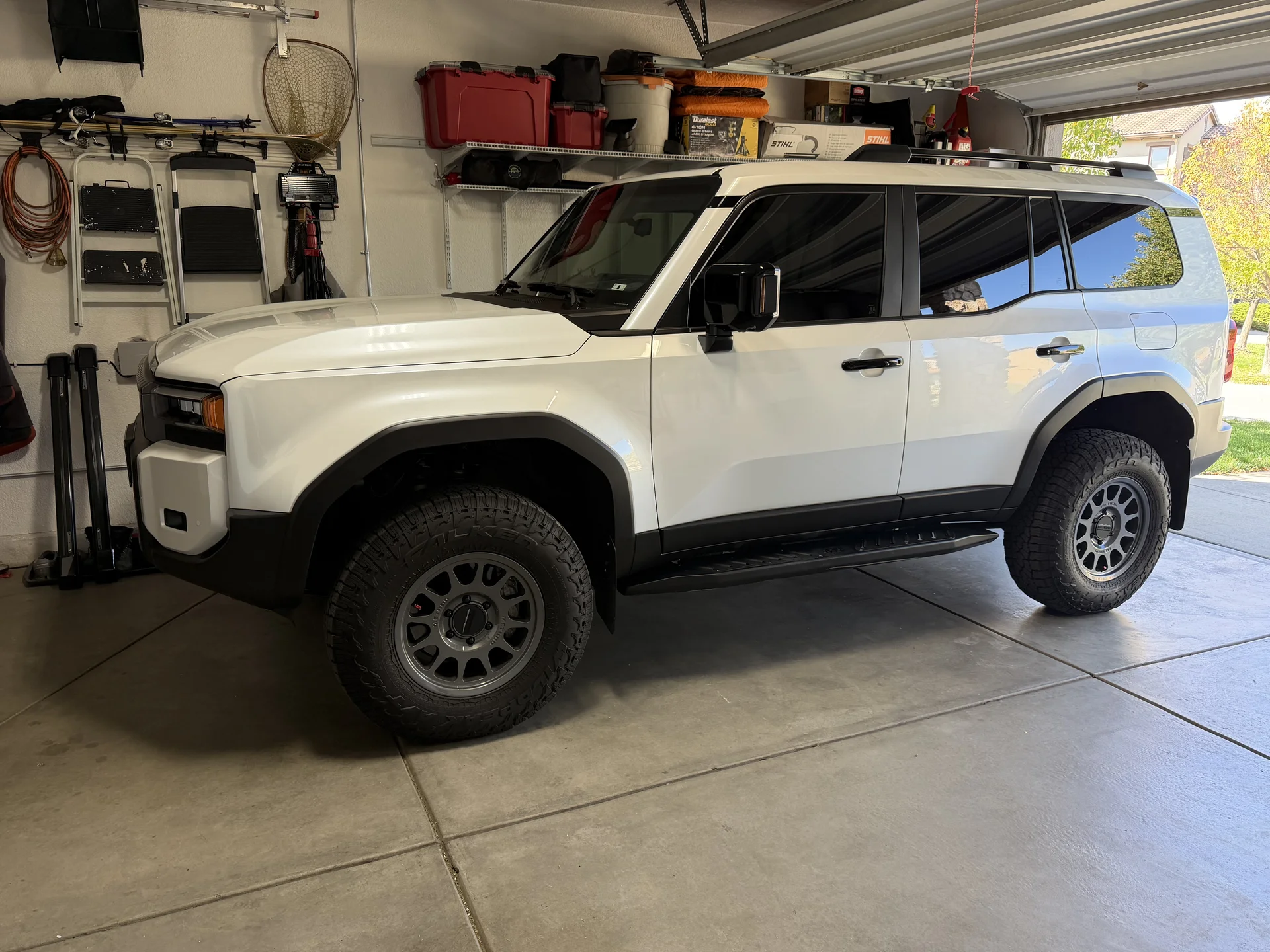
I've been building out my LC for about a year a little at a time. This past month or so I started looking at bumper and winch combinations and I began to think about weight, because they certainly add weight to the front of the vehicle. Since I was adding an OME BP-51 set up, I easily could have adjusted to handle the additional weight. But it got me thinking further, how much weight can I reasonably add to this vehicle. I already have under armor that I've added, larger 33" tires in E load and Method 703 which also add weight. So I started calculating all of my gear and other items that go into the truck for a weekend in the high country and learned that I run out of available capacity and push the limit of the GVWR pretty easily. To give you an idea of where I am now, without a bumper, winch, rear bumper, roof rack (all items that I would have loved to add but can't), I have this table below to simply illustrate how quickly one runs out of available cargo/additional available weight capacity, You'll note that if I'm traveling with two people instead of just me, that I pull the rear seats to give me more capacity. What I'm packing is not very much and I've utilized extreme lightweight packing gear for things like cots and chairs.
====================================================================
TOYOTA LAND CRUISER 250 OVERLAND BUILD CONFIGURATION SUMMARY
====================================================================
Vehicle Platform: 2026 Toyota Land Cruiser Premium (Hybrid i-FORCE MAX)
Location/Elevation Base: Morrison, CO / 6,000 Feet
Active Build Strategy: Maximum Weight Optimization & Complete Seat Delete
====================================================================
1. PRIMARY VEHICLE BASELINE SPECIFICATIONS
--------------------------------------------------------------------
- 2.5-Inch Front Lift / 2-Inch Rear Lift (Stance Leveled)
- OME Upper Control Arms (UCAs) & DuroBumps Progressive Bump Stops
- Current Valving/Clicker Configuration Settings: 1:3 Front / 2:4 Rear
2. COMPONENT WEIGHT REDUCTION METRICS
--------------------------------------------------------------------
* Second-Row Seats Deletion (100% Complete): -125.0 lbs SAVED
- Passenger-Side 60% Split Assembly Removed (-75.0 lbs)
- Driver-Side 40% Split Assembly Removed (-50.0 lbs)
3. FIXED OVERLAND MODIFICATIONS & BASELINE STOWED GEAR MANIFEST
--------------------------------------------------------------------
4. DYNAMIC TRIP CARGO & CONSUMABLES PROFILE
--------------------------------------------------------------------
5. FINAL CHASSIS PAYLOAD & MARGIN ANALYTICS
--------------------------------------------------------------------
====================================================================
CONFIGURATION STATUS: OPTIMIZED | SAFE OPERATING LIMITS MAINTAINED
====================================================================
What all this means, I'm not so sure, other than to state that the LC does not have much available weight to be added to this vehicle to stay under the max capacity rating. You basically can't fully build out one of these completely without sacrificing everything that comes along with running a vehicle over maximum capacity. I will definitely be setting up camp before tackling off-road mountain passes and removing weight from the vehicle. The last thing I need is to exasperate potential brake fade because I'm overloaded coming down Red Cone pass or something similar.
I think that if I would have researched this more on the front end I may have actually waited for the GX550, which gives one about 600 additional available pounds due to some more robust components, which also increase the towing capacity of that vehicle. I have to say that I love this vehicle, it's one of my favorites that I've ever owned. Heck, I find errands to run sometimes just to go for a drive. But I am disappointed that this is an issue and it's certainly not set up to handle a full overland build. At least that will save me some money but damn would I like to have upgraded front/rear bumpers with appropriate lighting. But, I don't have the available weight capacity.
How many of you look at this when doing your builds? I don't think that I am making too much of this.
====================================================================
TOYOTA LAND CRUISER 250 OVERLAND BUILD CONFIGURATION SUMMARY
====================================================================
Vehicle Platform: 2026 Toyota Land Cruiser Premium (Hybrid i-FORCE MAX)
Location/Elevation Base: Morrison, CO / 6,000 Feet
Active Build Strategy: Maximum Weight Optimization & Complete Seat Delete
====================================================================
1. PRIMARY VEHICLE BASELINE SPECIFICATIONS
--------------------------------------------------------------------
- Starting Payload Capacity (Factory Max): 1,100 lbs
- Gross Vehicle Weight Rating (GVWR Target): 6,725 lbs
- Powertrain Architecture: 2.4L Hybrid 4-Cylinder (6,000 lbs Towing)
- Primary Suspension Upgrades:
- 2.5-Inch Front Lift / 2-Inch Rear Lift (Stance Leveled)
- OME Upper Control Arms (UCAs) & DuroBumps Progressive Bump Stops
- Current Valving/Clicker Configuration Settings: 1:3 Front / 2:4 Rear
- Summer Running Gear: Method 703 Wheels (+35 Offset) / Falken Wildpeak AT4 255/80/17 Tires
- Winter Running Gear: Method 318 Wheels / Nokian Hakkapeliitta LT3 275/70/18 Tires
- Under-Vehicle Armor: Toyota OEM Upgraded Skid Plates (Engine, Transmission, Rear Differential)
2. COMPONENT WEIGHT REDUCTION METRICS
--------------------------------------------------------------------
* Second-Row Seats Deletion (100% Complete): -125.0 lbs SAVED
- Passenger-Side 60% Split Assembly Removed (-75.0 lbs)
- Driver-Side 40% Split Assembly Removed (-50.0 lbs)
- Factory Emergency Equipment: OEM Mechanical Bottle Jack Removed (-8.0 lbs SAVED)
- Tool Storage Adaptation: Replaced Rigid Heavy Box with Lightweight Soft Bag (-20.0 lbs SAVED)
- Roof Configuration Optimization: Factory Crossbars Omitted (Bare Side Roof Rails Kept)
3. FIXED OVERLAND MODIFICATIONS & BASELINE STOWED GEAR MANIFEST
--------------------------------------------------------------------
- Structural Chassis Upgrades: Heavy Steel Slee Rock Sliders (~130 lbs)
- Exterior Lighting Array: Nacho Quattro Supreme Pods (Ditch Cowl Mounted, Amber DRL, Spot/Flood)
- Audio Hardware Enclosure: Rear Cargo Hold 10-Inch Subwoofer Enclosure
- Emergency Safety Apparatus: 2.5-lb Fire Extinguisher & GlueTread Patch Kits (Tread & Sidewall)
- Integrated Air Management: Morrflate Air Compressor & 4-Hose Set in Soft Storage Config
- Hydraulic Vehicle Recovery: Safe Jack Sergeant 35-lb Hydraulic Lifting Kit
- Field Recovery Components: Synthetic Recovery Lines, Kinetic Ropes, & Soft Shackles Only
- Primary Wilderness Shelter: REI 2-Person Ground Tent & Marmot Sleeping Bag System
- Baseline Camp Living Gear: Helinox High-Back Chairs (2) & Helinox Cot with Leg Extensions
4. DYNAMIC TRIP CARGO & CONSUMABLES PROFILE
--------------------------------------------------------------------
- Onboard Personnel Load (Two Occupants): 400.0 lbs
- Potable Trail Fluids: 5 Gallons Wilderness Water (~8.34 lbs/gallon = 41.7 lbs)
- Base Camp Kitchen Gear: Camp Chef Everest Cooking Stove (12.0 lbs)
- System Pressurized Fuel: 4 Coleman Propane Canisters (8.0 lbs total loaded)
- Base Cold Storage System: Yeti 35 Cooler (Fully Provisioned Baseline)
- Onboard Refreshment Packs: 12-Pack of 12oz Soda Cans (9.8 lbs)
- Camp Furniture Infrastructure: 4-Foot Folding Utility Camp Table (15.0 lbs)
5. FINAL CHASSIS PAYLOAD & MARGIN ANALYTICS
--------------------------------------------------------------------
- Total Combined Upgrades, Gear, and Occupants: 954.5 lbs
- Net Safety Cushion Remaining: +145.5 lbs UNDER GVWR
- Recommended Buffer Allocation: Soft personal apparel duffels, seasonal safety layers, dry rations.
- Packing Guideline: Position downsized tool bags, water supplies, and heavy cases flat on the cleared
====================================================================
CONFIGURATION STATUS: OPTIMIZED | SAFE OPERATING LIMITS MAINTAINED
====================================================================
What all this means, I'm not so sure, other than to state that the LC does not have much available weight to be added to this vehicle to stay under the max capacity rating. You basically can't fully build out one of these completely without sacrificing everything that comes along with running a vehicle over maximum capacity. I will definitely be setting up camp before tackling off-road mountain passes and removing weight from the vehicle. The last thing I need is to exasperate potential brake fade because I'm overloaded coming down Red Cone pass or something similar.
I think that if I would have researched this more on the front end I may have actually waited for the GX550, which gives one about 600 additional available pounds due to some more robust components, which also increase the towing capacity of that vehicle. I have to say that I love this vehicle, it's one of my favorites that I've ever owned. Heck, I find errands to run sometimes just to go for a drive. But I am disappointed that this is an issue and it's certainly not set up to handle a full overland build. At least that will save me some money but damn would I like to have upgraded front/rear bumpers with appropriate lighting. But, I don't have the available weight capacity.
How many of you look at this when doing your builds? I don't think that I am making too much of this.


