Fuel boiling issue

This site may earn a commission from merchant affiliate
links, including eBay, Amazon, Skimlinks, and others.

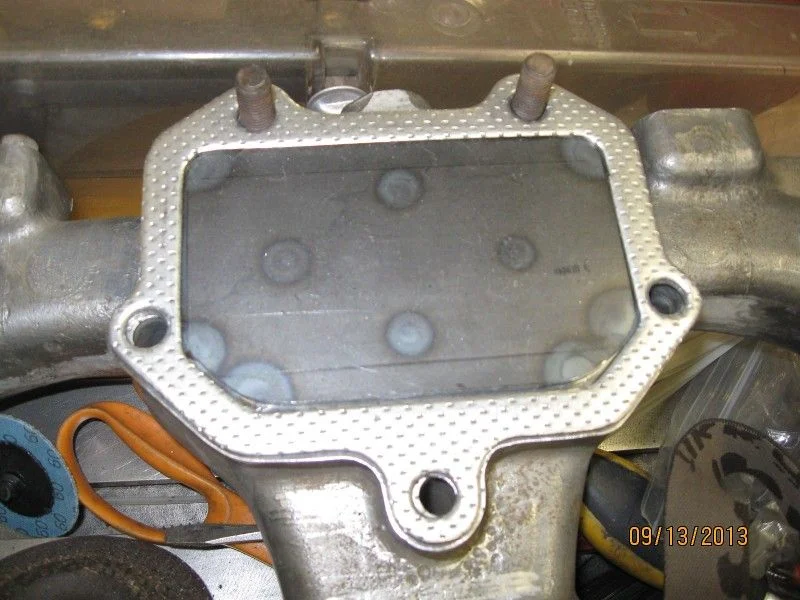
I made my own, but the Cruiser Outfitters part is basically the same. I don't have a good photo of the plate by itself, but this is it on the bottom of the intake manifold. I doubled it up on just the bottom side for longevity without affecting the thickness in the gasket area.

2016833
 
Last edited:
I live at 2400’ and frequent 6-8.5k’, with no changes to timing or anything else.

I have headers, heat-sleeved fuel line over the engine, a fuel return, electric fuel pumps, no automatic cooling fan and DUI ignition.

My infrared thermometer shows the headers at 450* on hot days... and no fuel boil off... no vapor lock.

The boiling issue is, IMHO, the result of the exhaust manifold heat “radiating up a chimney” thru the intake manifold and acting like a lit burner under the carb.

The headers mitigate that scenario because they don’t serve as a “chimney”. Even though they are 450*, the heat isn’t focused on the carb base.

The electric pumps are not in the engine compartment... that helps keep fuel temp down and heat shielding the feed line doesn’t hurt.

I would go with the block off plate and sleeve the fuel feed first. Cheap and fairly easy.

I love electric pumps... no worries about dumping fuel into the crankcase... and my fuel system design provides emergency fuel backup, via a second tank/pump, in the event of a pump failure. I would suggest an electric pump, if the block off and sleeves don’t eliminate your boiling issue.

Headers just don’t provide a lot of performance improvement. They generate a lot of heat (some radiates into the cab), crowd the driver’s side of the engine compartment and, if your power steering pump is on the driver’s side, you’ll need to install a cooler... PS fluid (ATF) will boil out.

 
I live at 2400’ and frequent 6-8.5k’, with no changes to timing or anything else.

I have headers, heat-sleeved fuel line over the engine, a fuel return, electric fuel pumps, no automatic cooling fan and DUI ignition.

My infrared thermometer shows the headers at 450* on hot days... and no fuel boil off... no vapor lock.

The boiling issue is, IMHO, the result of the exhaust manifold heat “radiating up a chimney” thru the intake manifold and acting like a lit burner under the carb.

The headers mitigate that scenario because they don’t serve as a “chimney”. Even though they are 450*, the heat isn’t focused on the carb base.

The electric pumps are not in the engine compartment... that helps keep fuel temp down and heat shielding the feed line doesn’t hurt.

I would go with the block off plate and sleeve the fuel feed first. Cheap and fairly easy.

I love electric pumps... no worries about dumping fuel into the crankcase... and my fuel system design provides emergency fuel backup, via a second tank/pump, in the event of a pump failure. I would suggest an electric pump, if the block off and sleeves don’t eliminate your boiling issue.

Headers just don’t provide a lot of performance improvement. They generate a lot of heat (some radiates into the cab), crowd the driver’s side of the engine compartment and, if your power steering pump is on the driver’s side, you’ll need to install a cooler... PS fluid (ATF) will boil out.


Right on. Makes a lot of sense. Thanks for the input.

I’ll go the route of the block off plate just to keep the intake manifold from getting too hot and cracking. Then TBI to circumvent all the carb issues. (I realize the fuel injection introduces complexity, but it seems like the benefits outweigh the cost by a bit.)
 
I'm busy at work, but when I get a chance I want to run some more numbers, see if they're repeatable, and post them in their own thread. I don't want to highjack this thread anymore than I've done. Anyhow, here's what I got the other day:

Setup: Stock 1987 2F. Desmogged, JimC tuned carb and dizzy, timing set to about 10 degrees, stock fuel system and routing (no fans). Truck is at sea level. Fuel is 90 octane non-ethanol.

Test: I did about 28 miles of constant driving the other day. Mostly stop and go. Outside air temp was 94 degrees at the start and stop of the trip (which included a stop at a gas station). Final 2 miles of the trip was mostly no stops, 50 mph. When I pulled into the garage, I immediately measured the intake temp directly below the carb with a thermal gun. I then lowered the hood and repeated the temp check every 5 minutes.

Results:
Time 0 min: 178F
Time 5 min: 200F (max temp noted)
Time 10 min: 198F
Time 15 min: 189F
Time 20 min: 182F

Additional notes: the carb insulator measured approximately 5F cooler than the intake. My drivers side floor mat measured 110F at Time 0 (I'm sure only I find that interesting since I wear flip flops).

I'm not saying 3FE headers will help anything, its just what I run. I'd be interested to see the numbers for a 2F intake with a 2F exhaust manifold attached. To me, if you are worried about fuel boiling, then the intake temp below the carb is the number you are looking for. I did not take the temp of the exhaust manifold. I'll do that next time. Maybe each runner and see the difference between them. That might be interesting...

Edit: just to add, I understand fuel circulation and fans are important parts of fuel cooling. My test was only to determine intake temps as the vehicle sat, post drive.
 
Last edited:
I'm busy at work, but when I get a chance I want to run some more numbers, see if they're repeatable, and post them in their own thread. I don't want to highjack this thread anymore than I've done. Anyhow, here's what I got the other day:

Setup: Stock 1987 2F. Desmogged, JimC tuned carb and dizzy, timing set to about 10 degrees, stock fuel system and routing (no fans). Truck is at sea level. Fuel is 90 octane non-ethanol.

Test: I did about 28 miles of constant driving the other day. Mostly stop and go. Outside air temp was 94 degrees at the start and stop of the trip (which included a stop at a gas station). Final 2 miles of the trip was mostly no stops, 50 mph. When I pulled into the garage, I immediately measured the intake temp directly below the carb with a thermal gun. I then lowered the hood and repeated the temp check every 5 minutes.

Results:
Time 0 min: 178F
Time 5 min: 200F (max temp noted)
Time 10 min: 198F
Time 15 min: 189F
Time 20 min: 182F

Additional notes: the carb insulator measured approximately 5F cooler than the intake. My drivers side floor mat measured 110F at time 0.

I'm not saying 3FE headers will help anything, its just what I run. I'd be interested to see the numbers for a 2F with a 2F exhaust manifold. To me, if you are worried about fuel boiling, then the intake temp below the carb is the number you are looking for. I did not take the temp of the exhaust manifold. I'll do that next time. Maybe each runner and see the difference between them. That might be interesting...

Interesting indeed. I'm working on getting the heat riser block off plate ordered (if cruiser outfitters would respond). I'm thinking this has to solve the issue being that there's nothing keeping the exhaust out of the area in question once at operating temp. The Toyota engineers weren't stupid, right? They always turned out great stuff. So I have to believe that it's not the design but rather the lack of flap in my situation that's creating the issue. (Granted, it was a Chevy engine design originally.) I'll run the same experiment before and after I install the block off plate and report back.

In related news: I ordered my TBI kit this morning.
 
Back
Top Bottom