

FJ60 Starting Issue- HELP~

This site may earn a commission from merchant affiliate
links, including eBay, Amazon, Skimlinks, and others.

Joined
Aug 11, 2011
Threads
3
Messages
11
Location
Asheville, NC
Hey all- long time!

So, I picked up an 87 FJ60 a couple weeks back and I'm running into a starting issue, specifically cold starts. Here's the breakdown:

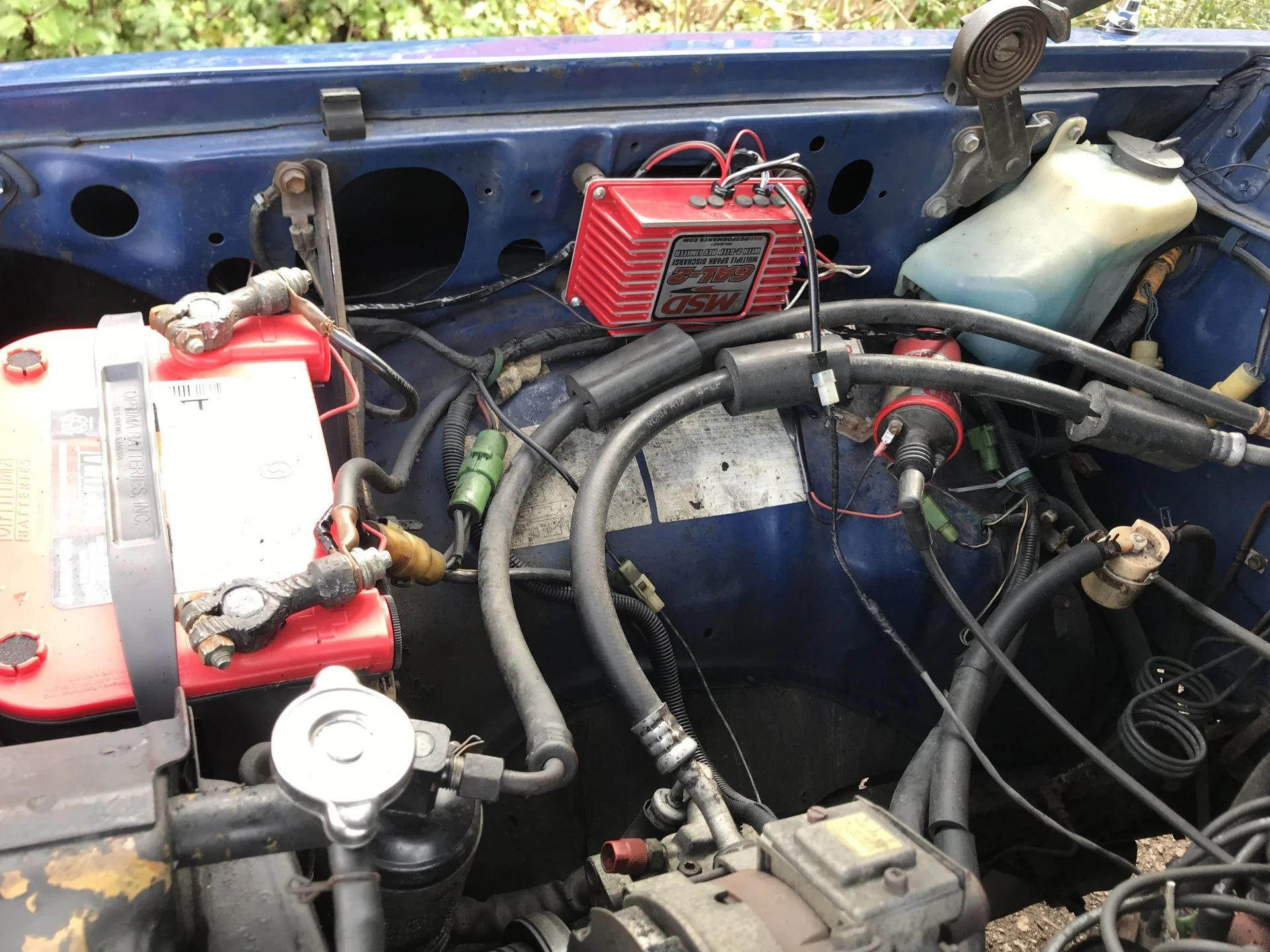
-Stock 2F with the dreaded MSD ignition (pic below for reference)
-Brand New Optima Red Top

It fires right up when temps are above 50 no problem. Pull choke, crank, fire. Easy peezy.
When the temps are cold, say around 30, I can't seem to get the ol’ girl to turn over….just cranks. I use the same starting process ( a process I found here on the forum that works flawlessly…when warm). The only way I can get this rig to turn over when cold is to jump it with my wife’s 4Runner. The battery show around the 10V mark and will crank all day, so I'm 99% sure that's not it. So the questions is…is the MSD ignition bad? Does it need a full 12V to fire, and therefore connecting a jump to it gives it more than enough juice to do so? I already went through the obvious trouble shooting- Starter, alternator, fuel in carb window, etc.

Anyone run into this issue? Any advice would be spectacular!
( second pic is with the new wheels/ tires…just because ;)
1920171


l5mjYQitTNmfrEAd9KnpYA.webp
 
10 in a resting battery? Too low. Should be at least 12. Do you have a battery charger? Charge it for awhile and see how it goes. Battery might be old and can’t maintain enough. Do you know how old it is? Sometimes they’re marked w/ a sticker. I had an old Kia years ago that was over 7 years. I didn’t realise and it got down to something like 7 when I was able to get it swapped out.
Are you keeping the choke out for at least 5 minutes?
 
10 in a resting battery? Too low. Should be at least 12. Do you have a battery charger? Charge it for awhile and see how it goes. Battery might be old and can’t maintain enough. How old is it?
Are you keeping the choke out for at least 5 minutes?
Battery is a week old and mfg date of 2018. I'm going off the V-meter on the dash saying around 10. When you say keeping the choke out for 5 minutes, are you saying when it's running, or while starting?

FWUp4pULSCySSlEa2hwqSg.webp
 
Yeah the voltmeter in the cab is worthless for diagnostics. It's kinda worthless for anything. If the engine can crank over with the starter, then the battery isn't the issue. If it starts fine when cool but not when cold, that's probably just a fuel ratio/temperature thing.
When it's reeeeeeally cold, try pumping the gas pedal 5 full strokes with the choke pulled out fully and wait at least 30 seconds before cranking the starter. Keep your foot off the gas pedal when starting when it's cold. If it catches & comes to life for a second, repeat the above. Always with foot off the gas pedal while trying to start it.

The reason to keep your foot off the gas pedal when starting is it lets the choke work. If you press down on the gas pedal, it defeats the function of a choke.
 
I appreciate the feedback, y'all!
Choke is fully functional, and I'm definitely following the 2F starting ritual as outlined by the 2F gods.

The key factor here is the additional 12V of jump that kicks the motor over. Went out this morning (19 degrees) and attempted to fire it up for about 5 minutes with no luck.

Any other thoughts?
 
The starting procedure for a carbureted 2F is different cold than when warm. this is from memory...

Cold Start: pull out the choke fully (choke plate is closed). pump the accelerator pedal 3 to 5 times. (this shoots gas into the intake manifold to provide some prime). turn the key to engage the starter. On my '85, if I drove the day before, the engine will start right up. If it has been more than a few days not running, then I need to do this procedure a few times. I think the gasoline in the carburetor evaporates or leaks out, so I first need to crank the engine to fill the fuel bowl before I can prime the engine using the accelerator pedal. The 2F engine needs a very rich air/fuel mixture to start when the engine is cold

Warm Start: push in the choke fully (choke plate is open). Push the accelerator pedal to the floor once and hold it there (wide open thorttle). Turn the key to engage the starter. When the engine starts to run, immediately release the accelerator pedal. The procedure prevents the warm/hot engine from flooding. The wide open throttle at start up will create a lean air/fuel mixture.
 
I have had a very similar issue lately. Starts up no problem when it is hot, will not start when it is cold. Spray starter fluid in carb and it runs for a few seconds and immediately shuts off. Finally figured it out the other day. EGR valve was stuck in the open position. Tapped it with a hammer a couple times to release it and it fired right up. Of course, not sure how jumping it would change anything on the mechanical EGR valve.
 
To rule out if the MSD is starved for AMPs when it's cold, leave the battery on a battery charger over night so it's fully topped off when you try to crank it in the cold morning. See if that changed anything
 
Yeah, if additional voltage/amps gets it running every time then I suspect piss poor spark from the MSD box due to low battery voltage. Resting voltage and cranking voltage change, often by a wide margin. And a battery's age doesn't rule out an issue. If the voltage during cranking drops below 11, I'd guess, then the MSD box may not have the requisite voltage to create spark.

Also, once it's running confirm you see about 14v to the battery.

And another thing to support a low voltage theory is that it does start when warm. Low temps drop battery voltage too.
 
All you smart guys. Just gotta get in this girl did tell him to charge it first. ;)
And definitely the cold sucks the power out of batteries... hence why you don’t keep power tool batteries in the garage in the winter. Similarly w/ home heating gas tanks in the winter.
 
Last edited:
The battery is 100% good- no question there.
I'll take a look at the MSD box and see if something jumps out at me.

It was equally chilly this morning, and for some reason I was able to get it fired up after a couple attempts.
  • 4 pumps of gas, pulled choke, (foot off the gas) cranked for about 5 seconds- nothing
  • Waited 10 seconds, pulled choke, pumped gas twice, cranked for about 10 seconds, nothing.
  • Repeated above and it finally kicked over.

It's inconsistant...which is what really stumps me.
 
Is this a mechanical or electric fuel pump setup? Because it sounds like the carb empties out and the float bowl is empty when you go to start it. If it's an electrical pump, and it runs all the time when the key is in Run, then just give it a little time to fill the float bowl. If mechanical, then I'd see if there is a reason the float bowl is empty every time you go to start it.

But this could be a couple things going on at the same time. Older engine could mean lower compression and harder to start in the cold.

All this is really just guess work without more diagnostic data. But it if were me, I'd buy an inexpensive electric fuel pump (that has the correct fuel pressure for the carb) and see if using that doesn't help. I have the same issue on an old Fiat I have, the Weber carb dries out between driving and have to wait till the fuel pump fills it up. I can usually hear when that happens as the fuel pump 'tone' changes as the carb float closes.
 
A
Is this a mechanical or electric fuel pump setup? Because it sounds like the carb empties out and the float bowl is empty when you go to start it. If it's an electrical pump, and it runs all the time when the key is in Run, then just give it a little time to fill the float bowl. If mechanical, then I'd see if there is a reason the float bowl is empty every time you go to start it.

But this could be a couple things going on at the same time. Older engine could mean lower compression and harder to start in the cold.

All this is really just guess work without more diagnostic data. But it if were me, I'd buy an inexpensive electric fuel pump (that has the correct fuel pressure for the carb) and see if using that doesn't help. I have the same issue on an old Fiat I have, the Weber carb dries out between driving and have to wait till the fuel pump fills it up. I can usually hear when that happens as the fuel pump 'tone' changes as the carb float closes.
A 60 and a Fiat? I thought I was the only one.
I have the same issues with my 60 after it’s been sitting. As said, it’s the lack of fuel in the carb. It always starts eventually.
 
A

A 60 and a Fiat? I thought I was the only one.
I have the same issues with my 60 after it’s been sitting. As said, it’s the lack of fuel in the carb. It always starts eventually.
Yeah, I restored an old Fiat Spider a few years back. Cool little car. Here are some pics
 
FYI don’t go w/ an electric pump. They suck and are noisy and simply add problems that truck was never meant to have.
Most carbs empty overnight or a few nights. The fuel seeps out. This is a well documented issue. No sense beating a dead horse. Sounds like he followed the directions @OSS provided and they worked. Do all this w/ the hood up and you can jump out after a few times priming the carb to see the level in the sight glass.

Keep it simple and don’t complicate matters. It’s a 30 year old truck, it’s not going to do exactly as asked each and every time. If we all wanted consistent we wouldn’t be driving around 30 year old tractors.
 
From the above last starting description, it sounds like the accelerator pump in the carb isn't squirting like it should: the engine isn't getting enough gas at cold start. If you can't remember the last time the carb was rebuilt (and the AP replaced) then that's worth looking into.
 
From the above last starting description, it sounds like the accelerator pump in the carb isn't squirting like it should: the engine isn't getting enough gas at cold start. If you can't remember the last time the carb was rebuilt (and the AP replaced) then that's worth looking into.
How does the AP have anything to do w/ a cold start issue?
 
If the accelerator pump seal is worn, it won't squirt as much gas with each pedal pump. When they're really worn out it'll just dribble fuel instead of squirt it with force into the manifold. The forceful squirting is important when the engine is really cold cuz it helps atomize the fuel as it splatters on the bottom of the intake.
Maybe it's not the problem, but best to rule it out by taking a peek down the carb throat when pumping the gas
 
Back
Top Bottom