Dual Batteries Complete!!!

This site may earn a commission from merchant affiliate
links, including eBay, Amazon, Skimlinks, and others.

Joined
Nov 16, 2004
Threads
299
Messages
3,761
Location
Oceanside, CA (Fire Mountain)
Finished up the dual battery setup in my '73 FJ40 and wanted to say thanks, post a few pics, and ask a few more questions... so here goes:

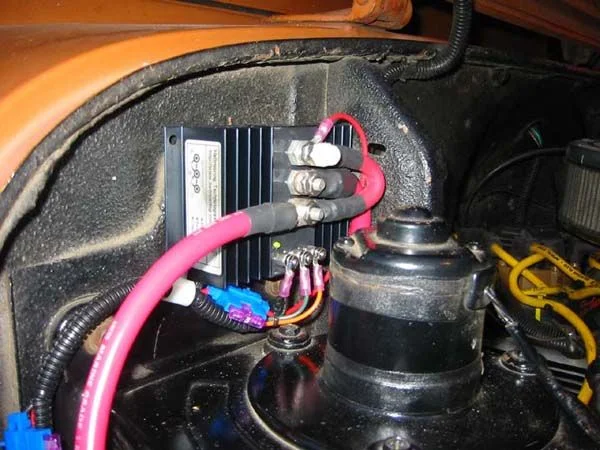
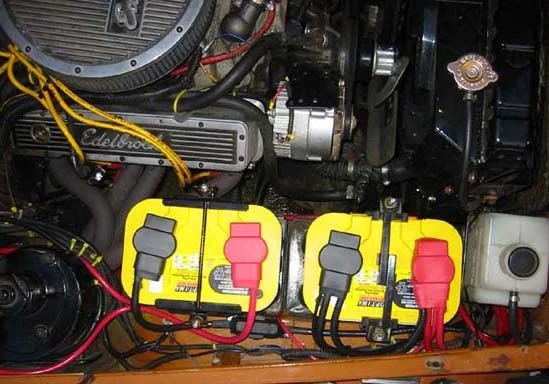
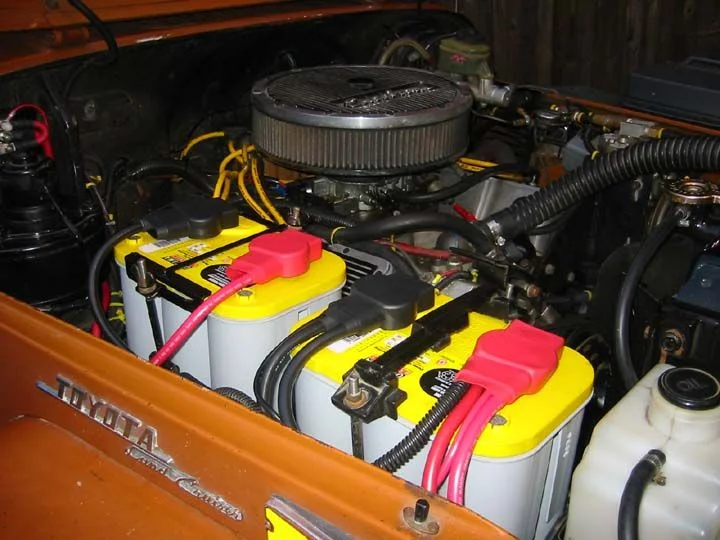
I used the BIC 95300 from Hellroaring and was pleased with the ease of installation, the tech support from Mike and the operation so far. I used 2 Optima Yellow tops along with all custom made cables using Marine grade 2g wire. I opted to run everything off the Main Battery and keep the 2nd as a backup for emergency starting or to connect for winching as needed. The selection is run by the remote module switch in the cab and I opted not to use a manual marine-type switch. I installed a 150AMP fuse on the negative cable of the backup battery as recommended by some and wondered if I need to use a similar inline fuse anywhere in the system for my winch? Any recommendations?

Thanks to CruiserDrew, RavenTai, and others for their postings as well as the Tech Pages by SLEE and others. I picked them to bits to find everything I wanted in my setup.

-Dom
dualbatt01.webp
BIC.webp
dualbatt02.webp
 
Last edited:
The only thing I don't understand is the 150A fuse in the ground wire of the second battery. This will preclude its use in applications like starting or winching without physically removing and swapping batteries. 150A fuse isn't going to last long with starting or winching where the current can exceed 300A.
 
Dom,
Congrats on your dual battery install...I also just finished mine:
https://forum.ih8mud.com/showthread.php?t=37136

I was wondering if the Hellroaring's instructions indicated a fuse on the Negative side of the auxiliary battery?

The only thing left for me to do is to add a Circuit Breaker, which will go on the positive side of the auxiliary battery.

thanks,
manny
 
Pin and Manny- First I have to classify myself as a hack electrician just dangerous enough to solder and tear things apart that I can't get back together. I have been successful re-wiring a cruiser and doing minor mods like the one mentioned above. I am trying to understand electrical current, etc better and bought the "managing 12 volts" book recommended here on the site. With that said...

I was looking to protect my new setup from damage because I had burnt up a wiring harness on my '71 years ago and didn't want to deal with that. I had also read that several members were running the fuse to protect their second battery from damage in case of a short. So after reading here I contacted Mike at Hellroaring to ask him. He recommended using an inline fuse on the second battery for protection in case a short caused inadvertant battery polarity reversal ("If placed on the ground side, it protects the entire length of positive cable to the battery from the backup battery power source"). After checking into it a little further I am looking into the possibility of protecting my other battery with a 250 AMP fuse that would go between the starter and the main battery and adding another between the BIC and the starter selenoid (see diagram) but haven't decided yet. I am starting to think that I am getting way too paranoid about burning this thing up. What do you guys think?
bic01.webp
 
Nice looking install Dom. Mike at Hellroaring really is great to bounce questions off of. On the winching thing, you are never winching off the #2 battery alone. When you combine the batteries both work in tandem. The BIC will only flow so much and so the 150 amps is enough to protect the wiring. Pin-Head's concerns would be the same if fused on the positive side as well. I used a 200amp fuse and one size bigger wire, but I'm still in the safety zone of the wiring.

I did use mine in Death Valley 2 weeks ago, but I have not winched with it yet. I'll post up if the fuse blows!
 
Thanks Andrew. And thanks for the PM reply. Do you have a pic of your aux fuse panel? Did you wire right from the main battery to the panel and/or are there any switched fuses or just all BAT power? That's the last thing I need to do besides determining the need for any more inline fuses. Did you fuse the winch or just run it to the main? Thanks.
-Dom
 
I don't know what a BIC is, so maybe my comments about the 150A fuse being inadequate are off base. Batteries can routinely deliver more than 300 amps in particular situations.

Fuses are always a compromise between protecting something and reliability. Toyota and all the other car companies didn't fuse the line from the battery to the starter motor because it is not likely to short and if it does it can be replaced relatively easily without damaging any other component. Toyota also did not fuse the ignition wire from the key, except for the fusible link at the battery.
 
I'm not an electrician...I know enough to be dangerous, that's about it :D

I was thinking about your negative fuse, and why I was planning on installing my CB will be on the positive side.
I think that if you are running dual batteries that share a common ground (which you may not), having a fuse on the negative side of your auxiliary battery may not be practical.

Any electricians out there?

manny
 
Manny if you think about it, the same current has to flow in the positive and negative wires, therefore, a fuse in the negative side protects all the wiring from the positive terminal. This is great for an auxillary battery. Plus the fuse block with it's wire terminals can not short to ground, since it is the ground.

On your main battery it would not be a good plan. If you did blow the fuse, your alternator would still be making current. Without the battery working as a "sink" you could get a voltage spike that could fry your computer, since it's ground is no longer grounded to the battery. Obviously it isn't a big deal in an FJ40, but it makes a big difference in an 80 series where the computer costs 1000 bones.

I did run my winch directly to the main power terminal on my primary battery, and sheethed all of it's cable with split loom. I have a short jumper to the fuse panel which is not fused either, but the jumper is 6 inches long and well protected. I am still going to fuse the lead from the main battery to the BIC, I just need to find a good place to mount it near the battery. It will be 250 amps and should be able to handle the load. If it blows, it just takes my #2 battery off line.

edit-I'm still dangerous too, but fuses on big wires connected to the battery are a good thing.
 
Back
Top Bottom