Finished my anvil stand.
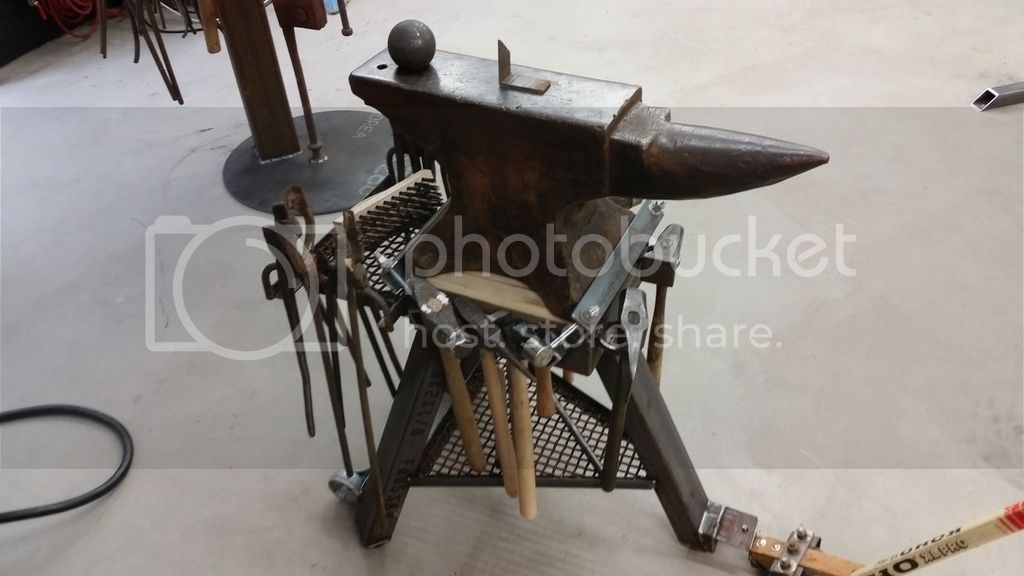
Base constructed out of 3" x 3" X 1/4" angle iron. Into this I inserted a wood block. The actual block is made from laminated and screwed 2x4's placed on edge and will help absorb shock and will help with ringing and vibration.
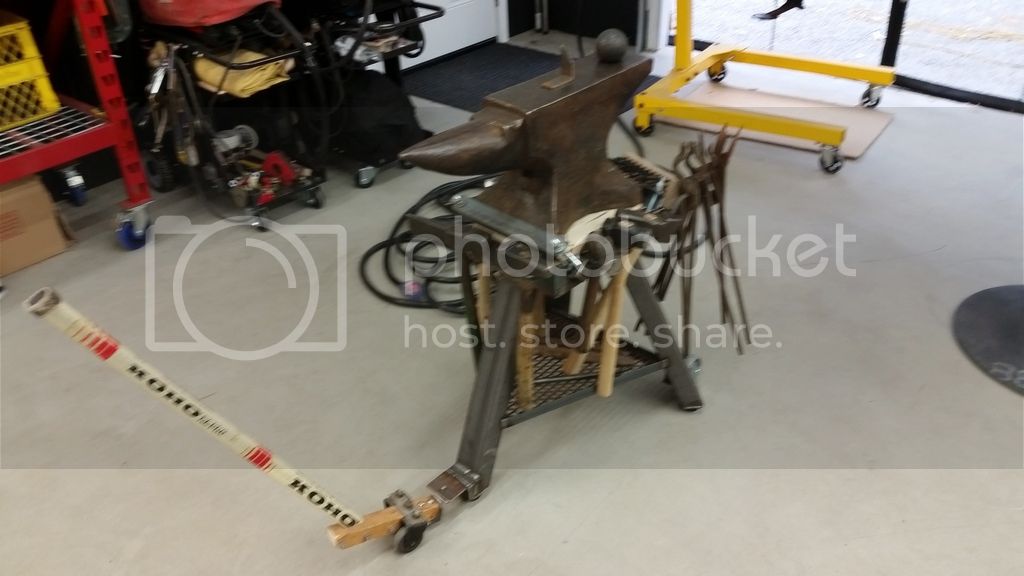
The legs are made from 3"x 2" 1/8th wall tube which I filled with play sand to help with stability and for dampening the ringing. I used rubber feet that had a 7/16th stud so the bottom plates of the legs have a capture nut welded to the back side. The rubber feet will keep it from moving as I hammer on it.
Height of the anvil is about halfway from wrist to first knuckle. This keeps me upright but allows almost full extension for a downward blow. If too high you lose the force of a swing and too low you hyper-extend your arm and then its physio time.
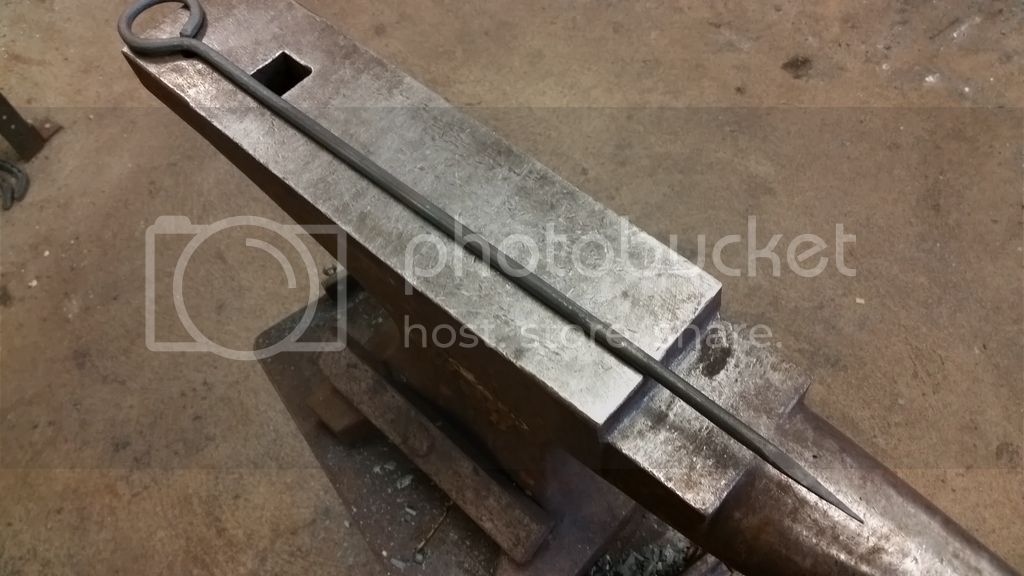
This is a 196 lbs anvil and based on its markings was made by Mousehole Forge in England which produced anvils from the 1600's to mid 1930's. The forge's power came from a water wheel which it used to power machines and mechanical hammers. The classical shape of an anvil is based on Mousehole's design as they were the first to mass produce anvils and they tried to standardize its shape.
http://www.wessexarch.co.uk/blogs/news/2014/01/09/mousehole-forge
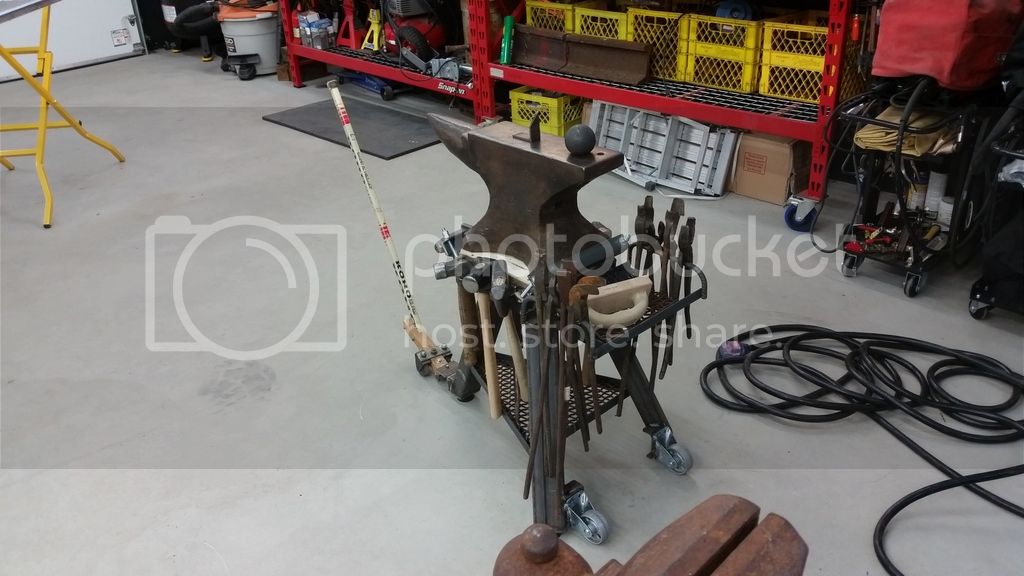
I've added rings from pipe to hang hammers and built a little tray and tong rack off the back. I used woven screen as scale will flake off the heated metal I'm forging and pile up on a solid surface - this way it will just drop through.
Years ago I made a dolly to move my cast iron table saw around. I built a tab off the front leg to accept the pin off the dolly and welded cintered wheels to the back. This thing moves around supper easy! Similar idea as to using a trailer dolly that has the ball on the front end to wheel your utility/boat,tent trailer etc around.
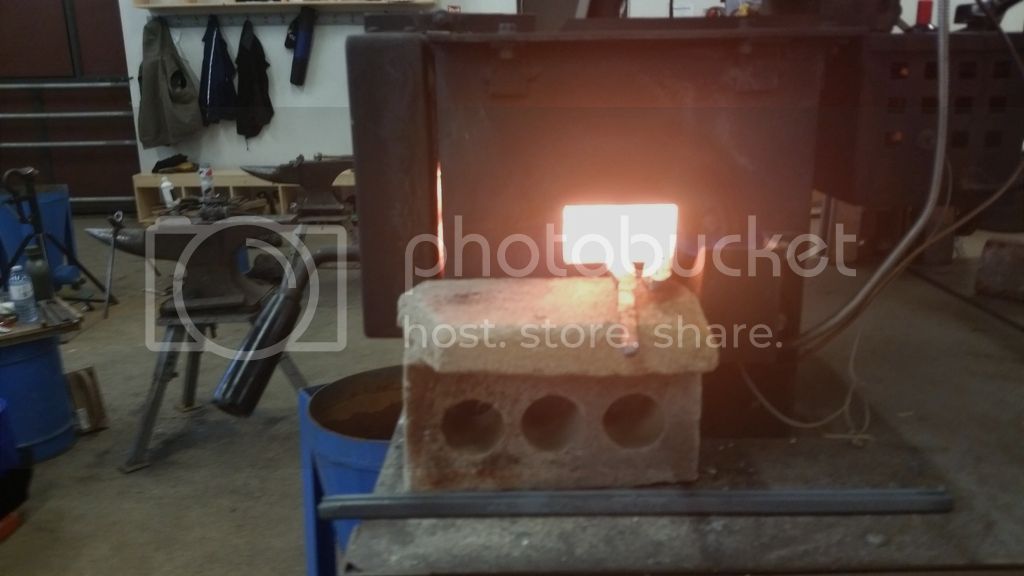
Now I have to wait to October as I have my first Blacksmithing course then. The good news is that they are using a natural gas forge that is made in Duncan. If I like it then I can buy local.
I chose to build a tripod design as it helps with uneven floor - Mine is polished but still has a dip or two (I may also wish to forge outside). I can also stand right up close to the anvil. This will allow me to do finer work and also keep my back upright. Angle of the legs is 22 degrees








 Broom clutching