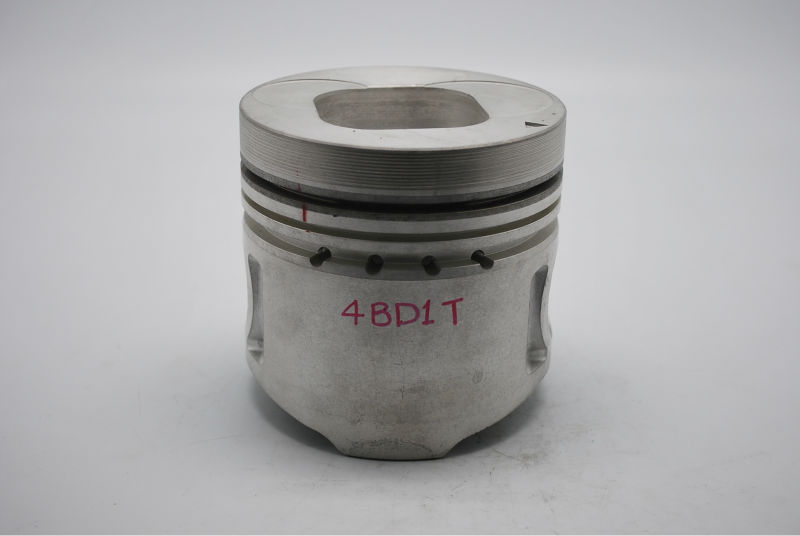
from what i've read, and what i believe to be logical out of all the varied opinions, is that a bad start (from either nursing that doesn't put enough pressure on the ring to expand them into the cyclinder wall, or from over exertion creating to much heat) can get smooth glazing deposits going on the cyclinder wall from burnt oil that doesn't allow the rings to wear out a proper seal.
this page explains it ok, but its a bit long so i'll paste just the relevant bit here
http://www.thedieselstop.com/contents/getitems.php3?Breaking in a Diesel Engine
"
Heat is important to assist wear for break-in but too much can cause major problems. This is the reason we should not subject the engine to significant loading for the first 1000 miles of its operation. Loading heavily will introduce more fuel to the cylinder, and will add significant amounts of heat and pressure to the cylinder components. Couple that scenario with new rings on a freshly honed cylinder wall and we can only imagine the amount of friction and heat being produced and absorbed by the rings. Furthermore, the engine oil, lubricating the cylinder walls, will flash burn when it contacts the very hot rings. The burned oil will leave a hard, enamel like residue on the cylinder wall, commonly known as oil glazing. When the rings are permitted to operate under such high temperatures, oil glazing of the cylinder can happen very quickly. Once this glaze builds up, the only repair is a labor-intensive process that requires disassembling the engine and re-honing the effected cylinders. Oil glazing is a problem because it is typically not distributed evenly in the cylinder, and the spaces that exist between the ring and cylinder wall are either still there or new larger ones are created. Oil glazing is typically thicker towards the top of the cylinder and it builds up in the areas where heating is the greatest. The glaze has very smooth and friction free properties that do not allow it to be scraped away by the rings. This inhibits further metal-to-metal wear between the cylinder wall and rings, preventing further mating of ring and cylinder. Thus, those small gaps between ring and cylinder surface will never seal. These spaces will then allow pressurized gasses and unburned fuel to escape into the crankcase, while allowing oil from the crankcase to enter the cylinder above the top compression ring.
Well why not run the engine at idle or under no load? This is bad too. It can create a similar condition to glazing. The rings need to expand a little during this initial break-in period, just not so much that they overheat and flash the engine oil. The engine needs to be moderately loaded in order to break in correctly. Running the engine under very light or no load prevents the oil film placed on the cylinder wall from being scraped away by the expanding compression rings. The rings will instead “hydroplane” or ride over the deposited oil film, allowing it to be exposed to the cylinder combustion. The oil film will then partially burn on the cylinder leaving a residue that will build up and oxidize over time. Eventually this leaves a hard deposit on the cylinder wall that is very similar to the glaze left from flash burning. My caution to those just running the engine as a normal daily driver (without some loading) and especially those who love to idle their vehicles, expect some VERY extended break-in periods (up to 30,000 miles on one I know of). Expect oil consumption forever due to oil glazing. The rings never really seat well if they cannot expand from the dynamics and heat that a load produces. Expect poor mileage due to the passing of compression and combustion gasses around the compression rings. Additionally, expect to see increased bearing wear and engine wear due to the fuel passing the rings diluting the engine oil.
Thus, we can see that heavy loading and light loading can cause some major problems. Moderate loading is the key to a proper break in for the first 1000 miles. It permits the loose fitting piston rings to expand into the cylinder walls allowing them to perform double duty: First, scraping oil off the cylinder wall, and second, to create friction that will promote wearing the two surfaces to each other’s proportions. Furthermore, moderate loading will allow the rings to get hot but not to the point where it will flash the lubricating oil supplied to the cylinder walls."
Thank you, I find this interesting. The glazing is certainly a potential problem, but I would assume it has mostly to do with quality of oil these days. And I would expect it to be much better than it used to be. Accordingly, it is much less important to keep the trucks running after stopping these days to avoid oil hardening in the turbo bearings.
Things like this make me doubt the validity of such an article though: "T
he rings need to expand a little during this initial break-in period,.."
That just makes no sense at all from a material physics point of view. Either the rings expand every time they heat up, or not. If they were to expand the very first time they heat up, and then not, the manufacturer would certainly preheat them once.
Also, ring 1 and ring 2 have different shape, one do scrape oil, one to spread it.
Finally, why is the glazing only a problem during break in, and not later? According to this write up, glazing is a result from flash oil-burning on contact of oil with rings. I very much doubt that too. The oil on the cylinder wall would burn at much higher temperature than the atomized diesel in the chamber. So if the rings were hot enough to set oil on fire, no controlled ignition by pressure/heat could happen in the cylinder. The diesel would just go up as soon as the first molecule hits a ring.
I am not trying to be an ass, I just keep thinking about the break in stuff and wondering.
cheers,
jan