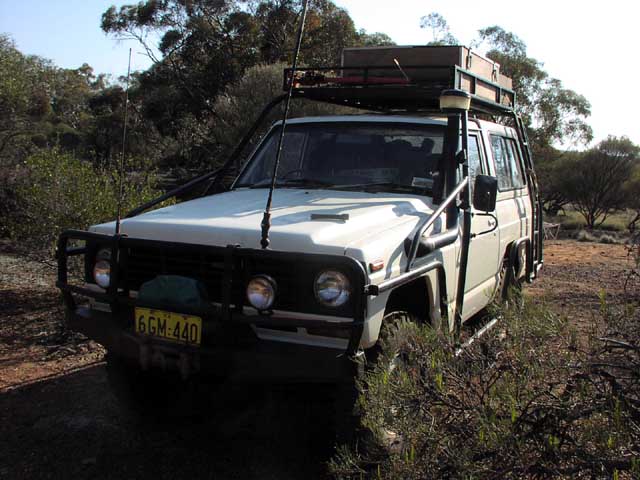
I'm not proclaiming to be an expert. If I was building a cage I would use these specs.
NHRA rules:


UROC rules:
4.12. Roll bars/Cages
4.12.1. Definition: UROC considers the cage as the safety bars surrounding the occupants. Designed to protect the
occupants in the event of a rollover.
4.12.2. A six (6) point mounting cage that protects all seats in a vehicle is required.
4.12.3. Basic roll cage must be constructed of material meeting or exceeding the following minimums:
4.12.3.1. Round magnetic steel (1026 DOM recommended) tubing 1.50” OD with 0.120” minimum wall.
4.12.3.2. Chromoly alloy steel A 519 grade 4130 1.50” OD with .090 minimum wall.
4.12.3.2.1. Must be quenched.
4.12.3.2.2. Normalized is not approved.
4.12.3.3. Roll cages made of other material or in other wall thickness/diameters must be done through a UROC
approved builder and have a certification and serial number on file with UROC. Roll cages already built of
other material or specifications than those above must be inspected and approved by UROC and there may
be a fee for this inspection. Contact UROC for information.
4.12.4. Any other materials are not permitted (aluminum, composite, etc.)
4.12.5. All bends must be smooth with no excessive crimping or any evidence of wall fracturing.
4.12.6. Roll cage construction must be fully welded.
4.12.7. Gussets must be welded at any welded joint on the four corners of the “halo” around the occupants in both a
horizontal and vertical position. Gussets must be constructed of a minimum of 0.125 (1/8) inch plate steel or one (1)
inch O.D x 0.120” wall straight tubing. Corner gussets can be replaced by diagonal bracing of the halo using a
minimum of1.50” OD .090 minimum wall tubing.
4.12.8. At least one spreader bar located above each seat within twelve (12) inches of the center of the seat.
4.12.9. At least one diagonal bar in a plane behind the seat(s) to triangulate the cage laterally.
4.12.10. A horizontal spreader bar behind the seat(s) of the vehicle, located at a height suitable for anchoring or routing
shoulder belts.
4.12.11. A horizontal spreader bar in the dashboard location (between the front two uprights).
4.12.12. If the front hoop (windshield area) is over thirty six (36) inches wide, a vertical support between the dash bar and the
front hoop must be installed near the center of the span.
4.12.13. If doors are not used, a bar running from the middle hoop at approximately shoulder height to the front hoop at approximately shin height must be present. This can be a bolt in piece.
4.12.14. Magnetic, flattened expanded sheet metal, 1/8” sheet metal or 1/8” aluminum must cover 100% of the cage
perimeter immediately over any and all seats in the vehicle and be welded or bolted to at least the four tubes
surrounding the seat(s). Holes may be drilled, but must not exceed 2” in diameter.
4.12.15. It is strongly suggested that there is a minimum clearance from the helmet of the tallest occupant to the lowest point
on the roof of 5 inches
4.12.16. The driver, when properly strapped in, should not be able to lean out the side of the cage.
4.12.17. Connecting points of the roll cage must tie in to the frame of the vehicle at six points.
4.12.17.1. Four of these points must be surrounding the occupants.
4.12.17.2. The front most position of the six points must be no farther toward the rear of the vehicle than
fifteen (15) inches behind the throttle and brake pedals.
4.12.18. Any variance of the above rules must be approved by and UROC official inspector.
4.12.19. A “periscope bar” (a bar sticking straight up from the roll cage) is not allowed.

Dave
NHRA rules:
UROC rules:
4.12. Roll bars/Cages
4.12.1. Definition: UROC considers the cage as the safety bars surrounding the occupants. Designed to protect the
occupants in the event of a rollover.
4.12.2. A six (6) point mounting cage that protects all seats in a vehicle is required.
4.12.3. Basic roll cage must be constructed of material meeting or exceeding the following minimums:
4.12.3.1. Round magnetic steel (1026 DOM recommended) tubing 1.50” OD with 0.120” minimum wall.
4.12.3.2. Chromoly alloy steel A 519 grade 4130 1.50” OD with .090 minimum wall.
4.12.3.2.1. Must be quenched.
4.12.3.2.2. Normalized is not approved.
4.12.3.3. Roll cages made of other material or in other wall thickness/diameters must be done through a UROC
approved builder and have a certification and serial number on file with UROC. Roll cages already built of
other material or specifications than those above must be inspected and approved by UROC and there may
be a fee for this inspection. Contact UROC for information.
4.12.4. Any other materials are not permitted (aluminum, composite, etc.)
4.12.5. All bends must be smooth with no excessive crimping or any evidence of wall fracturing.
4.12.6. Roll cage construction must be fully welded.
4.12.7. Gussets must be welded at any welded joint on the four corners of the “halo” around the occupants in both a
horizontal and vertical position. Gussets must be constructed of a minimum of 0.125 (1/8) inch plate steel or one (1)
inch O.D x 0.120” wall straight tubing. Corner gussets can be replaced by diagonal bracing of the halo using a
minimum of1.50” OD .090 minimum wall tubing.
4.12.8. At least one spreader bar located above each seat within twelve (12) inches of the center of the seat.
4.12.9. At least one diagonal bar in a plane behind the seat(s) to triangulate the cage laterally.
4.12.10. A horizontal spreader bar behind the seat(s) of the vehicle, located at a height suitable for anchoring or routing
shoulder belts.
4.12.11. A horizontal spreader bar in the dashboard location (between the front two uprights).
4.12.12. If the front hoop (windshield area) is over thirty six (36) inches wide, a vertical support between the dash bar and the
front hoop must be installed near the center of the span.
4.12.13. If doors are not used, a bar running from the middle hoop at approximately shoulder height to the front hoop at approximately shin height must be present. This can be a bolt in piece.
4.12.14. Magnetic, flattened expanded sheet metal, 1/8” sheet metal or 1/8” aluminum must cover 100% of the cage
perimeter immediately over any and all seats in the vehicle and be welded or bolted to at least the four tubes
surrounding the seat(s). Holes may be drilled, but must not exceed 2” in diameter.
4.12.15. It is strongly suggested that there is a minimum clearance from the helmet of the tallest occupant to the lowest point
on the roof of 5 inches
4.12.16. The driver, when properly strapped in, should not be able to lean out the side of the cage.
4.12.17. Connecting points of the roll cage must tie in to the frame of the vehicle at six points.
4.12.17.1. Four of these points must be surrounding the occupants.
4.12.17.2. The front most position of the six points must be no farther toward the rear of the vehicle than
fifteen (15) inches behind the throttle and brake pedals.
4.12.18. Any variance of the above rules must be approved by and UROC official inspector.
4.12.19. A “periscope bar” (a bar sticking straight up from the roll cage) is not allowed.
Dave