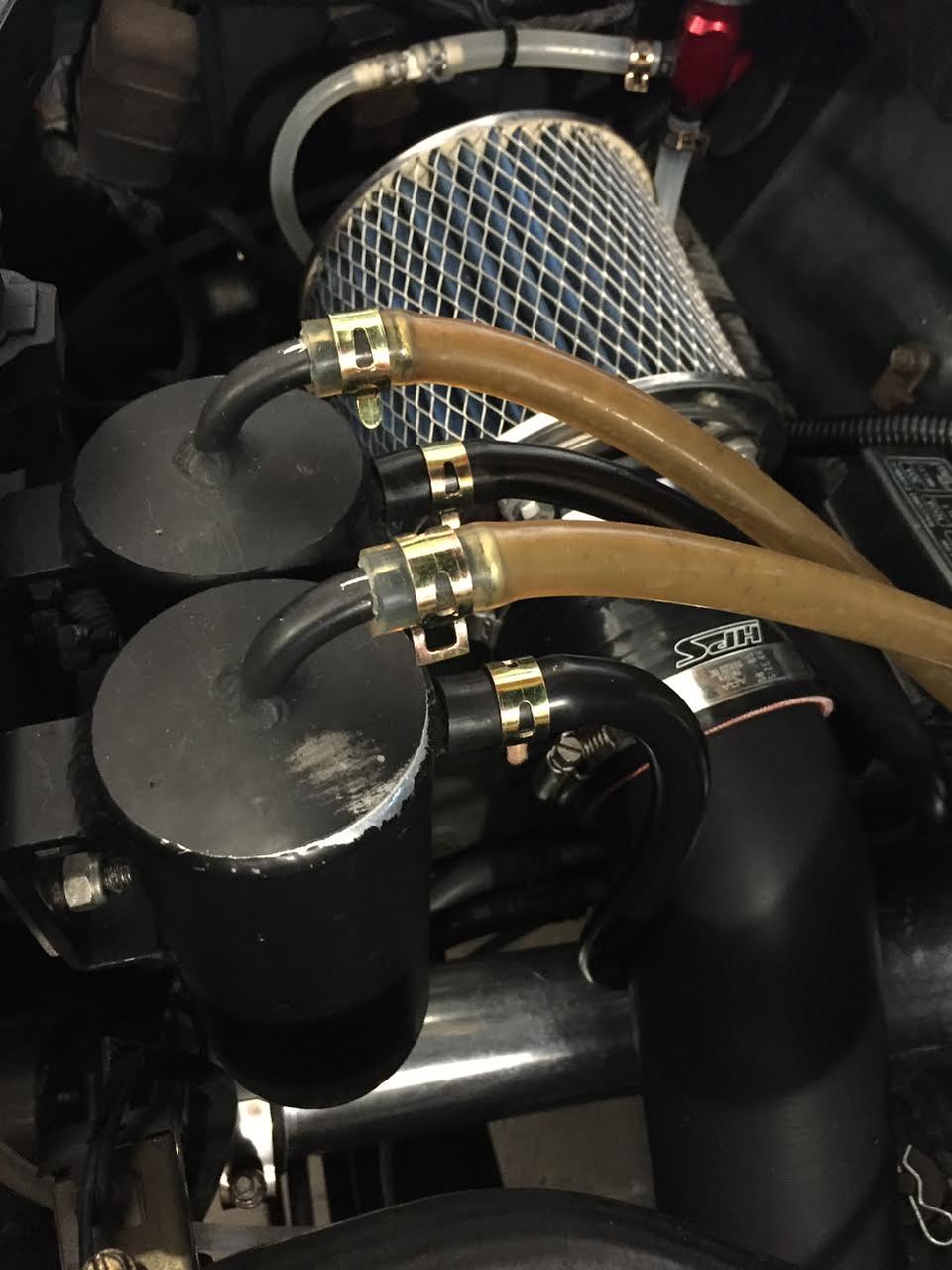
I thought about doing what you said than wondered if that would affect air fuel mixture. From what I have been reading, the PCV valve meters the flow of blowby gasses. Wouldn't the flow rate be too much for the ECU to compensate for with on unmetered PCV valve.
From
Positive Crankcase Ventilation (PCV)
PCV PROBLEMS
The most common problem that afflicts PCV systems is a plugged up PCV valve. An accumulation of fuel and oil varnish deposits and/or sludge inside the valve can restrict or even block the flow of vapors through the valve. A restricted or plugged PCV valve cannot pull moisture and blowby vapors out of the crankcase. This can cause engine-damaging sludge to form, and a backup of pressure that may force oil to leak past gaskets and seals. The loss of airflow through the valve can also cause the air/fuel mixture to run richer than normal, increasing fuel consumption and emissions. The same thing can happen if the pintle inside the PCV valve sticks shut.
If the pintle inside the PCV valve sticks open, or the spring breaks, the PCV valve may flow too much air and lean out the idle mixture. This may cause a rough idle, hard starting and/or lean misfire (which increases emissions and wastes fuel). The same thing can happen if the hose that connects the valve to the throttle body, carburetor or intake manifold pulls loose, cracks, or leaks. A loose or leaky hose allows "un-metered" air to enter the engine and upset the fuel mixture, especially at idle where the idle mixture is most sensitive to vacuum leaks.
On late model vehicles with computer engine controls, the engine management system will detect any changes in the air/fuel mixture and compensate by increasing or decreasing short term and long term fuel trim (STFT and LTFT). Small corrections cause no problems, but large corrections (more than 10 to 15 points negative or positive) will typically set a lean or rich DTC and turn on the MIL.
Problems can also occur if someone installs the wrong PCV valve for the application. As we said earlier, the flow rate of the PCV valve is calibrated for a specific engine application. Two valves that appear to be identical on the outside (same diameter and hose fittings) may have different pintle valves and springs inside, giving them very different flow rates. A PCV valve that flows too much air will lean the air/fuel mixture, while one that flows too little will richen the mixture and increase the risk of sludge buildup in the crankcase.
Watch out for cheap replacement PCV valves. They may not flow the same as the OEM PCV valve. Quality brand name replacement PCV valves are calibrated exactly the same as the original valves, and are designed to provide long-lasting, trouble-free performance.